 My Small Nest
Freshman year is equal parts thrilling and terrifying. One minute you’re hanging posters in a dorm room the size of a closet, and the next you’re juggling laundry, lecture halls, dining halls, and friendships all at once. Everyone calls college the best four years of your life, but nobody hands you the manual on move-in day.
Consider this that manual: 70 practical tips for college freshmen covering what actually matters — studying smarter, spending less on textbooks and dorm gear, living well with roommates, staying safe, protecting your mental health, and building a social life you genuinely enjoy. No filler, just the habits and purchases that make freshman year survivable and genuinely fun.
1. Read the Syllabus on Day One Like a Contract
That packet your professor posts on day one is not busywork reading — it is the rulebook for the entire semester. Grading weights, exam dates, the late-work policy, office hours, sometimes even hidden extra-credit opportunities all live in that document. Skim it and a midterm worth 40% of your grade will blindside you; read it carefully and you can map your whole semester in one sitting. Save every syllabus in one dedicated folder, because you will reference them constantly — especially if a grade is ever disputed. Try this: spend 15 minutes per class in week one highlighting due dates and moving them into your calendar so nothing ever sneaks up on you.
 Pin it
2. Introduce Yourself to Every Professor Early
In a 200-seat lecture hall you are invisible unless you choose otherwise. Walk up after the first or second class, introduce yourself, mention your major or what drew you to the course, and ask one genuine question. That two-minute conversation puts a face to your name on every future exam and paper — and professors are noticeably more generous with borderline grades, extensions, and recommendation letters for students they actually know. Office hours are the easiest version of this: most professors sit there alone, genuinely happy when someone shows up, and you do not need a crisis to visit. Try this: stop by each professor’s office hours once in the first month, even if it is just a five-minute hello.
 Pin it
3. Ask Questions Fearlessly — You're Paying for Answers
Your tuition quietly includes unlimited access to experts who are literally paid to answer your questions — yet most freshmen sit in silence, afraid of sounding foolish. Here is the reality: half the room is confused about the same thing, and the student who asks becomes the one everyone silently thanks. Asking is also the fastest route to genuine understanding rather than surface-level memorization, and office hours and discussion sections exist precisely for confusion. If a giant lecture feels impossible, start in smaller discussion sections or after class. Try this: commit to one question per week across all your classes and watch how much faster the material clicks.
 Pin it
4. Check RateMyProfessor Before Registering for Classes
The same course can feel life-changing or soul-crushing depending entirely on the instructor. Before registering each semester, look up every professor on RateMyProfessor and read for patterns in clarity, workload, and grading fairness — especially comments about whether tests match the lectures. One angry review means little, but consistent themes across dozens of reviews are reliable. Supplement this with upperclassman wisdom: ask older students in your major who is worth seeking out. Try this: build your schedule around the best-rated professors first, then fit everything else around them.
 Pin it
5. Participate Visibly — Effort Moves Borderline Grades
When a final average lands at 89.4, the professor choosing between a B+ and an A- remembers the student who contributed, asked thoughtful questions, and visibly cared. Participation is not about dominating discussion — it is about visible engagement: eye contact, preparation, contributing in small groups, showing up ready. In smaller classes professors notice exactly who tries and who coasts, and that goodwill converts into extensions when you are sick, benefit of the doubt on ambiguous exam answers, and strong recommendation letters later. Try this: aim to contribute once per discussion section — an answer, a question, or a reaction to someone else’s point.
 Pin it
6. Join Your Class Group Chat on Day One
If a GroupMe, Discord, or WhatsApp chat exists for your class, join it immediately. Missed a lecture and someone will share notes; confused about the homework and ten people are confused together until someone cracks it. These chats are where study groups form before exams and where you hear about canceled classes faster than any official channel. The key is contributing rather than lurking: share notes, answer what you can, be kind. They also become low-pressure friendship pipelines with people you see three times a week. Try this: if no chat exists after week one, start one yourself and share the link — you will instantly become the most useful person in the class.
 Pin it
7. Attend the First Two Weeks of Every Class
The first two weeks set the tone for everything. That is when professors reveal their expectations, teaching style, grading quirks, and what they actually care about — information no syllabus fully captures. You will learn whether attendance is quietly tracked, whether exams come from lectures or the textbook, and how strict the late policy really is. It is also the easiest window for making friends and finding study partners, since everyone is still open. Some professors even drop no-shows from the roster. Try this: treat the first fortnight as reconnaissance, note how each professor teaches, and tune your study approach per class.
 Pin it
8. Use the Free Tutoring Center Before You Struggle
Your tuition already paid for the tutoring center, the writing center, and the math lab — use them like it. The classic freshman error is waiting until grades are sinking to walk in; tutors help most when you arrive early with specific questions, not the night before a final in full panic. Writing center staff teach you to write better, not just fix commas, and drop-in math hours let you bring homework with zero appointment. The staff are students who recently aced these exact classes, so they know the professors’ quirks and test styles. Try this: visit the tutoring center in month one for your hardest class, even while you are doing fine — learn the system before you actually need it.
 Pin it
9. Make the Library a Weekly Ritual
Your dorm room contains a bed, a roommate, and roughly four hundred distractions; the library contains quiet, focus, and the psychological signal that it is time to work. Students who study in the library consistently get more done in less time, because the environment removes the temptation to nap, scroll, or chat. Campus libraries also offer reservable group rooms, whiteboards, printers, and even borrowable laptop chargers. Explore yours early — find the silent floors, the sunny corners, the 24-hour sections during finals. Try this: lock in one recurring weekly library block and treat it like a class, phone on silent.
 Pin it
10. Record Lectures for Review (With Permission)
Even strong note-takers miss things in a fast lecture. A recording gives you a safety net: revisit confusing explanations, catch missed details, and review by listening while walking across campus. Many professors allow recording outright and some post their own; always ask first — a quick ‘may I record for my own review?’ is polite and almost always approved. Recordings shine before exams: listening at 1.25x or 1.5x speed beats re-reading notes for efficiency. Try this: after each recorded lecture, spend ten minutes timestamping the confusing parts, then re-listen to just those sections that evening.
 Pin it
11. Review Your Notes Within 24 Hours
Your brain begins forgetting new information within hours unless you reinforce it. A 15-to-20-minute review of each class’s notes the same day — or the next morning — dramatically improves long-term retention versus re-reading everything before an exam. This is not re-studying; it is a quick pass to fill gaps, flag confusion, and connect new ideas to what you already know. Done consistently, exam prep becomes review instead of re-learning, roughly halving study time. Try this: build a 20-minute ‘daily review’ into your evening routine, right after dinner while the day’s material is still warm.
 Pin it
12. Don't Fear the W — Withdraw Strategically
Sometimes a class goes sideways: an impossible professor, an overloaded schedule, life happening. Withdrawing — a ‘W’ on the transcript — is not the disaster freshmen imagine. One W is completely normal and will not hurt graduate school or job prospects; even several are explainable. What genuinely hurts is a D or F dragging your GPA down for years, because GPA damage is far harder to repair than one withdrawal. The key is timing: learn your school’s withdrawal deadline (usually mid-semester) and talk to your advisor first. Try this: if you are below a C at midterms despite real effort, have an honest conversation with your professor and advisor about whether withdrawing is the smarter play.
 Pin it
13. One Failed Course Doesn't End Your Story
It happens to far more students than admit it: you fail a class. Too much partying, a brutal professor, personal struggles nobody knew about — the cause matters less than the response. A single failure feels catastrophic but is genuinely recoverable: most schools allow retakes, and many replace the old grade in your GPA calculation entirely. Graduate schools and employers weigh your overall trajectory, not one bad semester, and an upward trend afterward tells a compelling resilience story. Try this: meet your academic advisor within a week of the bad grade to map a retake plan, turning the failure into a detour instead of a dead end.
 Pin it
14. It's Completely Okay to Change Your Major
Most freshmen choose a major at seventeen on limited information, parental pressure, or what sounds impressive — and a huge percentage change it at least once. Switching is not quitting; it is deciding with actual college experience behind you. Freshman year is the ideal exploration window, since general-education requirements overlap across majors and you lose very little progress. Watch for the classes that make you lose track of time versus the ones you dread, and talk to professors and upperclassmen in fields that intrigue you. Try this: take one ‘wild card’ class per semester in a totally different field — your real passion may be hiding there.
 Pin it
15. Track Your Degree Plan Yourself
Your advisor is a helpful guide, but they manage hundreds of students and can make mistakes — and you are the one who pays if a required course gets missed. From semester one, keep your own copy of your degree requirements (the degree audit or catalog) and check off each requirement as you complete it. Before every registration period, map your next semester yourself, then bring the plan to your advisor for a sanity check rather than asking them to build it from scratch. This prevents the classic senior-year nightmare: discovering a missing prerequisite chain that delays graduation. Try this: build a simple four-year course map in a spreadsheet during your first month, and update it every semester before meeting your advisor.
 Pin it
16. Never Buy Extra Materials Until the Professor Confirms
That $200 textbook bundle or special lab kit listed on the syllabus may never actually get used. Professors frequently mark materials ‘required’ out of habit, then announce on day one that the older edition is fine, the homework code is optional, or the readings are posted free. Wait until after the first class before buying anything beyond basics — you could save hundreds per semester. When you do need materials, check library reserves, consider older editions (page numbers differ but content is usually nearly identical — confirm with the professor), or split costs with a classmate. Try this: attend week one with just a notebook, then make one consolidated purchase decision per class after hearing the actual requirements.
 Pin it
17. Rent or Buy Used Textbooks From Student Groups
The campus bookstore should be your last resort for textbooks — its prices run consistently highest. Start with your university’s student groups on Facebook, Discord, or Reddit, where older students sell last semester’s books for a fraction of retail. Rental services often cost far less than buying new, and for books you will never open again, renting is ideal. Also check library reserves and older editions for classes where you just need the information. At semester’s end, resell what you bought to recoup costs. Try this: post your book list in student groups two weeks before the semester — the best deals go to whoever asks first.
 Pin it
18. Block Your Week in Google Calendar
High school built your schedule for you; college makes you the architect, and without a system, assignments slip fast. Google Calendar — free with your school email — is the simplest tool that works: enter class times, then block study sessions, work shifts, club meetings, and even downtime as unmovable appointments. Color-code by category for at-a-glance readability and set notifications on anything deadline-bound. Time-blocking kills the ‘I will do it later’ spiral that ends in 2 a.m. panic. Try this: every Sunday night, spend 20 minutes planning the week ahead — chaos becomes a checklist you can actually follow.
 Pin it
19. Study in 50-Minute Sprints With Real Breaks
Marathon study sessions feel productive but are mostly an illusion — focus and retention fall off a cliff after about an hour of continuous work. Study in focused 50-minute sprints with 10-minute breaks where you genuinely step away: stand, stretch, get water, look out a window. Switching from textbooks to social media is not a break; your brain needs real rest to consolidate what it learned. After three or four sprints, take a longer 30-minute break. This rhythm sustains energy across a full study day instead of crashing by hour three, and it makes starting easier — anyone can commit to 50 minutes. Try this: use a simple timer, phone face-down, single task, full focus until it rings.
 Pin it
20. Rotate Study Locations to Boost Memory
Here is a well-researched quirk of memory: studying the same material in different locations helps your brain retain it better. Study only in your dorm room and recall gets tied to that one environment; rotate between the library, a coffee shop, an empty classroom, and a sunny quad bench and you build richer, more flexible memories. Each spot also carries different energy — silent floors for deep focus, busy cafes for lighter review, outdoors for reading — and variety fights the boredom that kills long study days. Just make sure each location genuinely supports focus. Try this: assign different subjects to different favorite spots so your brain starts pairing each location with its subject.
 Pin it
21. Turn On School Email Notifications — and Actually Read It
Professor announcements, deadline changes, financial aid notices, housing updates, event invitations — everything important lands in your school email, yet a surprising number of freshmen never check it and then wonder why they missed the scholarship deadline or the room-selection window. Turn on push notifications during week one and build a two-minute morning scan into your routine, coffee in hand. Create folders or filters for key senders (financial aid, housing, your department) so urgent items do not drown in club spam. Try this: pin your school email app to your home screen for the first semester until checking becomes automatic.
 Pin it
22. Use a Puzzle-Alarm App If You Sleep Through Alarms
In high school someone probably woke you up; in college a standard phone alarm is frighteningly easy to snooze into oblivion — and oversleeping a midterm is a freshman classic. If you are a heavy sleeper, an alarm app like Alarmy that demands math problems, a photo of your bathroom sink, or vigorous shaking before it silences itself sounds extreme until it saves a grade. Pair it with smart placement: phone across the room so you must physically stand up. Add a gentle backup alarm 15 minutes before the real one, and keep a consistent wake time — even weekends — to stabilize your body clock. Try this: test the whole system on a low-stakes day, not on final-exam morning.
 Pin it
23. Set a Weekly Allowance and Stick to It
Without a spending plan, campus money evaporates: daily coffees, late-night orders, impulse bookstore runs. A weekly allowance creates a simple guardrail — pick a realistic number, and when it is gone, it is gone until next week. Separate needs from wants mentally, and track spending for the first month so you actually see where it goes; most freshmen are shocked. A dedicated checking account or prepaid card just for spending money makes the limit physical instead of theoretical. Try this: install a free budgeting app and review it every Sunday night — awareness alone trims most people’s spending noticeably.
 Pin it
24. Ask for Student Discounts Everywhere You Go
Your student ID functions as a discount card, and most freshmen leave serious money unclaimed by never asking. Spotify, Apple Music, Amazon Prime, Adobe, and streaming services all offer student pricing — often half the standard rate. Beyond the big names, campus-area restaurants, clothing stores, theaters, and museums frequently give 10–20% off but rarely advertise it, so the question ‘do you offer a student discount?’ is worth three seconds every single time. Many schools also maintain a student-deals page listing local partners. Try this: make it a game for one week — ask everywhere you spend money and total what you saved; you will never forget to ask again.
 Pin it
25. Make the Dollar Store Your First Stop
For dorm basics, the dollar store should come before Target or Amazon: cleaning supplies, storage bins, shower caddies, desk organizers, laundry bags, snacks, school supplies, and basic toiletries run dramatically cheaper. Quality is perfectly adequate for one-year items like a broom, a lint roller, or hangers. Do your move-in run there before buying anything full price — a huge share of your list may get checked off. One exception: do not cheap out on safety-critical items like power strips. Try this: walk every aisle once before move-in, photograph price tags, and compare against big-box prices before your next trip.
 Pin it
26. Buy Liquid Detergent in a Jug, Skip the Pricey Pods
Laundry pods look harmless but cost two to three times more per load than liquid detergent — one of the sneakiest budget drains in the dorm laundry room. A large jug of detergent (or a big box of powder) bought at semester start lasts months for a fraction of the price. Measure properly, too: most people overdose detergent, which leaves residue on clothes and in machines. One jug plus a cheap pack of dryer sheets covers a semester of laundry for very little. Try this: write your name on the jug in permanent marker and store it in your room — communal supplies have a way of walking off.
 Pin it
27. Stack Fast-Food App Rewards and Points
At 11 p.m. with the dining hall closed, fast-food app points function as actual currency. Download the apps for the chains near campus and always order through them instead of at the counter: you earn points on every purchase, unlock free items fast, and get app-exclusive deals that can halve a meal’s cost. Birthday rewards and weekly freebies sweeten it further. The trick is loyalty — concentrate spending at two or three spots rather than scattering points across ten apps. Just do not let the gamification nudge you into ordering more often than you otherwise would. Try this: check the ‘deals’ tab before every order — a buy-one-get-one or free item is almost always waiting.
 Pin it
28. Keep Applying for Scholarships Every Semester
Most students apply for scholarships once — before freshman year — and never again. That leaves real money on the table: departmental awards, sophomore and junior merit scholarships, major-specific funds, and local community awards with tiny applicant pools. Your financial aid office and department websites list opportunities you would never find on Google, and many go unclaimed for lack of applicants. Even a $500 award covers textbooks for a year, and smaller local scholarships face far less competition than the famous national ones. Try this: at each semester’s start, list deadlines in a spreadsheet and apply to at least three new scholarships before midterms.
 Pin it
29. File FAFSA the Day It Opens
The FAFSA opens October 1st, and filing early genuinely matters — some federal, state, and institutional aid is first-come, first-served, and late filers can miss thousands in grants they would have qualified for. Set an opening-day calendar reminder and gather documents (tax info, Social Security number, school list) ahead of time so you can submit in one sitting. File even if you assume your family earns too much: many schools require a FAFSA on file for merit scholarships and emergency aid, and work-study is impossible without one. And refile every year — aid is not automatic. Try this: file on October 1st with your parents the way you would handle taxes — early, together, done before life gets busy.
 Pin it
30. Thrift Big-Ticket Dorm Items First
Mini-fridges, microwaves, lamps, bookshelves, and fans are the dorm classics students desperately unload every May — which makes thrift stores near campus goldmines in August. Check Goodwill, Salvation Army, and local shops before buying any big-ticket item new; barely used fridges and microwaves often go for a small fraction of retail. Facebook Marketplace and your school’s buy-and-sell groups run even cheaper, since sellers just need the item gone. Plug in electronics before paying, wash fabric items well, and time your run for the first two weeks of the semester when upperclassmen are clearing out. Try this: make the thrift run your very first shopping trip — you might furnish half your room for the price of one new mini-fridge.
 Pin it
31. Learn Five Cheap Dorm Meals by Heart
Eating out or ordering in three times a day destroys a college budget faster than almost anything else. You do not need culinary skills — just five cheap, filling dorm-friendly meals on rotation: overnight oats, quesadillas, pasta with jarred sauce, rice bowls with frozen veggies and eggs, peanut butter banana toast. A modest grocery run covers a week of breakfasts and lunches when you stick to basics. A microwave and mini-fridge unlock most of the list; an electric kettle widens it. Try this: choose your five meals this week, write the grocery list, shop once — future hungry you will be grateful.
 Pin it
32. Split Bulk Buys With Roommates
Bulk pricing is dramatically cheaper per unit, but one freshman cannot finish a 48-pack of granola bars alone. Team up with your roommate or floor mates and split warehouse-club runs — one shared membership costs almost nothing per person. Divide the haul on the spot: snacks, cleaning supplies, toiletries, laundry detergent, trash bags, paper towels. A simple group-chat list prevents double-buying. The one rule: settle money immediately. Venmo right after the trip so nobody chases $12 for three weeks. Try this: schedule one monthly bulk run with floor mates and treat it as a fun outing rather than a chore.
 Pin it
33. Claim Your Free Software and Subscriptions
Your tuition unlocks a surprising trove of free and discounted resources most freshmen never touch. Microsoft Office 365 is typically free with your school email; Adobe, Spotify, and streaming services offer steep student pricing. Your library card opens free software tutorials via LinkedIn Learning, free ebooks and audiobooks, and often free news subscriptions. Campus gyms, counseling, career services, and printing quotas are all prepaid through your fees — and students routinely pay for antivirus, cloud storage, or VPNs their school provides free. Try this: spend one afternoon on your school’s IT and library sites claiming everything — it feels like finding money you already owned.
 Pin it
34. Shower Shoes Are Non-Negotiable
Communal dorm bathrooms are cleaned regularly, but ‘regularly’ and ‘constantly’ are different things — and you share that floor with dozens of strangers. Shower shoes are the single most non-negotiable dorm purchase: cheap flip-flops that protect against athlete’s foot, warts, and general unpleasantness. Keep a dedicated pair that never leaves the bathroom zone, replace them each semester, and pair them with a shower caddy so your shampoo and razor never touch shared surfaces. Try this: buy two cheap pairs during move-in shopping — one for now and a backup, because they wear out fast.
 Pin it
35. Pack a Power Strip, Not Just a Charger
Dorm rooms are famous for offering two outlets for a room’s worth of devices: phone, laptop, lamp, fan, fridge, and more. A power strip with a long cord (6–10 feet) ends the outlet shortage and lets you arrange furniture for comfort instead of socket proximity. Buy quality with surge protection — cheap uncertified strips are a genuine fire hazard, and many dorms ban them outright, so check your housing rules. Built-in USB ports cut down on brick chargers, and routing the cord along the wall with adhesive clips avoids trip hazards and keeps your RA happy. Try this: plug the strip in on day one and map every device to it — you will wonder how anyone survives on two outlets.
 Pin it
36. Bring a Fan — Dorm Heat Is Real
Dorm buildings heat like greenhouses: aging systems, windows that barely open, a roommate who runs hot. A simple box or clip-on fan is the difference between sleeping and suffering through September — and surprise spring heat waves. Set it in the window at night to pull in cool air, or aim it across the room for breeze-plus-white-noise that aids sleep. Moving air feels several degrees cooler, and a fan doubles as background noise masking hallway chaos. If your roommate runs cold, a small personal clip fan on your bed is the diplomatic fix. Try this: bring the fan on move-in day — you will be sweating through unpacking and want it running within the hour.
 Pin it
37. Own a Small Vacuum and Broom
Dorm floors accumulate an astonishing volume of dust, hair, and mystery crumbs, and depending on a communal vacuum — if one even exists — is a losing game. A compact stick vacuum in the $30–50 range cleans the whole room in five minutes and tucks into a closet corner. Add a small broom and dustpan for quick daily sweeps, especially with a rug. Clean floors genuinely transform how a room feels: five minutes of vacuuming makes a tiny room feel twice as large. Split the cost with your roommate as shared property. Try this: institute a 10-minute Sunday reset — vacuum, wipe surfaces, trash out — and the room stays guest-ready all week.
 Pin it
38. Pack a Capsule Wardrobe, Not Your Whole Closet
Your dorm closet is roughly phone-booth sized, and bringing your entire wardrobe guarantees a daily avalanche. Pack a capsule wardrobe instead: versatile basics in one coordinated palette that all mix and match, plus a few statement pieces. Roughly 7–10 tops, 3–4 bottoms, one nice outfit, workout clothes, and climate layers genuinely cover two weeks without repeating. Swap seasons with home during breaks rather than storing everything at once, use slim velvet hangers to save inches, and stash off-season items under the bed. Try this: lay out two weeks of outfits before packing — any piece that does not work in at least three outfits stays home.
 Pin it
39. Keep an Umbrella by the Door
Nothing sinks a day like a surprise downpour on the 15-minute walk to an 8 a.m. lecture. A compact umbrella living in your backpack or by your door is among the highest value-per-dollar items you will own in college — campuses are built for walking, so you are weather-exposed constantly, and sitting through class soaked is miserable. Choose a sturdy windproof model over the cheapest option, since flimsy umbrellas invert in the first real storm. A small microfiber towel in your bag makes a good backup. Try this: buy the umbrella before you need it — everyone shops during the first storm, when prices spike and the good ones sell out.
 Pin it
40. Invest in One Great Winter Coat
On a campus with real winters, this is the single most important clothing purchase you will make. You will walk everywhere — to 8 a.m. classes in January wind, across icy quads, waiting for late buses. A cheap coat means four months of being cold and miserable; one quality insulated, waterproof, hooded coat lasts all four years and costs less per wear than almost anything you own. Shop end-of-season sales before freshman year or thrift stores near campus for barely used options, layer thermals underneath rather than buying bulkier, and do not neglect the supporting cast: warm waterproof boots, gloves, and a hat. Try this: test the coat on your coldest daily walk — warm after ten minutes standing still means it passes.
 Pin it
41. Bring a First-Aid and Medicine Kit
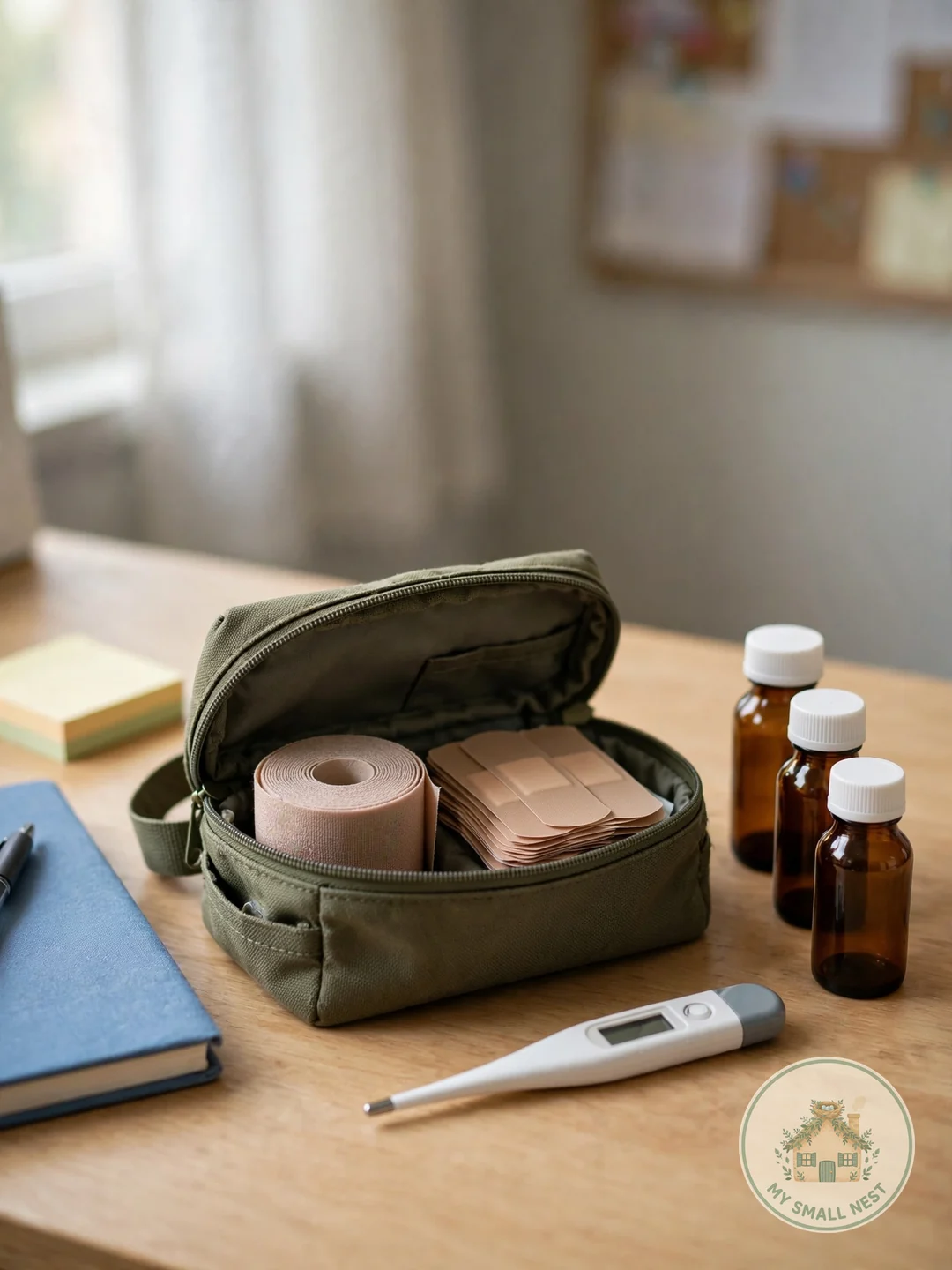
Freshman year delivers a parade of minor ailments: communal-living colds, late-night headaches, campus-walking blisters, dorm-sweeping stomach bugs. A small kit — pain relievers, cold medicine, bandages, antiseptic, allergy meds, a thermometer, plus any personal prescriptions — spares you miserable midnight pharmacy runs. Add your specific needs (inhaler, EpiPen, contact supplies), a copy of your insurance card, and your doctor’s number. Campus health centers handle bigger issues but close at 2 a.m. when the headache peaks. Try this: assemble the kit during back-to-school sales when supplies are cheapest, in one labeled pouch you can grab in seconds.
 Pin it
42. Add a Mattress Topper on Day One
Honesty time: dorm mattresses are thin, lumpy, vinyl-covered instruments of mild torture. A 2-to-3-inch memory foam topper is the highest-impact comfort purchase of your college career — students consistently call it the best money they spent freshman year. Better sleep, fewer morning aches, and a bed you actually want to be in matters when that bed is also your couch, desk chair, and theater. Look for CertiPUR-US certified foam and a washable cover, and bring a decent pillow from home instead of the flat freebie. Try this: order the topper before move-in so it waits at home — unbox it first and let it expand while you unpack everything else.
 Pin it
43. Keep a Mini Toolkit in Your Desk Drawer
Things break in dorms: desk-chair screws loosen, shelves wobble, curtain rods refuse to stay up, furniture needs assembling. A compact toolkit — multi-bit screwdriver, hammer, pliers, measuring tape, plus command strips and zip ties — handles the vast majority of dorm fixes in minutes. You will also become extremely popular during move-in week when everyone is assembling furniture. Keep it to a small desk-drawer pouch; you are not renovating. Command strips deserve the spotlight: they are the dorm-approved hanging method that protects your security deposit, so stock multiple sizes. Try this: do a 10-minute fix-it session after unpacking — tighten every screw and hang everything properly once, and it stays done.
 Pin it
44. Pack a Wheeled Laundry Hamper
You will haul laundry across the building weekly, and a flimsy bag that rips mid-hallway is a rite of passage nobody wants. A sturdy wheeled hamper with a handle turns laundry day into a five-minute roll down the hall. Choose one with a removable mesh bag so the whole bag goes into the washer, and consider a two-compartment model (lights/darks) to skip sorting entirely. Keep detergent, dryer sheets, and your laundry card or quarters inside so everything travels together. Try this: set a recurring phone reminder for laundry day — ‘out of underwear’ is a terrible planning system. And do laundry on weekday mornings or Sunday nights, never Sunday afternoon when every machine is taken.
 Pin it
45. Bring a First-Night Box for Move-In
Move-in day is chaos: long lines, packed elevators, emotional parents, belongings scattered across a dozen bins. A clearly labeled ‘first-night box’ with everything for the first 24 hours cuts straight through it: bedding and a pillow, toiletries and a towel, shower shoes, pajamas, a change of clothes, phone charger, medications, cleaning wipes, snacks. Unpack this box first and ignore everything else until tomorrow — you will sleep in a made bed instead of on a bare mattress surrounded by boxes. Label it obnoxiously — big letters, bright tape — so it never vanishes into the pile. Try this: pack the box last at home so it is the first thing you grab, and keep it in the car rather than the moving truck.
 Pin it
46. Add a Warm Desk Lamp for Late Nights
Overhead dorm lighting is harsh, fluorescent, and designed for interrogations rather than 11 p.m. essay writing. A warm-toned desk lamp (2700–3000K) transforms the room: easier on your eyes during late sessions, cozy instead of clinical, dimmable for winding down. Choose adjustable brightness and a flexible neck so light lands exactly where needed without blasting a sleeping roommate. LEDs run cool, sip electricity, and last for years. The lamp also creates a psychological boundary — on means focus time, off means the day is done — which helps your brain switch modes in a room where you live, sleep, and study. Try this: pair it with warm string lights for instant coziness that makes the dorm feel like home.
 Pin it
47. Pack a Swimsuit — Spontaneous Plans Happen
It sounds random until the moment arrives: a friend’s apartment pool, a lake trip, a spontaneous beach weekend, a dorm hot-tub night — and everyone who packed a swimsuit is having fun while everyone else sits out. A swimsuit occupies almost zero space and weighs nothing, so there is no reason to skip it. Apply the same logic to a few ‘just in case’ categories: workout clothes (campus gyms are free and excellent for stress), one nice outfit (presentations, dinners, surprise formals), layers for erratic weather. Try this: while packing, ask ‘what would make me say no to a fun plan?’ and pack the three items that fix it.
 Pin it
48. Agree on a Cleaning Schedule in Week One
Nothing poisons a roommate relationship faster than unspoken resentment about mess. In week one — while the honeymoon phase still holds — agree on a cleaning schedule: who vacuums, who handles trash, who cleans the bathroom if it is private, and how often. Write it down and post it somewhere visible. Specificity is everything: ‘keep common areas tidy’ means nothing, while ‘vacuum Sundays, trash out Tuesdays and Fridays’ actually works. Add a monthly 10-minute check-in to adjust what is not working before it becomes a fight. Try this: frame it positively — ‘let us build a system so we never argue about this’ — over pizza in the first week.
 Pin it
49. Write a Roommate Agreement Early
Your housing office’s roommate agreement is not just paperwork — it is the most important awkward conversation of your year, and having it early prevents nearly every classic roommate conflict. Sit down in the first two weeks and cover the real topics: sleep schedules and quiet hours, guests and overnight visitors, sharing food and supplies, thermostat settings, and how you will handle problems. Write it down and both sign; the formality is the point, giving you something neutral to reference later instead of arguing from emotion. Revisit it after month one, when you will have discovered things you never anticipated. Try this: run it as a fun getting-to-know-you activity with snacks, not a legal negotiation — honesty now saves the friendship later.
 Pin it
50. Put Shared Costs in Writing
Money between friends gets awkward fast, and roommates share plenty of small expenses: cleaning supplies, toilet paper, a shared fridge, streaming accounts, split groceries. Decide upfront how shared costs work — even 50/50 splits, taking turns, or an app like Splitwise — and settle up promptly. Letting $8 here and $15 there accumulate for two months breeds quiet resentment that detonates over something trivial. Log purchases the moment they happen; it takes ten seconds. For bigger shared buys (a rug, a microwave), agree in writing who owns what at move-out. Try this: create a Splitwise group on day one and add every shared purchase immediately — nobody ever has to start the awkward ‘you owe me’ conversation.
 Pin it
51. Protect Your Sleep With White Noise
You and your roommate will almost certainly keep different sleep schedules — and in a small shared room, someone’s 2 a.m. gaming session is everyone’s problem. Defend your sleep like your GPA depends on it, because it does. A white noise machine or app masks hallway noise, snoring, and late-night typing; a contoured sleep mask blocks the desk lamp your roommate needs. Agree on quiet hours together (midnight to 8 a.m. on weeknights is a common starting point) and honor them even when your schedules differ. If you are the night owl, comfortable sleep earbuds and a well-aimed light keep the peace. Try this: have the sleep conversation in week one alongside the cleaning schedule — ‘what do we each need to sleep well?’ — before bad habits form.
 Pin it
52. Don't Limit Yourself to One Friend Group
High school gave you one friend group; in college, clinging to a single circle is the fastest route to feeling trapped by sophomore year. Dorm-floor friends, major classmates, club people, coworkers, gym buddies — these can all be different groups, and that is healthy. Different circles meet different needs: study partners, deep conversations, pure fun, professional networking. If one group drifts or hits drama, you are not left with nothing, and multiple groups keep you from morphing into whoever surrounds you most. Try this: aim for at least three separate social contexts by the end of the first semester — dorm, classes, and one club or activity.
 Pin it
53. Everyone Wants Friends — Say Hi First
Here is the secret nobody tells freshmen: almost everyone is nervous and lonely in the first weeks, and almost everyone is waiting for someone else to move first. The student who says hi first, sits with strangers at orientation, and suggests food after class is not being weird — they are doing what everyone wishes they had the courage to do. College friendships form through repeated, low-stakes contact: your hall, your discussion section, your club meetings. You do not need a perfect opener; ‘hey, I am new here too, mind if I sit with you?’ works every time. Try this: set a daily goal for the first month — one genuine conversation with someone new each day.
 Pin it
54. Join One or Two Clubs and Actually Show Up
Clubs are the easiest friendship engine on campus, but the freshman mistake is joining twelve at the activities fair and attending none. Choose one or two that genuinely excite you — not what flatters a résumé — and show up consistently. Consistency is the entire game: the third meeting turns strangers into acquaintances, the tenth into real friends. Clubs also deliver leadership experience, skills, and stories classes never provide, plus an instant community of shared interests. Look past the obvious: intramurals, cultural organizations, volunteer groups, wonderfully weird niche clubs. Try this: commit to your chosen clubs for the full semester before judging — the payoff compounds with attendance.
 Pin it
55. Follow Your School's Social Accounts for Free Events
Some of the best parts of college cost nothing: quad concerts, movie nights, food-truck festivals, career fairs, comedy shows. Your school announces them constantly — on Instagram, TikTok, X, and old-fashioned flyers — but only students following the right accounts ever hear about them. Follow your university’s main account, the student activities board, your dorm’s account, and a few major campus organizations in week one, with notifications on for the activities board so you catch ticket drops. Campus events are also low-pressure social gold: everyone is there to have fun, and conversation starters are built in. Try this: say yes to one campus event per week for the first two months — your social life will largely build itself.
 Pin it
56. Don't Fear Eating Alone in the Dining Hall
Walking into the dining hall alone the first time feels like the whole room is watching. It is not — everyone is occupied with their own meal, friends, and phone. Eating alone is a normal adult skill, and college is an ideal place to learn it. Bring a book, catch up on a show, review notes, or simply people-watch; solo meals can become genuinely peaceful breaks in a hectic day. Crucially, do not skip meals for lack of company — that is how eating patterns go sideways. And dining halls double as meeting grounds: asking to join a table or sitting near classmates sparks real conversations. Try this: reframe solo dining as independence practice — confident people eat alone without a second thought.
 Pin it
57. Put Your Phone Away and Be Present
You will take a thousand photos in college and remember almost none of the moments if you live behind the screen. At concerts, dinners, sunsets, and late-night conversations, choose deliberately: take the group picture, then pocket the phone and talk to the people in it. This is not a no-photos rule — it is a be-where-you-are rule. You will also simply notice more: the campus in fall, the 2 a.m. conversations that become legends. Presence is a social superpower, too — people gravitate toward those who actually listen instead of half-scrolling. Try this: make the first 30 minutes of any hangout phone-free, yours face-down in your pocket, and watch the conversation improve.
 Pin it
58. Keep a Hobby Outside Campus Life
When every part of your identity becomes ‘college student,’ burnout follows. Keep at least one hobby disconnected from your GPA, major, or résumé — running, painting, gaming, hiking, baking, photography, learning guitar badly. Off-campus hobbies are especially valuable: they give you a world beyond the campus bubble and friends who never mention midterms. Hobbies are your pressure valve; when classes intensify, something you do purely for joy protects your mental health better than another study hour. Do not monetize it, do not optimize it. Try this: block two hours weekly as sacred hobby time, defended like an unskippable class.
 Pin it
59. Capture Memories Without Missing the Moment
Document your college years — future you will treasure the photos — without experiencing freshman year through a six-inch screen. The rule is simple: capture the memory, then rejoin the moment. Snap the sunset, then watch it. Take the group photo at the party, then dance. Film the concert opener, then actually listen. Constant filming does not just cost you the experience; it makes you the person everyone finds annoying. A useful test: if you are watching the event through your phone instead of your eyes, put it away. Try this: allow one ‘photographer moment’ per event — the group shot — then go phone-free for the rest.
 Pin it
60. Share Your Location on Nights Out
College nights out are fun until someone cannot find their friend at 1 a.m. Make it non-negotiable: whenever you head out — parties, concerts, unfamiliar neighborhoods — at least one trusted person holds your live location, and you hold theirs. Share it before you leave, not after something feels wrong. Go in groups, arrive together, actually leave together; the buddy system is not just for kindergarten. Keep your phone charged — a portable charger is safety equipment, not a luxury — know your address, and save the campus safety escort number. Try this: make a pact with your core group in September — nobody gets left behind, ever, no exceptions.
 Pin it
61. Trust Your Gut — Leave When It Feels Off
Your instincts are a safety system refined over millennia — listen to them. If a party feels wrong, a person gives you a bad vibe, a walk home feels unsafe, or a situation is escalating, you need no justification to leave. ‘I have to go’ is a complete sentence. Too many freshmen override their gut to avoid seeming dramatic, rude, or uncool — but people worth keeping never mock you for prioritizing safety. Prepare exit strategies in advance: a friend you can text a code word, a rideshare app with payment saved, the campus escort number in your contacts. Try this: decide your boundaries before going out, while clear-headed, so you are not negotiating with yourself later.
 Pin it
62. Know Your Limits and State Them
College freedom includes the freedom to say no, and knowing your limits in advance is what keeps fun from curdling into regret. Decide before you go out — not in the moment — what you are comfortable with: how much you will drink, if at all; when you will head home; which situations you will walk away from. Eat a real meal beforehand, pace yourself with water between drinks, and never accept a drink you did not see poured. ‘No’ needs no explanation, and real friends respect it instantly — anyone who pressures you past a clear no is telling you exactly who they are. Try this: tell a trusted friend your limits before the night begins so they can back you up.
 Pin it
63. Make Sleep a Study Strategy
Sleep is not the enemy of good grades — it is the foundation of them. All-nighters feel heroic, but the evidence is consistent: sleep-deprived brains cannot form memories properly, so those 4 a.m. study hours barely stick. Students sleeping seven to eight hours consistently outperform crammers on every measure that matters. Treat sleep as a study strategy: keep a roughly consistent bedtime (weekends included), wind down screen-free for 30 minutes, and protect your sleep environment with earplugs, an eye mask, or white noise. Naps are legitimate tools — a 20-minute power nap beats another coffee. Try this: for one week, prioritize eight hours over extra studying and compare your focus; most students never go back.
 Pin it
64. Use the Free Counseling Center
Freshman year is an emotional obstacle course — homesickness, academic pressure, identity shifts, relationship changes, loneliness can all hit at once — and that is normal, not a personal failing. Every college has a counseling center, free or nearly free because your fees cover it, and no problem is too small: homesickness, grade anxiety, roommate tension are exactly what it exists for. Going early — before a rough patch becomes a crisis — makes it far more effective. Also look into peer support groups and wellness workshops. Try this: save the counseling center’s number and walk-in hours in your phone during week one, so reaching out later takes zero effort.
 Pin it
65. Learn Where Campus Blue-Light Phones Are
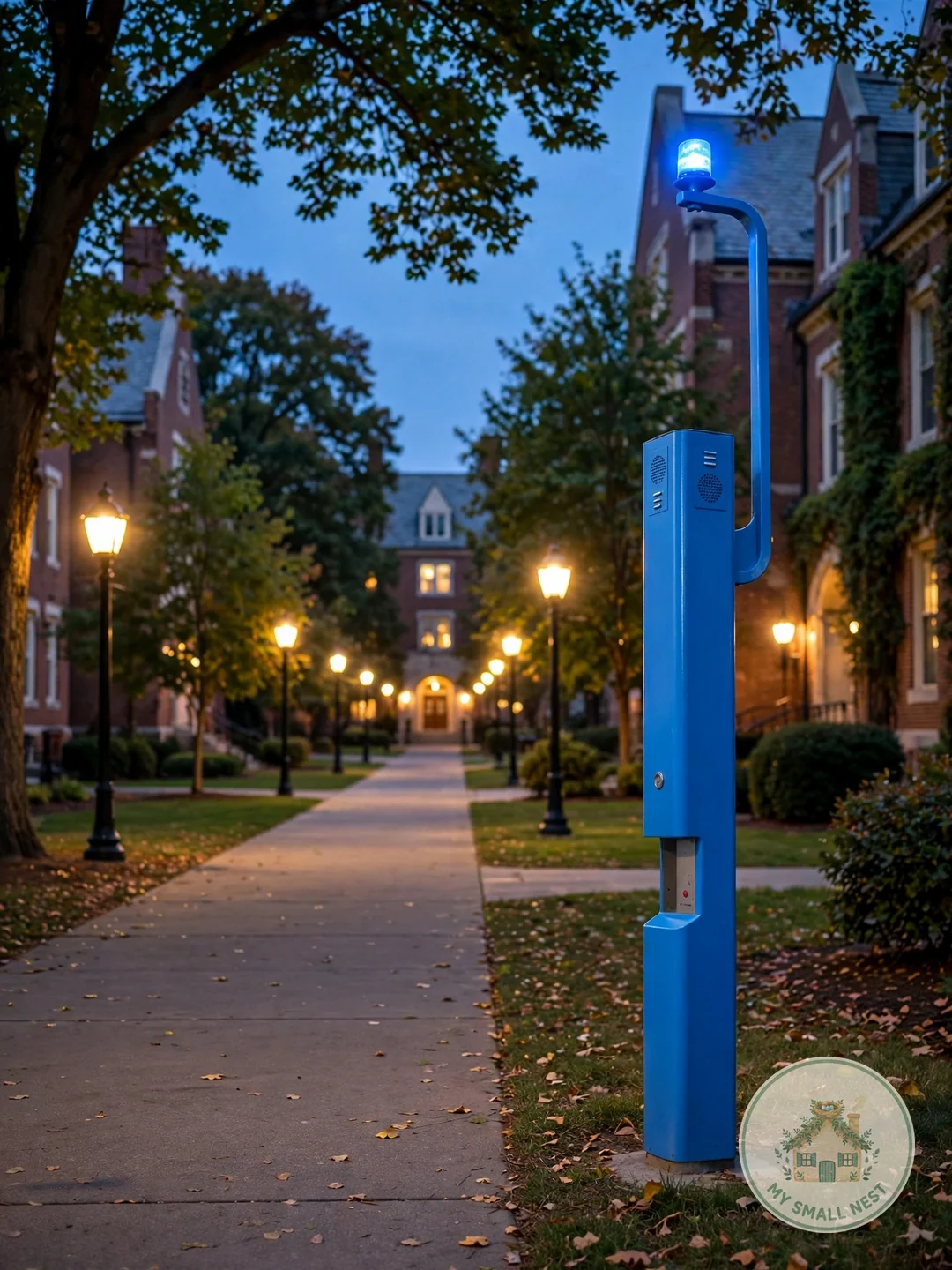
Every campus has emergency blue-light phones — tall poles with blue lights connecting directly to campus security. In your first week, note their positions along your regular routes, especially paths you would take at night. Save campus security’s emergency and non-emergency numbers, and check whether your school offers a safety app (many include virtual walking escorts and emergency buttons). Also learn the late-night transportation options: shuttles, escort services, well-lit main paths. This is preparedness, not paranoia — the same reason you learn where the fire exits are. Try this: walk your main routes one evening in the first week, while it is still light, to spot lighting, phones, and safe shortcuts.
 Pin it
66. Limit Social Media When It Hurts Your Grades or Mood
Social media is a highlight reel that makes everyone else’s college life look perfect while you sit in your dorm feeling behind. If scrolling leaves you anxious, inadequate, or unable to study, that is data, not a character flaw. Curate aggressively: mute accounts that trigger comparison, limit party pages, and notice how you feel after 20 minutes of scrolling versus 20 minutes of anything else. Use screen-time limits during study hours, and replace rather than just remove the habit: call a friend, take a walk, actually study. Nobody posts the failed midterm, the lonely Friday night, or the 3 a.m. anxiety. Try this: run a one-week social media audit — track your mood before and after scrolling, then adjust.
 Pin it
67. Be Selfish With Your Time
Your time and energy are finite, and college will happily spend both for you: clubs want your evenings, friends want your weekends, group projects want your sanity. Guarding your time is not rude — it is how you protect sleep, studying, and your own goals. Learn to decline plans that do not serve you without writing a paragraph of excuses; ‘I cannot, I have plans’ is enough (your plans may be alone time). Audit commitments monthly: anything that consistently drains without giving back gets dropped. The students who burn out are rarely the ones who do too little — they are the ones who never learned to guard their calendar. Try this: keep one weeknight completely unscheduled as sacred recharge time, defended like a final exam.
 Pin it
68. Call Home When You're Homesick
Homesickness strikes almost every freshman — often around week three, when the excitement fades and routine sets in. It is not weakness; it is proof you have people worth missing. Call home when you need to, without guilt. A familiar voice can reset a terrible day in ten minutes. Find a sustainable balance, though: calling five times daily can stall your new life, while never calling breeds isolation. Try a weekly rhythm — a Sunday family call plus texts through the week — and be honest with your family about how you feel; they have likely been through this. Try this: schedule the weekly call so it is something to look forward to, instead of only calling when already upset.
 Pin it
69. Remember Your Why on Hard Days
On the hard days — the failed quiz, the lonely weekend, the 2 a.m. doubt spiral — reconnect with why you came. Maybe it is a career you have dreamed about since childhood, stability for your family, proving something to yourself, or simply becoming who you are meant to be. Write your ‘why’ where you will see it: a sticky note on the mirror, your phone wallpaper, the first page of your planner. When motivation evaporates — and it will, regularly — named purpose and discipline carry you, but only if you defined them in advance. Your why need not be grand; ‘I want options’ is enough. Try this: write a letter to your future graduated self about why you started, and open it senior year.
 Pin it
70. Give Yourself Grace — You're Learning
You will mess up freshman year. A bombed quiz, an awkward comment, a missed deadline, the wrong friends, tears in a stairwell — probably all of them. That is not failure; that is the curriculum. College is designed as the place to make mistakes with a safety net, and every upperclassman carries a disastrous-first-semester story. The only genuine mistake is treating a stumble as a verdict on your worth. Learn the lesson, adjust, move forward — resilience is built exactly this way. Talk to friends about the hard parts; you will discover everyone is struggling, not just you. Try this: when something goes wrong, ask ‘what would I tell a friend in this situation?’ — then take your own advice.
 Pin it
Common Mistakes to Avoid
Skipping Class Because Nobody Checks
No one takes attendance in a 300-person lecture, but skipping remains the fastest route to a bad grade. You miss the professor’s emphasis cues, exam hints, and participation goodwill. Go — especially the first two weeks.
Buying Every Textbook New From the Bookstore
The campus bookstore is the priciest option for nearly everything. Waiting until after the first class, then renting or buying used from student groups, saves hundreds per semester.
Waiting Until Finals to Ask for Help
Tutoring centers, office hours, and counseling work best when you use them early. Freshmen who wait until they are drowning get far less from the same free resources.
Saying Yes to Everything and Burning Out
Twelve clubs, a part-time job, and a packed social calendar sounds ambitious until October. Guard your time, keep one unscheduled night a week, and drop commitments that drain you.
Frequently Asked Questions
What are the most important tips for college freshmen?
The highest-impact habits: read every syllabus on day one, introduce yourself to professors, set a weekly budget, join class group chats, use the free tutoring center before you struggle, and protect your sleep. Master these six in the first month and the rest of freshman year gets dramatically easier.
How can freshmen save money in college?
Rent or buy used textbooks from student groups instead of the campus bookstore, thrift dorm essentials like mini-fridges, shop dollar stores for basics, ask for student discounts everywhere, stack fast-food app rewards, file FAFSA on opening day, and keep applying for scholarships every semester. These habits save most freshmen a significant amount each year.
What should I pack for my freshman dorm room?
The essentials: shower shoes, a power strip with surge protection, a fan, a mattress topper, a small vacuum, a wheeled laundry hamper, a first-aid kit, an umbrella, and a mini toolkit. Pack a capsule wardrobe instead of your whole closet, and bring a labeled ‘first-night box’ with bedding, toiletries, and chargers so move-in day stays sane.
How do I make friends as a college freshman?
Everyone is looking for friends the first few weeks, so say hi first. Join one or two clubs and show up consistently, attend campus events, eat in the dining hall (even alone), join class group chats, and keep your dorm door open during the first month. Friendships form through repeated low-stakes contact, not one perfect conversation.
What should I do if I'm struggling academically freshman year?
Act early: visit professors’ office hours, use the free tutoring and writing centers, and join study groups before midterms — not after. If a class is unsalvageable, withdrawing strategically beats a GPA-crushing F. One bad grade or even a failed course is recoverable; meet with your advisor to make a retake plan and adjust your study habits.
Freshman year will not be perfect — and that is exactly the point. You will collect these 70 college tips the hard way or the easy way, and now you get to choose the easy way. Start with the big wins: read your syllabi, meet your professors, budget your money, protect your sleep, and say hi to strangers. The rest you will figure out as you go, one semester at a time.
Four years from now, you will be the upperclassman giving this advice to nervous freshmen — and you will mean every word. Save this guide, share it with your roommate, and go make your first year count. You have got this.



What readers are saying
No comments yet — yours could be the first.