 My Small Nest
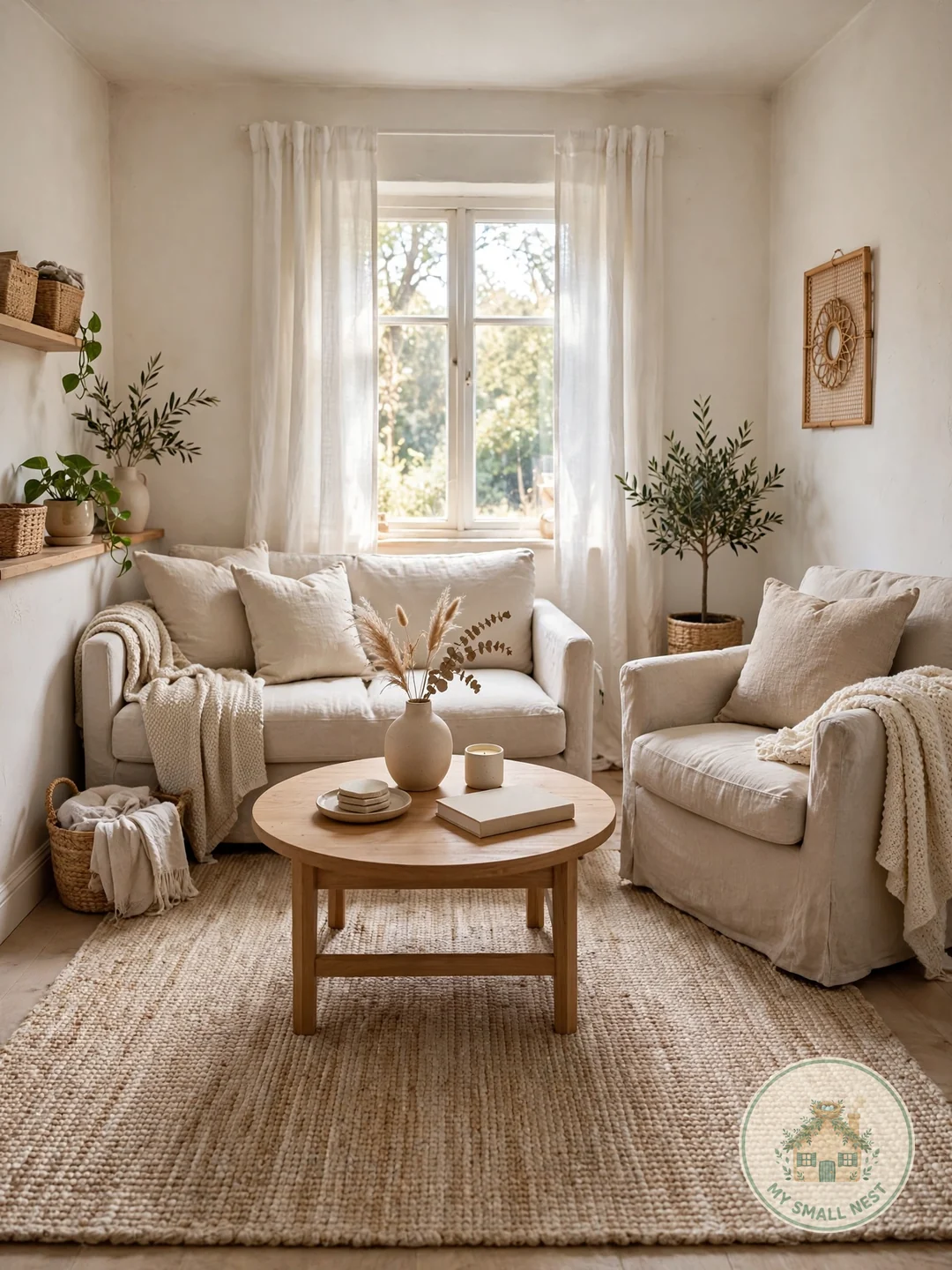
I bought the wrong rug twice for my studio — the first one swallowed the room, the second looked like a postage stamp floating under the sofa. The third one, a 5×8 with my sofa’s front legs sitting on it, finally made my 380 sq ft feel like a real living room.
If your small living room rug feels “off” and you cannot quite say why, these 8 living room rug ideas are for you. They cover sizing, color, pattern, and the practical stuff — including the one sizing rule that fixes 90% of rug mistakes.
1. Size Up — Let Furniture Sit on the Rug
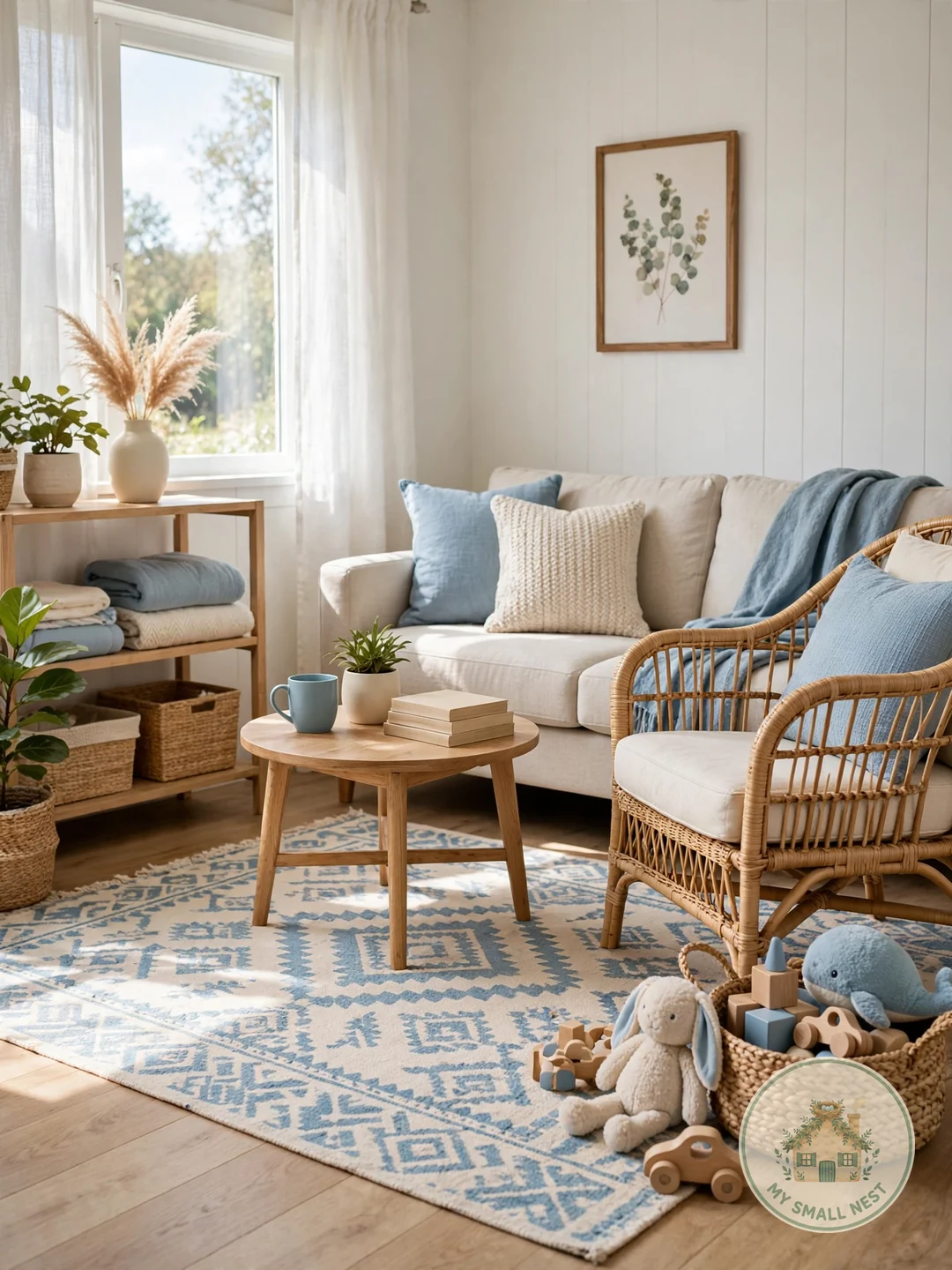
The number-one small-room rug mistake is going too small: in a compact living room, aim for a 5×8-foot rug (or 6×9 if the room allows) with at least the front legs of your sofa and chairs resting on it. A larger rug makes the floor read as one continuous surface, which tricks the eye into seeing a bigger room — a too-small rug chops the floor into fragments and shrinks everything visually. Leave 12 to 18 inches of bare floor between the rug’s edge and the walls so it looks intentional rather than wall-to-wall. Budget reality check: decent 5×8 low-pile rugs run $60-120 at IKEA, Target, or Rugs USA.
Make it work: Tape the outline on your floor with painter’s tape before you buy — living with the footprint for a day prevents the most expensive rug mistake there is. Photograph the taped outline from the doorway; the camera reveals proportion errors your eyes miss.
 Pin it
2. Go Light to Keep Things Airy
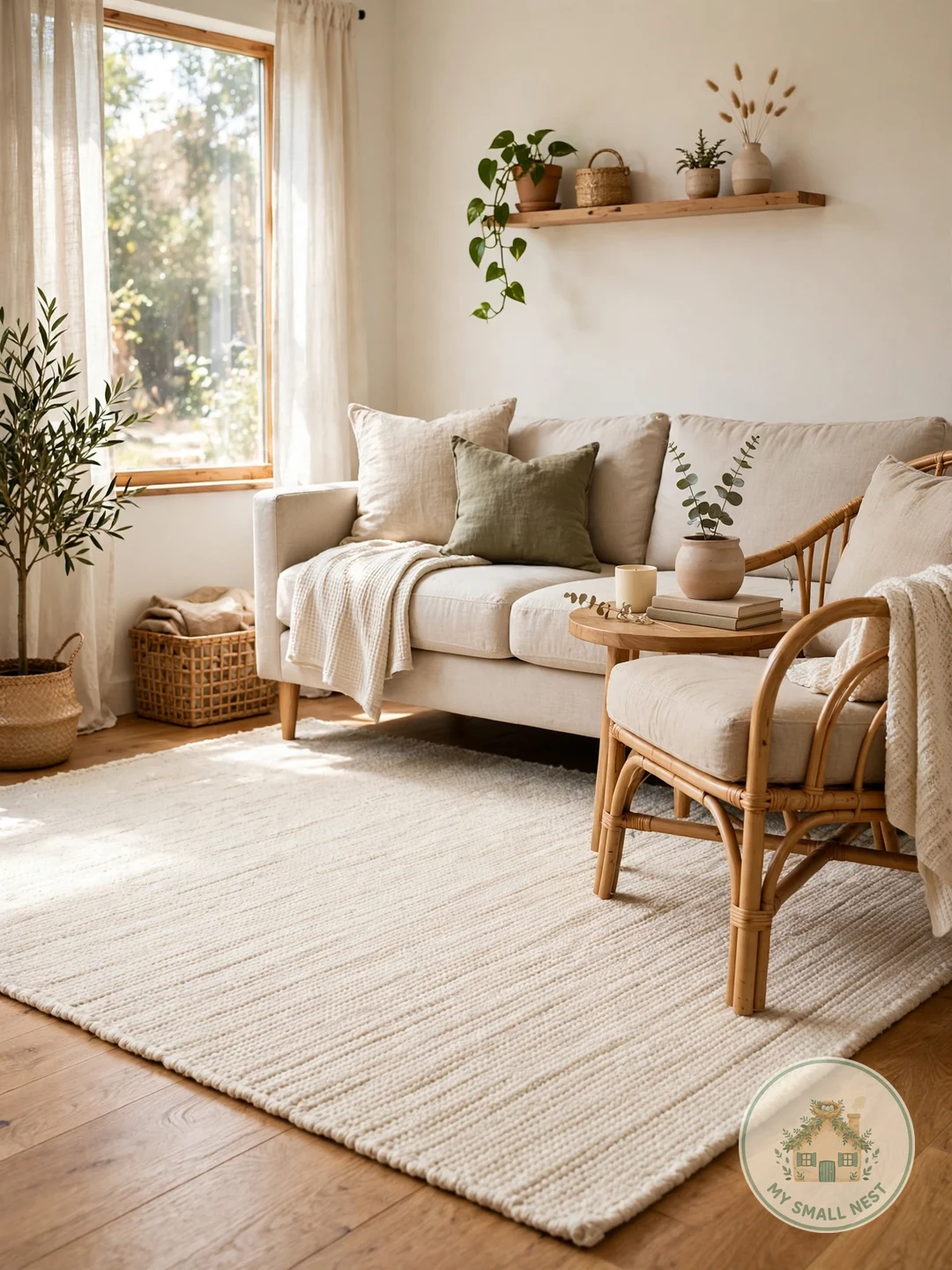
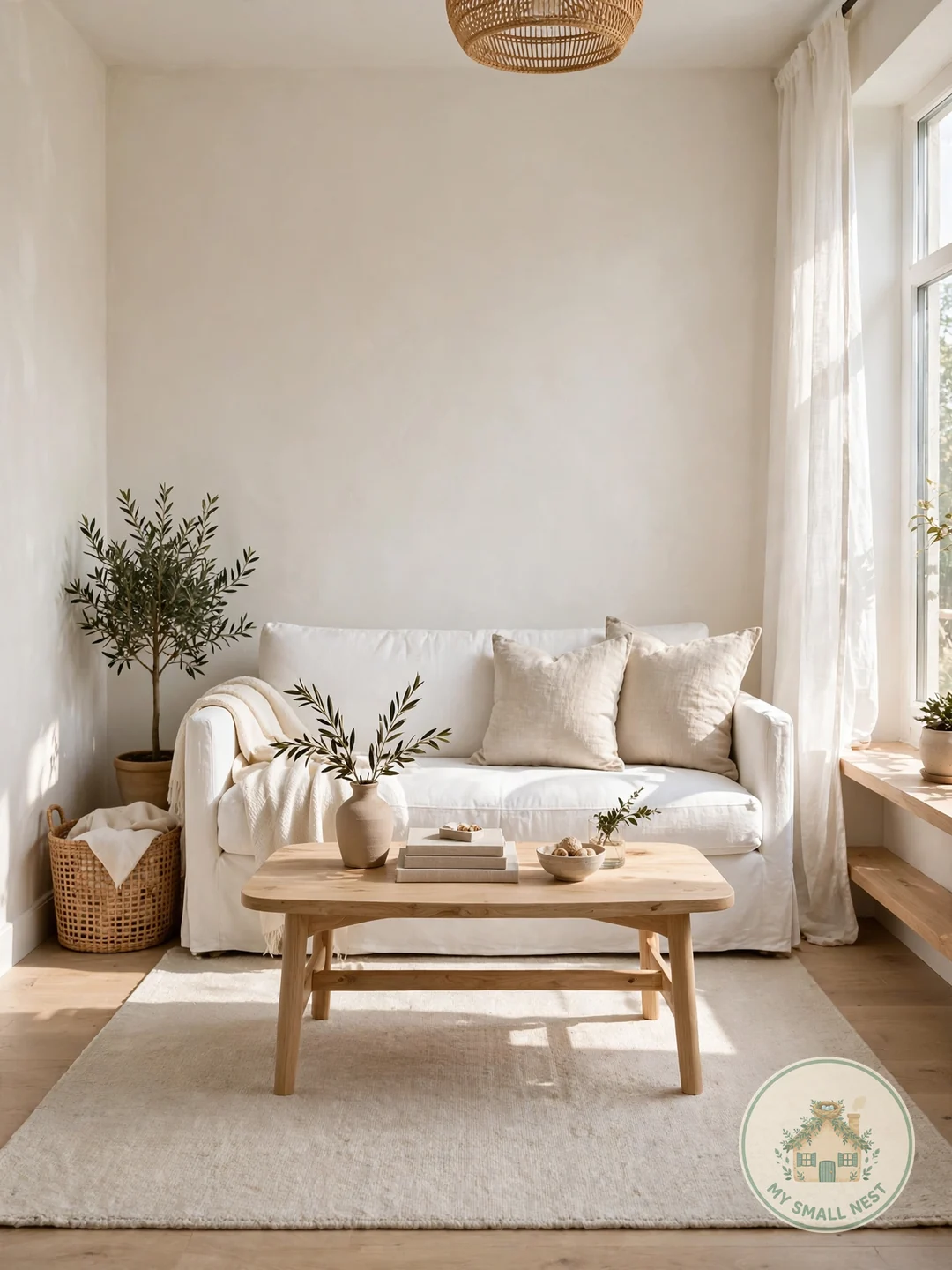
Light and medium-tone rugs — ivory, oatmeal, soft gray — bounce light around and keep a small room feeling open, while dark rugs visually anchor the floor and can close a tiny room in. That does not mean boring: texture (a nubby weave, a subtle tone-on-tone pattern) gives a pale rug all the interest of a dark one without the visual weight. If you love dark, balance it — a dark rug demands light walls and light upholstery to avoid the cave effect. And the stain anxiety that keeps people from going light? Washable cream rugs ($80-150 for 5×8 at Ruggable or Tumble) solve it completely.
Make it work: I tried a cream rug in my studio after years of dark ones — the room genuinely feels bigger, and the washable cover means I am not stressed about it. Vacuum light rugs twice weekly; they show crumbs faster than dark ones, but a quick pass keeps them fresh.
 Pin it
3. Stretch the Room with Stripes
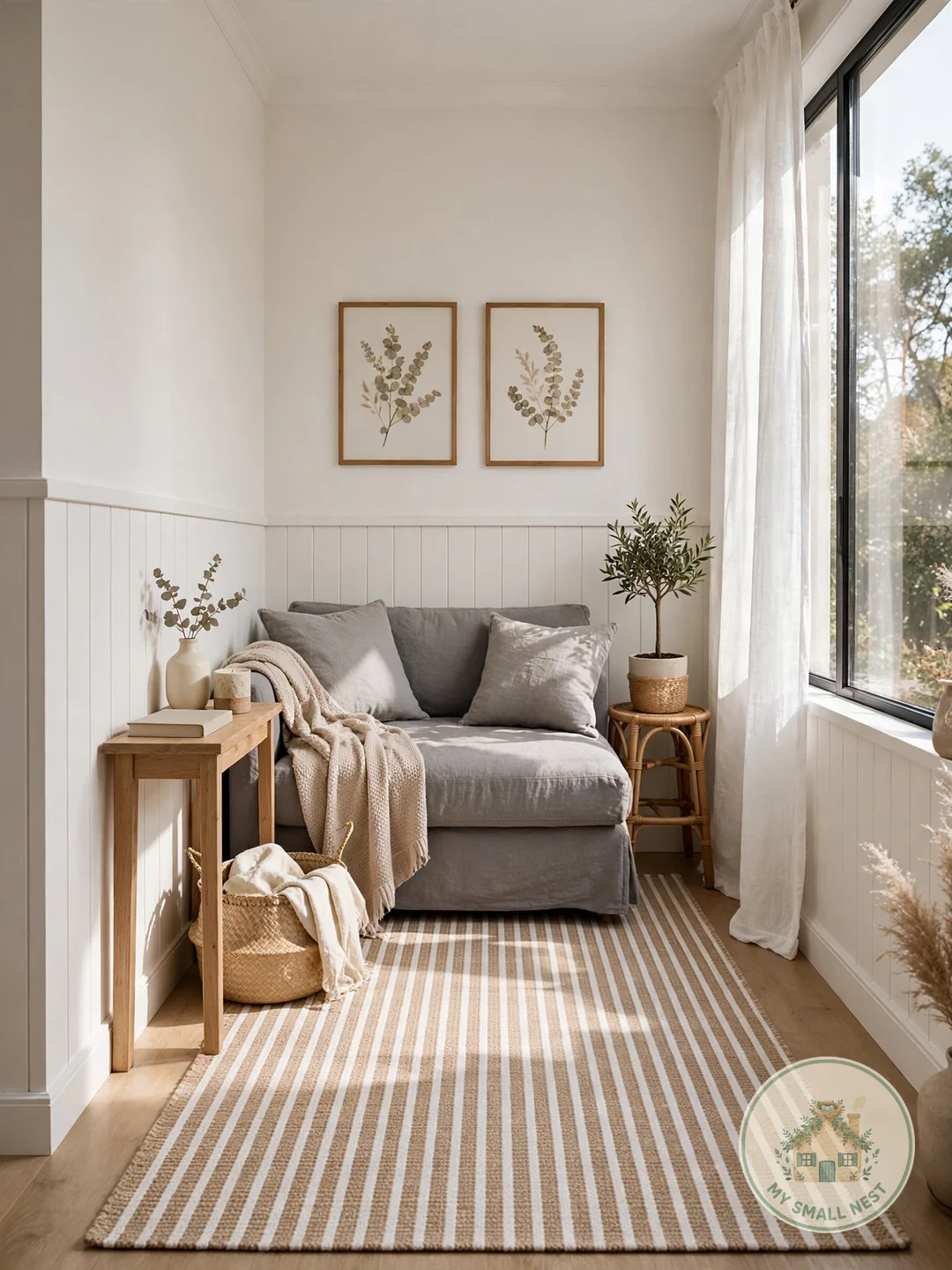
Stripes are the oldest spatial trick in decorating: run them lengthwise, parallel to the room’s longest wall, and the floor appears to stretch in that direction. A 5×8 striped flat-weave ($50-100 at IKEA, Target, or World Market) adds pattern without the visual noise of a busy print — from across the room, stripes read as texture, not pattern. Keep the stripe contrast low (tone-on-tone) in very small rooms; high-contrast stripes energize the space but can overwhelm anything under 150 square feet.
Make it work: Orient the stripes toward the focal point — usually the TV wall or the main window — so the eye travels the long way and the room feels extended. Perpendicular stripes will visually shorten the same room, so direction matters.
 Pin it
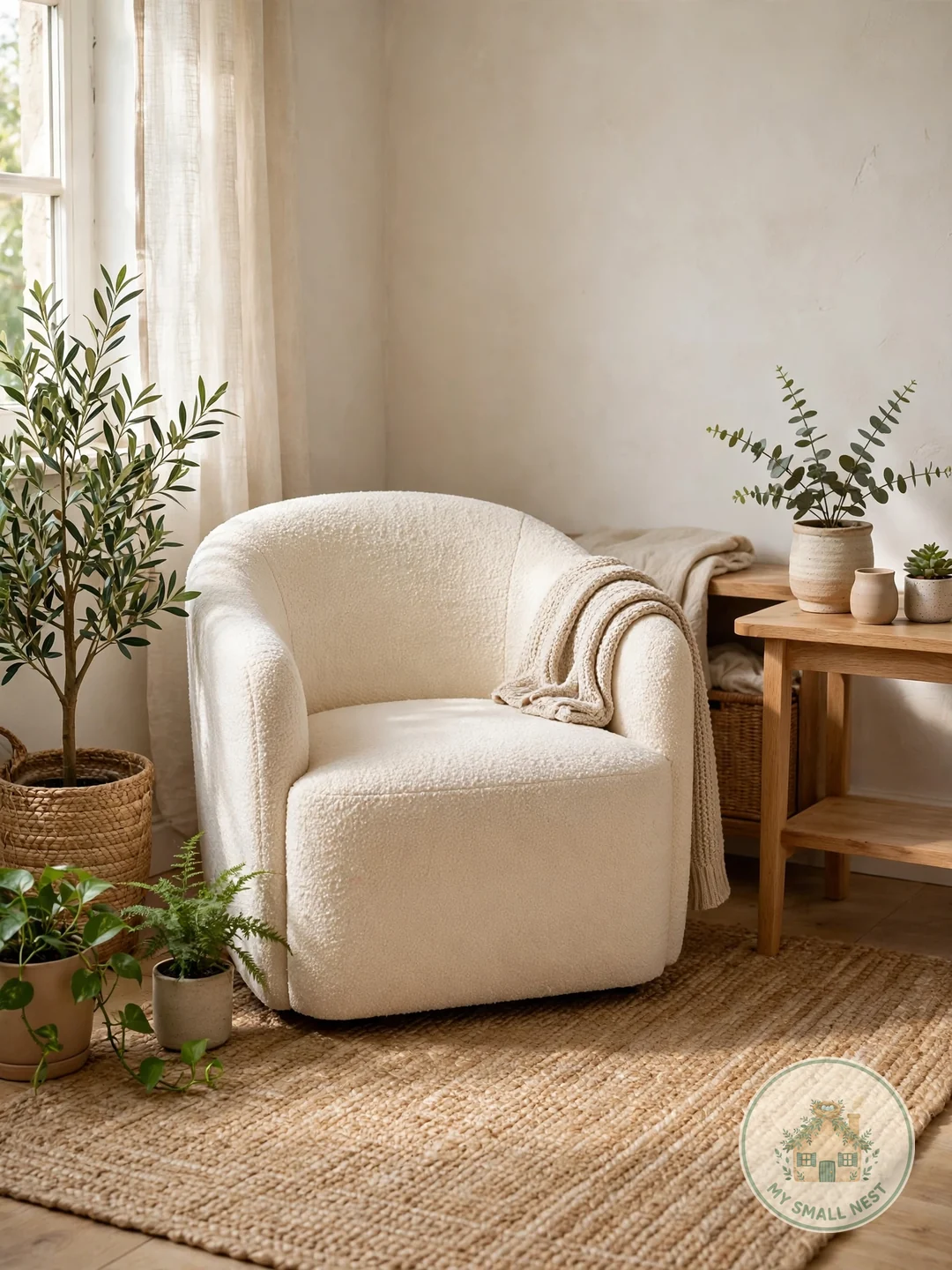
4. Ground the Space with Natural Jute
A natural jute rug ($70-140 for 5×8 at IKEA, Rugs USA, or World Market) adds the warmth and texture that small, hard-floored rooms desperately need — and its neutral tone works with literally any color scheme you already have. Jute’s chunky weave hides crumbs and pet hair better than any smooth rug, a real gift in a small space where every mess shows fast. The one caveat: jute and moisture do not mix, so keep it away from exterior doors and plant-watering zones. If bare feet find jute scratchy, layer a soft rug on top (see idea 6) — problem solved.
Make it work: Buy jute with a tight, uniform weave — loose weaves shed for months and snag on chair legs. A $20-25 rug pad underneath stops the shedding from migrating across your floors and adds cushioning.
 Pin it
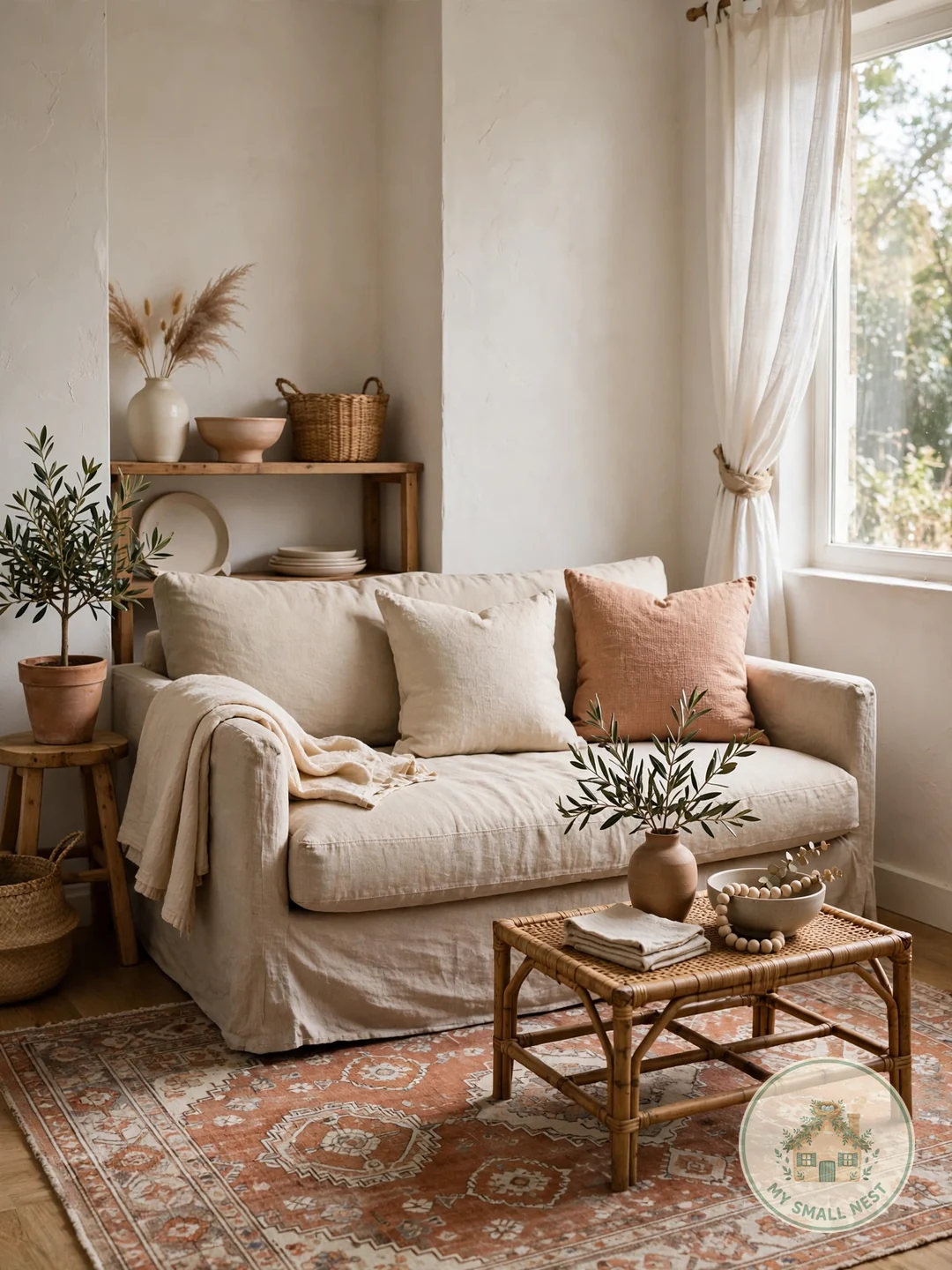
5. Add Character with a Muted Vintage Pattern
A vintage-style rug in faded terracotta, dusty blue, or muted sage ($80-160 for 5×8 at Rugs USA, Loloi, or Target) gives a small room instant character without the visual chaos of a bold new pattern — the “faded” finish is actively doing you a favor. These rugs hide stains, pet hair, and wear better than any solid color, which matters enormously when the whole room is 200 square feet. Keep the rest of the room’s pattern quiet (solids and textures) so the rug can be the star without competition. Low-pile polypropylene versions are the most forgiving choice for pets and kids.
Make it work: Pull one muted color from the rug for your throw pillows — that single echo is what makes a patterned rug look “designed” instead of random. Two echoes maximum; more than that and the room starts matching too hard.
 Pin it
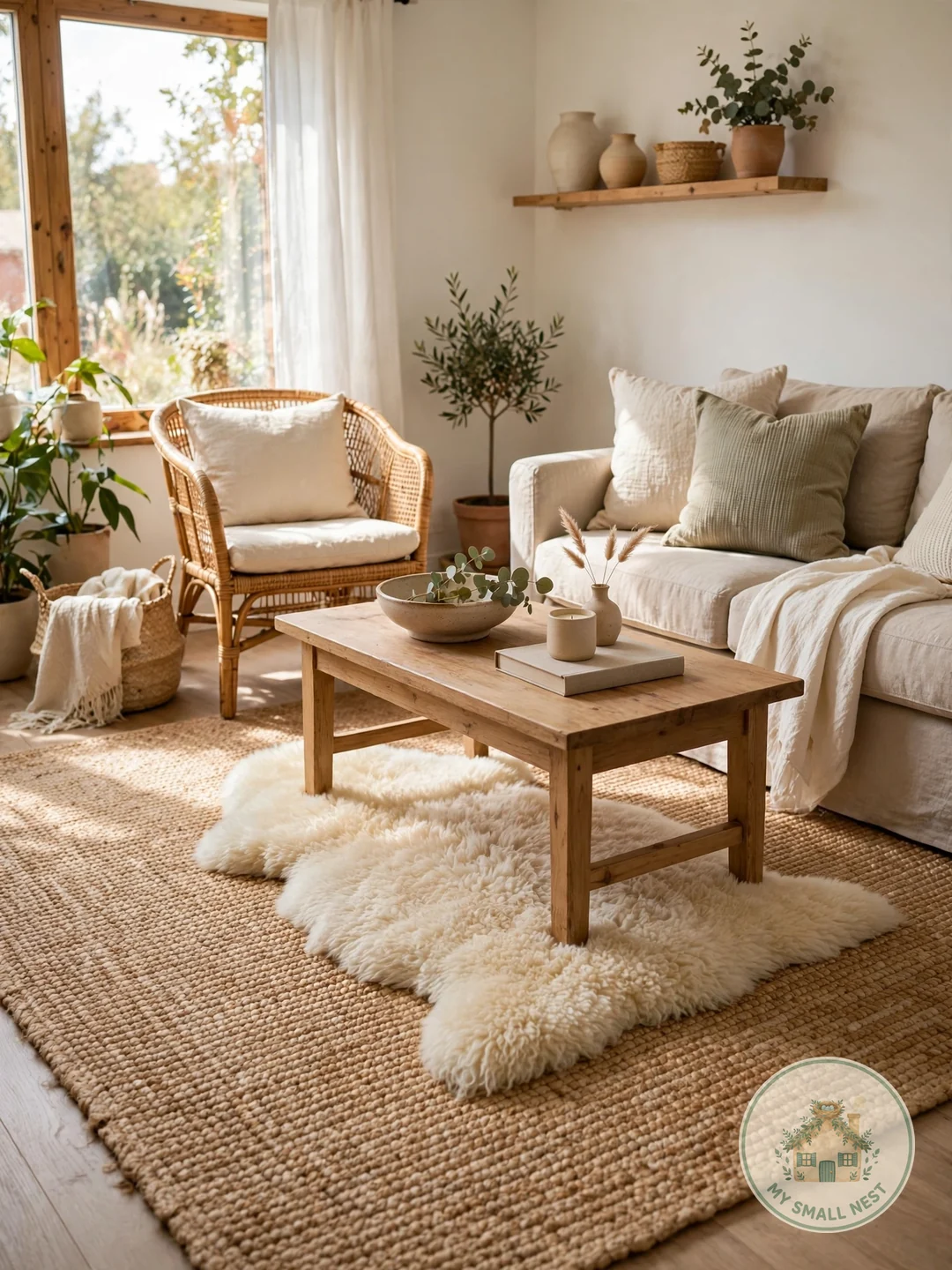
6. Layer Two Rugs for a Designer Look
Layering — a large flat base rug with a smaller, softer rug on top at a slight angle — delivers the plush designer look for less than one premium rug costs. Start with a 5×8 jute or plain cotton base ($60-100), then layer a 3×5 vintage-style or sheepskin-look rug ($40-80) on top, offset by 6 to 12 inches. The base defines the zone; the top adds softness exactly where feet land. Total: $100-180 for a look that reads $400 or more. Use $8 rug tape between the layers so the top rug does not wander across the room.
Make it work: I tried this in my studio — jute base plus a small vintage-look rug angled under the coffee table, and visitors assume it was one expensive piece. Keep the top rug’s pattern bolder than the base; two competing patterns fight, but bold-over-quiet sings.
 Pin it
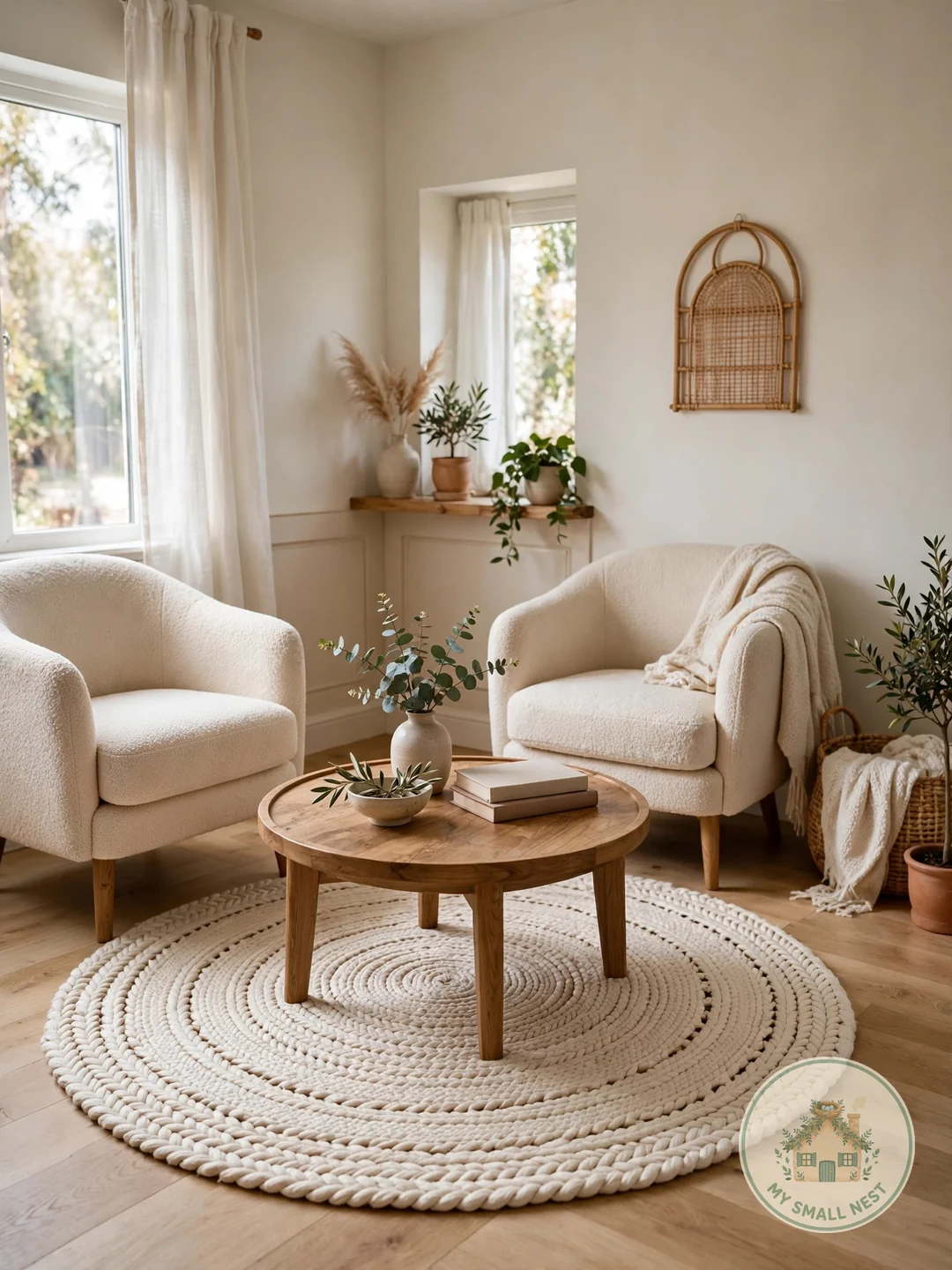
7. Soften Corners with a Round Rug
In a boxy small room, a round rug breaks up all the rectangles — try one under a round coffee table, in a reading corner with an armchair, or centered in a square seating area. A 5 to 6-foot round rug ($70-130 at IKEA or Rugs USA) follows the same front-legs-on rule: at least the chair’s front legs should sit on it. Round rugs also solve awkward layouts where a rectangle would collide with doorways or traffic paths. The curved edge tricks the eye into seeing flow instead of corners, which makes tight rooms feel less cramped.
Make it work: Center the round rug on the room’s focal point — fireplace, main window, or coffee table. An off-center round rug looks like a mistake, while an off-center rectangle just looks casual; circles demand precision.
 Pin it
8. Choose Washable for Real Life
In a small living room, the rug takes all the traffic — which is why a machine-washable rug ($90-180 for 5×8 at Ruggable, Tumble, or Revival Rugs) is the most practical choice you can make. The two-piece system (washable cover plus pad) means red wine, pet accidents, and mystery stains go in the washing machine instead of becoming permanent residents. Wash the cover every 2 to 3 months, or after any big spill, and it comes out looking new. The flat profile also means doors clear it easily and robot vacuums climb it without a struggle.
Make it work: Buy the pad the brand recommends — third-party pads can be too thick for the cover’s zipper, and a lumpy washable rug defeats the entire purpose. Wash cold and line-dry the cover to keep the fit perfect.
 Pin it
Mistakes to Avoid
Buying too small
The classic error, and the most common one. When in doubt, go one size up — a rug that is slightly too big always looks better than one that is slightly too small, and it makes the room feel larger too.
Matching the rug to the wall color exactly
A rug the same color as the walls or sofa disappears into the background. Aim for contrast in tone even if the palette stays neutral — the rug should define the seating area, not camouflage into it.
Skipping the rug pad
No pad means slipping, bunching, and faster wear. A $20-30 pad extends the rug’s life by years, adds comfort underfoot, and — critically — keeps the rug from migrating across hard floors.
Choosing high pile for a busy room
Shaggy rugs trap crumbs and show traffic lanes fast, which is brutal in a small room where every inch is high-traffic. Low pile or flat-weave handles daily life better and is far easier to clean.
Ignoring the door swing
A thick rug under a door that drags across it will frustrate you every single day. Check the clearance before buying, or choose low pile for any rug near a door — measure the gap, not just the room.
FAQs
What size rug is best for a small living room?
Go as large as the room allows — usually 5×8 feet for a small living room, or 6×9 if it fits. At minimum, the front legs of your sofa and chairs should sit on the rug. A larger rug makes the floor look continuous, which makes the whole room feel bigger.
Should a small living room have a light or dark rug?
Light and medium tones keep a small room feeling open, but a dark rug can work if the walls and furniture stay light — it grounds the space dramatically. The key is contrast balance: do not pair a dark rug with dark furniture in a tiny room.
Are patterned rugs okay in small spaces?
Yes — a medium-scale pattern in two or three colors adds personality without shrinking the room. Avoid very busy, high-contrast patterns, which create visual noise. Stripes are a safe bet: they elongate the floor and read as calm.
How do I layer rugs in a small living room?
Start with a large, inexpensive flat-weave base (like jute or a plain cotton rug), then layer a smaller, softer rug — sheepskin, vintage-style, or low shag — on top at a slight angle. Use rug tape between layers, and keep the top pattern bolder than the base.
What is the best budget rug for a small living room?
Flat-weave cotton, jute, and low-pile polypropylene rugs offer the best value — a 5×8 typically runs $60-120. They are durable, easy to clean, and light enough to shake out. Save the splurge for a smaller layered top rug, which costs less because of its size.
The right rug does not just decorate your small living room — it defines it, warms it, and quietly makes it feel bigger than it is. Start with the sizing rule (front legs on, tape the outline), pick the idea that fits your life, and give your floors the upgrade they have been waiting for. Save this guide for your next refresh, and share it with anyone still living with the postage-stamp rug.

What readers are saying
No comments yet — yours could be the first.