 My Small Nest
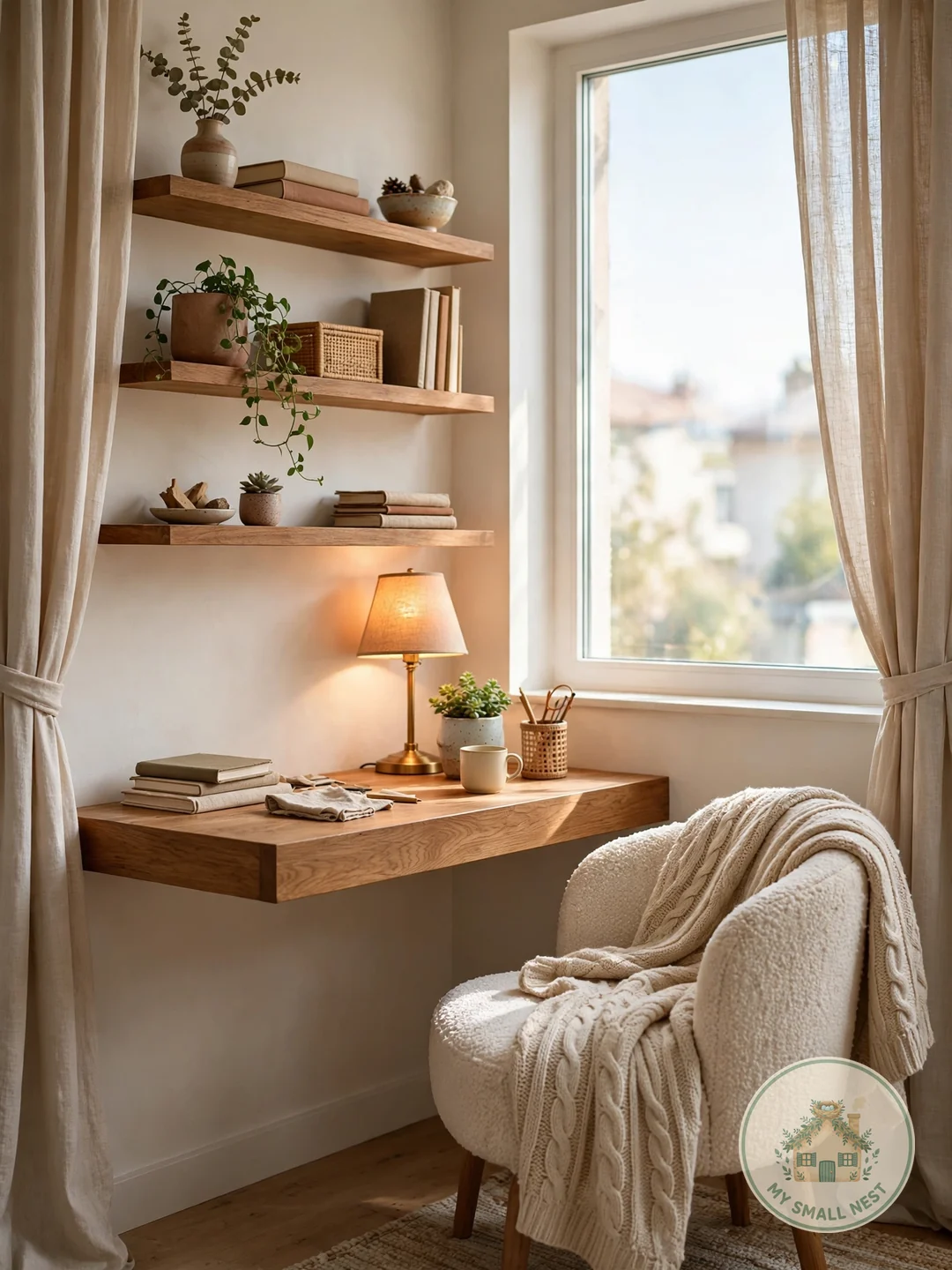
Three weeks into working from my 380 sq ft studio, my lower back staged a full protest — the couch was officially fired as an office. I carved a desk into a 4-foot closet that same weekend, and my workdays (and my posture) have never been the same.
If you are working from a small apartment and dreaming of a workspace that does not swallow your living room, these 8 home office nook ideas are for you. Most cost under $100, none need a spare room, and every one is renter-friendly or reversible.
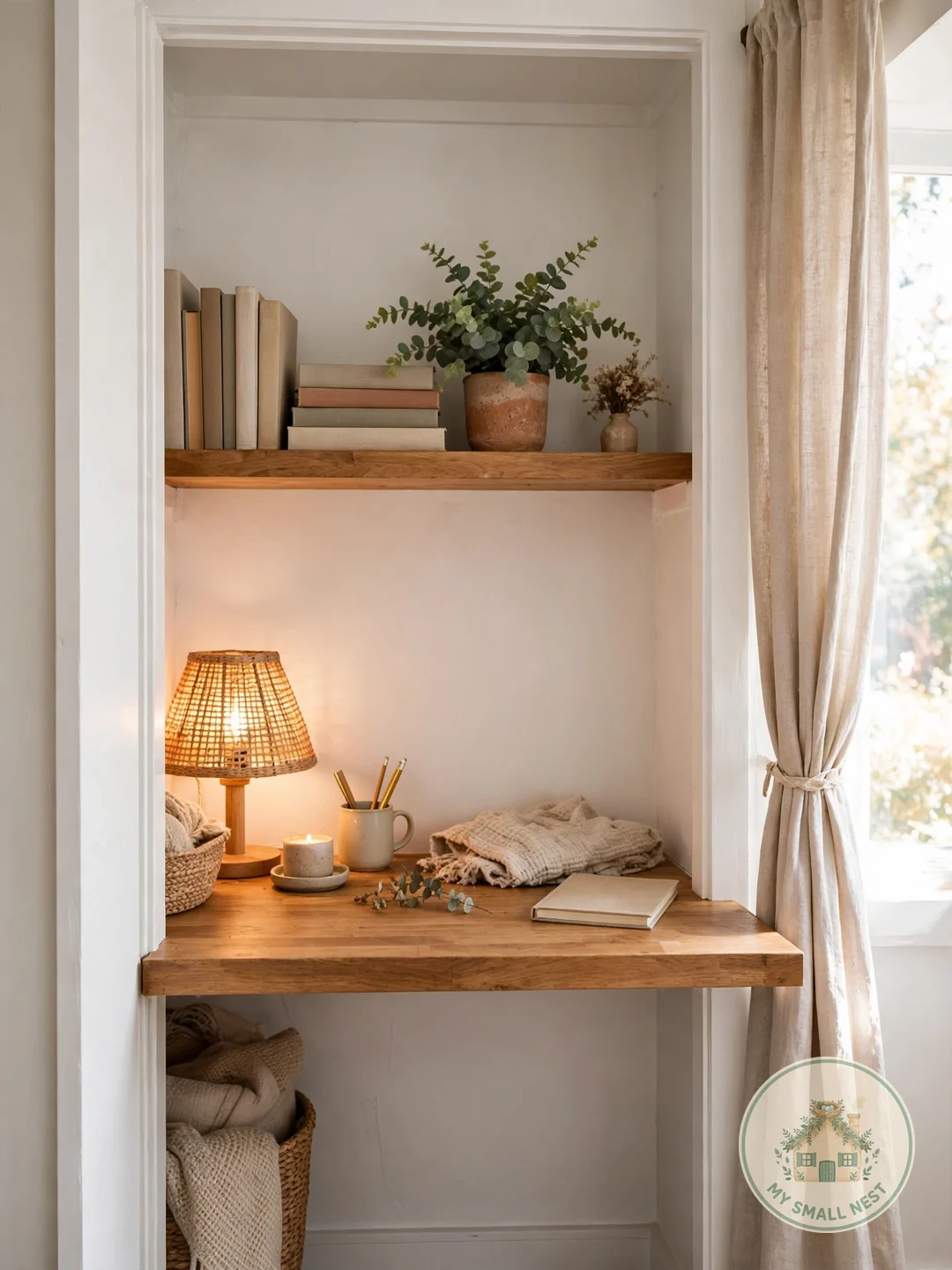
1. The Closet Office (Cloffice)
A standard reach-in closet is about 24 inches deep and 4 to 6 feet wide — almost exactly the footprint of a comfortable desk zone. Pull the doors off (slide them under the bed), lay a 1-inch plywood board or IKEA LINNMON tabletop ($25-40) across the frame at 29 to 30 inches high, and you have a real desk with walls that block visual clutter. Add a $15 LED bar light under a shelf, and close a $20 curtain at day’s end to make work disappear completely. Renters, rejoice: every bit of this is reversible on move-out day.
Make it work: Paint the closet interior warm white — it bounces light around and makes the nook feel intentional, not leftover. I tried this in my studio’s coat closet, and the white paint alone made the space feel twice as big.
 Pin it
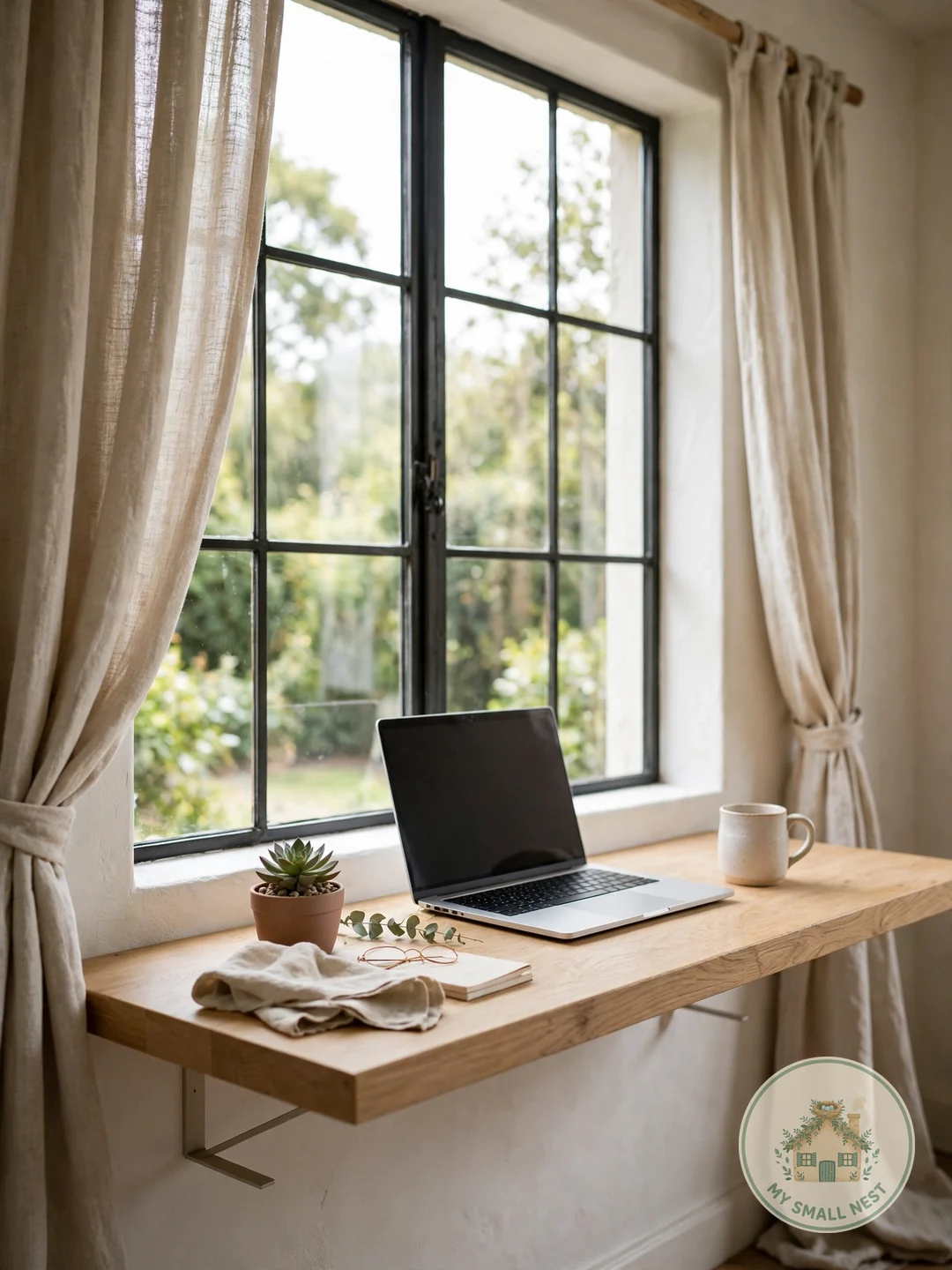
2. Floating Desk Under a Window
A wall-mounted floating desk uses zero floor space, which makes the wall under a window the perfect spot — you get natural light and a view for free. A 32 to 36-inch floating desk from IKEA (the LACK wall shelf is $15) or Amazon ($40-60) holds a laptop, notebook, and lamp comfortably at standard 29-inch height. Daylight doubles as your task lighting, so you will need fewer lamps and lower energy bills. Anchor it into a stud with the included brackets and it will hold 30-plus pounds without wobbling.
Make it work: Leave 4 to 6 inches of clearance between the desk edge and the window frame so curtains still close. I tried this in my studio under the big window — a $8 suction-cup planter on the glass adds life without eating a single inch of desk space.
 Pin it
3. Corner Desk with a Curtain Divider
Dead corners are free real estate: a 42-inch corner desk or two small desks pushed into an L-shape can cost as little as $50 at IKEA or Target. Mount a $12 ceiling track or a $15-25 tension rod and hang a curtain panel to close off the zone at 5 pm — in a studio, that tiny ritual tells your brain work is over. Choose a curtain at least 1.5 times the width of the opening so it gathers nicely instead of hanging flat and sad. This is the closest thing to a home office “door” that $40 can buy.
Make it work: Pick a warm textured fabric like linen-look or velvet — it doubles as a flattering video-call backdrop. Measure the ceiling height before buying the rod; most tension rods max out around 8 feet.
 Pin it
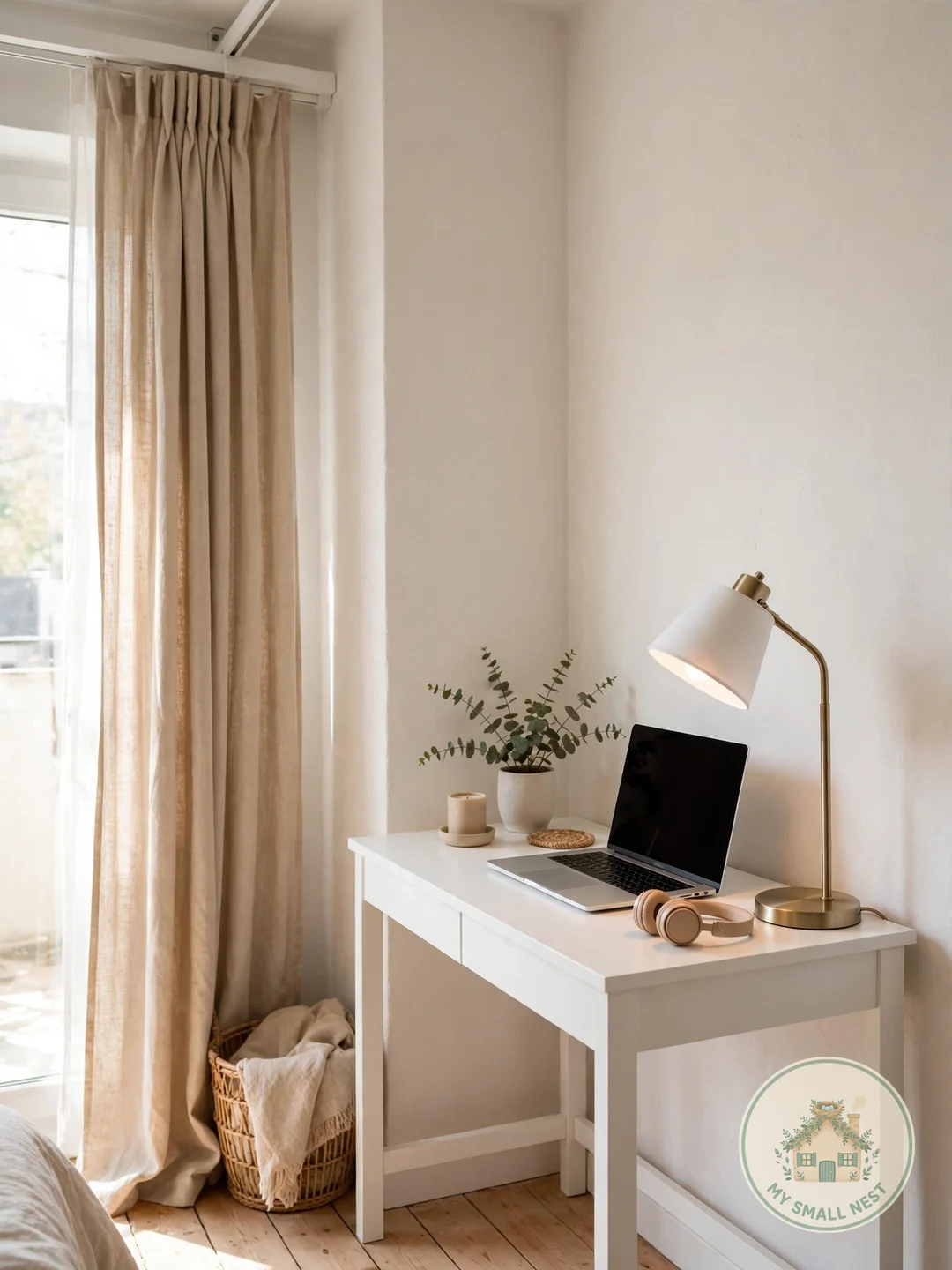
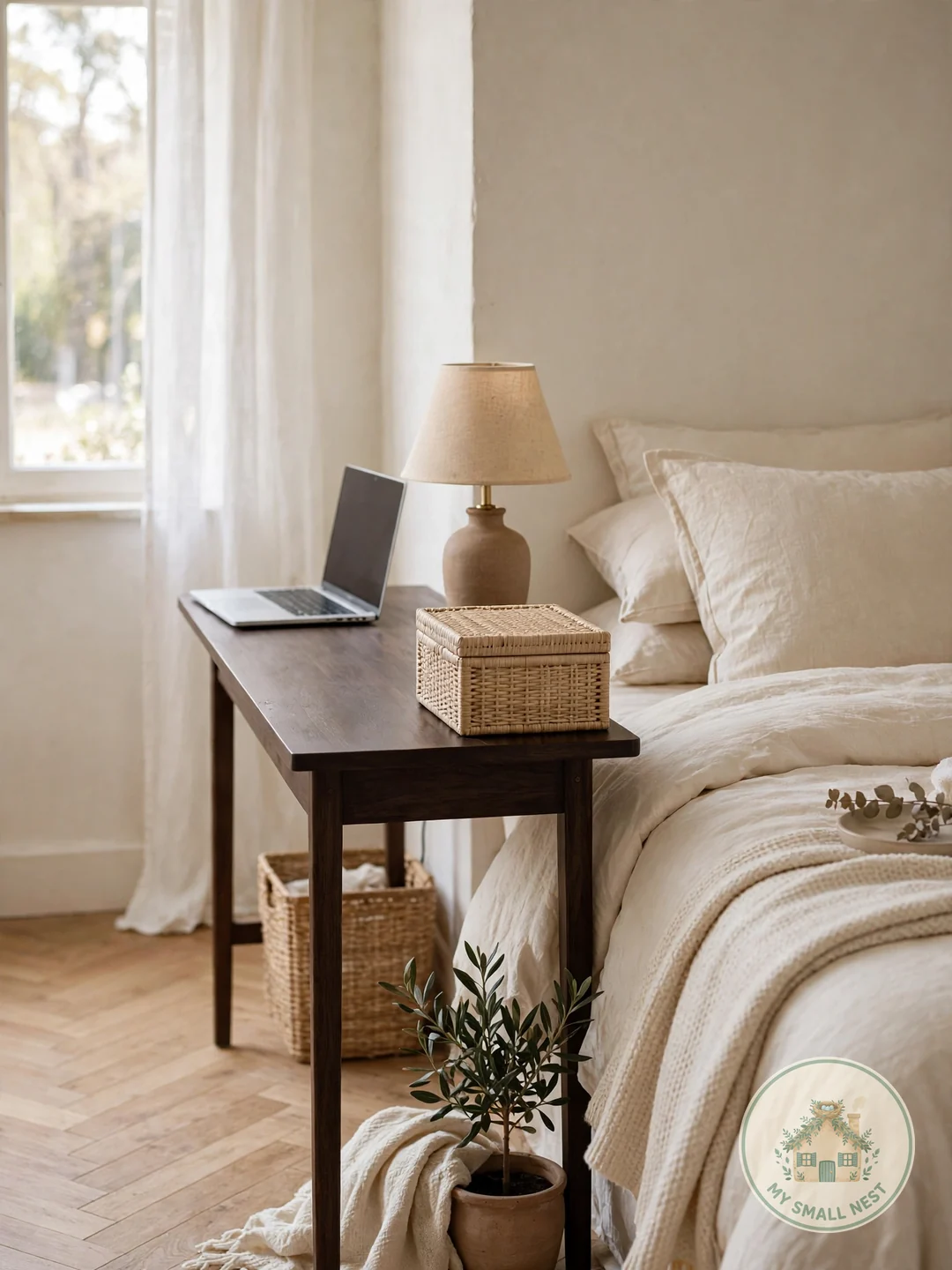
4. Bedside Desk for Studio Living
In a true studio, let one piece of furniture pull double duty: a narrow 12 to 16-inch-deep console table beside the bed works as a nightstand by night and a laptop desk by day. Look for a 36 to 48-inch-wide console at Target or IKEA ($40-70) — wide enough for a laptop plus a coffee mug, slim enough to hug the wall. Pair it with a chair that tucks fully underneath so the walkway stays clear, and you have a “real desk” without adding a single piece of furniture. It is the cheapest path to a dedicated workspace in a studio.
Make it work: Add a $10 clip-on lamp to free the surface completely, and use a $12-15 cable-management box so cords do not trail across your pillow zone at night.
 Pin it
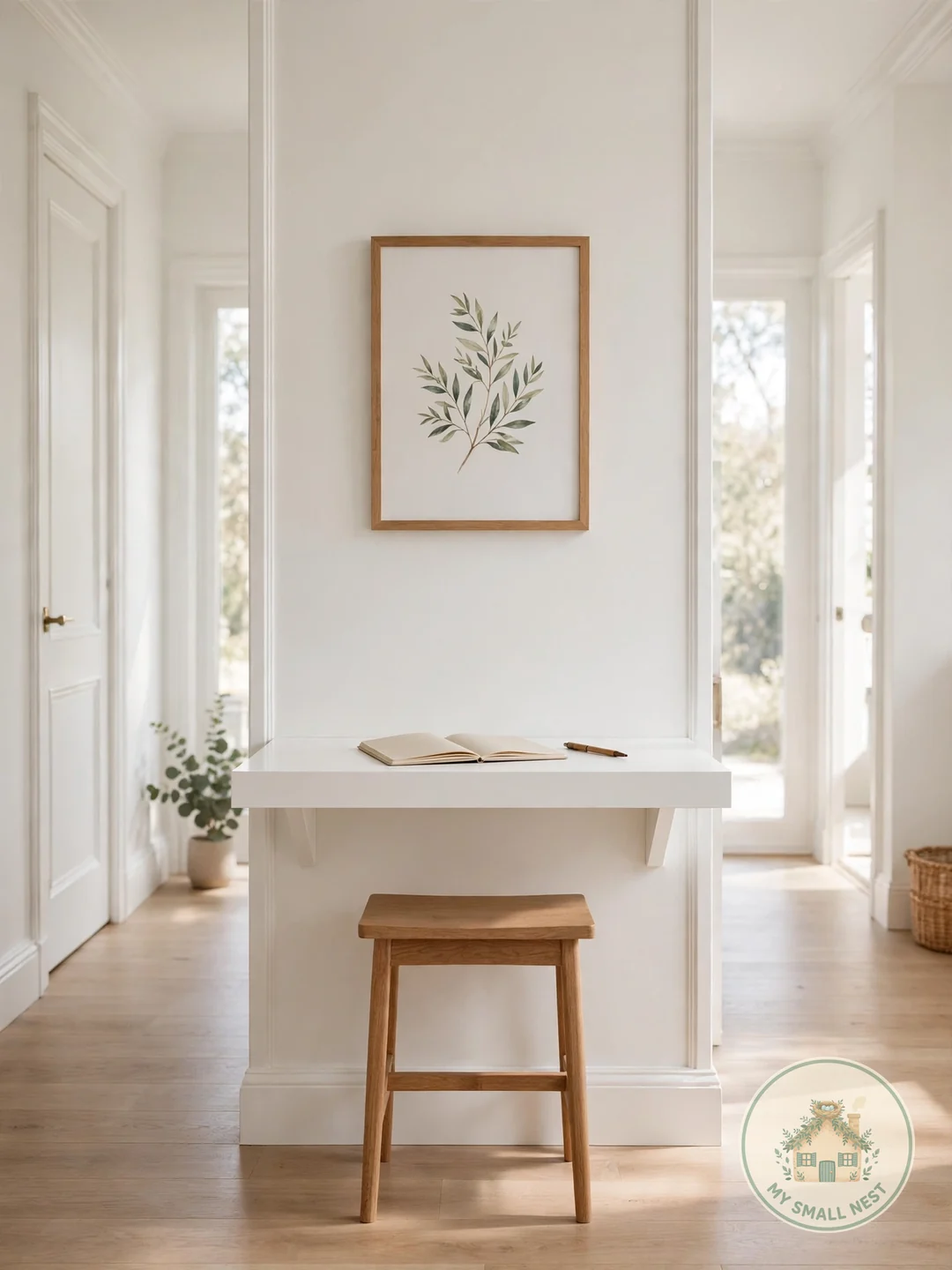
5. Hallway Desk Nook
That 3-foot stretch of hallway wall between the bedroom and bathroom is a desk waiting to happen. A 24-inch-wide wall-mounted drop-leaf table ($30-50 on Amazon) folds flat when you are not working, leaving the hallway fully passable — it works in hallways as narrow as 36 inches. Mount a small shelf 18 inches above it for supplies, and you have built an office in space that was doing absolutely nothing. Just confirm your lease allows small wall anchors; most do if you spackle the holes on move-out.
Make it work: Stick a $5 battery-powered motion-sensor light under the shelf so the nook lights itself when you sit down — no wiring, no electrician, no landlord permission needed.
 Pin it
6. Warm Layered Lighting
Overhead lighting makes any nook feel like a cubicle; the fix is two warm light sources at different heights. A $20-30 adjustable desk lamp with a 2700K bulb handles task light, while a $15 plug-in wall sconce or LED strip behind the monitor adds the ambient glow that makes a corner feel cozy instead of corporate. Put both on $10-12 smart plugs so you can shift from “focus mode” to “evening wind-down” without getting up. Bad lighting causes more nook abandonment than bad chairs — people just do not realize it.
Make it work: Face one light source toward the wall behind your monitor — the bounced glow reduces eye strain and looks great on video calls. I tried this in my studio by swapping my desk’s harsh daylight bulb for a $6 warm 2700K bulb, and my nook went from interrogation room to cozy corner overnight.
 Pin it
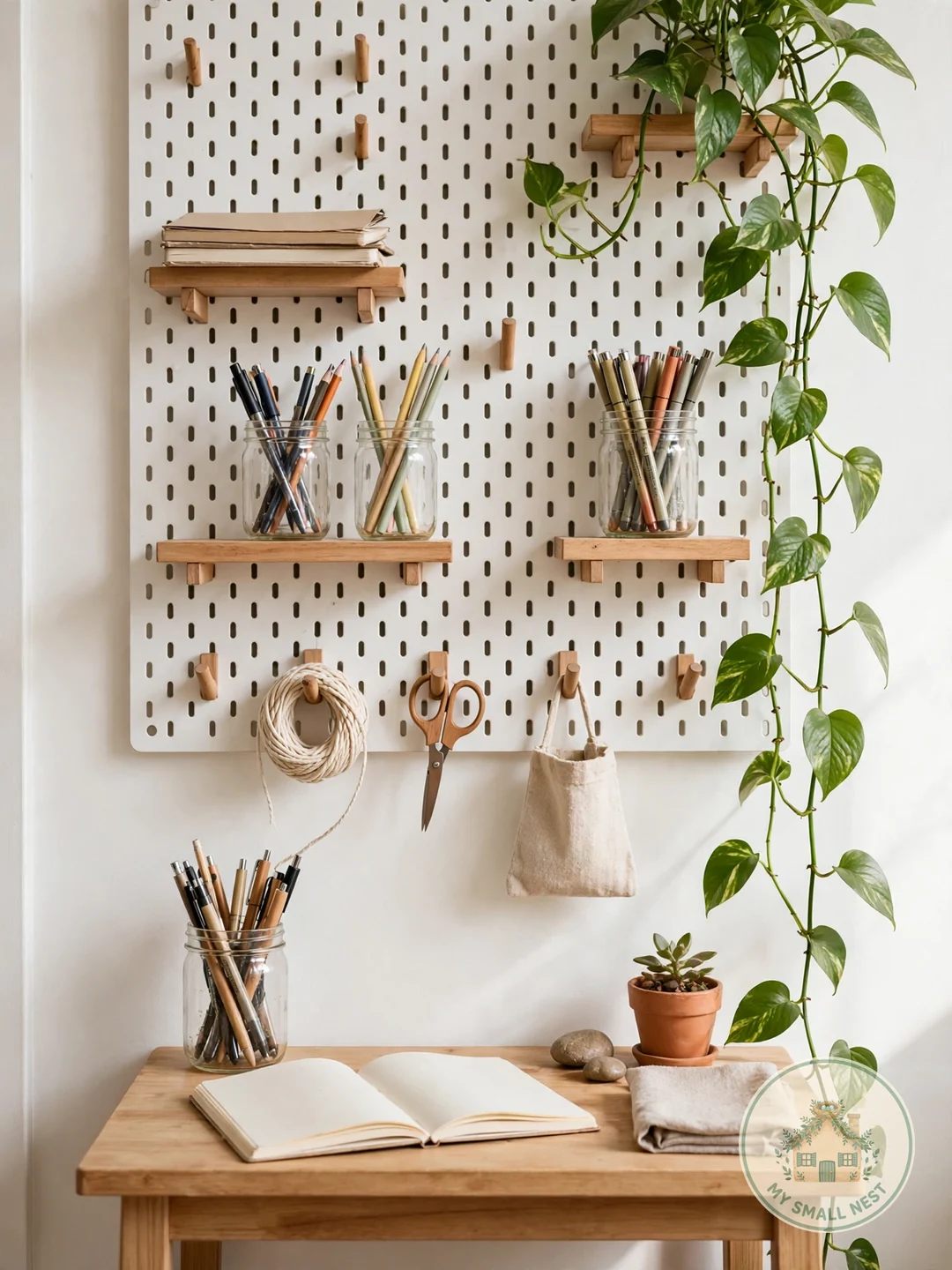
7. Vertical Storage Above the Desk
When the desk is only 30 inches wide, the wall above it becomes your filing cabinet. Two 24-inch floating shelves ($15-25 each at IKEA or Home Depot) mounted 16 and 28 inches above the desk hold books, supplies, and a plant without touching the work surface. Add an $8-12 pegboard with hooks for headphones and cables, and suddenly a tiny desk has the storage of a full office. Renters can use heavy-duty adhesive strips rated to 16 pounds per shelf for a completely drill-free version.
Make it work: Keep the bottom shelf at least 16 inches above the desk so your monitor and your head clear it — measure twice before drilling, because patching extra holes is nobody’s idea of fun.
 Pin it
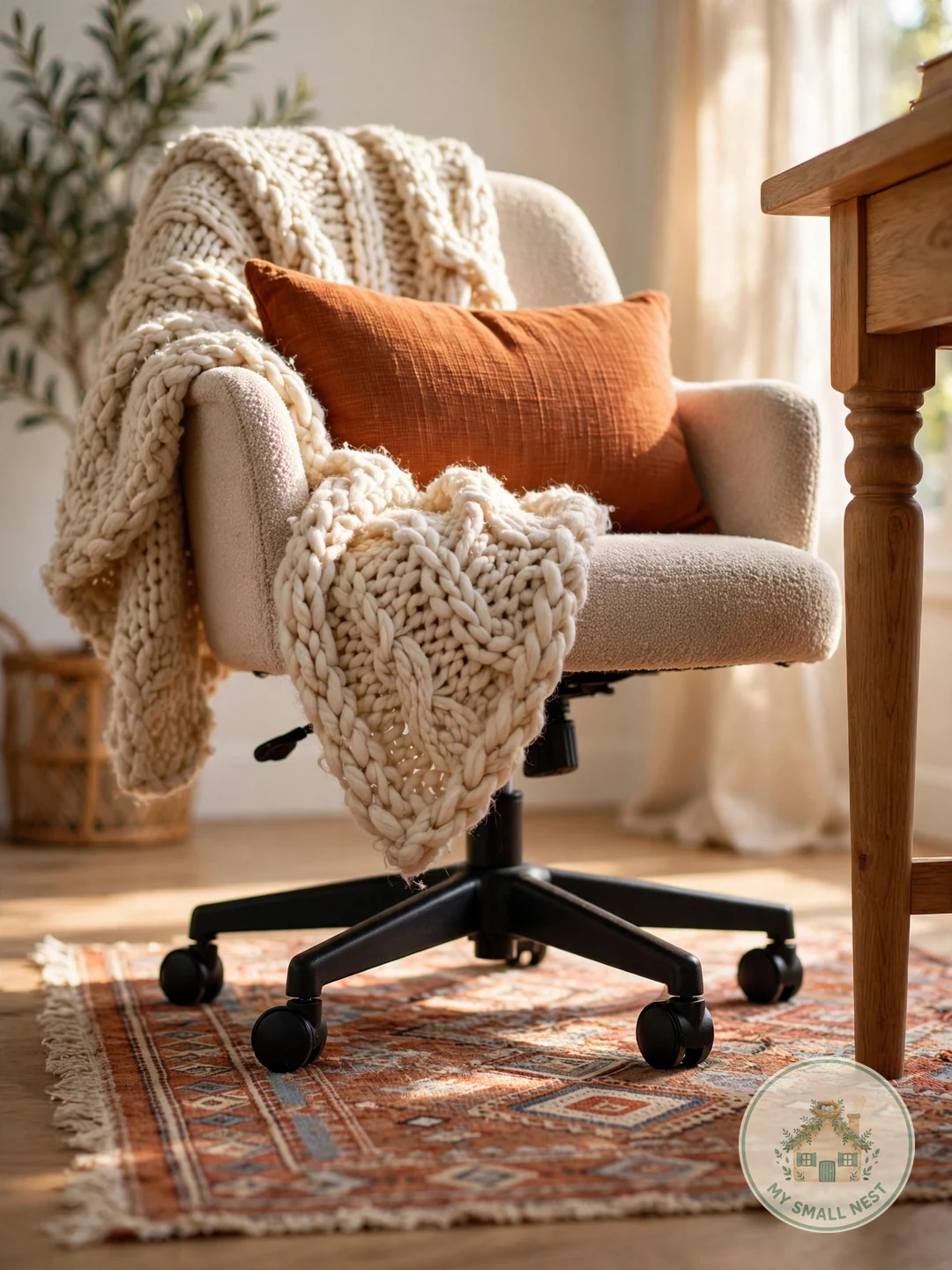
8. Cozy Textile Touches
A nook feels like an office; textiles make it feel like yours. A 2×3-foot rug under the desk chair ($25-40 at IKEA or Rugs USA) defines the zone and softens hard floors, while a $15 lumbar cushion saves your back during long days. Drape a $20 throw over the chair back for warmth and color — in a studio, these small textiles signal “workspace” the way a door would. Choose washable, low-pile options that survive chair wheels and coffee spills without drama.
Make it work: Stick to a two-color palette for all the textiles — it keeps a 4-foot nook looking curated instead of cluttered. One pattern maximum; let texture do the rest of the talking.
 Pin it
Mistakes to Avoid
1. Facing a blank wall with no light
A desk shoved against a dark wall feels like punishment within a week. Always pair the nook with a window, a good lamp, or both — light is what makes you actually want to sit there.
2. Using a dining chair all day
Dining chairs are built for 45-minute meals, not 8-hour workdays. A $60-100 ergonomic task chair, or at minimum a $15 lumbar cushion, pays for itself in back pain avoided.
3. Letting cables take over
In a 4-foot nook, three visible cords look like chaos. A $12 cable box or a strip of adhesive cord clips keeps everything invisible and dust-free.
4. Skipping the workday shutdown ritual
Without an office door, work bleeds into the evening unless you create a boundary. Close the curtain, fold the desk, or simply cover the monitor — that small ritual protects your off-hours.
5. Over-decorating the nook
A tiny workspace cannot hold ten inspirational objects. Keep decor to two or three pieces you genuinely love; every extra item is visual noise competing with your focus.
FAQs
How can I create a home office in a small apartment?
Think nooks, not rooms: a closet, a corner, the wall under a window, or a hallway stretch can all hold a compact desk. Use vertical wall storage to keep the surface clear, and define the zone with a rug or curtain so it feels separate from living space. Most of these home office nook ideas cost under $100 to set up.
What size desk fits in a small apartment nook?
For laptop work, a 30 to 36-inch-wide desk at 20 to 24 inches deep is plenty. Wall-mounted floating desks save the most floor space, while 12-inch-deep console tables work as dual-purpose nightstand-desks. Measure your nook twice and leave room for your chair to tuck in fully.
How do I make my home office nook cozy?
Layer warm lighting with 2700K bulbs, add textiles like a small rug and cushion, and include one plant or piece of art you love. Keep the color palette warm and the clutter minimal — coziness in a small nook comes from texture and light, not from more stuff.
Can I work from a closet office comfortably?
Yes, with two upgrades: good lighting and airflow. Add a bright desk lamp plus a small clip light, and keep the closet open or curtained rather than sealed while you work. A 4-foot closet fits a desk and shelf comfortably for most people, and the “door” of a curtain gives you a real end-of-day boundary.
How do I separate work space from living space in a studio?
Use visual dividers: a curtain on a tension rod, a rug under the desk zone, or a bookshelf as a room divider. End each workday by closing the curtain or covering the desk — that small ritual tells your brain work is over and protects your evenings in a one-room home.
You do not need a spare room to have a workspace you love — just a nook with good light and a little intention. Try one or two of these home office nook ideas this week, and turn that forgotten corner into the coziest spot in your small apartment. Save this guide for your weekend project list, and share it with a fellow work-from-home friend.


What readers are saying
No comments yet — yours could be the first.