 My Small Nest
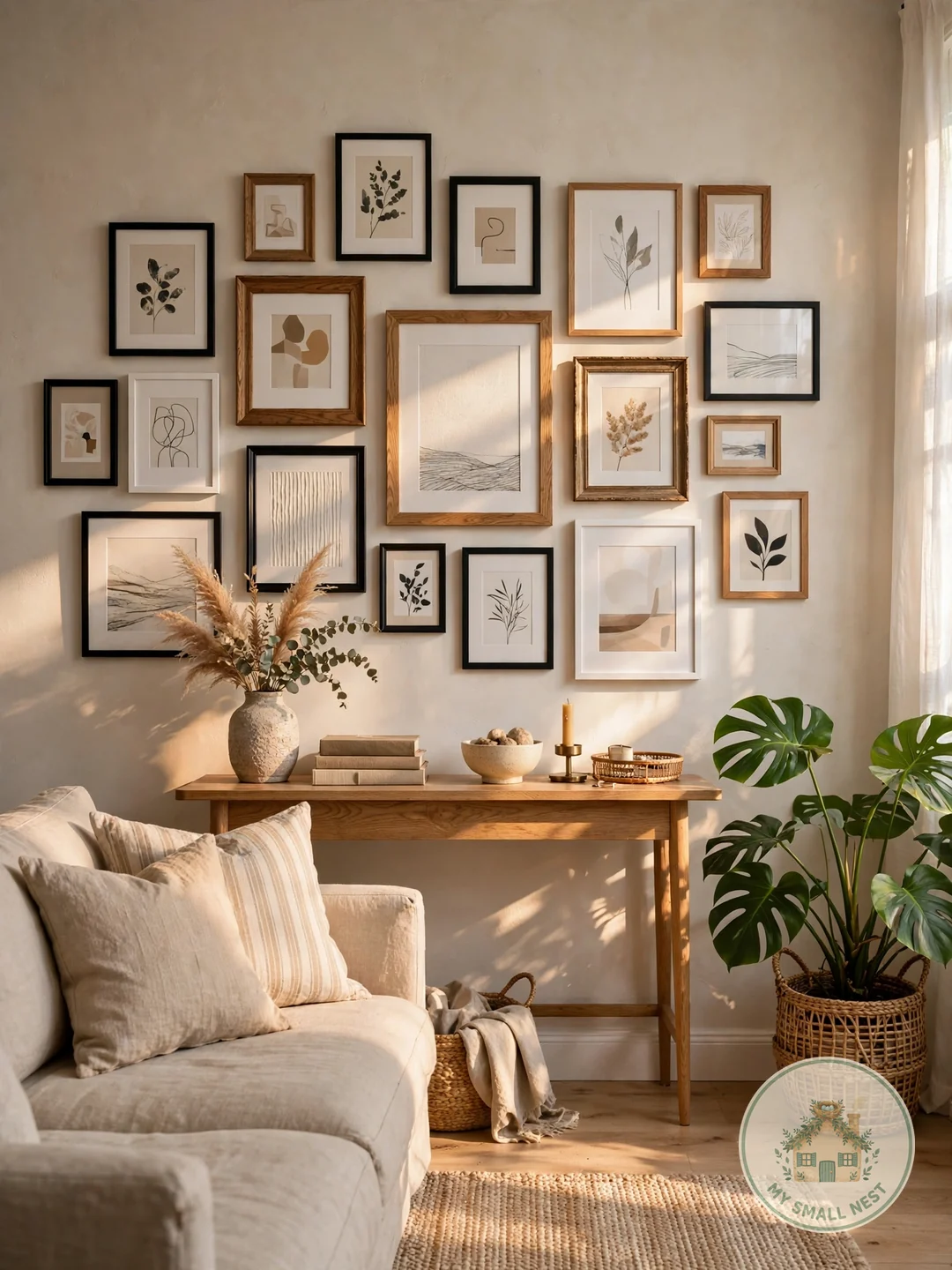
Staged homes sell faster for a reason: personalized walls make any space feel like home, and a gallery wall is the highest personality-per-square-inch project you can do. The problem? Most gallery wall tutorials assume you own a 12-foot suburban wall and a drill — not a skinny hallway and a strict lease.
These 8 gallery wall ideas are built for small-apartment renters: no-nail hanging methods, frames under $3 each, and layouts designed for narrow walls and low ceilings. Every look comes together for under $100 — most for under $40.
1. The Single-Column Vertical Stack
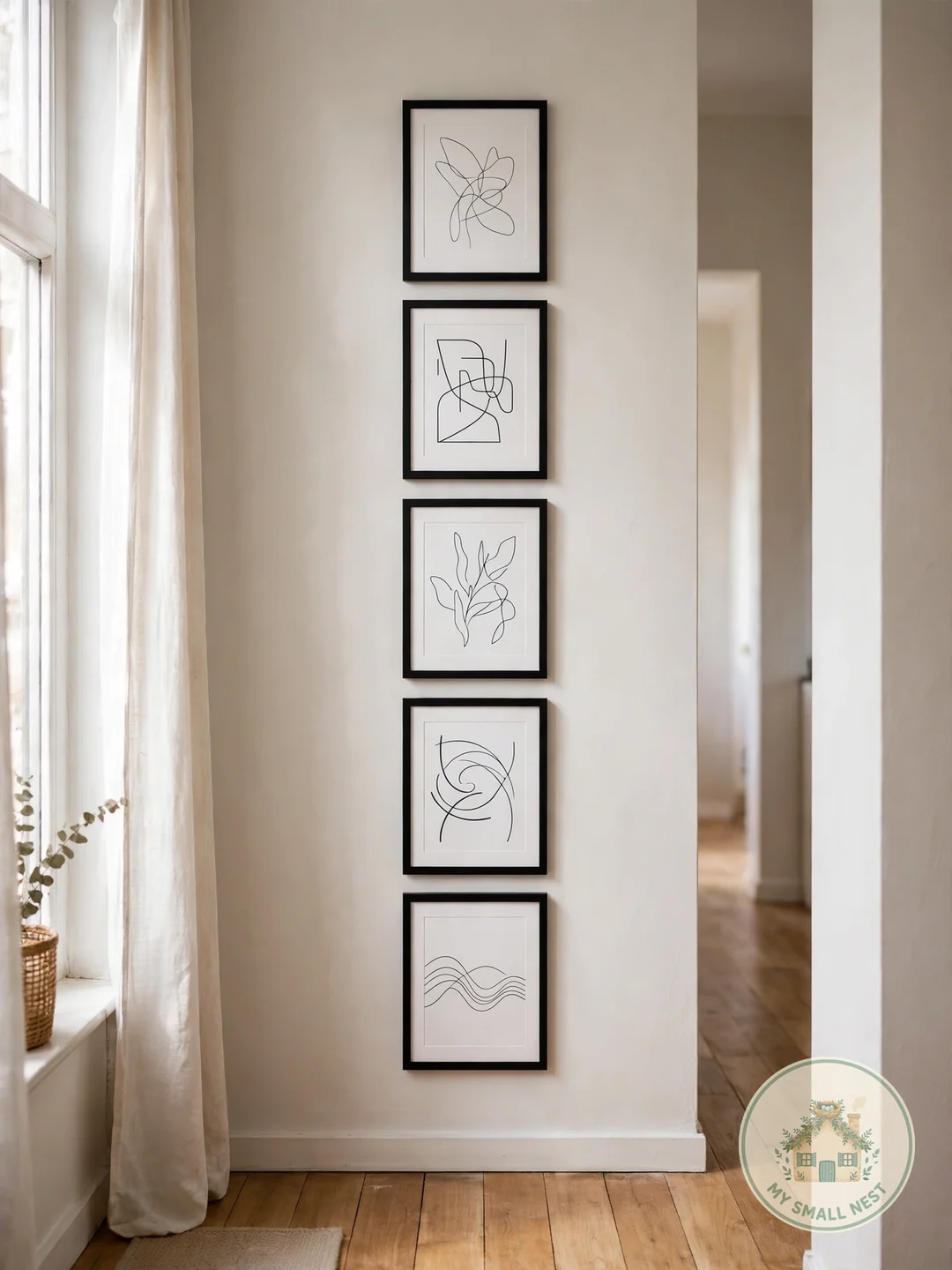
If your apartment walls are narrow, go tall instead of wide. A single-column stack of 4 to 6 frames draws the eye upward and makes standard 8-foot ceilings feel grand — perfect for the sliver of wall beside a door or between windows. It uses the least wall real estate of any gallery layout while still delivering a curated, intentional look.
Keep a uniform 2-inch gap between frames and stick to one frame color so the column reads as one vertical piece, not clutter. Start the bottom frame at about 30 inches from the floor and work up; the top frame should land 6 to 8 inches below the ceiling.
Make it work: Print art in matching sizes — 8×10 is the sweet spot — because uniform sizing is what makes a column look designed rather than accidental.
 Pin it
2. Ledge Shelf Gallery Wall
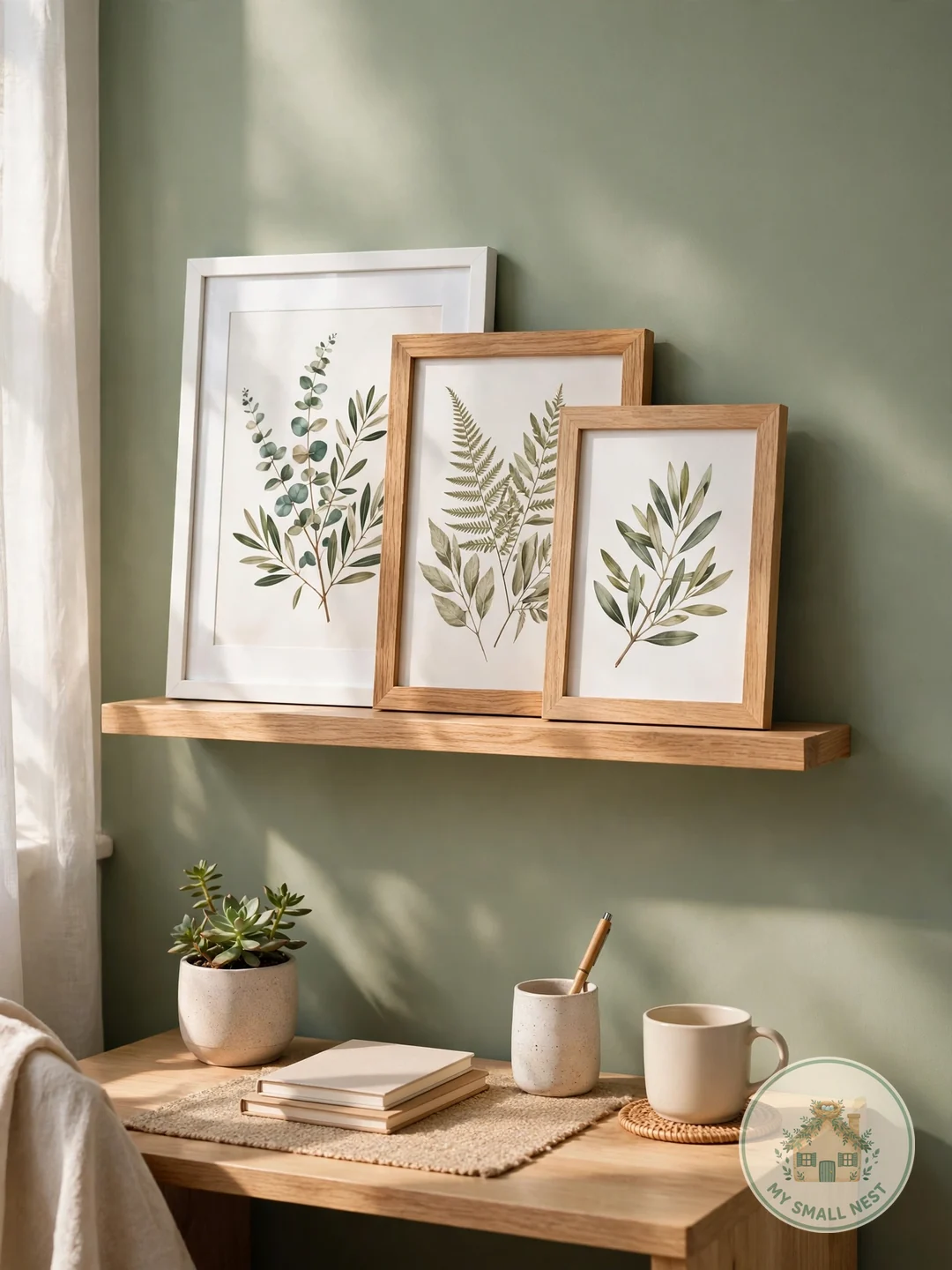
A wall-mounted picture ledge is the renter’s best friend: one bracket, endless rearranging. Lean 3 to 5 frames on a 36-inch ledge above a desk or sofa and you get a gallery wall without a single frame-hanging commitment — swap pieces for seasons, moods, or new art without touching the wall. Ledges run about $15 to $25 each at IKEA or Target.
Overlap frames slightly and add one small object — a tiny plant, a candle, a small stack of books at one end — to break up the flat line and give the ledge depth. I tried this in my studio: my ledge gets restyled every season and it takes ten minutes, zero new holes.
Make it work: Put the ledge’s single anchor into a stud or use a toggle bolt — it carries the weight of five frames, so its one mounting point has to be solid.
 Pin it
3. Salon-Style Grid for Tiny Living Rooms
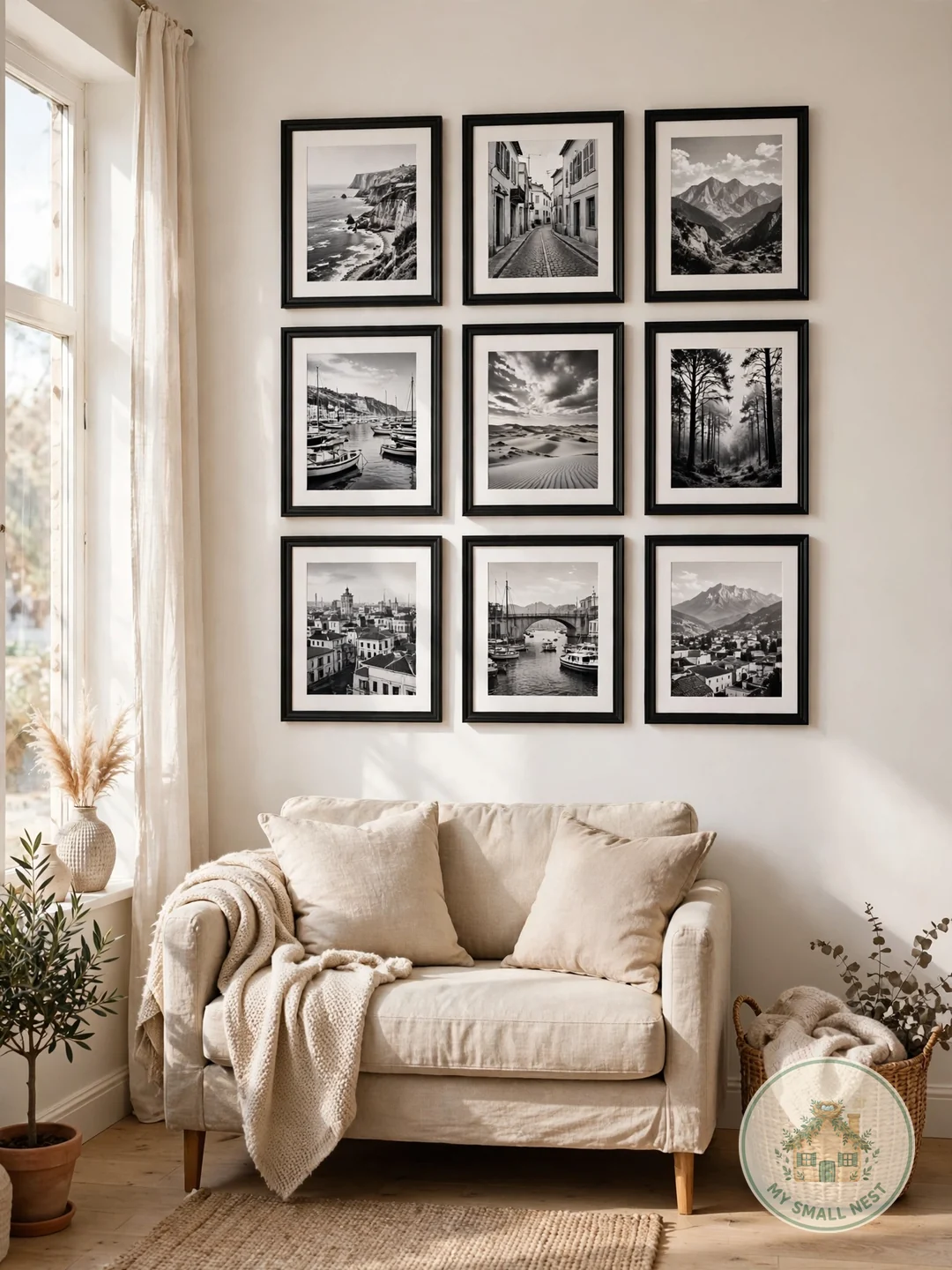
The classic salon wall gets an apartment edit: a tight 3×3 grid of matching 8×10 frames. Uniform frames and tight 2-inch spacing make nine pieces feel calm instead of chaotic, which matters when your living room is also your dining room and office. Buy matching frames in multipacks — often $1 to $3 per frame at IKEA, Target, or Amazon Basics — and the whole project lands under $40.
Use black-and-white prints inside the frames — monochrome art keeps a busy grid from visually shrinking the room. Measure the full grid on the floor first: nine 8×10 frames with 2-inch gaps make a 28×34-inch rectangle, so you know exactly where it lands on the wall.
Make it work: Hang from the center frame outward — get the middle piece level and everything else follows it.
 Pin it
4. No-Nail Tape and Clip Gallery
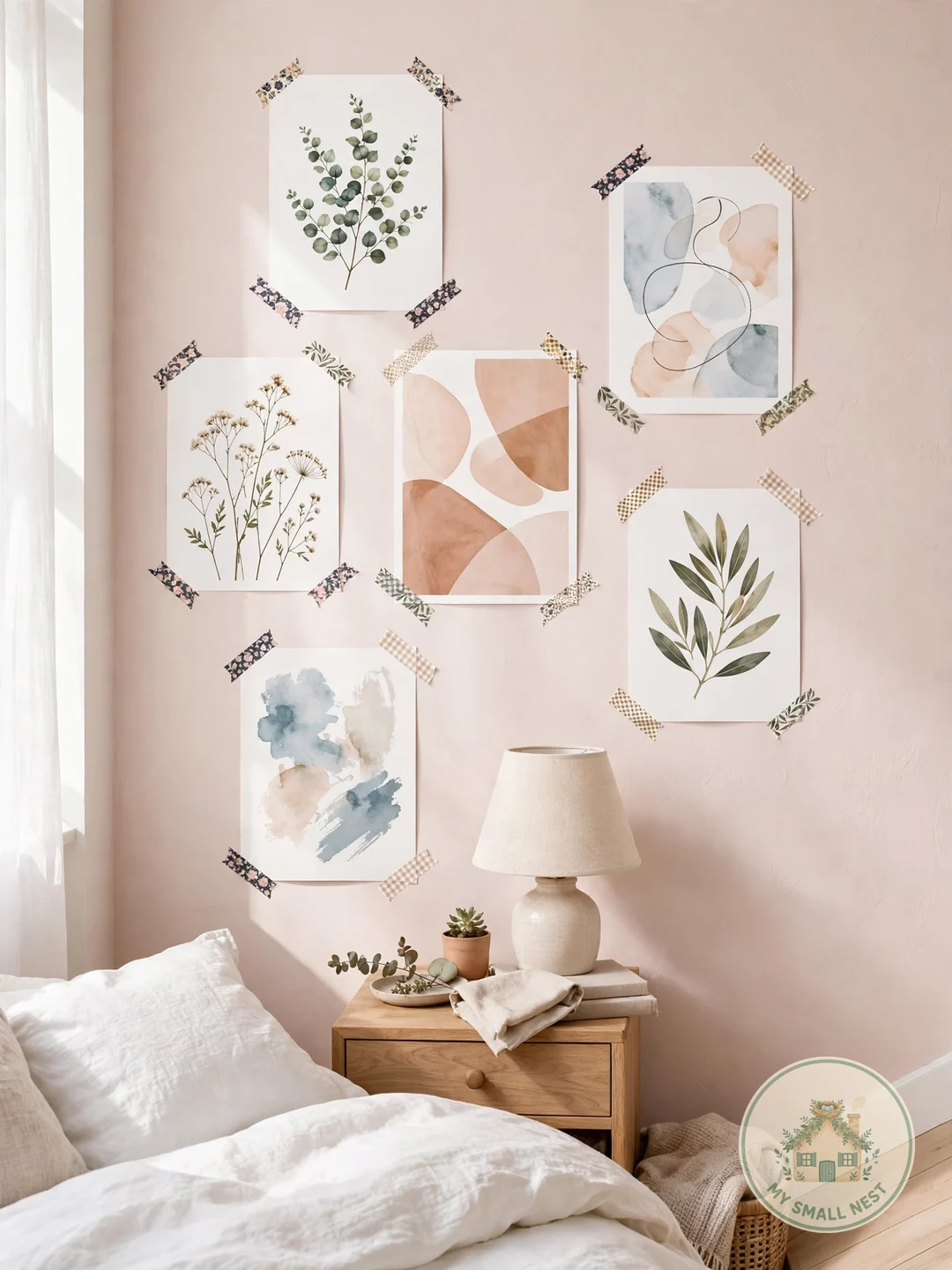
For strict no-hole leases, adhesive hanging strips and washi tape are your secret weapon. Arrange 6 to 10 lightweight frames with removable strips, or go ultra-budget and tape unframed art prints straight to the wall with decorative washi tape ($4 a roll) in a grid or scattered pattern. Everything removes cleanly on move-out day.
Check weight ratings — standard strips hold up to 4 lbs per set, plenty for poster frames and canvases under 16×20, but use the 16-lb large strips for anything heavier. Clean the wall with rubbing alcohol first and wait an hour before hanging; half of all adhesive failures are just dusty walls.
Make it work: For washi-tape galleries, cut all tape pieces the same length — uniform tape borders are what make unframed prints look intentional instead of dorm-room-y.
 Pin it
5. Around-the-TV Gallery Wall
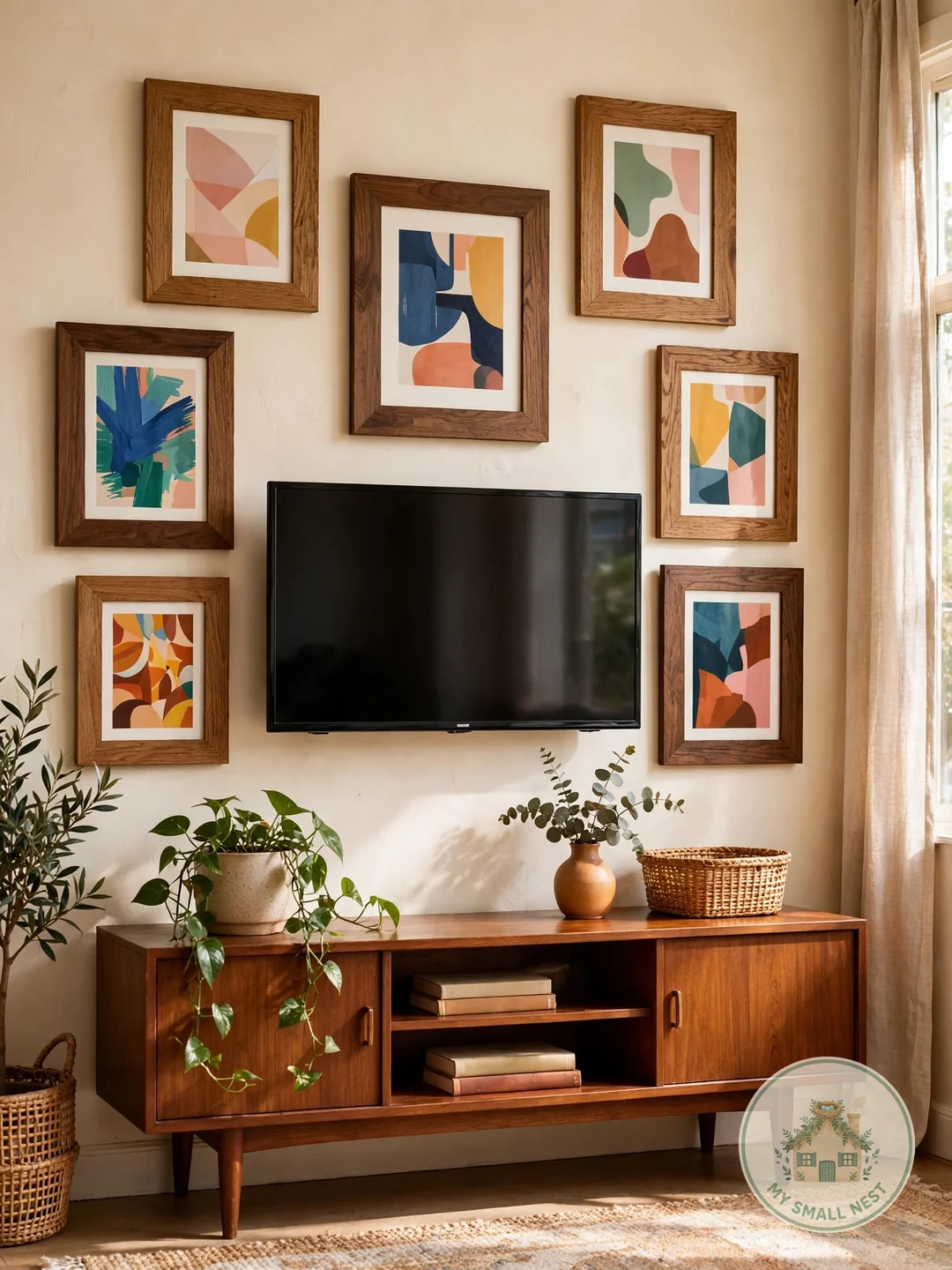
Your TV does not have to be the lonely black rectangle of the living room. Framing a 43 to 55-inch television with 5 to 7 pieces turns it into part of a gallery wall, and the screen practically disappears into the arrangement when it is off. This is one of the smartest small-apartment layouts because it uses wall space that was already spoken for.
Keep art 3 to 4 inches from the TV’s edges and use chunky wood frames — the contrast makes the setup look styled rather than accidental. Start with one larger piece on each side of the TV for balance, then fill in with smaller frames above and below.
Make it work: Mount the TV first, then arrange art around it — and leave the TV’s vents uncovered. Overheating electronics behind tight frames is a real (and expensive) mistake.
 Pin it
6. Staircase-Free Hallway Gallery
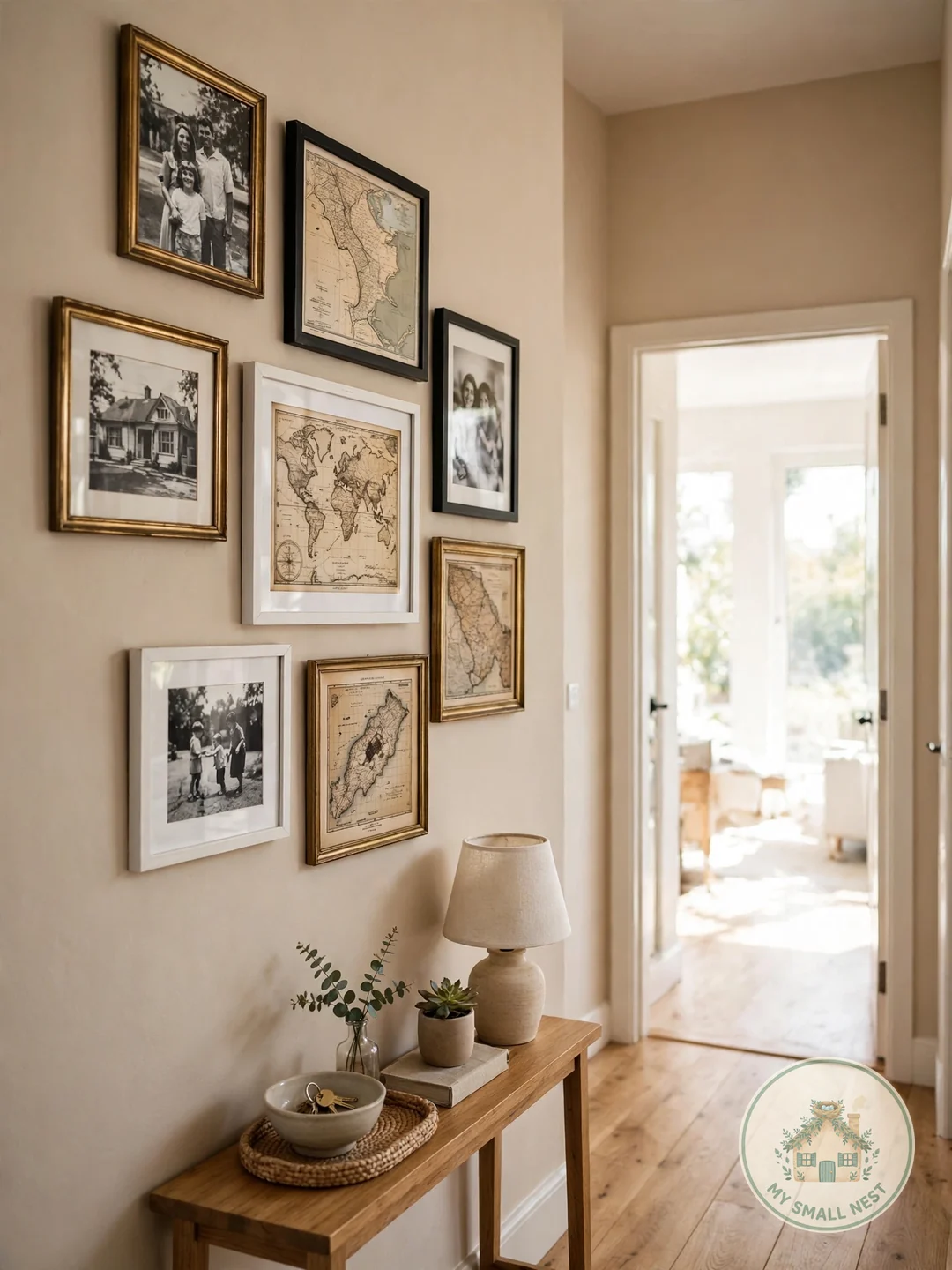
Hallways are the most underused real estate in small apartments. Hang a flowing arrangement of 5 to 8 pieces along your entry hall and it turns a pass-through space into a mini art tour — the apartment suddenly feels like it has one more “room” than it does. Narrow halls actually suit galleries: you view each piece up close, like a real museum corridor.
Center every frame at 57 inches from the floor — gallery standard — so the line stays level even with mixed frame sizes. I tried this in my studio’s entry hall: eight frames, all thrifted for under $2 each, and guests now stop to look instead of rushing past.
Make it work: In dark hallways, add one plug-in picture light or a $10 LED puck light — art you cannot see might as well not be hung.
 Pin it
7. Mixed-Media Gallery Wall
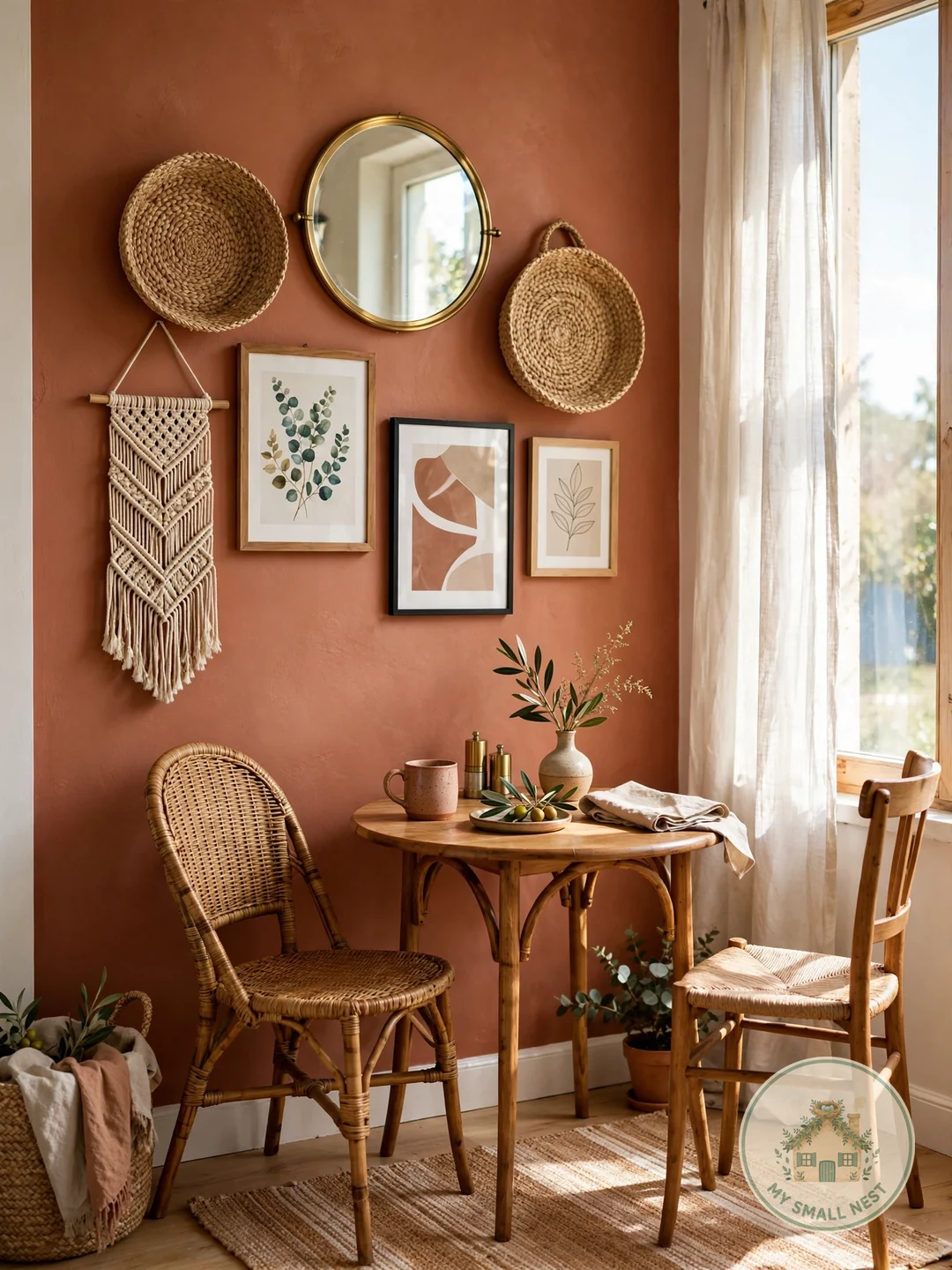
Frames are not the only thing that belongs on a gallery wall. Mix in woven baskets ($5 to $10 thrifted), a small round mirror, a wall-mounted planter, or a fabric hanging for texture and dimension — especially valuable in small apartments where flat white walls can feel sterile. A round mirror in the mix bounces light around and can make the room feel noticeably larger.
Start with your biggest piece off-center, then build outward; odd total numbers of pieces look most natural to the eye. Keep a 2 to 3-inch rhythm between all objects, framed or not, so the mix reads as one composition.
Make it work: Limit yourself to one “hero” texture — all baskets, or all plants — plus frames. Two competing textures plus mixed frames is where mixed-media turns into mixed-mess.
 Pin it
8. Mini Gallery for Closet-Sized Walls
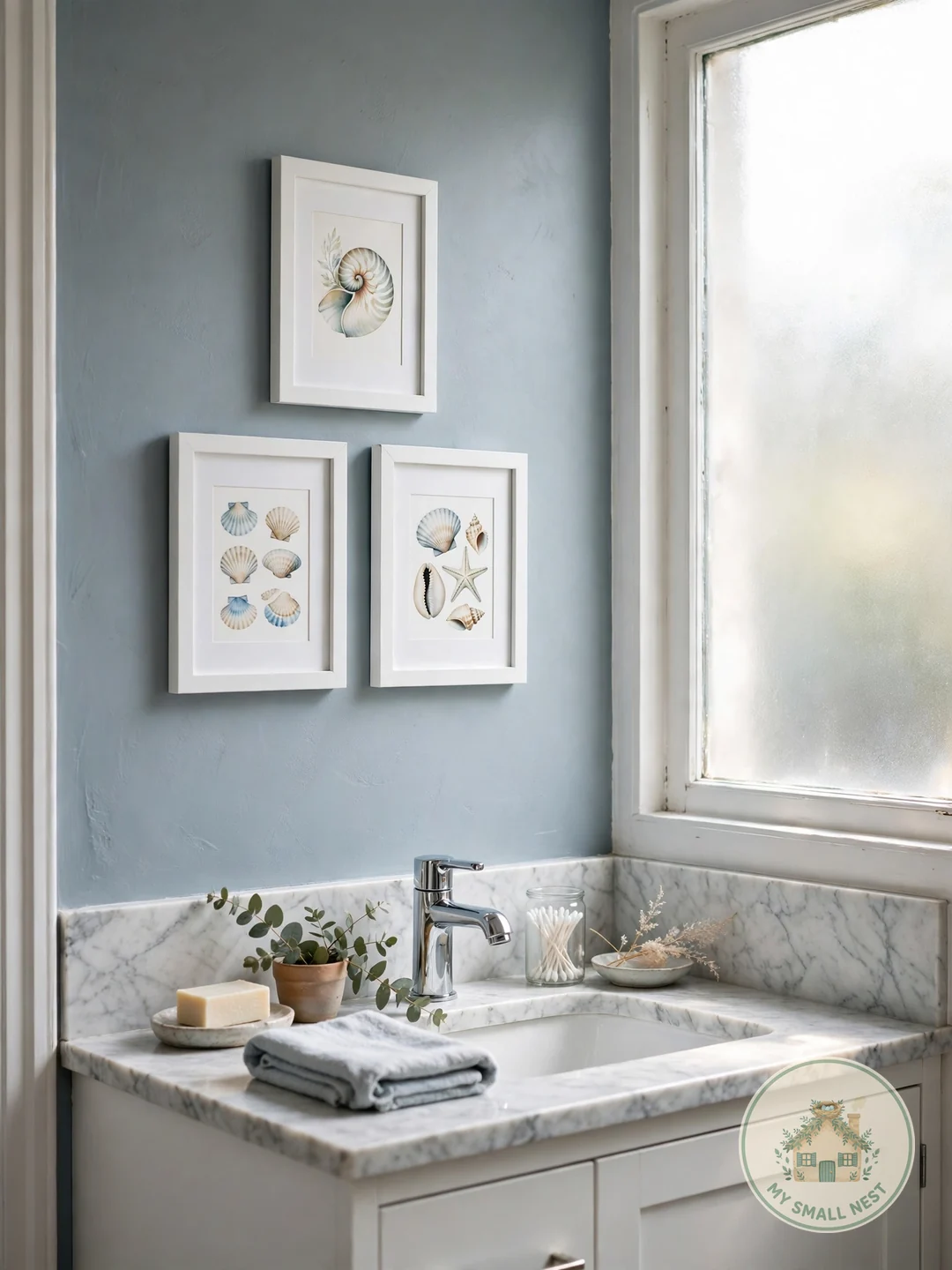
Some apartment walls are barely two feet wide — a bathroom wall, the nook beside the fridge, the strip next to a window. A mini gallery of 3 to 4 small 5×7 or 4×6 frames turns those forgotten spots into intentional moments. Tiny frames cost next to nothing — dollar stores sell them for $1.25 — and the small scale keeps the wall feeling airy instead of crowded.
Cut paper templates first and tape them up for 24 hours to test the arrangement before committing to nails or strips; what looks right in your head often needs one piece shifted two inches left. Small art needs small mats or no mats at all — chunky mats on tiny frames eat the art.
Make it work: One mini gallery per small wall, not three — restraint is what makes a tiny arrangement look like a choice.
 Pin it
Mistakes to Avoid
Hanging Everything Too High
The center of your arrangement should sit at eye level (about 57 inches) — art hung near the ceiling makes small rooms feel off-balance and disconnected from the furniture below.
Mixing Too Many Frame Colors
Five frame finishes on one wall reads as clutter. Stick to two, max three, that complement each other — black plus natural wood covers almost every apartment style.
Skipping the Paper Template Step
Hammering nails on hope leads to a wall full of holes and a crooked result. Tape up cut paper templates and live with the layout for a day first; the 20 minutes of prep saves hours of patching.
Choosing Art That’s Too Small for the Wall
Tiny frames floating on a big empty wall look lost. Scale your arrangement to fill roughly two-thirds of the wall width — measure the wall, then plan the grid to match.
Ignoring the Weight Limits on Adhesive Strips
Overloaded strips fail at 2 a.m. — loudly. Weigh your frames, use the right strip rating, and double up for anything over 8 lbs. When in doubt, go one rating higher than you think you need.
FAQs
What are the best gallery wall ideas for renters who can’t drill holes?
Adhesive hanging strips, picture ledges (one or two small anchors), and washi-taped unframed prints are the top renter-friendly options. Large strips hold up to 16 lbs per frame when applied correctly, and a single ledge lets you restyle endlessly with only two wall holes to patch at move-out.
How many frames should a small apartment gallery wall have?
Five to nine frames is the sweet spot for most apartment walls. Fewer than five can look sparse on a full wall; more than nine in a compact room starts to feel busy. For very narrow walls, a vertical stack of four to six frames works beautifully.
What’s the cheapest way to frame a gallery wall?
Buy multipack frames from IKEA, Target, or Amazon Basics (often under $2 per frame), print art at home or through a budget online printer, and use free public-domain art downloads. A full nine-frame gallery wall can cost under $40 this way.
How do I make a gallery wall look cohesive instead of random?
Pick one unifying element: the same frame color, the same mat color, a single color palette across all art, or a consistent theme like travel or botanicals. One thread of consistency lets everything else be eclectic.
Should a gallery wall be centered over furniture?
Generally yes — center it over the sofa, console, or bed below, and leave 6–8 inches between the top of the furniture and the bottom of the lowest frame. If there is no furniture, center the arrangement at 57 inches from the floor.
A gallery wall is one of the few decor projects that gives you maximum personality per square inch — exactly what small apartments need. Pick the layout that fits your walls and your lease, start with what you can afford, and add pieces over time. Save this guide for your next frame run, and share it with a friend whose rental walls are still blank.
What readers are saying
No comments yet — yours could be the first.