 My Small Nest
Your dorm room is tiny, shared, and full of rules — and it’s still going to be one of your favorite places you’ve ever lived, if you set it up right. The 2026 dorm look is all about cozy layers, warm light, and storage that doesn’t look like storage.
These 17 dorm room inspo ideas are picked for real dorms: twin XL beds, cinderblock walls, roommate negotiations, and budgets that need every dollar to work twice as hard.
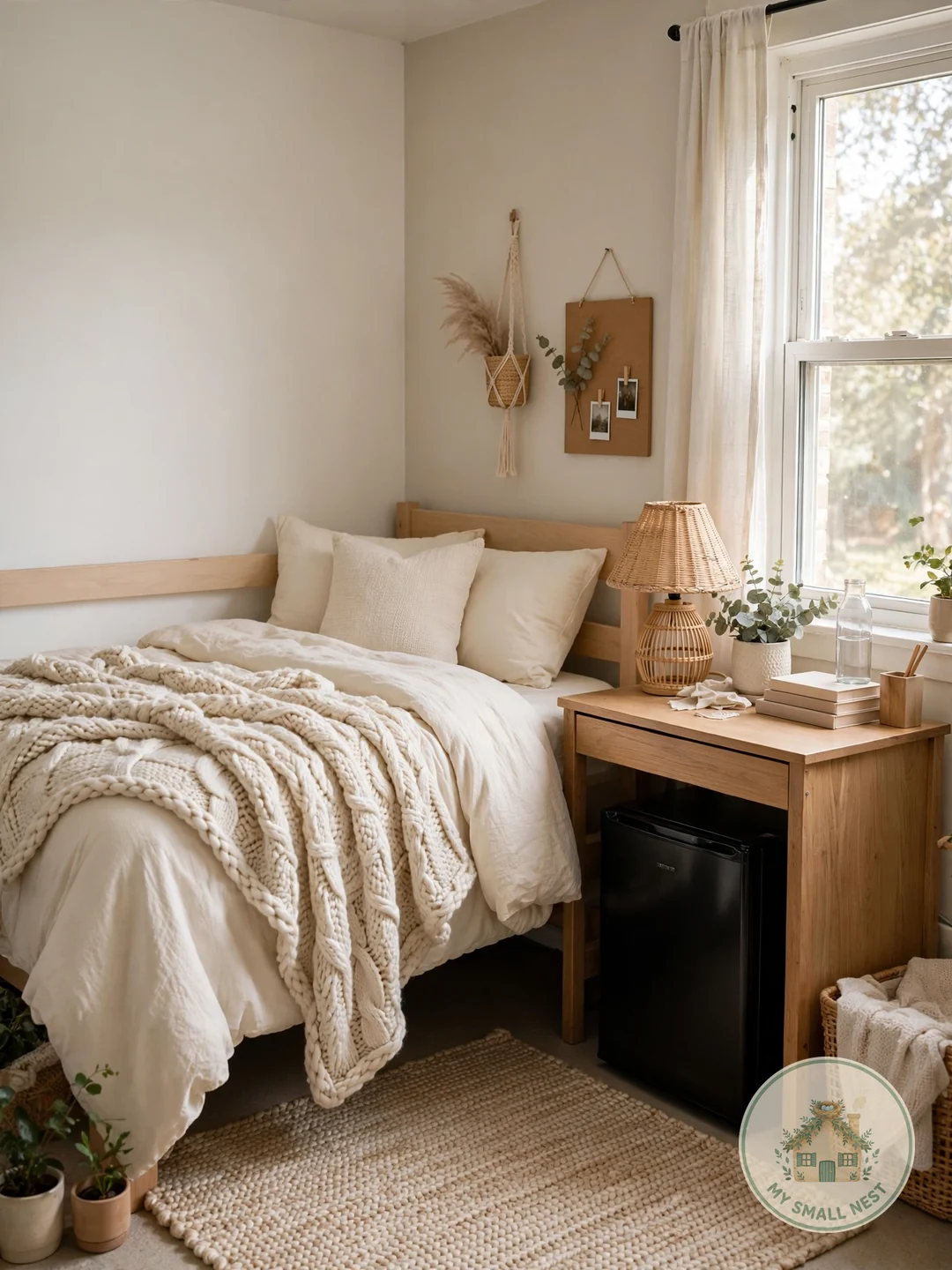
1. Start With Soft Neutrals
Every room that looks pulled-together starts with a palette, and soft neutrals — warm white, cream, oatmeal, light gray — are the most forgiving choice for a shared dorm. Neutrals make a 12×15-foot room feel bigger, they never clash with a roommate’s style, and they let you change accent colors each semester without rebuying everything.
Build the base with neutral bedding, a neutral rug, and neutral curtains (about $80–$120 total at Target or IKEA), then add color in cheap, swappable pieces like throw pillows and art. When in doubt, cream over stark white — it hides dorm-laundry wear and photographs warmer.
 Pin it
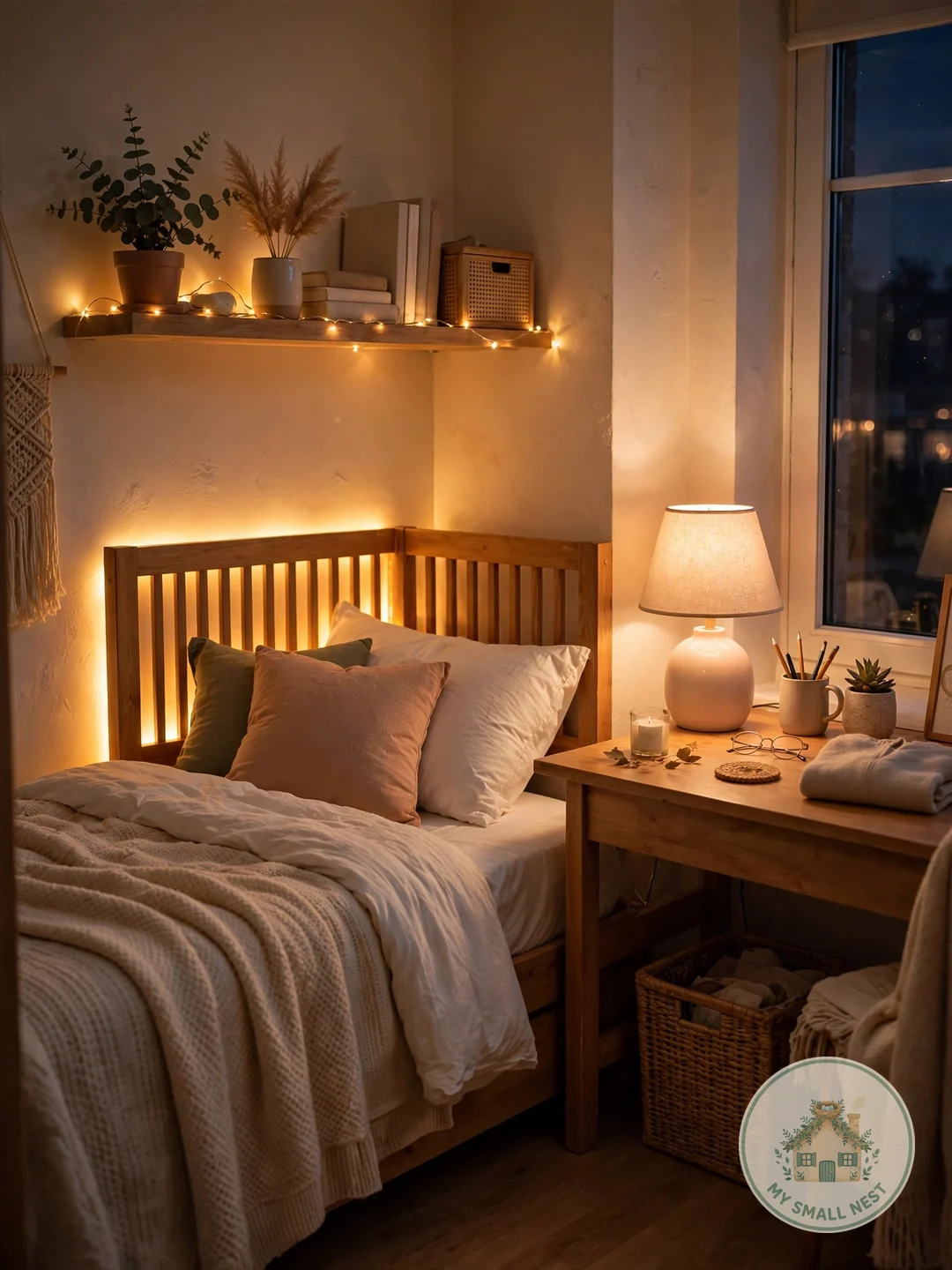
2. Layer LED Lighting and Cozy Lamps
Dorm overhead lighting is universally terrible, so layering your own light is the fastest mood upgrade. Start with warm-white LED strip lights ($12–$18 for a 16-foot strip on Amazon) along the headboard or under a lofted bed, then add a small table lamp with a fabric shade ($18–$28) for the desk or dresser.
Swap the bulb for a warm 2700K dimmable one ($8–$12) and the whole room shifts from interrogation-room to cozy in one click. Battery-operated fairy lights ($8–$12) draped over a photo wall or headboard add the sparkle — just check your housing rules, since some dorms restrict string lights near fabric.
 Pin it
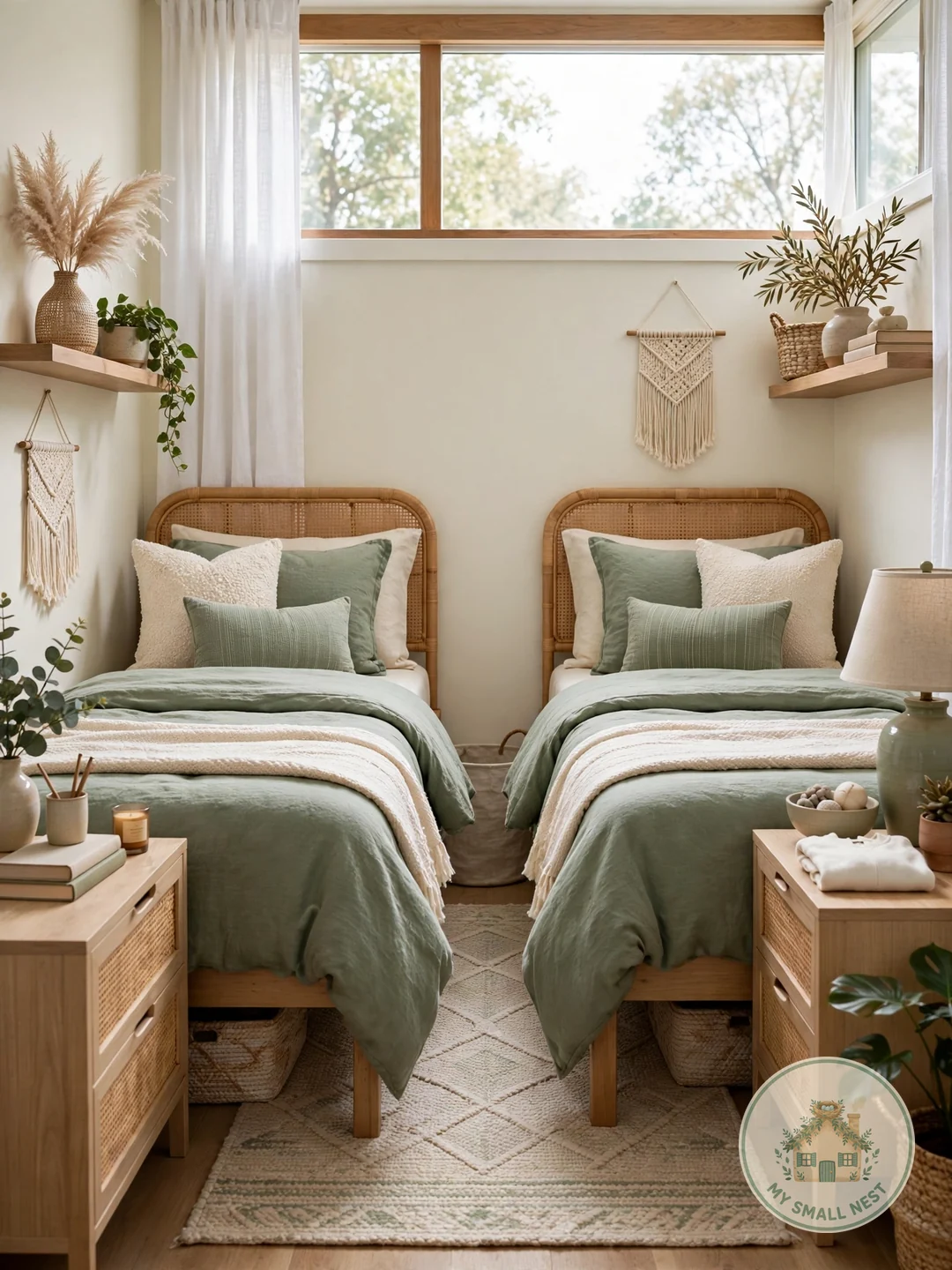
3. Coordinate With Your Roommate
The prettiest dorm rooms are planned, not accidental — and planning starts with one conversation. Text your roommate before either of you shops: agree on a shared palette (neutrals plus one accent is the easy win), split the big shared items (fridge, microwave, rug, vacuum), and divide the walls so your decor zones don’t collide.
I tried this in my studio when a friend moved in temporarily — we split a $40 rug and a $25 lamp instead of each buying our own, and the room looked twice as intentional for half the money. Put the agreement in a quick shared note: who bought what, who takes it in May. Future-you will be grateful.
 Pin it
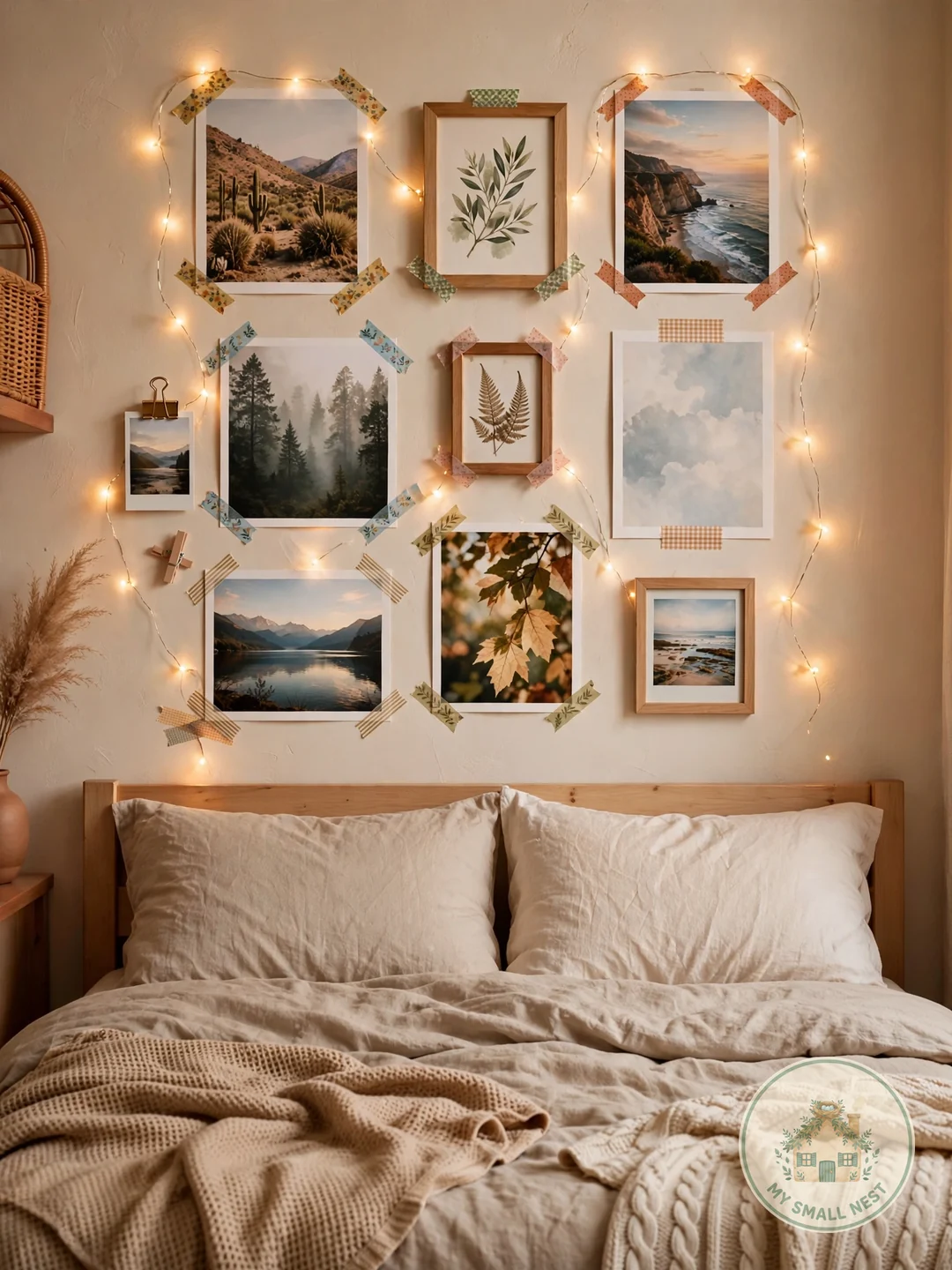
4. Create a Photo Wall
A photo wall is the cheapest large-scale wall decor that exists — and the most personal. Print 20–30 favorite photos as 4×6 prints ($0.30–$0.50 each at CVS, Walgreens, or Amazon Prints), arrange them in a loose grid or heart shape over the bed or desk, and hang with Command poster strips ($8 for a multi-pack) so everything comes down clean.
Mix in a few postcards, ticket stubs, or printed quotes for texture — the wall should look collected, not catalog. Leave a few empty spots on purpose; the wall gets better all year as new memories earn their place.
 Pin it
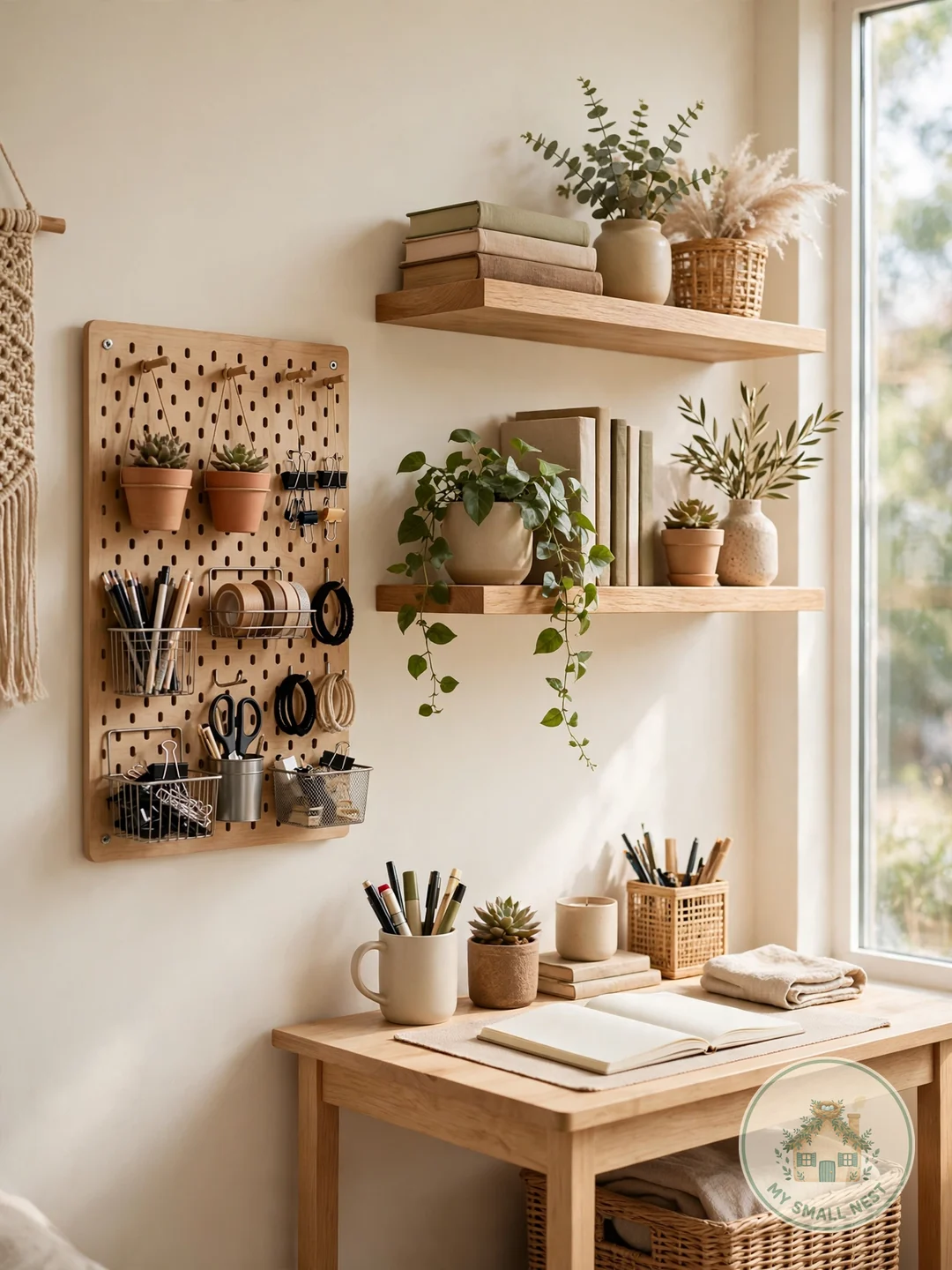
5. Add Floating Shelves for Storage
Dorm walls are mostly empty vertical space begging to be used. A set of two or three floating shelves ($18–$30 at IKEA’s LACK line or Amazon) mounted with damage-free adhesive brackets holds books, plants, and framed photos without touching the desk or floor.
Most adhesive shelf brackets support 5–10 pounds per shelf — enough for paperbacks and small plants, not a textbook collection. Style them in odd numbers (three objects per shelf beats four), keep the heaviest items closest to the wall, and check your housing policy: some dorms allow adhesive shelves, others restrict you to over-door and freestanding options.
 Pin it
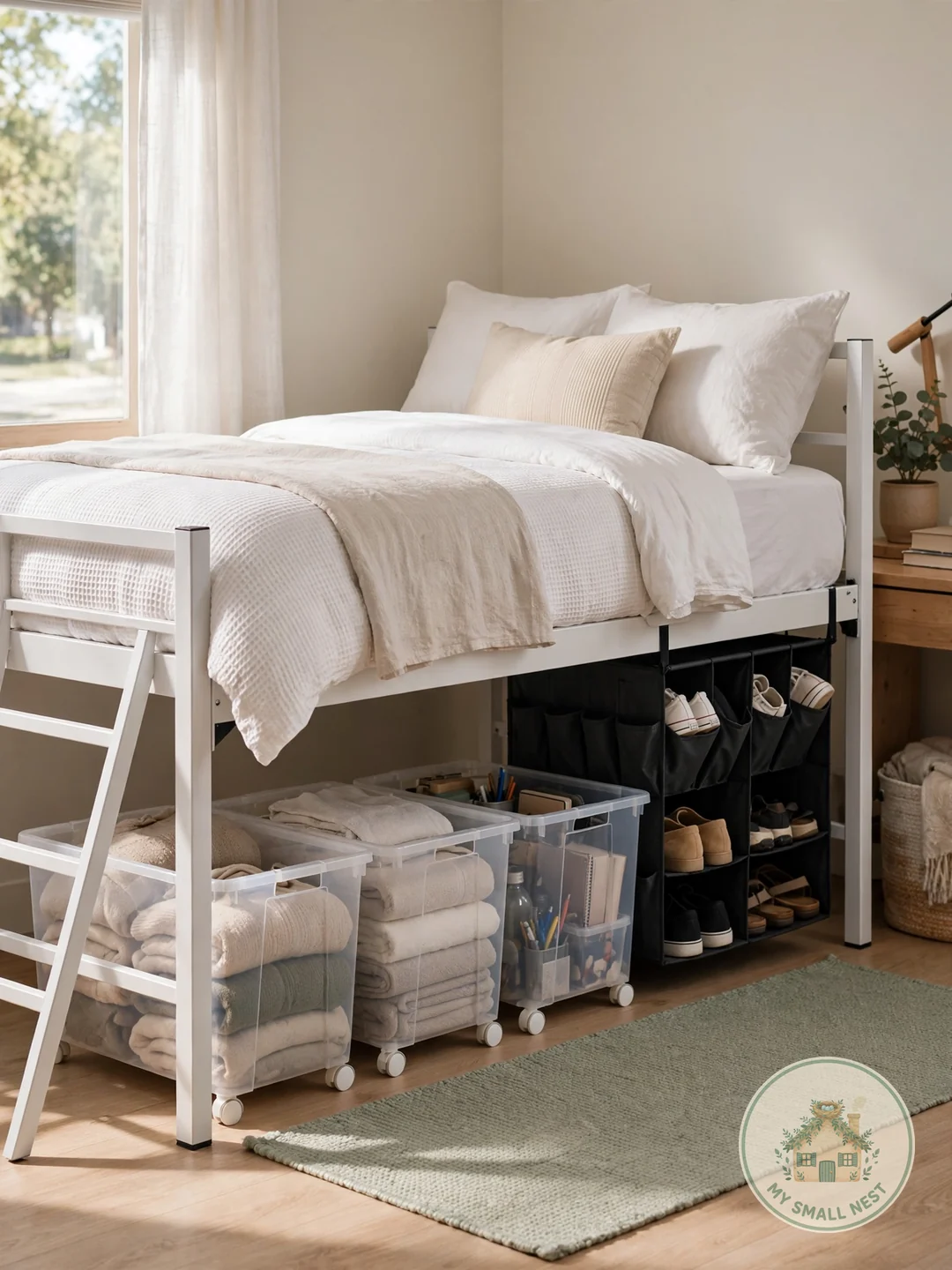
6. Maximize Under-Bed Storage
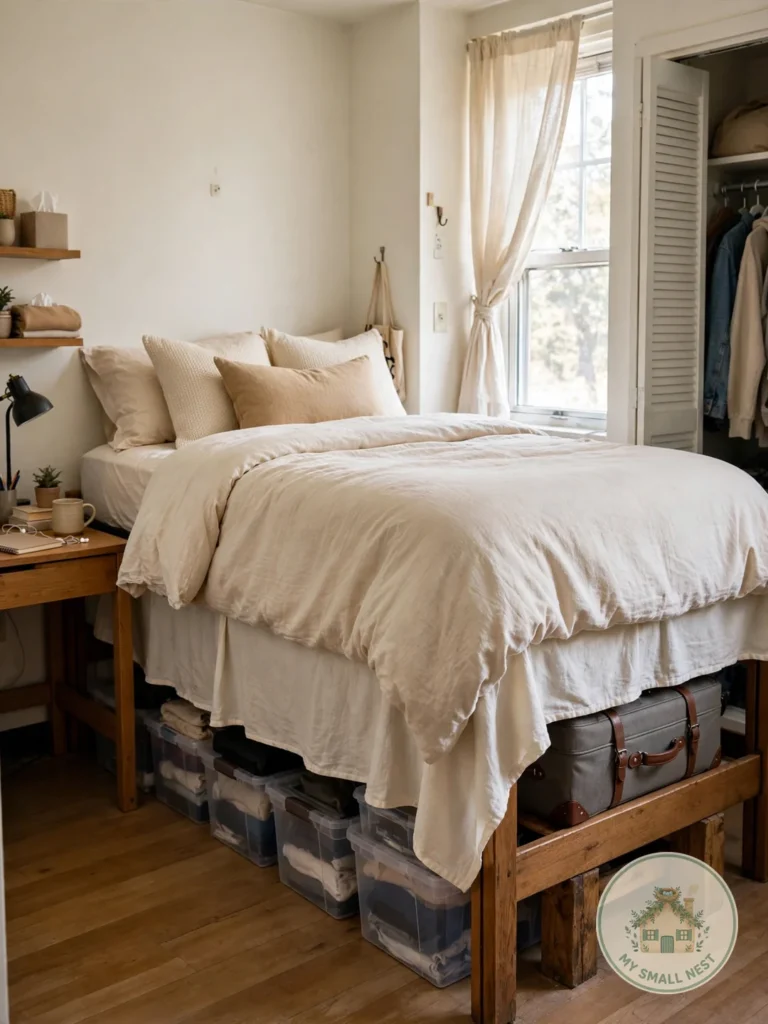
The space under your bed is the biggest storage zone in the room — most dorm beds can be raised or lofted to give you 24–36 inches of clearance. Measure first, then buy flat bins that actually fit: IKEA’s SKUBB boxes ($10–$15) or Target’s Brightroom fabric bins ($8–$12) slide in neatly and keep off-season clothes, snacks, and extra bedding out of sight.
I tried this in my studio with a 6-inch riser set under the bed frame ($18) — it bought me enough clearance for two full storage bins and a suitcase, which in a 380-square-foot studio is basically a second closet. Label each bin with painter’s tape so you’re not unstacking everything to find the winter coat.
 Pin it
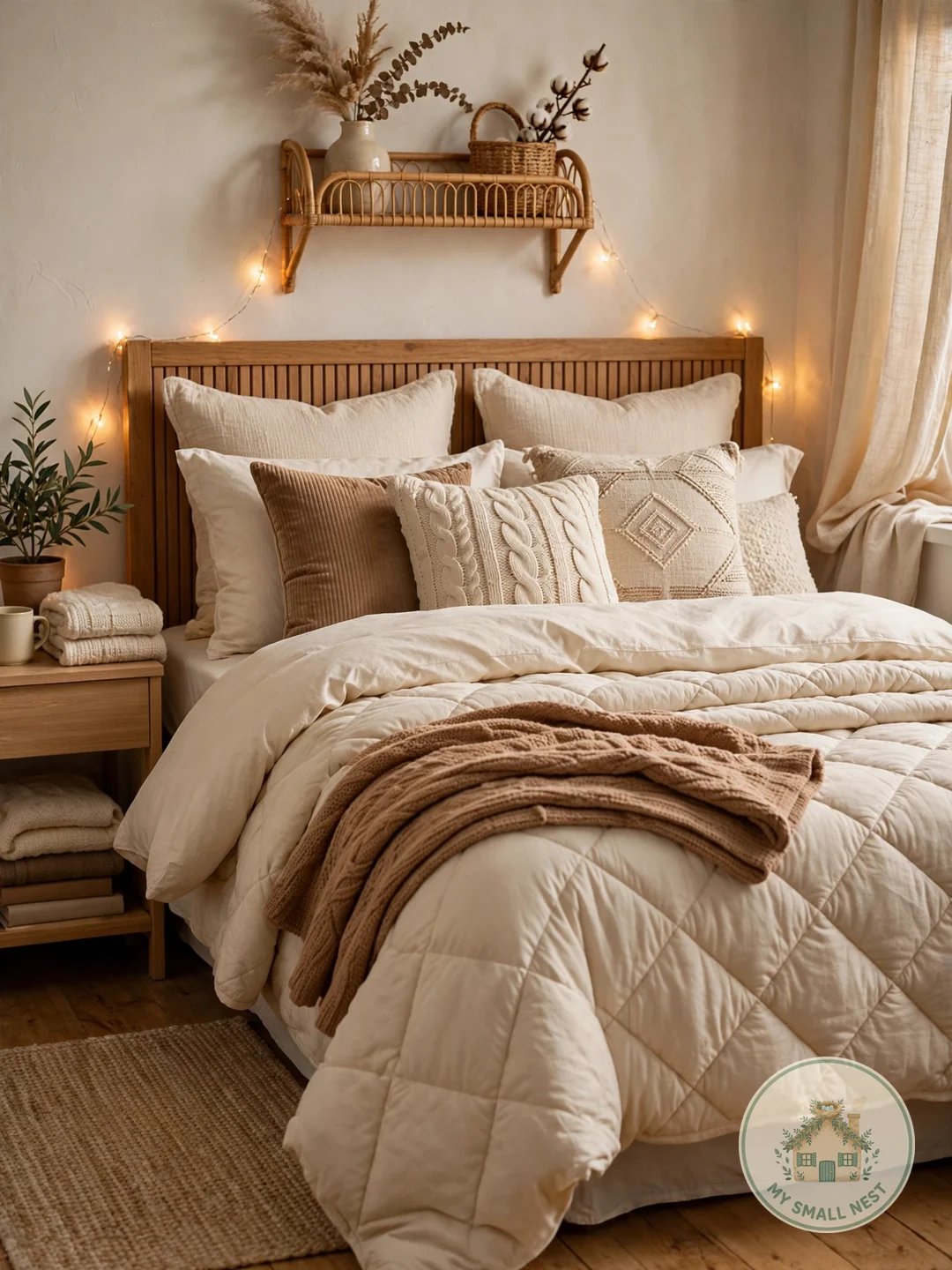
7. Layer Cozy Bedding
Layered bedding is what separates “dorm bed” from “Pinterest dorm bed,” and it doesn’t require expensive pieces. Start with a twin XL duvet cover set ($35–$55 at Target), add a contrasting quilt or coverlet folded at the foot ($25–$40), then finish with two sleeping pillows plus two decorative shams or throw pillows ($15–$25 total).
The formula is simple: base layer in your main color, middle layer in a texture (waffle, knit, quilted), top accent in your pop color. A $15 throw blanket draped diagonally across the corner hides a multitude of unmade-bed sins and makes the whole room look styled in ten seconds.
 Pin it
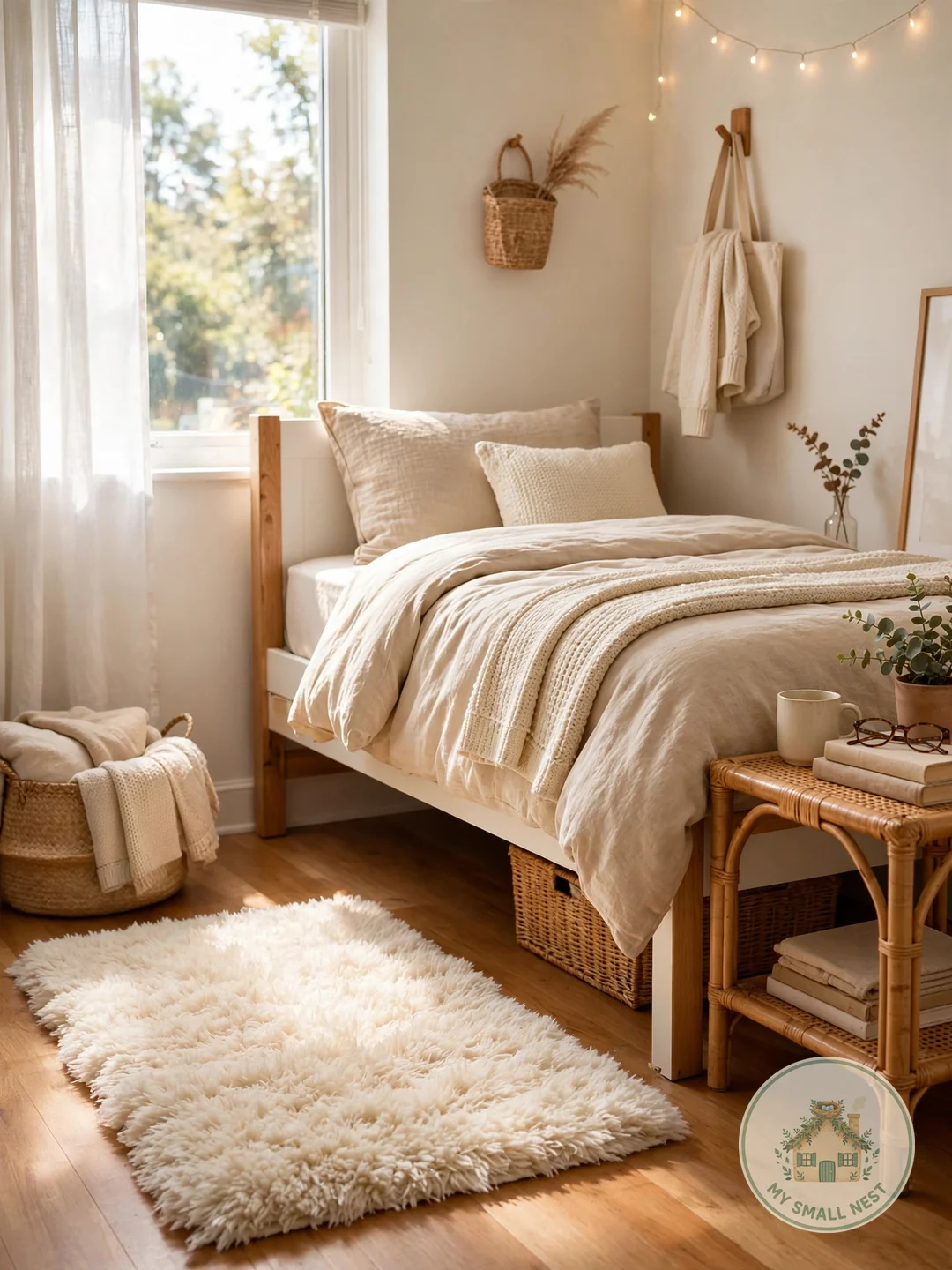
8. Warm It Up With a Small Rug
A rug does three jobs in a dorm: warms up cold tile, deadens noise for the room below, and visually claims your side of the room. A 3×5 or 4×6 low-pile rug ($25–$50 at IKEA, Target, or Rugs USA sale section) fits the classic between-the-beds layout without swallowing the walkway.
Low pile is the practical choice — it vacuums easily with a handheld and doesn’t trap every crumb from late-night snacks. If spills worry you, the machine-washable rug dupes on Amazon ($40–$65) go straight in the dorm laundry machines and come out looking new.
 Pin it
9. Set Up a Mini Coffee or Snack Station
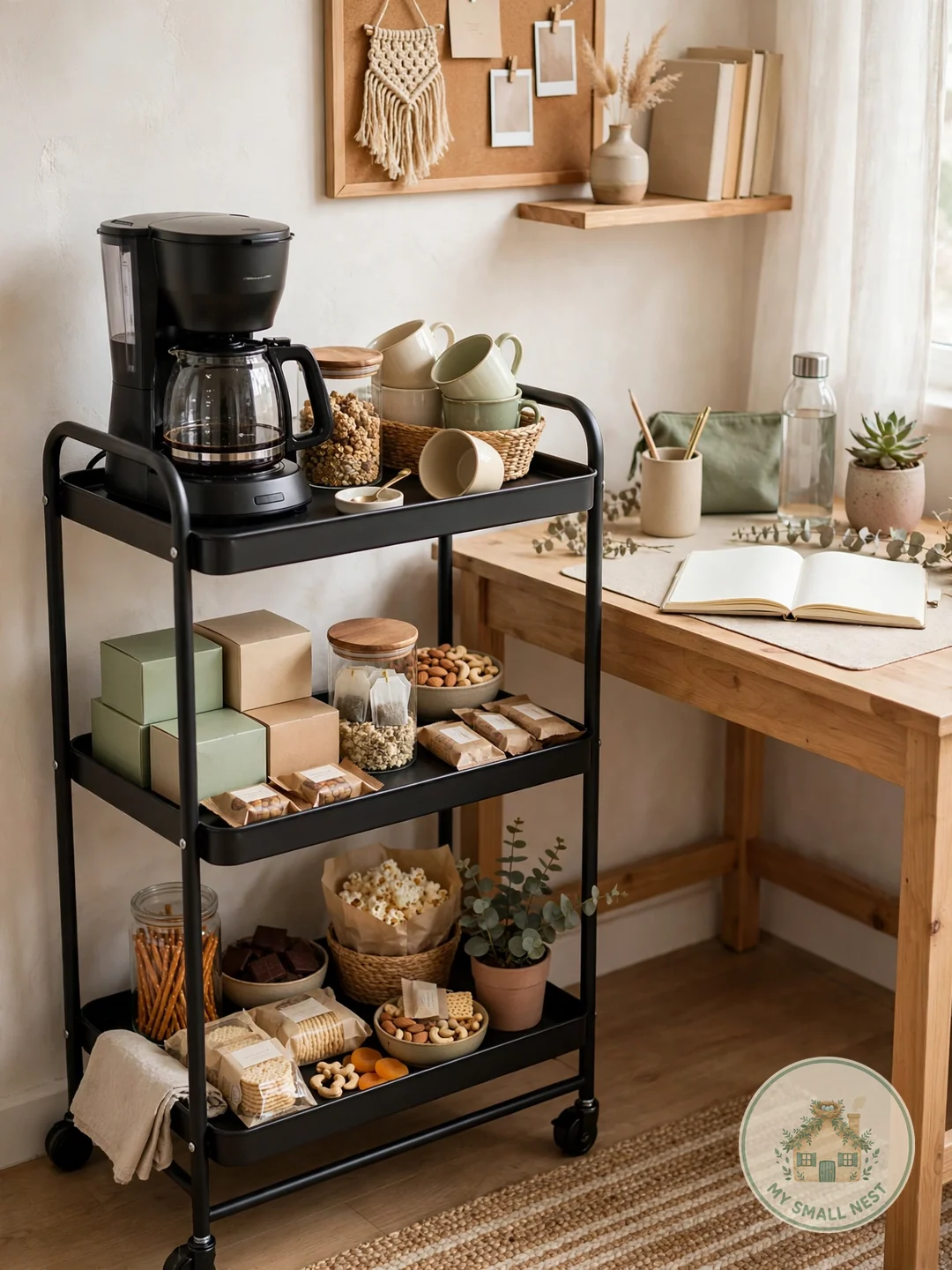
A mini coffee or snack station turns your corner of the room into the place everyone wants to hang out. The setup: a small rolling cart ($25–$35 at IKEA’s RASKOG or Target) holding an electric kettle ($20–$30) or compact coffee maker ($25–$45), two mugs, tea and instant coffee ($10–$12), and a snack basket ($8–$12 for granola bars, popcorn, and the good chocolate).
I tried this in my studio with a $30 cart parked by the “kitchen” wall — it kept every mug and snack in one zone instead of migrating across the whole apartment, and guests always gravitated to it. Do the math on coffee alone: 20 cents a homemade cup versus $5 at the campus café pays for the whole cart in a month.
 Pin it
10. Organize Your Desk Station
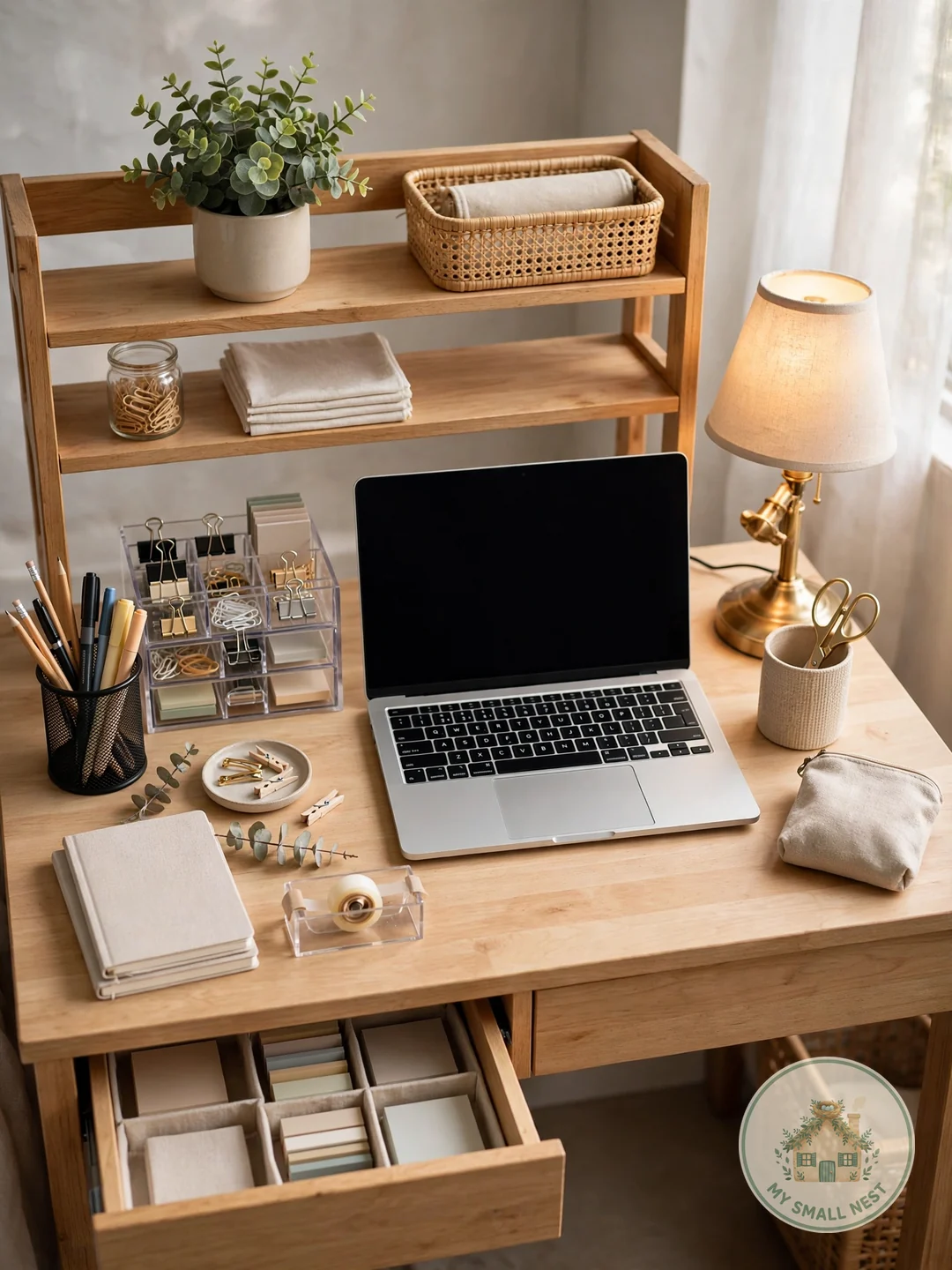
Your desk is command central for four years of studying, so set it up like you mean it. A desk organizer with a phone stand and pen cups ($12–$18), a small drawer unit or desktop shelf ($15–$25) to double the surface, and a cable clip set ($6) to keep chargers from sliding behind the desk cover the basics.
Then make it yours: a small plant ($8–$12), a framed photo, and a desk lamp with warm light ($20–$30). Keep the actual work surface to about two-thirds clear — a desk buried in decor becomes a desk you avoid, and avoidance is how assignments pile up.
 Pin it
11. Add Plants for Freshness
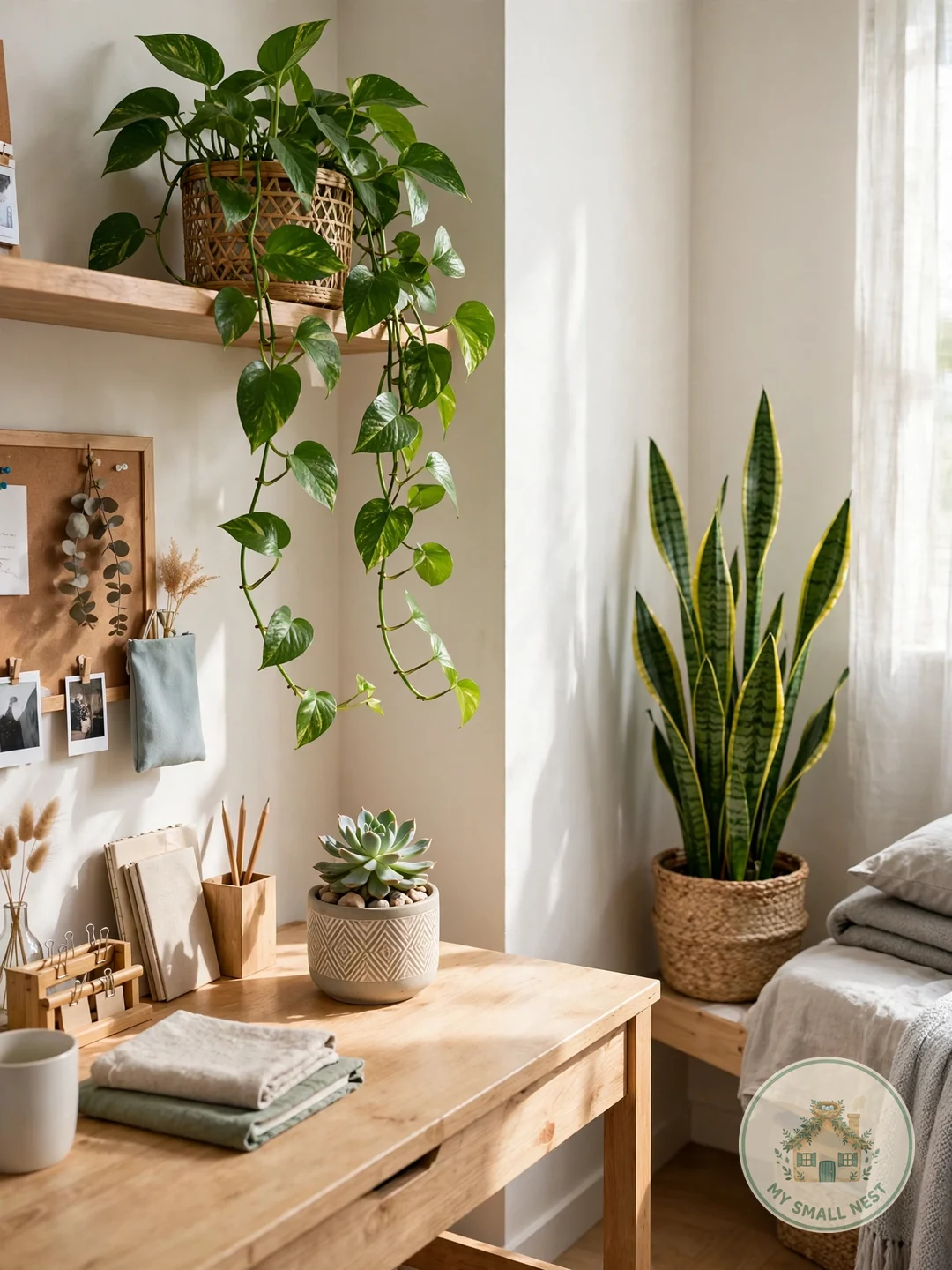
Plants are the one decor item that literally makes the air feel fresher, and dorms are full of the low-light corners where the right plants thrive. Start with the unkillables: a pothos ($8 at Trader Joe’s), a snake plant ($12–$18 at Home Depot), and a ZZ plant ($15–$20) — all three survive missed waterings, dark rooms, and winter-break neglect.
Hang the pothos from a Command hook in a macrame planter ($10–$12) so it uses zero surface space, and cluster the floor plants in one corner for a mini-jungle effect. Three plants for under $40 transforms a concrete box more than any poster ever will — just confirm your dorm allows live plants (almost all do).
 Pin it
12. Hang a Wall Tapestry
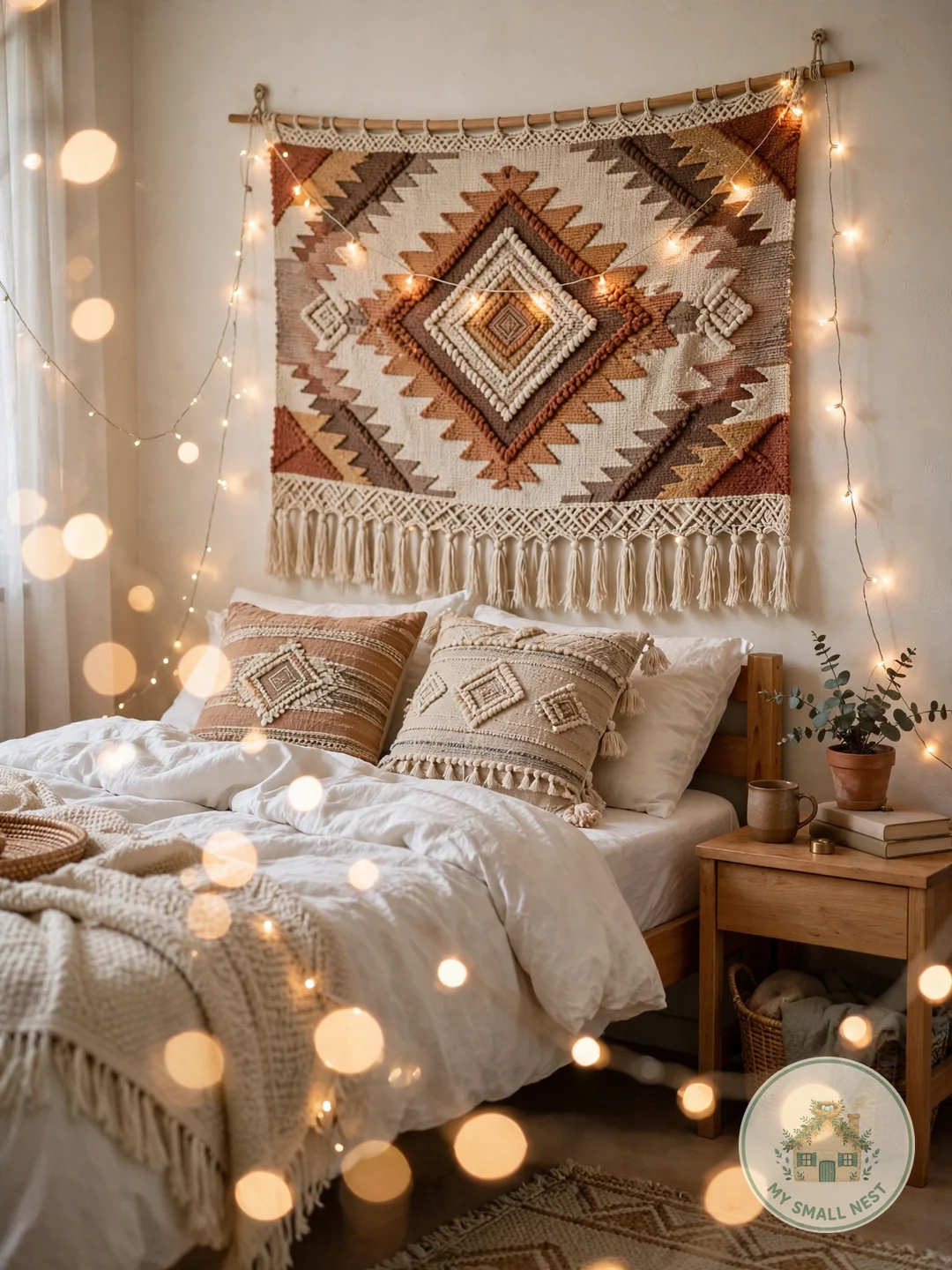
A wall tapestry is the no-paint accent wall: one 60×80-inch piece ($20–$35 on Amazon) hung behind the bed covers more visual area than any other single decor item. Botanical prints, abstract landscapes, and celestial designs are the 2026 favorites — pick one that shares a color with your bedding so the room reads cohesive.
Hang it with a tension rod for a clean top edge, or Command strips rated for the weight if rods aren’t allowed. I tried this in my studio with a $28 tapestry behind the couch — it hid a multitude of wall sins and became the backdrop for every video call. Steam the fold creases out first; ten minutes of steaming makes a budget tapestry look triple the price.
 Pin it
13. Style an Aesthetic Mirror Corner
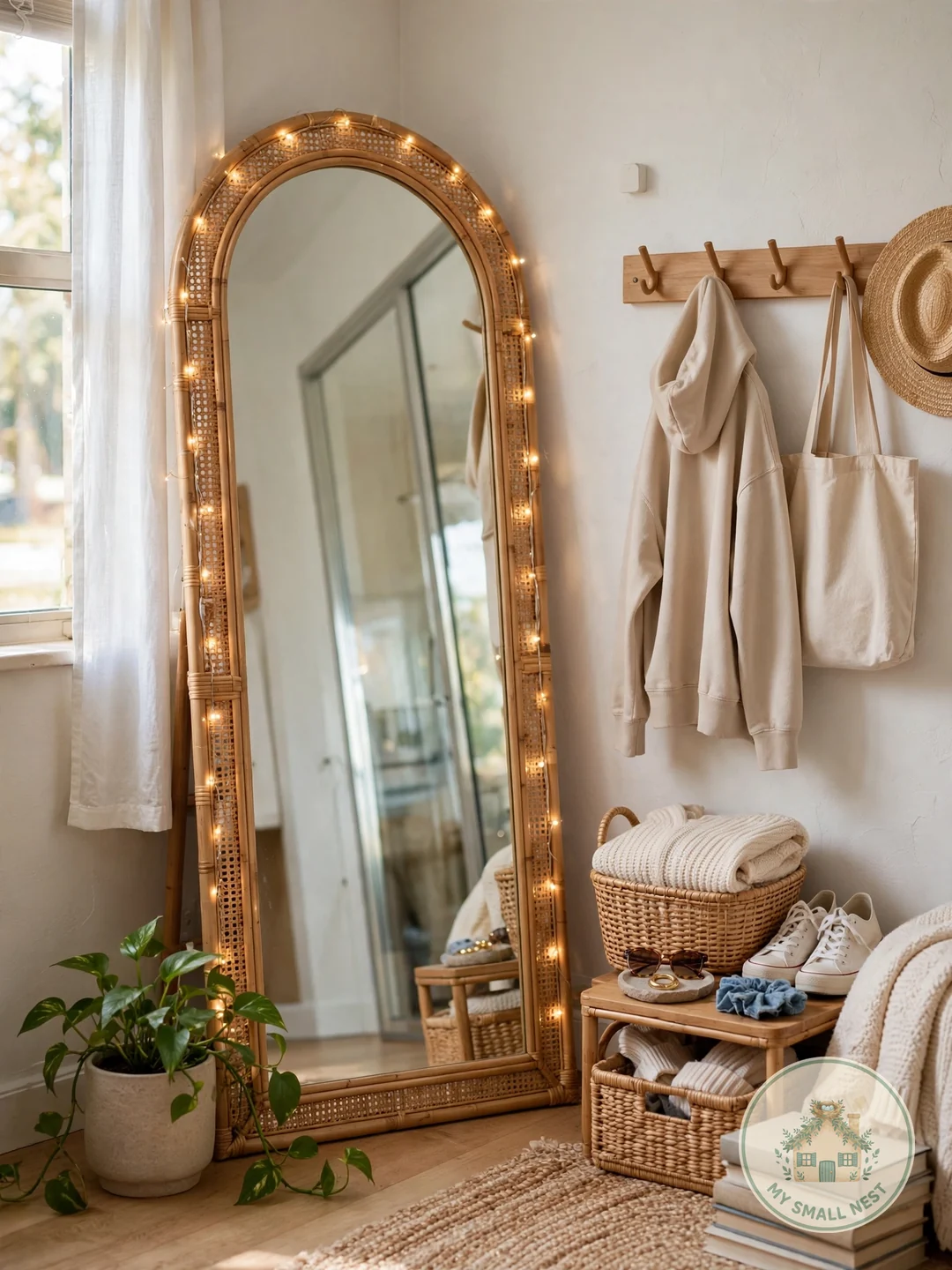
A full-length mirror ($20–$35 at Target or Walmart) is the hardest-working decor in a dorm: it makes the room feel twice as big, bounces light into dark corners, and yes, lets you check the outfit. Lean it against the wall beside the closet or hang it on the door with over-door hooks ($8) — no drilling required.
Style the corner around it: a small plant at the base, string lights along the frame, or a leaning shelf beside it. The mirror corner photographs beautifully, which matters more than it should — this is the spot that ends up in every room tour and move-in vlog.
 Pin it
14. Choose Multi-Use Furniture
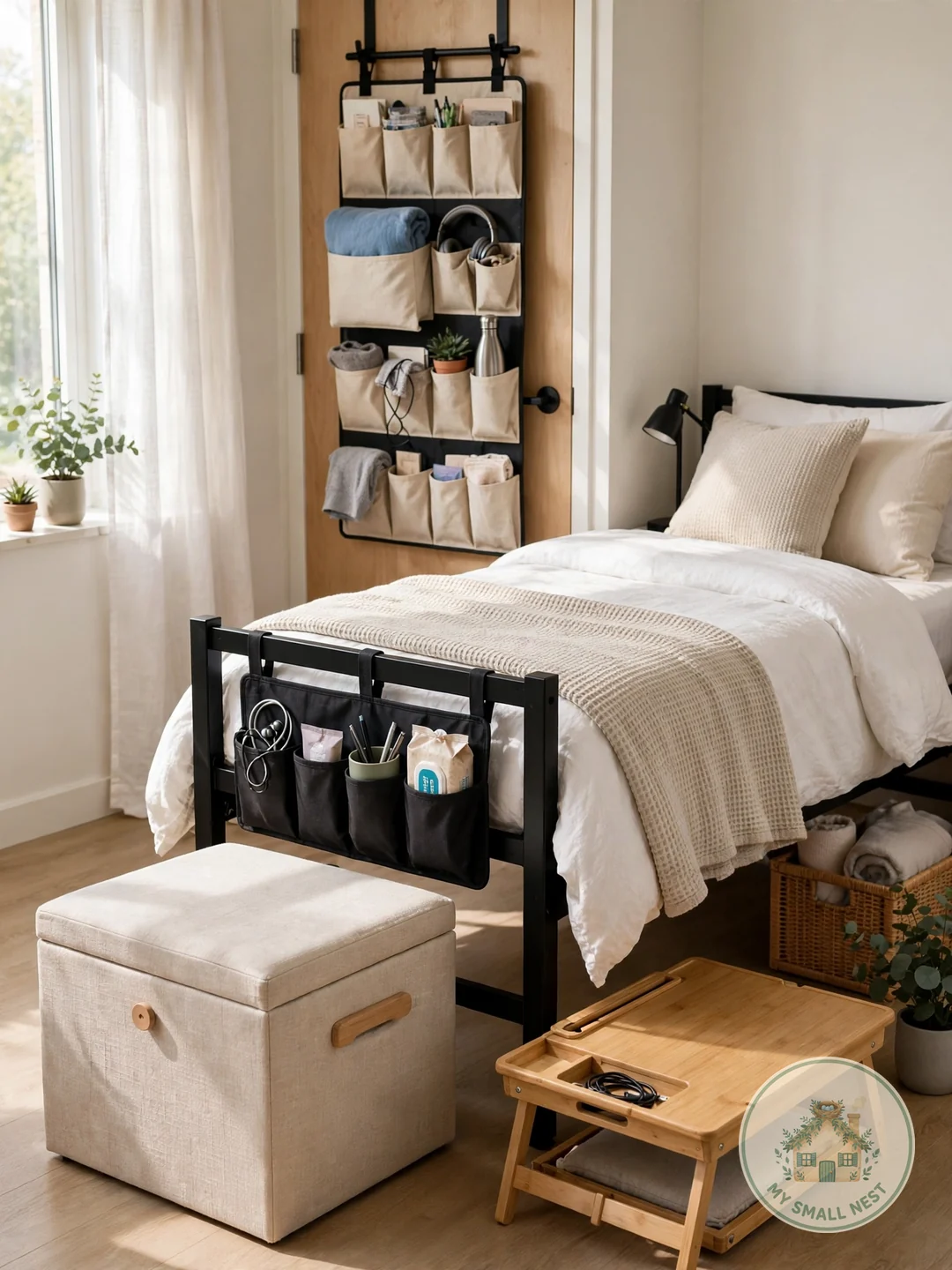
Every piece of dorm furniture should do at least two jobs. An ottoman with hidden storage ($30–$50) is a seat, a footrest, and a blanket chest; a rolling cart ($25–$35) is a nightstand, a coffee station, and a bathroom caddy on wheels; a folding lap desk ($20–$30) turns the bed into a study spot when the desk chair gets old.
Before buying anything single-purpose, ask what else it can do — in a 200-square-foot shared room, a piece that only does one thing is a luxury you can’t afford. Thrift stores near college campuses are full of exactly these pieces every May when seniors move out.
 Pin it
15. Create a Cozy Study Nook
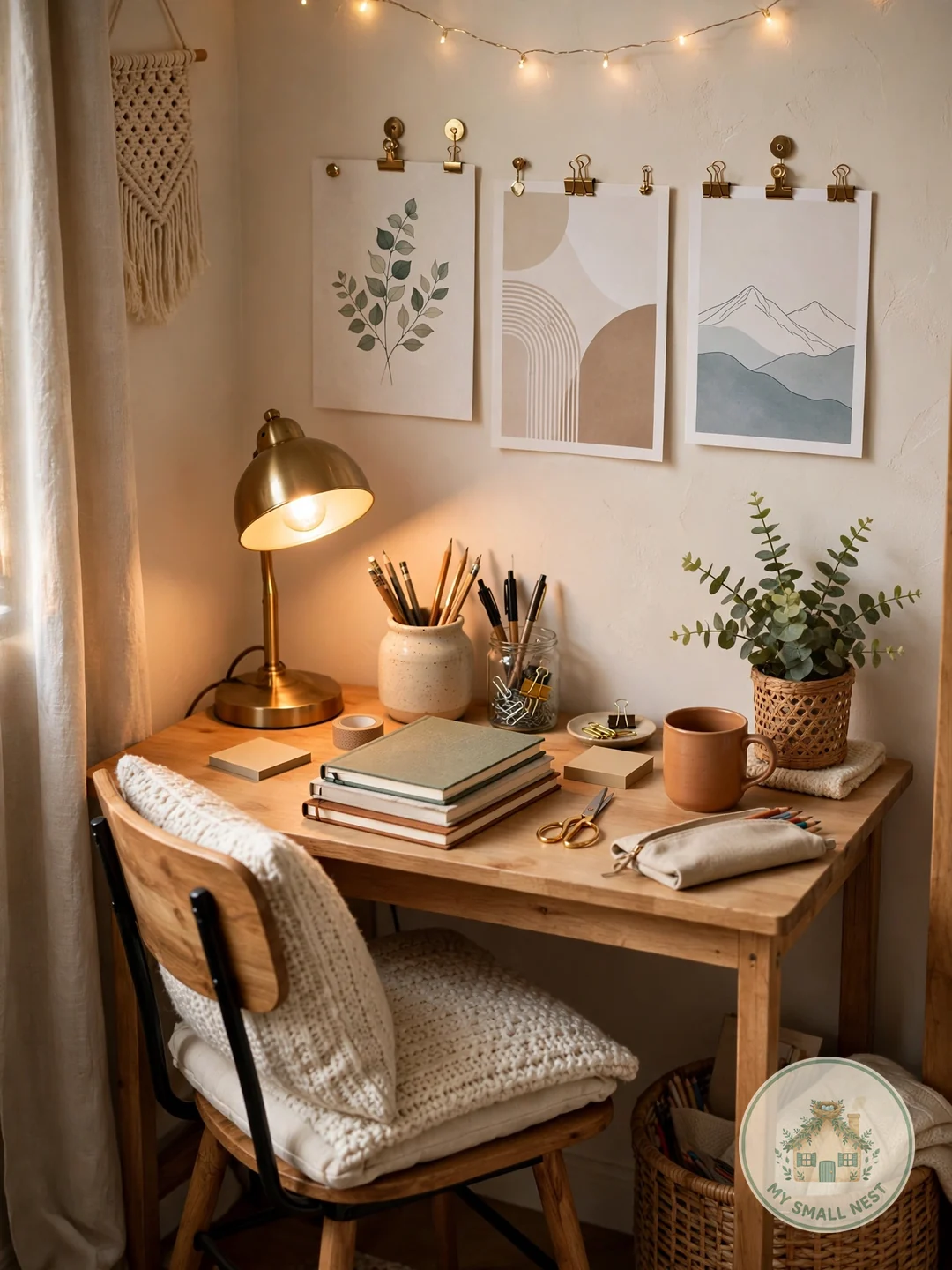
Not every study session happens at the desk — sometimes you need a corner that feels separate from the sleep zone. Carve one out with a floor cushion or pouf ($25–$40), a small side table or crate ($10–$15), a clip-on reading light ($12–$18), and a throw blanket.
I tried this in my studio with a $30 pouf and a thrifted side table in the corner by the window — it became my reading spot, my journaling spot, and honestly my thinking spot, all for under $50. In a dorm, even a 3×3-foot nook by the window gives your brain a “different room” to switch into when the desk feels stale.
 Pin it
16. Hang Curtains for Instant Polish
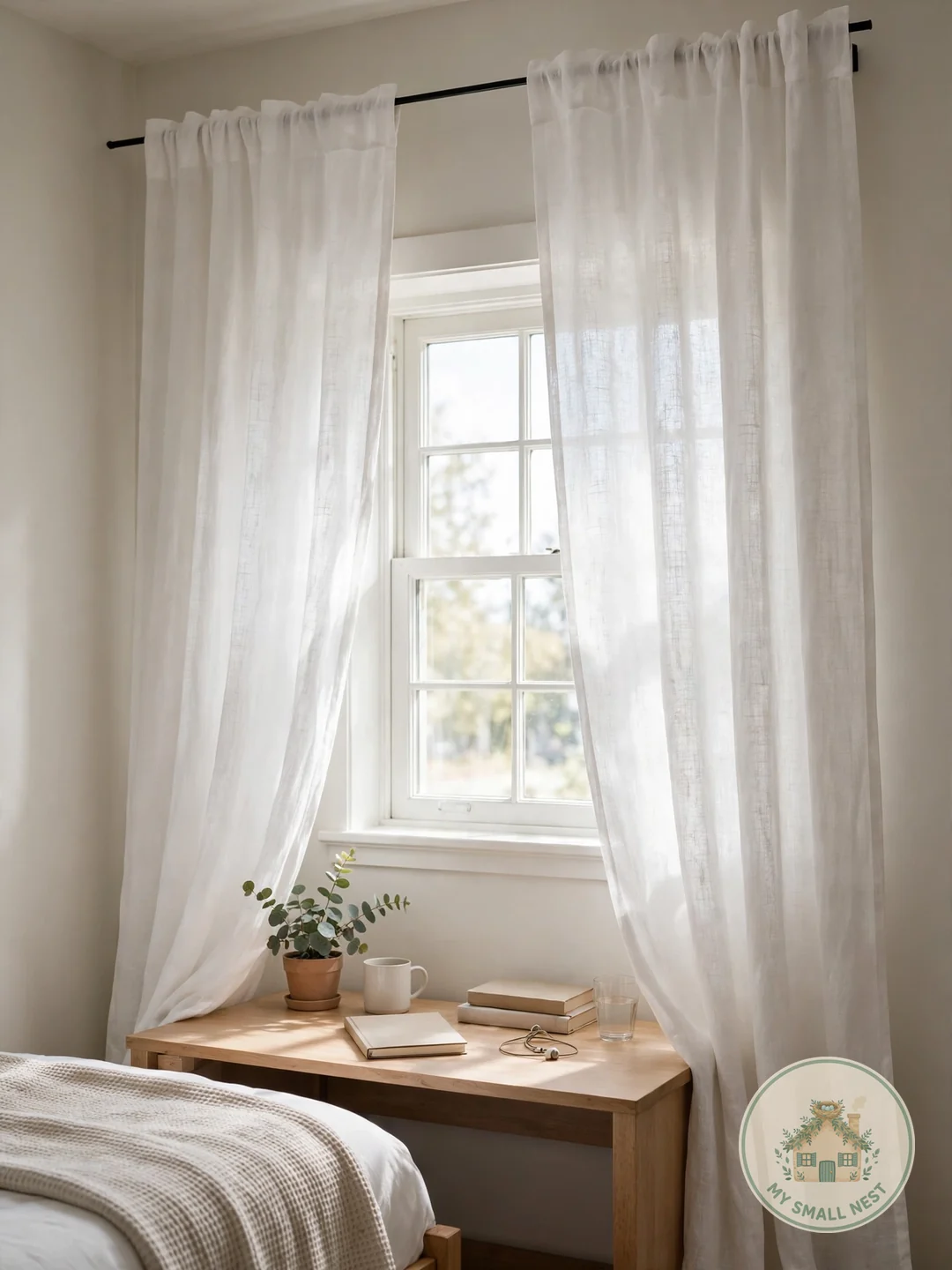
Curtains are the fastest way to make a dorm room look finished — they soften the hard window frame, add color at eye level, and actually help you sleep. Most dorms allow tension rods (no drilling), and a pair of 84-inch curtains ($20–$35 at Walmart or Amazon) fits the standard 30–36-inch dorm window.
Go for blackout or room-darkening lining ($5–$10 more) — the sleep upgrade is worth more than any other curtain feature when your roommate’s schedule doesn’t match yours. Hang them high and wide: rod 4–6 inches above the frame and panels extending past the sides makes the window look bigger and the room taller.
 Pin it
17. Use a Bedside Caddy
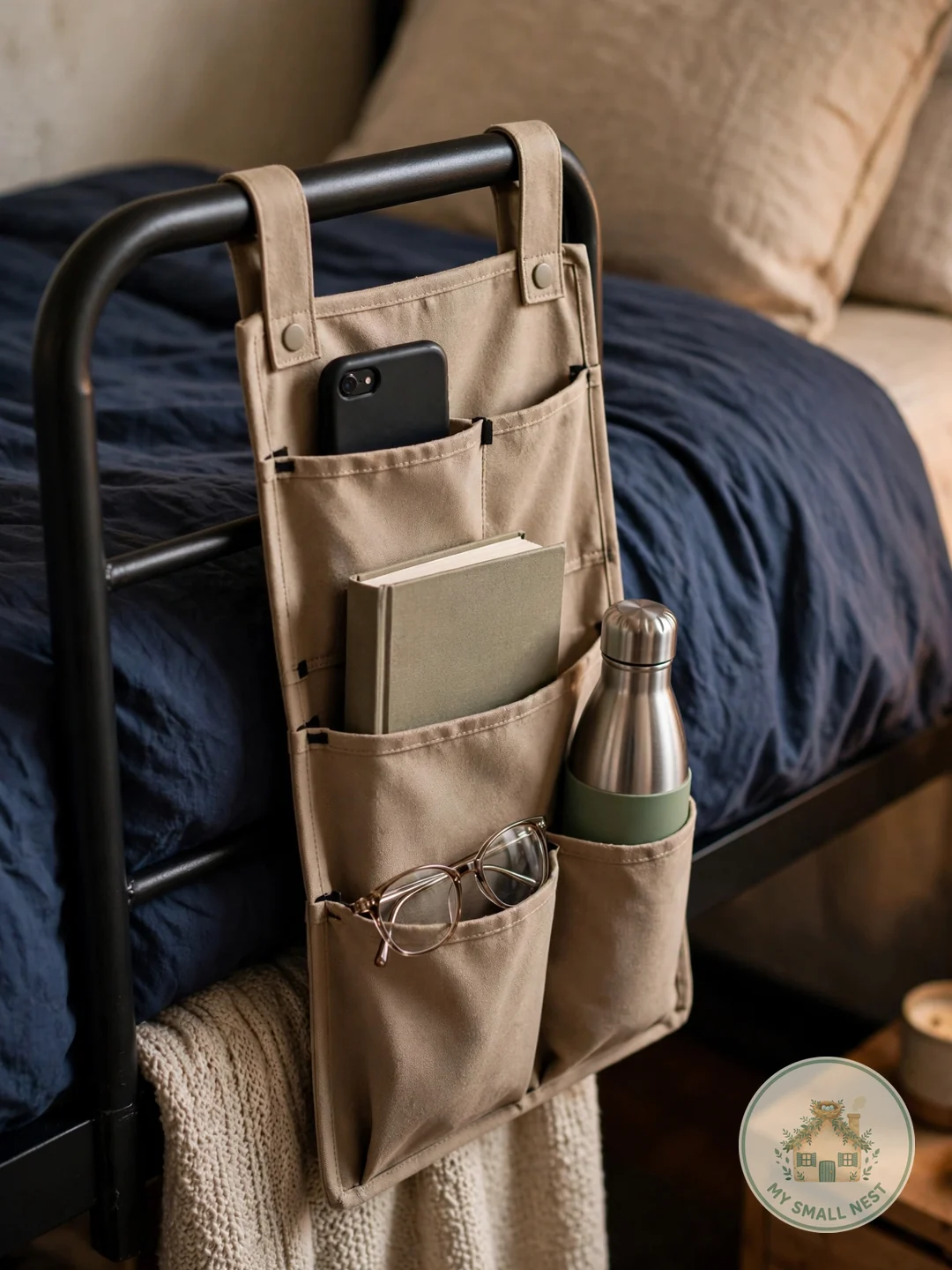
When the bed is lofted or pushed against the wall, there’s nowhere to put the phone, glasses, water, and lip balm — that’s the bedside caddy’s job. A fabric caddy that slides between the mattress and frame ($10–$15 on Amazon) holds everything within arm’s reach with pockets sized for phones, books, and bottles.
Look for one with a reinforced top edge so it doesn’t collapse, and a cup-holder pocket if you’re a bedtime-tea person. It’s the smallest purchase on this list and the one you’ll use literally every single day — twice a day, if you count the 2 a.m. water reach.
 Pin it
5 Mistakes to Avoid
Buying before measuring: Dorm beds, windows, and desks come in odd sizes — twin XL bedding, narrow rugs, and bins that don’t fit under the bed are classic move-in-day regrets. Measure everything first.
Ignoring the roommate conversation: Two people decorating independently creates visual chaos. Agree on a palette and split shared items before either of you shops.
Using nails or damaging walls: Command strips, poster putty, and tension rods exist for a reason. Wall damage fees ($25–$100 per hole at many schools) can wipe out your entire decor budget.
Overbuying before move-in: Wait to buy rugs, curtains, and large decor until you’ve seen the actual room. The Pinterest cart you built in July may not fit the room you get in August.
Choosing looks over function: A beautiful room you can’t study, sleep, or store things in stops feeling beautiful by week three. Every pretty piece should also do a job.
FAQs
How can I make my dorm room cute on a budget?
Start with bedding and lighting — they cover the most visual area for the least money. A duvet cover set, string lights, and a small rug transform a dorm for under $100. Thrift stores and end-of-summer sales are goldmines for dorm decor.
What should every dorm room have?
The essentials: comfortable layered bedding, good lighting (desk lamp + string lights), under-bed storage, a power strip with surge protection, and a rug. Add a mirror, plants, and wall art to make it feel like home.
How do I decorate a dorm room I share with a roommate?
Talk before you shop: agree on a shared color palette, split the big shared purchases (fridge, rug, vacuum), and divide the walls into zones. Keep your boldest choices on your side of the room and shared areas neutral.
What are the best renter-friendly ways to hang things in a dorm?
Command strips and poster strips for frames and photos, tension rods for curtains and tapestries, over-door hooks for towels and robes, and washi tape for lightweight prints. Everything comes down clean on move-out day.

What readers are saying
No comments yet — yours could be the first.