 My Small Nest
Moving into your first college apartment is thrilling — until night one, when you’re standing in a half-empty apartment with no shower curtain, no toilet paper, and a sinking feeling that you packed everything except the essentials. I know, because that was me: I remembered the fairy lights and forgot the can opener.
That is exactly why I made this college apartment checklist: 12 printable, room-by-room lists covering paperwork, bedroom, kitchen, bathroom, cleaning, safety, and even what to pack for move-in day itself. Real quantities, real sizes, real budgets — the stuff nobody tells you until you’ve already made the expensive mistake.
Who this is for: first-time renters moving into a college apartment this semester — and their parents, who are currently panic-buying on Amazon. Print it, share it with your roommates, and check things off as you go.
1. Before You Pack: Lease, Bills & Landlord Paperwork
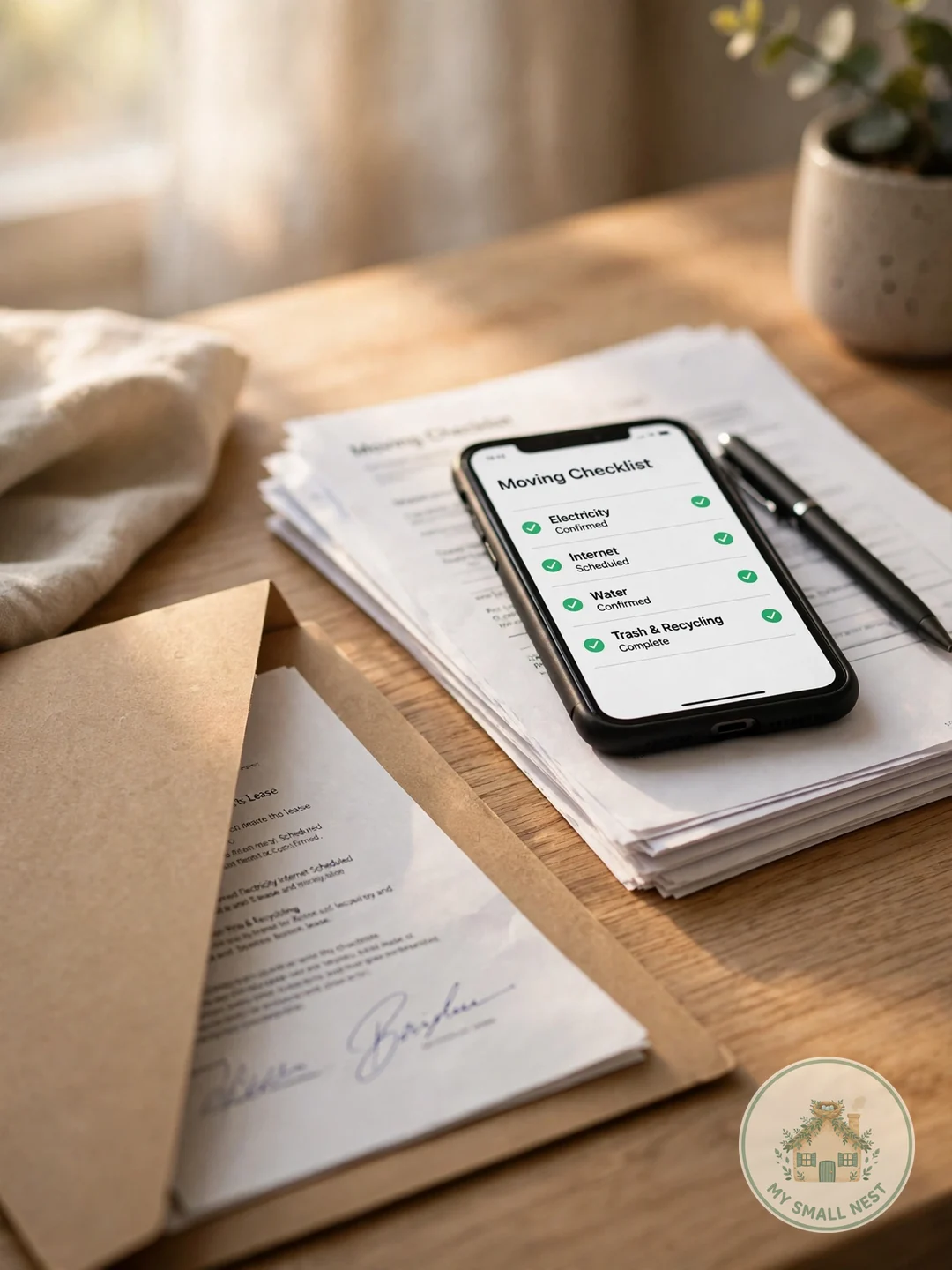
The least fun list is the one that saves you the most money. Before a single box gets packed, gather your lease copy, photo ID, proof of enrollment, and your landlord’s contact info in one folder — physical and digital. Confirm which utilities are included and set up the rest (electric, water, internet) at least a week before move-in so you are not sitting in the dark on night one. Take dated photos of every room, wall, and appliance on day one; that five-minute photo walk is your deposit protection when you move out.
Renter’s insurance costs about $10–15 a month and most leases require it — a stolen laptop without coverage is a $1,000 lesson nobody needs. Lemonade and Assurant both offer student-friendly policies you can set up online in ten minutes. Screenshot your move-in inspection form and email everything to yourself so it survives a lost phone.
Make it work: Keep a single note on your phone titled “Apartment Paperwork” with account numbers, due dates, and your landlord’s number pinned at the top. When the Wi-Fi dies at midnight, you’ll thank past-you.
 Pin it
2. The Bedroom Starter Kit
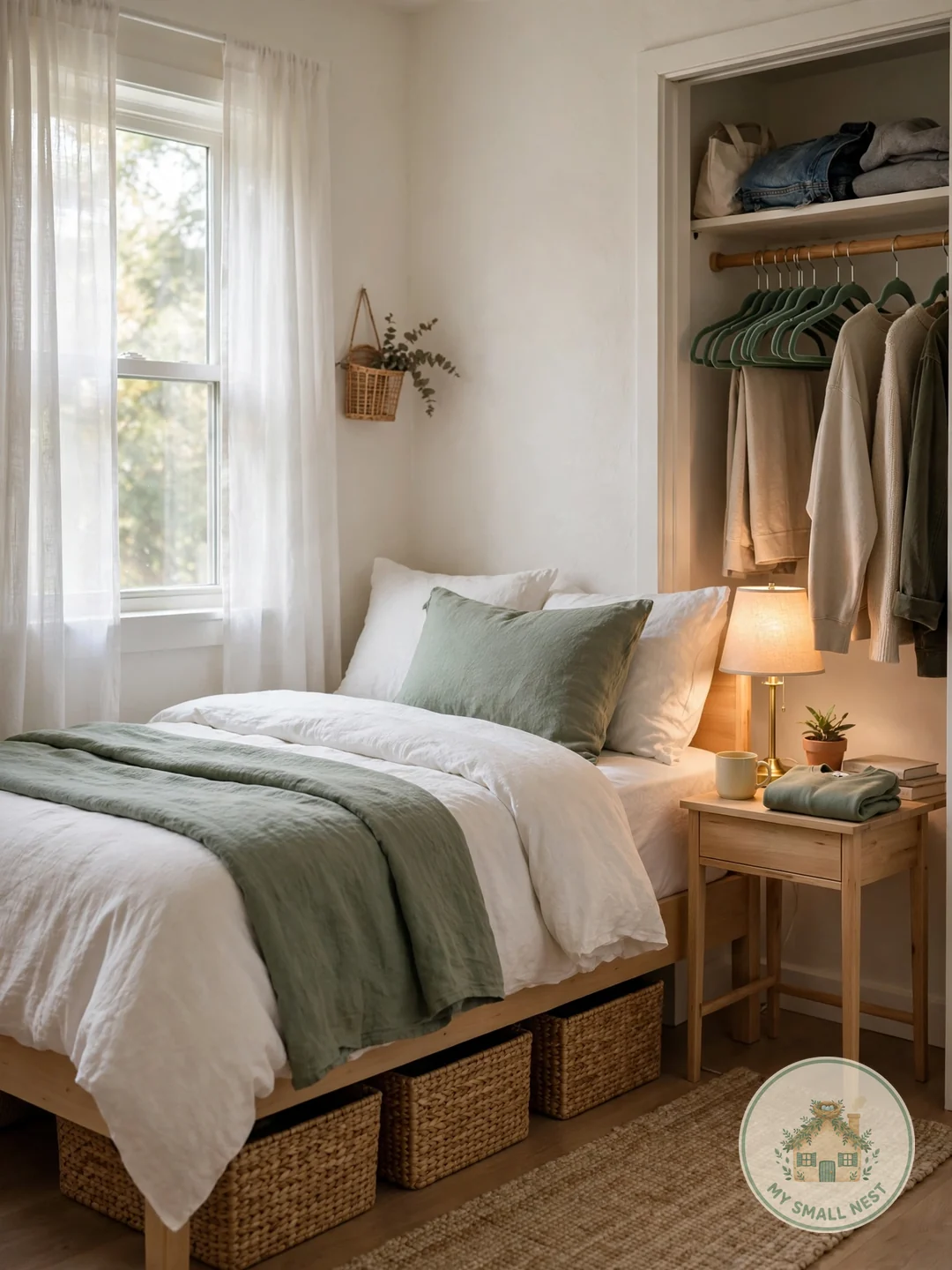
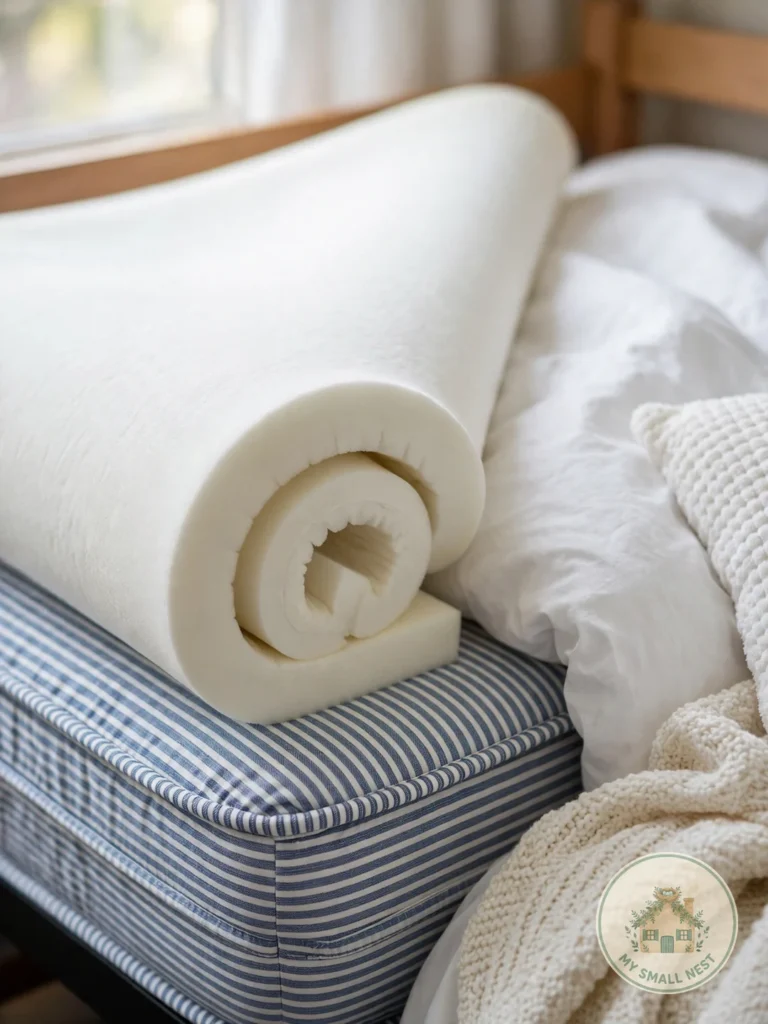
Your bedroom is mission control, so nail the basics first. Most college apartments come with a Twin XL bed (39 x 80 inches — regular twin sheets will not fit), so buy Twin XL sheets and a mattress protector before anything decorative. A 2–3 inch memory foam topper ($50–$70 on Amazon) transforms even a sad dorm-style mattress into something you will actually sleep on, and two firm pillows plus a soft one covers both sleeping and propping up to study.
Add a set of slim velvet hangers ($12–$15 for 30 — they hold twice the clothes in a small closet), a small bedside lamp with a warm bulb, and under-bed storage bins for shoes and seasonal clothes. Skip the giant comforter until you know your room’s temperature; a mid-weight duvet ($40–$60) plus a throw blanket is more flexible and cheaper to wash.
Make it work: Buy one extra fitted sheet so laundry day never leaves you sheetless. Two sheet sets in rotation is the entire system — it’s that simple.
 Pin it
3. Kitchen Gear You Will Actually Use
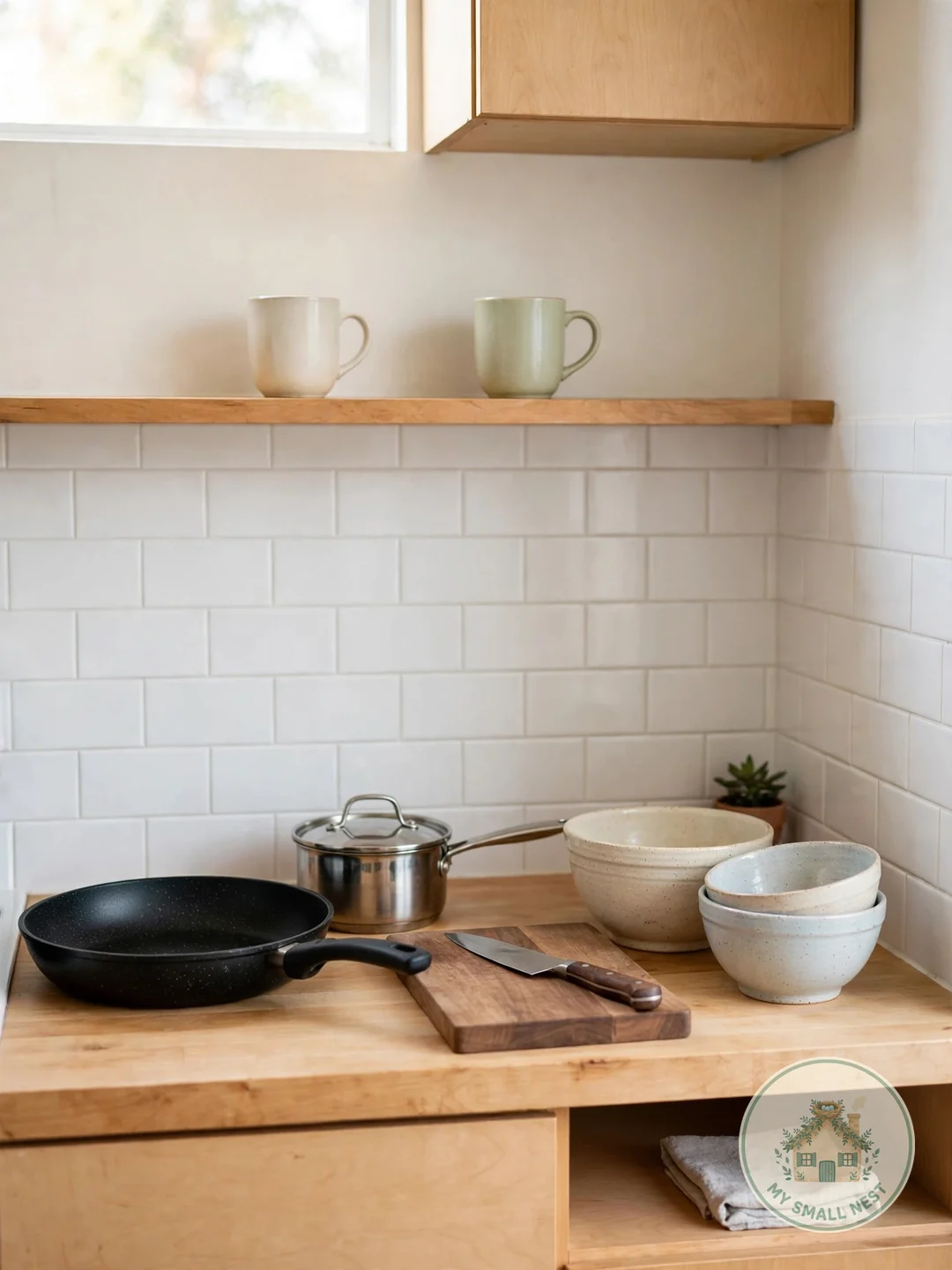
College kitchens are small and shared, so every item must earn its space. The real-work list: one 10-inch nonstick skillet, one medium saucepan with lid, a sheet pan, a cutting board, a chef’s knife, a wooden spoon, a spatula, a can opener, and a set of mixing bowls that double as serving bowls. Add two plates, two bowls, two mugs, and a basic cutlery set per person — more than that just piles up in the sink.
A small rice cooker ($25–$35) or an air fryer ($40–$60) earns its counter space fast because both cook real meals with almost no skill required. Skip the single-use gadgets (avocado slicers, egg separators) and the 20-piece knife block. Coordinate with roommates before buying — one shared toaster, coffee maker, and blender beats three of each cluttering the counter.
Make it work: Buy the knife new and sharp ($15–$25 for a decent chef’s knife) — a dull cheap knife is genuinely dangerous. Everything else can be thrifted.
Emma’s tip: When I set up my 380 sq ft studio kitchen, I bought the full “starter set” and used maybe half of it. The truth: my 10-inch skillet, one good knife, and a rice cooker handle 90% of my cooking. If I were furnishing a college apartment today, those three things would be the entire week-one purchase, and everything else would wait until I’d cooked in the space for a month.
 Pin it
4. Bathroom Basics Without the Clutter
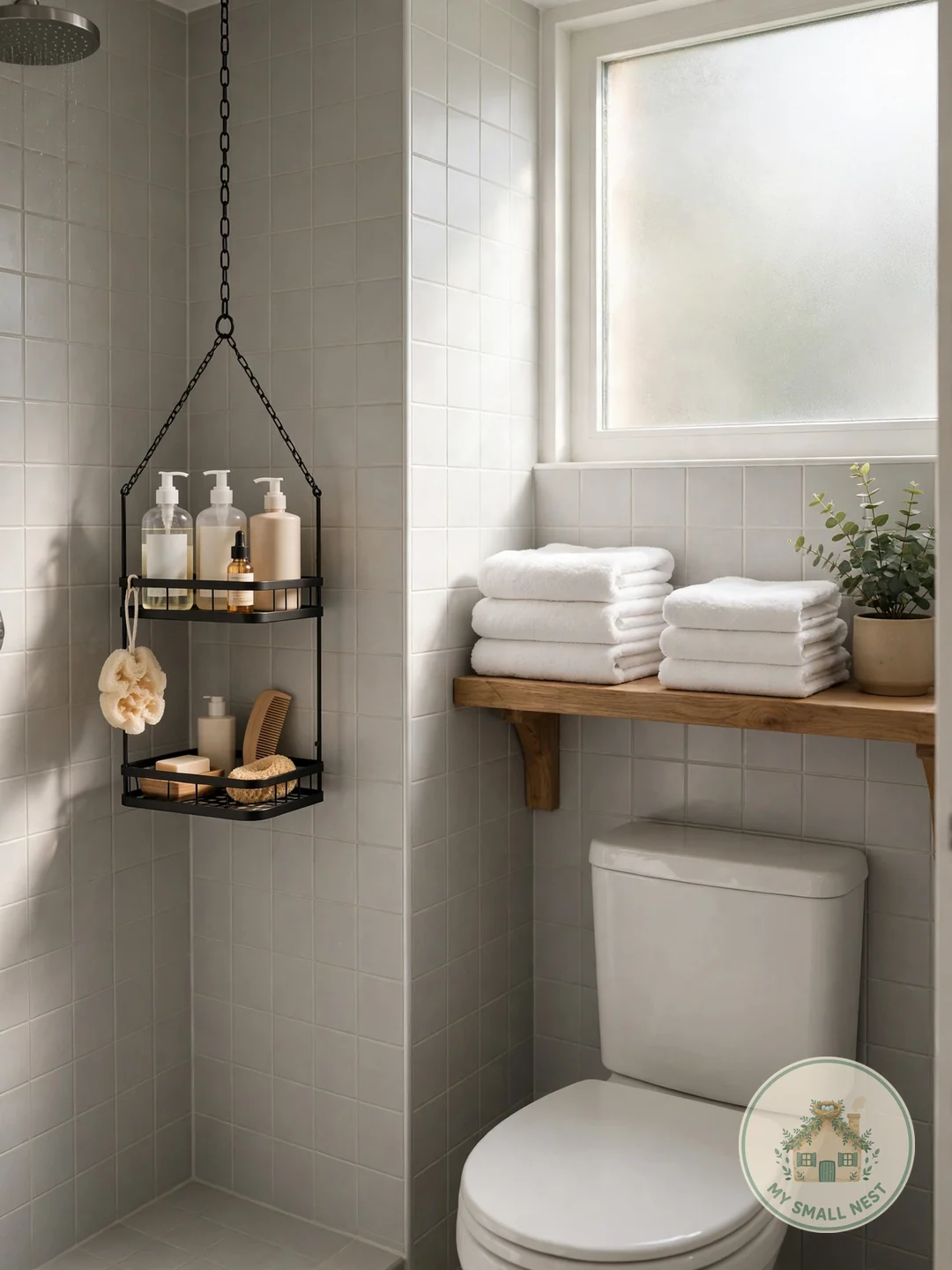
Shared bathrooms need a system, not more stuff. Each person gets: two bath towels, two washcloths, a shower caddy that hangs from the showerhead ($10–$15), and a small bin for under-sink toiletries. A shower curtain and liner ($12–$18 together) are move-in-day essentials if the apartment does not provide one — nothing ruins night one like a flooded floor.
Shared items the apartment needs: a plunger (buy it before you need it — $10 now beats a $150 plumber later), a toilet brush, a small trash can with a lid, and a non-slip bath mat. An over-the-toilet storage shelf ($25–$35) instantly doubles storage in a tiny bathroom, and a tension-rod shelf inside the shower keeps everyone’s bottles separate without drilling holes.
Make it work: Label shower caddies with a waterproof tag so there is never a mystery about whose razor is whose. Roommate harmony lives in the small details.
 Pin it
5. The Non-Negotiable Cleaning Kit
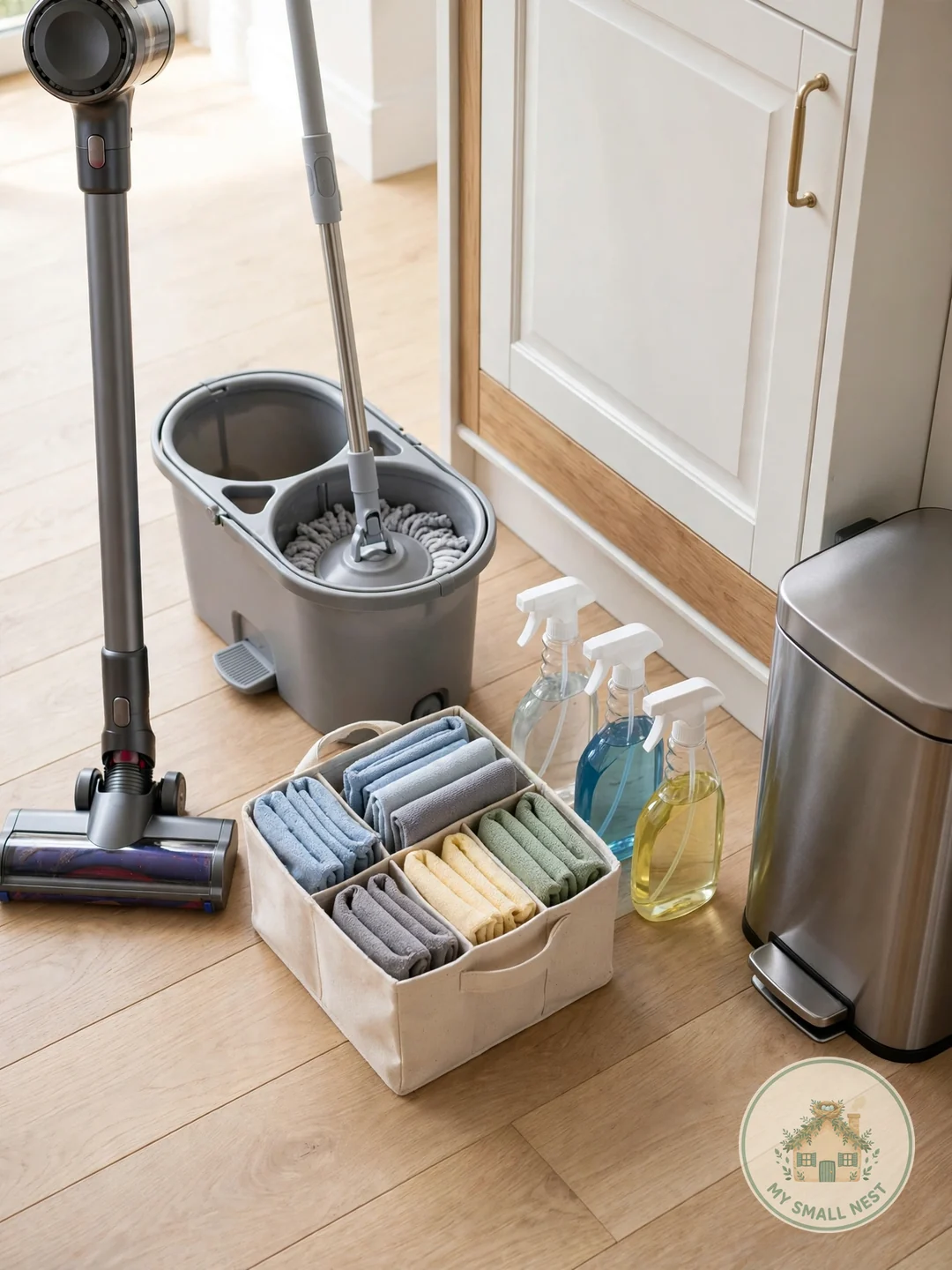
Landlords remember dirty apartments at deposit time, so a basic cleaning kit is non-negotiable. You need a broom and dustpan, a lightweight stick vacuum ($70–$120 — worth every penny on carpet), a spin mop or Swiffer-style mop, an all-purpose cleaner, a bathroom cleaner, dish soap, sponges, and microfiber cloths. Add trash bags in the right sizes, a step-on trash can for the kitchen, and a smaller one for the bathroom.
Laundry basics belong here too: a sturdy hamper with handles, detergent pods (no measuring, no spills — $12–$15 for a tub), dryer sheets or wool balls, and a small drying rack ($20–$30) for delicates and air-dry-only clothes. A lint roller by the door saves every outfit. Split the cost of the cleaning kit with roommates and keep supplies in one shared caddy under the kitchen sink.
Make it work: Set a 15-minute Sunday reset — everyone cleans one zone. Fifteen minutes weekly beats a five-hour deep clean before the landlord’s inspection, and it keeps roommate resentment at zero.
 Pin it
6. A Study Zone That Fits Any Corner
Even in a tiny bedroom, a dedicated study spot protects your grades and your sleep — studying in bed trains your brain to stay awake there, which is the last thing you want. A compact 32–40 inch desk ($60–$100 at IKEA or Target) fits almost any wall, and a folding desk works if floor space is truly tight. Pair it with an adjustable desk lamp (cool white, 4000–5000K) to save your eyes during late sessions and a chair with real back support; your back will thank you by midterms.
Add a power strip with a long cord — outlets are never where you need them — plus a small desk organizer ($15–$25) so papers do not colonize the surface. Noise-canceling earbuds or a white noise app make thin apartment walls disappear. Face the desk toward the wall, not the bed, and keep only study items on it so sitting down signals focus time.
Make it work: The wall-facing rule is the whole trick: when your chair faces the bed, every study session becomes a nap negotiation. Face the wall, and your brain learns that chair means work.
Emma’s tip: My entire “office” in my 380 sq ft studio is a 32-inch desk facing the wall — it’s also where I write every article on this site. The wall-facing setup genuinely works: I tried facing the room for a month and my productivity fell off a cliff. Small space, big lesson — orientation matters more than square footage.
 Pin it
7. Safety & Emergency Must-Haves
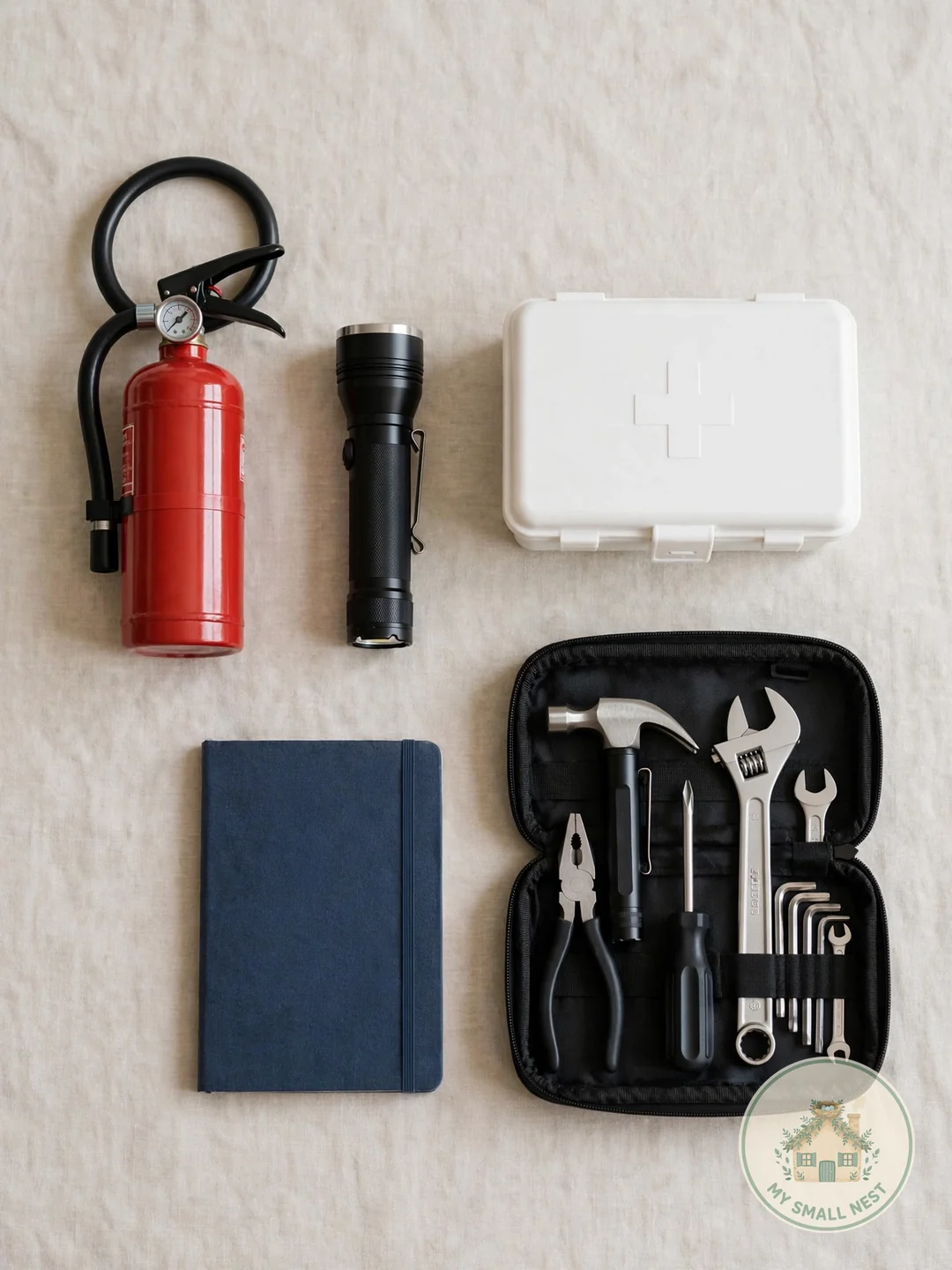
Safety items are the easiest things to forget and the most important to have. On day one, test the smoke and carbon monoxide detectors and note the results in your move-in photos; if any are missing or dead, email your landlord immediately so it is on record — that email is your legal paper trail. A small ABC fire extinguisher for the kitchen costs under $25 and belongs mounted near — but not directly over — the stove.
Keep a flashlight (not just your phone — $12–$18 for a good LED one), a basic first-aid kit ($15–$20), and a small tool kit with a screwdriver set, hammer, and measuring tape ($25–$35) — you will use the tape constantly, from furniture shopping to hanging curtains. Save your landlord’s emergency number, campus security, and the local non-emergency line in your phone before you need any of them.
Make it work: Put the fire extinguisher, flashlight, and first-aid kit in one labeled spot everyone in the apartment knows — the “oh no” shelf. In an actual emergency, nobody should have to think about where things are.
 Pin it
8. The Move-In Day Survival Box
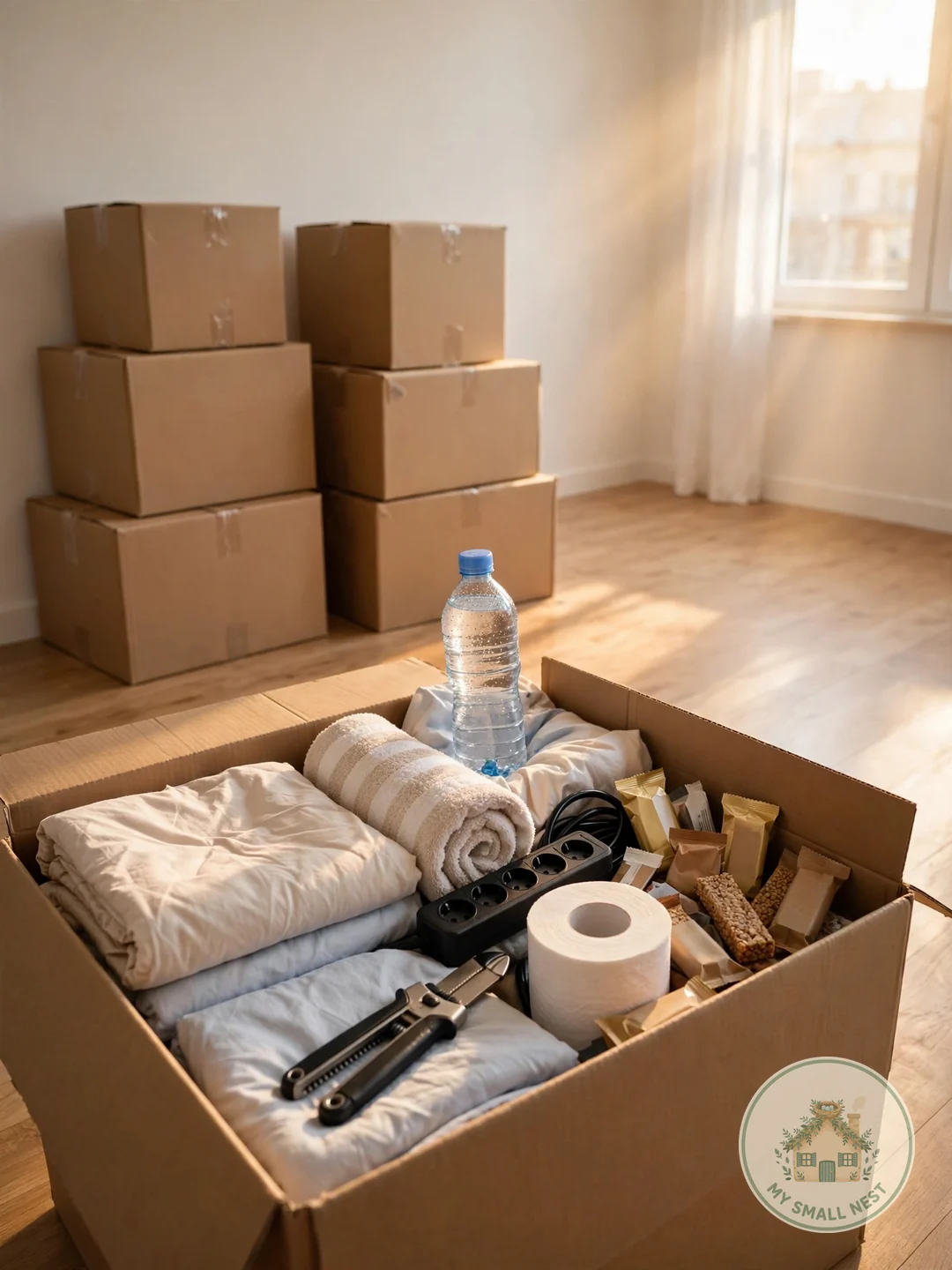
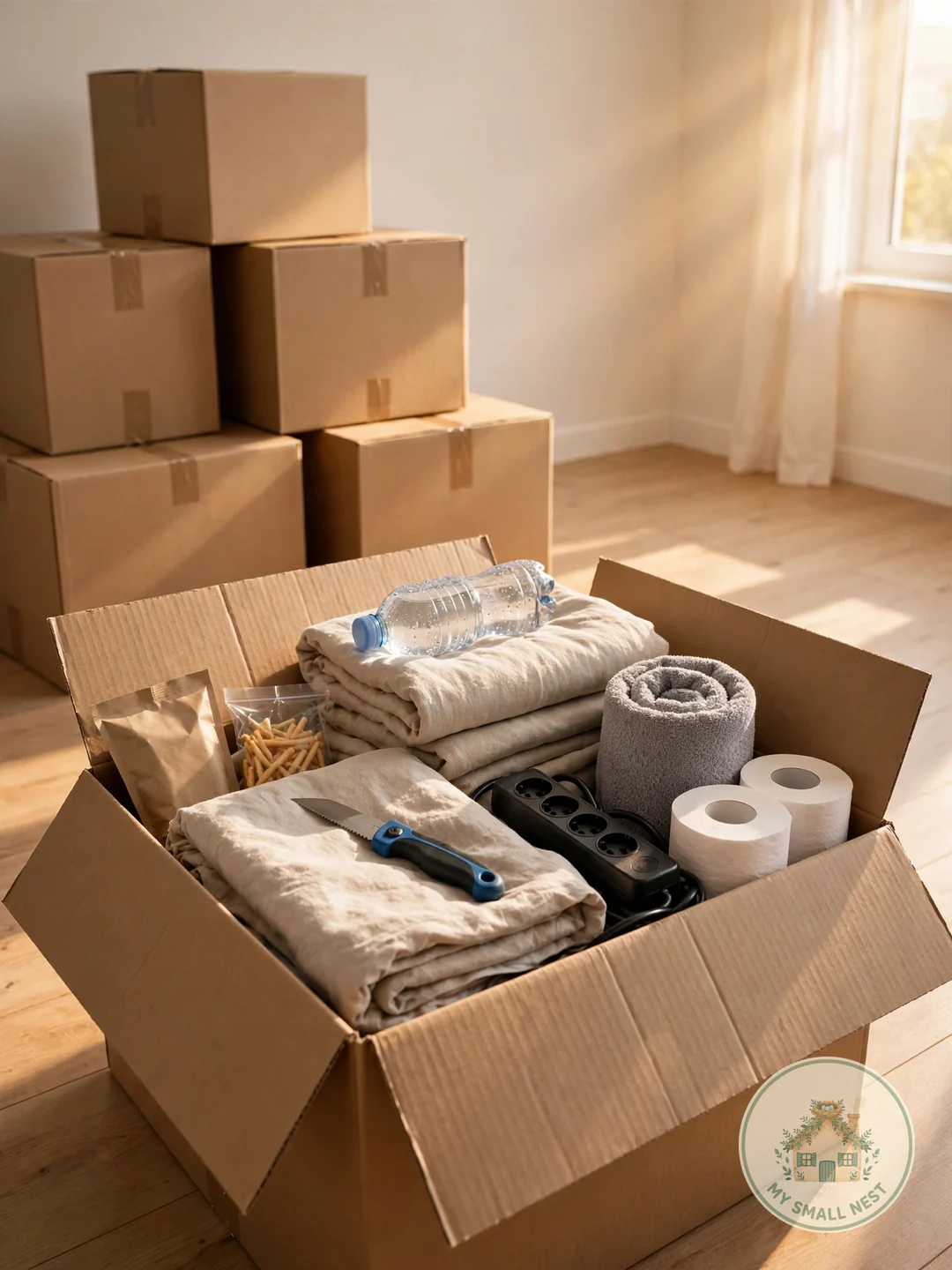
Pack one box last and open it first — this is your survival kit for the chaos of move-in day. Inside: bed sheets and a pillow (so you can sleep no matter what), a towel and toilet paper, phone chargers and a power strip, basic tools (screwdriver, box cutter, hammer), trash bags, paper towels, all-purpose cleaner, snacks, water bottles, and a change of clothes. Add your important documents folder and any medications.
Label this box in huge letters on every side — “OPEN FIRST” — and load it last so it comes off the truck first. Everything else can wait until tomorrow, but this box means night one is comfortable instead of miserable. Toss in a doorstop too — propping your door open while hauling boxes makes move-in day dramatically easier.
Make it work: Pack this box a full week before moving day, not the night before. The night-before version always forgets the toilet paper. Ask me how I know.
 Pin it
9. The Roommate Split List
The fastest way to waste money is every roommate buying the same toaster. Before anyone shops, make a shared list dividing items into three columns: shared (split the cost), assigned (one person buys, others Venmo), and personal (everyone buys their own). Shared items: cleaning supplies, trash cans, toilet paper, paper towels, basic cookware, the vacuum, and shared decor. Personal items: bedding, towels, toiletries, desk gear, and food.
Use a shared note or spreadsheet everyone can edit, and agree on a spending cap for shared items — say $50 per item without a group text — so nobody buys a $200 vacuum without asking. Photograph receipts and settle up weekly, not at the end of the semester, because December math ruins friendships. Do a group video call to walk through the shared list together — ten minutes now prevents three duplicate air fryers later.
Make it work: Assign each big shared purchase to one person and have the others Venmo immediately. “I’ll get you back” is where roommate money goes to die.
Emma’s tip: I’ve lived with roommates and I’ve lived solo in my 380 sq ft studio, and here’s what I learned: the weekly settle-up is the entire secret. My roommates and I did a 5-minute money check every Sunday — whoever was owed got paid that night. We never once fought about money in two years. The couples who “settle at the end of the semester” are the ones who stop speaking by November.
 Pin it
10. First-Week Pantry & Fridge Starter
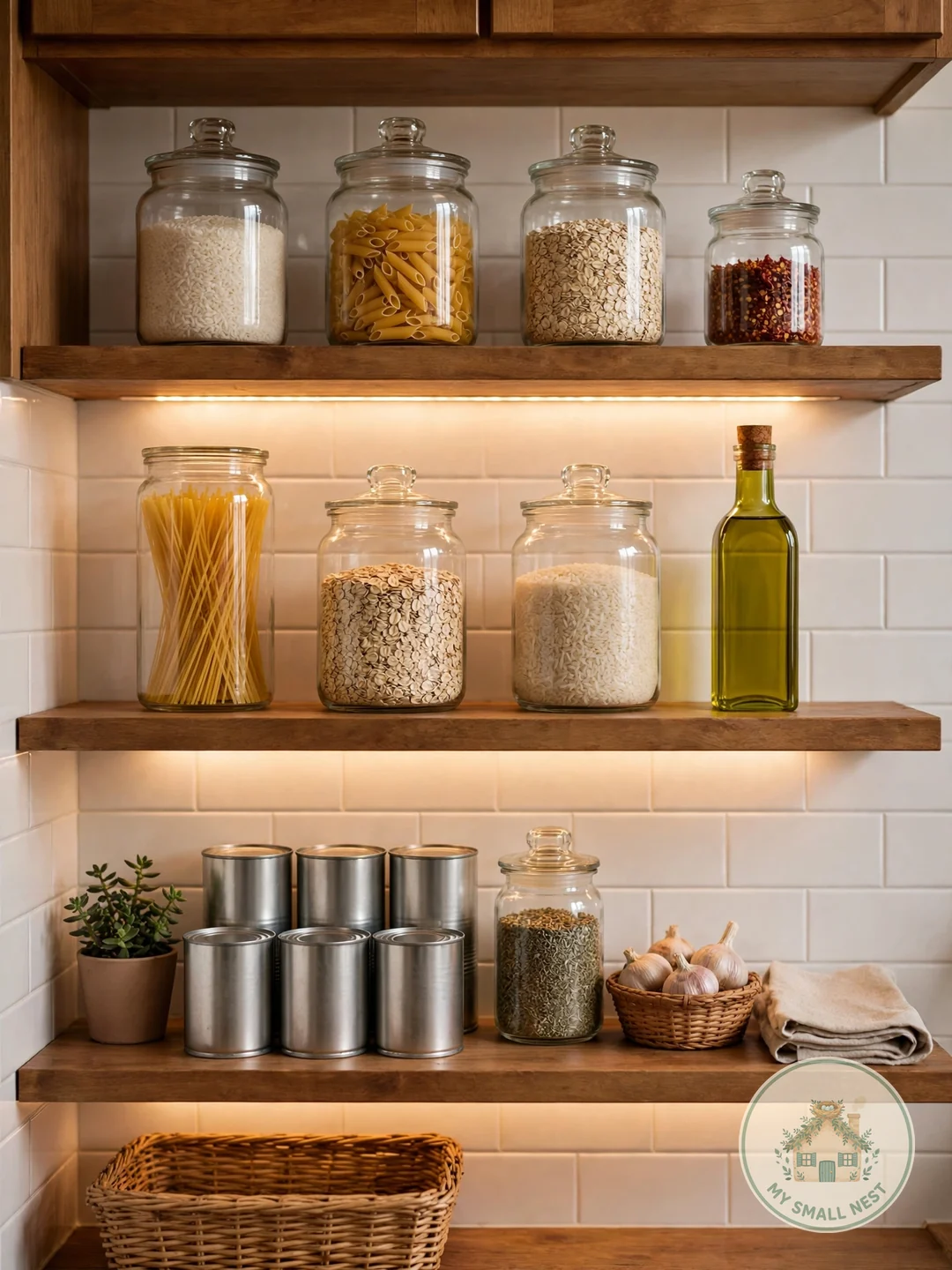
Eating out every night will destroy a student budget in a week — $15 a day is $450 a month — so stock a starter pantry on day one. The essentials: rice, pasta, oats, peanut butter, canned tomatoes and beans, olive oil, salt, pepper, garlic powder, and a basic spice set. In the fridge: eggs, milk or a shelf-stable alternative, butter, cheese, tortillas, and frozen vegetables — the backbone of a dozen cheap meals. A full starter run costs $60–$90 and covers two weeks.
Add a few grab-and-go items for the first chaotic days: granola bars, fruit, bread, and sandwich fillings. A set of reusable containers ($12–$18) keeps leftovers fresh and makes meal prep realistic, and a simple meal plan on the fridge door stops the nightly what-should-we-eat debate. Cook one big batch meal (pasta, chili, stir-fry) on move-in weekend — it feeds everyone and sets the cooking habit early.
Make it work: The batch meal on move-in weekend is the highest-ROI cooking you’ll do all semester. One $15 pot of chili feeds four people for three days and proves the kitchen works.
 Pin it
11. Laundry & Linen Rotation System
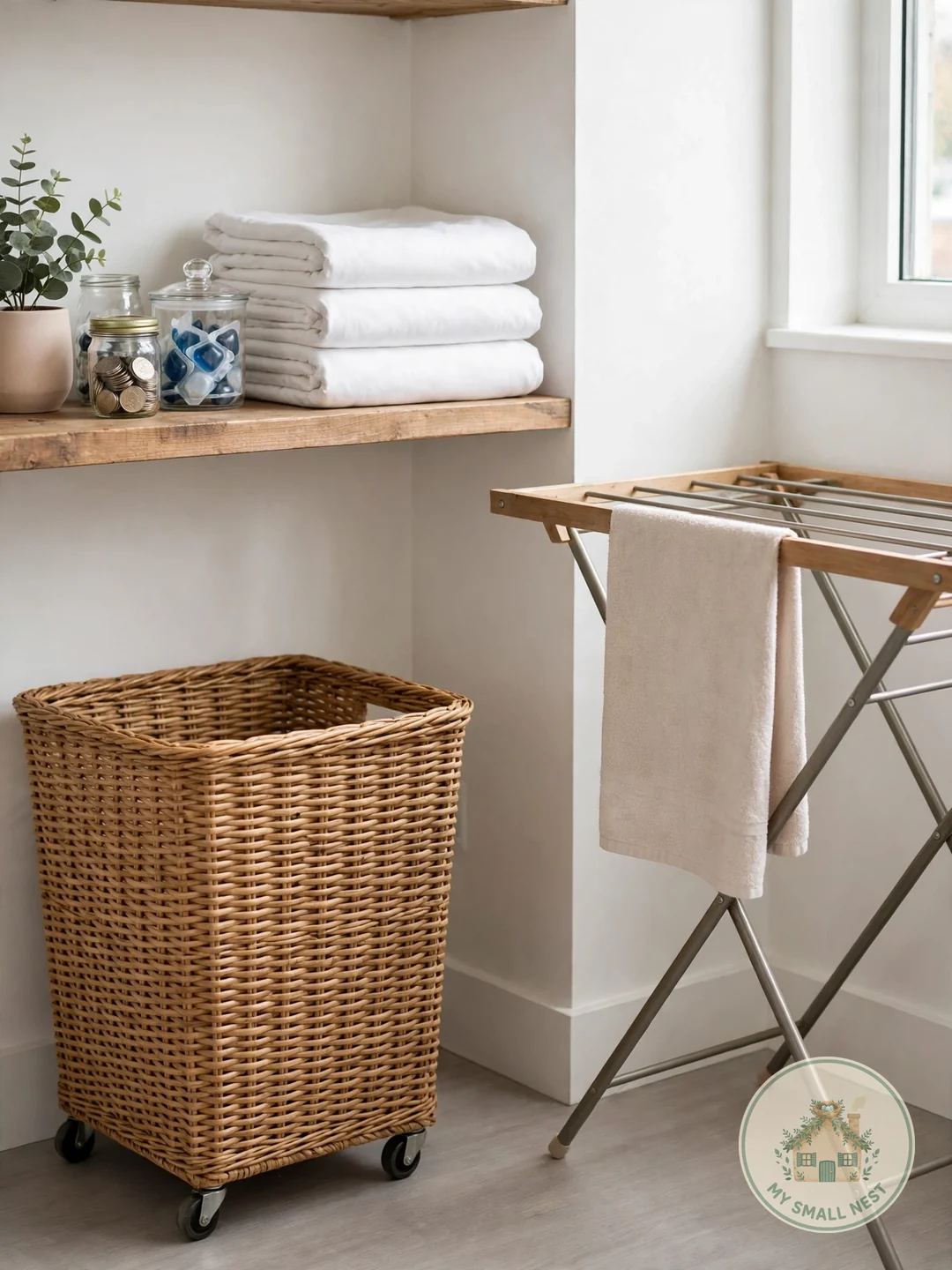
Apartment laundry is either in-unit, shared in the building, or a trek to the laundromat — plan for your reality before you’re standing in front of a broken machine with a week’s worth of clothes. Get a rolling hamper with compartments or two collapsible hampers ($20–$30) — lights and darks — so sorting happens automatically. Detergent pods, a stain stick, and dryer balls cover 95 percent of laundry needs, and a small mesh bag ($5–$8 for a set) protects delicates and keeps socks from vanishing.
Keep two full sheet sets and rotate them so one is always clean, plus a spare set of towels for guests. A $2 roll of quarters in a labeled jar saves the dreaded no-quarters moment at shared machines, and a foldable drying rack ($20–$30) handles delicates and rainy days. Pick one laundry day a week and set a phone reminder — in shared buildings, early morning or late evening means no waiting for machines.
Make it work: Learn the stain stick now, not after the incident. A $4 stain stick used within ten minutes saves shirts that a $40 replacement can’t.
 Pin it
12. Furnish on a Student Budget
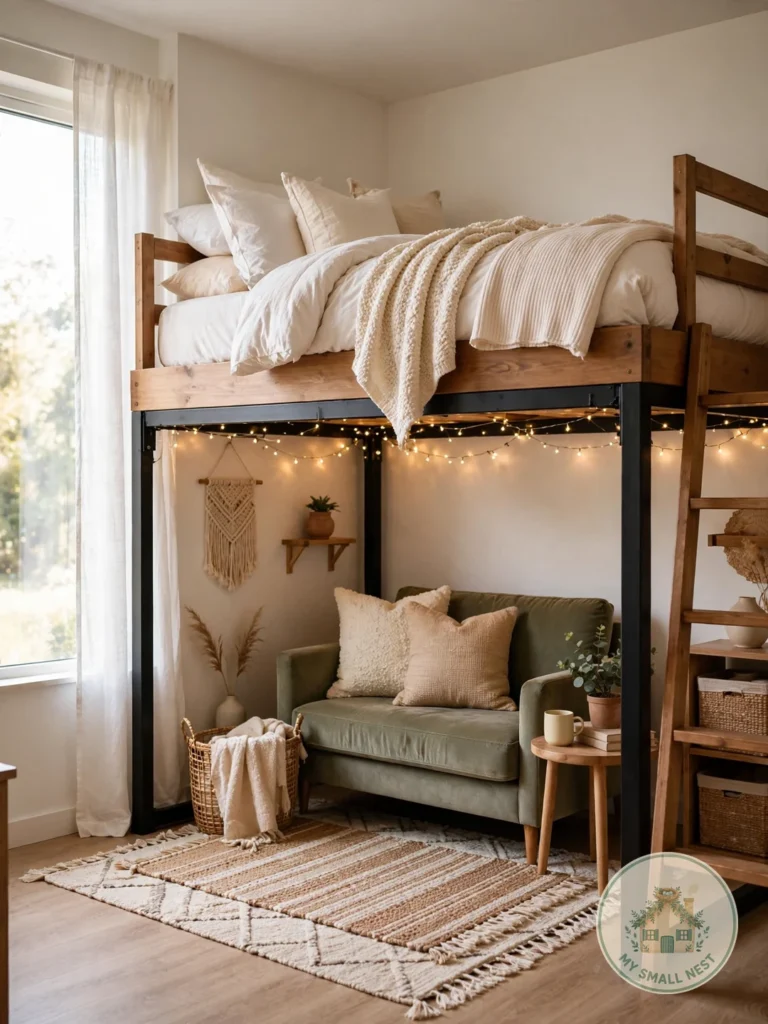
You do not need to furnish the whole apartment on day one — and you should not. Start with the essentials checklist, live in the space for two weeks, then buy what you actually miss. The best deals appear in late August (back-to-school sales) and again in May and December, when graduating students flood Facebook Marketplace and campus groups with nearly-new furniture at a fraction of retail — I’ve seen $300 desks go for $40.
Buy these new: mattress topper, pillows, and anything hygiene-related. Buy these used: desks, bookshelves, lamps, mirrors, and decor — a quick wipe-down makes them good as new. Set price alerts on marketplace apps and check thrift stores weekly; the good pieces go fast. And measure your rooms and doorways before buying any furniture — the number one student mistake is a couch that will not fit through a 28-inch doorway.
Make it work: Keep your room measurements in a phone note — every room, every doorway, the stairwell width. When the perfect $30 bookshelf appears on Marketplace, you’ll know in ten seconds whether it fits, and ten seconds is all you get before someone else claims it.
Emma’s tip: Almost everything in my 380 sq ft studio is secondhand — my desk was $25 on Facebook Marketplace, my bookshelf was free from a neighbor’s curb, my mirror was $8 at a thrift store. The only things I bought new were the mattress topper, pillows, and a shower curtain. Total furnishing cost: under $300, and nobody who’s visited has ever guessed. The two-week wait rule is what makes it work — you stop buying fantasy furniture and start buying what you actually need.
 Pin it
4 Mistakes to Avoid
Buying everything before seeing the space
It is tempting to order a full apartment’s worth of stuff online, but every layout is different. Wait until you have walked the rooms, noted what is included, and measured — then buy. Returns eat your budget and your patience, and restocking fees are real.
Forgetting to measure doorways and rooms
That perfect thrift-store couch is useless if it will not fit through a 28-inch doorway. Measure every room, doorway, and stairwell before buying furniture, and keep the numbers in your phone for spontaneous marketplace finds — the good ones sell in minutes.
Skipping renter’s insurance and move-in photos
At roughly $10–15 a month, renter’s insurance is the cheapest protection for your laptop, bike, and clothes. Pair it with dated move-in photos of every room — together they protect your belongings and your security deposit, and both take less than an hour total.
Duplicating purchases with roommates
Three vacuums, four toasters, and a graveyard of duplicate cleaning supplies is the classic roommate tax. Make the shared split list before anyone shops, assign big shared items to one buyer, and settle up weekly — your wallet and your friendships will survive the semester.
FAQs
Is there really a free college apartment checklist PDF?
Yes — this post is designed as one. Each of the 12 sections above works as its own printable list: paperwork, bedroom, kitchen, bathroom, cleaning, study zone, safety, move-in day, roommate splits, pantry, laundry, and budget furnishing. Use your browser’s print function and select “Save as PDF” to turn the whole post into your free college apartment checklist PDF.
What size sheets do I need for a college apartment?
Most college apartments and dorms use Twin XL beds (39 x 80 inches), which need Twin XL sheets — regular twin sheets will pop off. Always confirm your bed size with your landlord or leasing office before buying, since some apartments use full-size beds. When in doubt, a mattress protector in Twin XL is the safest first purchase.
How much should I budget to furnish a college apartment?
Plan $400–$800 for essentials if you shop smart: thrifted furniture, discount bedding, and dollar-store basics. Splitting shared items like cleaning supplies and kitchen gear with roommates can cut that nearly in half. Buy the essentials first, live in the space for two weeks, then fill in what you actually miss.
What should roommates split vs. buy separately?
Split shared-space items: cleaning supplies, trash cans, toilet paper, paper towels, basic cookware, the vacuum, and shared decor. Buy separately: bedding, towels, toiletries, desk supplies, and personal food. Keep a shared editable list on everyone’s phone and settle costs weekly so nothing gets awkward by December.
When should I start buying apartment essentials?
Start 4–6 weeks before move-in. Watch for back-to-school sales in late July and August for bedding, storage, and small appliances, and check Facebook Marketplace and campus groups in May and December when students sell nearly-new furniture cheap. Buy the move-in day survival box items last so they are packed on top.
A great college apartment is not about having everything — it is about having the right things, in the right rooms, without blowing your budget or your sanity. Work through this checklist one section at a time, share the roommate list before anyone shops, and give yourself grace on the things you can add later.
Found this helpful? Save it to your moving board, send it to your roommates, and check back whenever the next semester move rolls around. Happy move-in — your cozy little place is waiting.

What readers are saying
No comments yet — yours could be the first.