 My Small Nest
Move-in day arrives faster than you think, and dorm rooms are tiny, bare, and shockingly uncomfortable without the right gear. Those rock-hard mattresses, the single sad outlet, the communal showers you’ll trek to with armfuls of shampoo bottles — every college student faces the same rude awakening in week one. The difference between a miserable first month and a great one usually comes down to about $400 of the right stuff.
The right dorm room essentials change everything. These 18 must-haves cover comfort, storage, cleanliness, and sanity, with real sizes, real prices, and the little details nobody tells you — like which items sell out by mid-August and which ones to split with your roommate. Add them to your list now, because once the semester starts, the good stuff sells out everywhere.
Who this is for: incoming freshmen (and their parents) building a dorm shopping list — plus sophomores who suffered through year one without this list and aren’t making that mistake twice.
1. Memory Foam Mattress Topper
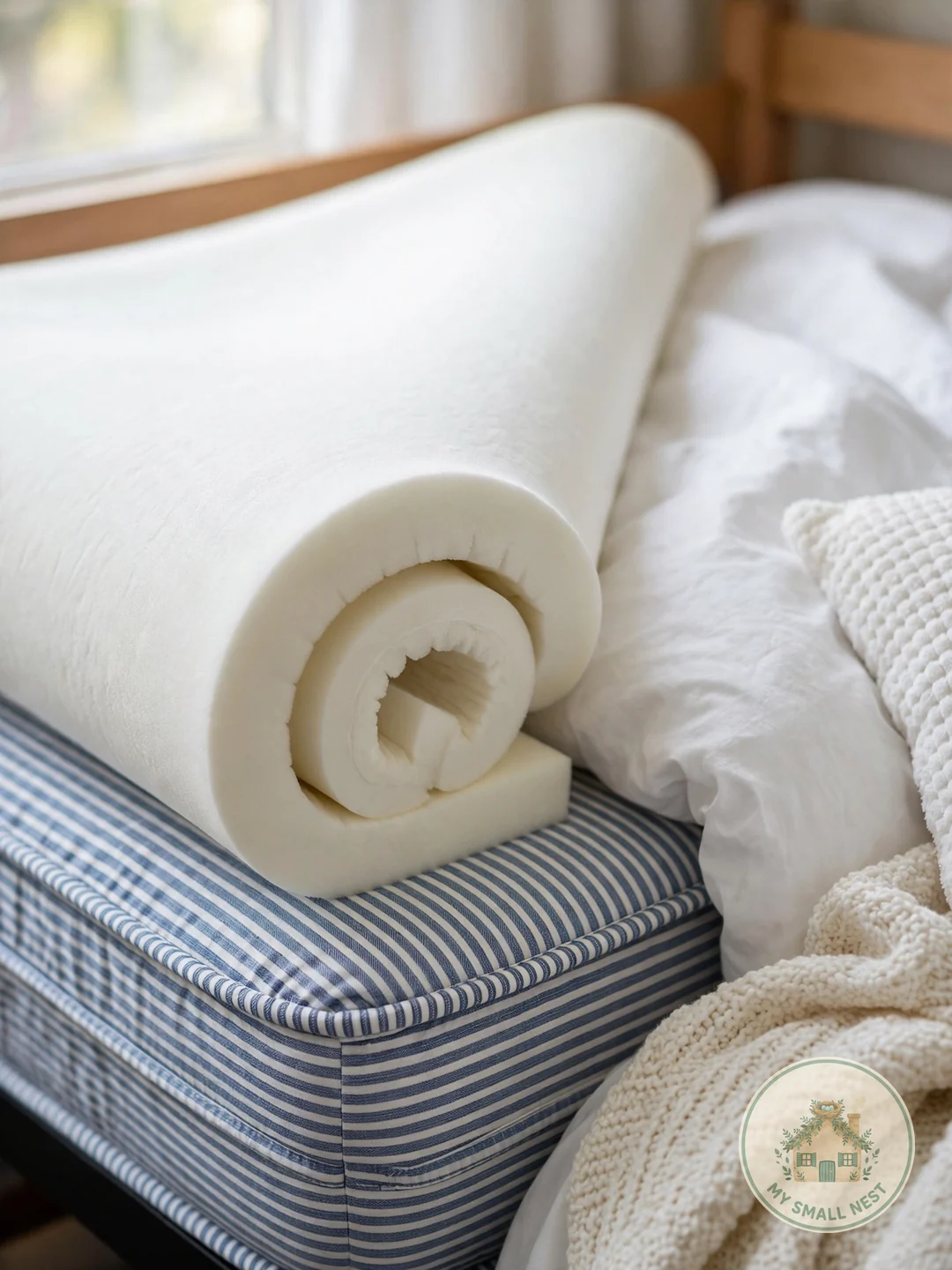
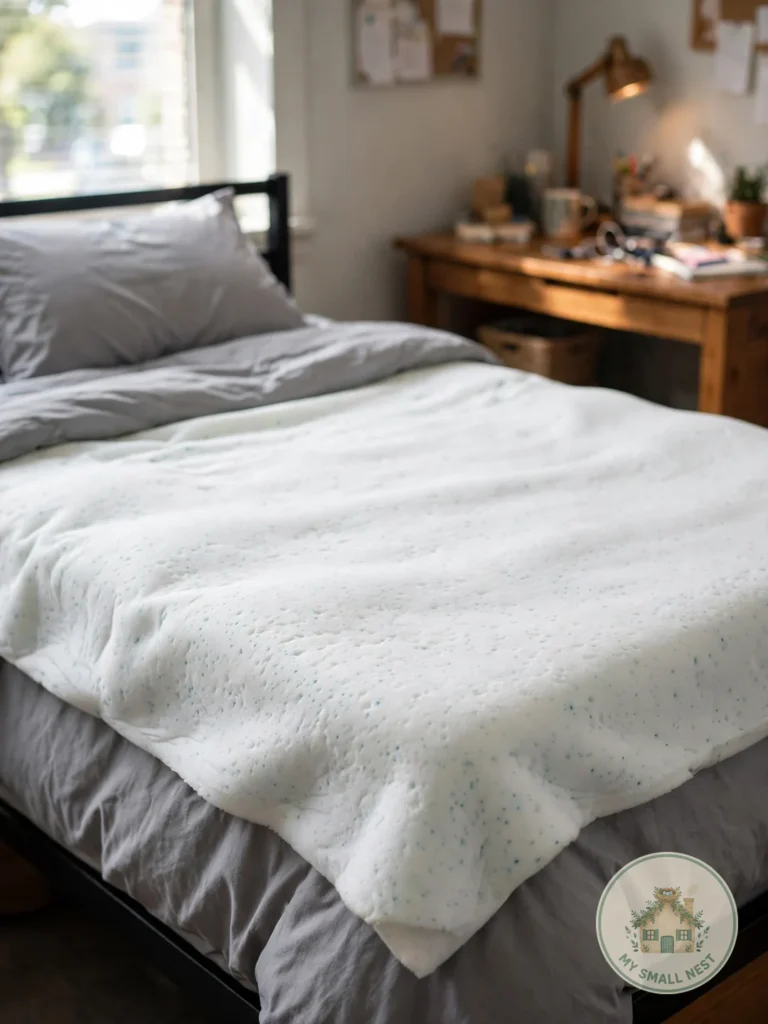
Dorm mattresses are famously awful — thin, squeaky, and about as comfortable as sleeping on a park bench. A 2 to 3-inch memory foam topper transforms that slab into a genuinely cozy bed, and it is the single highest-impact purchase on this list. Look for a Twin XL size, since most college beds run extra long (38 x 80 inches), and check that your school allows toppers (almost all do). Ventilated or gel-infused foam is worth the small upgrade if you sleep hot.
Budget tip: a solid 2-inch topper costs around $50 to $70 on Amazon, and it folds up small for storage over the summer. Layer it under your fitted sheet so it stays put — on top of the sheet, it slides around all night. Buy the topper before move-in and pack it in its compressed roll; it expands overnight, so unroll it the moment you arrive to get a head start.
Make it work: Add a waterproof mattress protector ($20–$30) over the topper. Dorm mattresses have histories you don’t want to think about, and the protector keeps your topper clean for all four years.
 Pin it
2. Cooling Bed Pillows
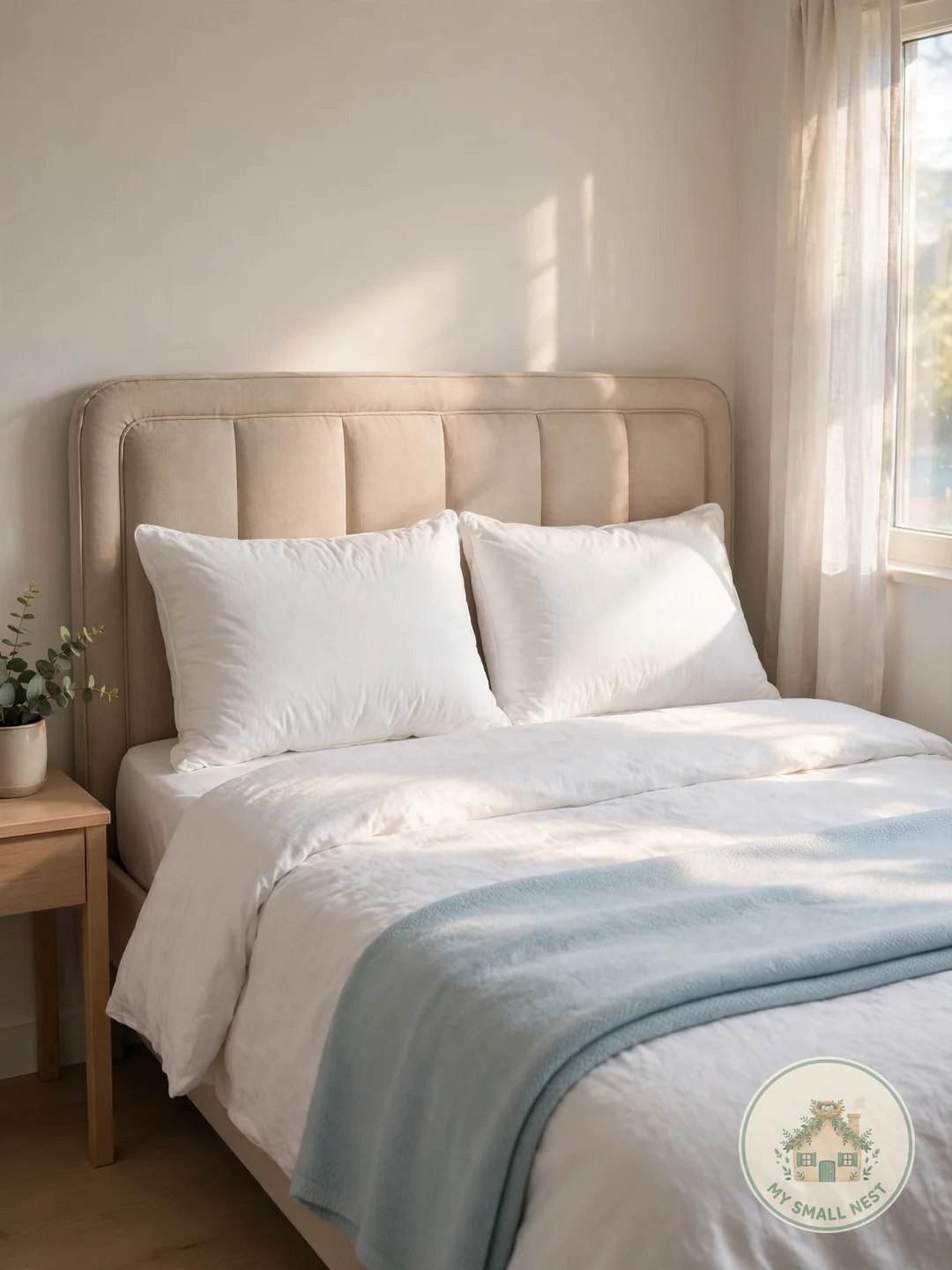
Between crowded buildings, no thermostat control, and late-night study sessions, dorm rooms run warm, and waking up sweaty is miserable. Cooling gel pillows stay noticeably cooler through the night than standard fiberfill, and they keep their shape far longer — cheap fiberfill pillows go flat by Thanksgiving. A set of two standard or queen pillows runs roughly $25 to $40.
Look for pillows labeled washable — dorm life is dusty, and you will want to toss them in the machine each semester. Pair them with a breathable cotton pillow protector to keep allergens and spills off the pillow itself. Fluff and air them out for a few hours after unboxing so they reach full loft before your first night’s sleep.
Make it work: Bring two pillows even if you “only sleep with one” — the second one is for propping up to study, and studying flat on your back is a nap waiting to happen.
 Pin it
3. Mini Fridge
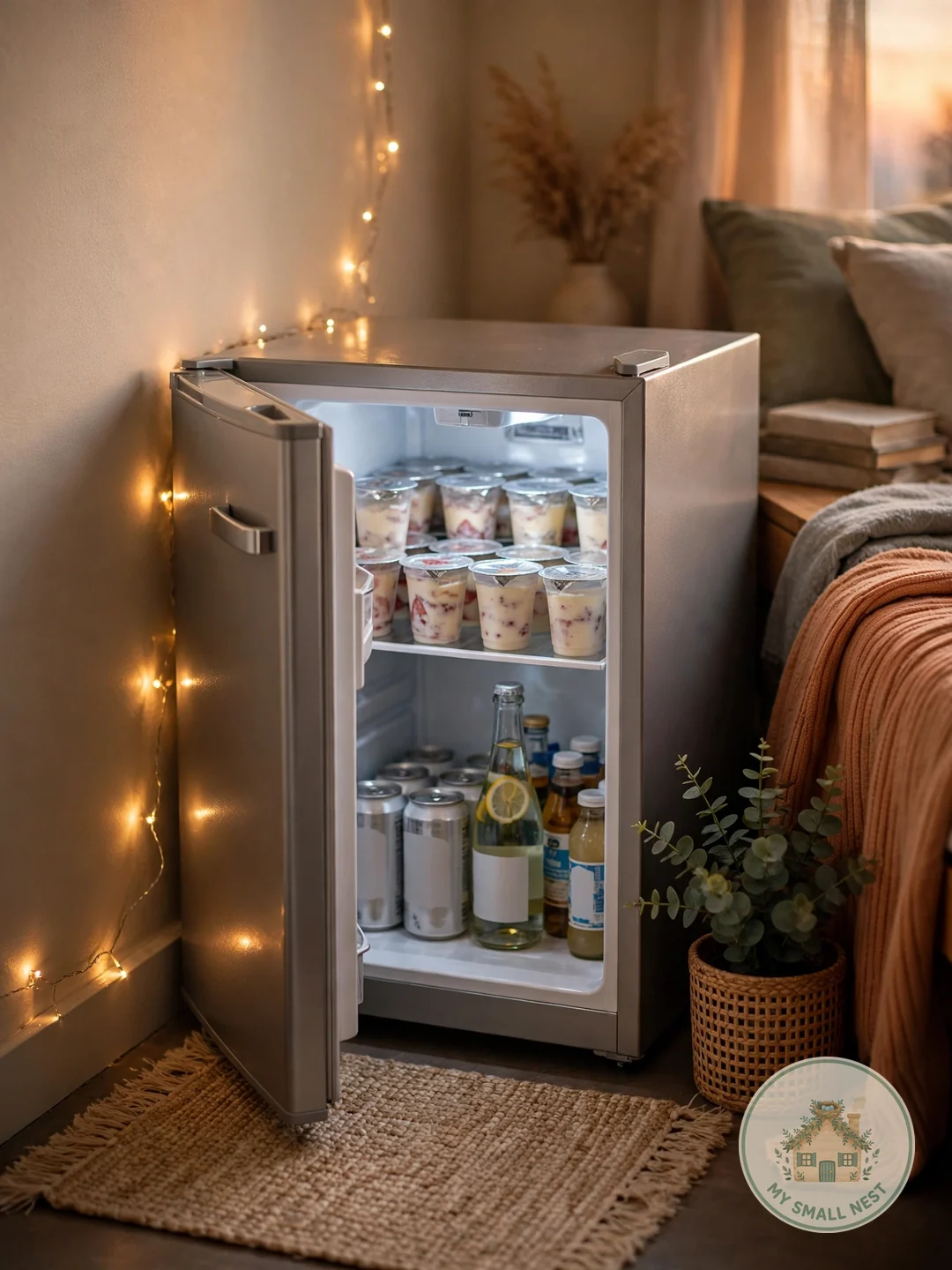
A mini fridge is the beating heart of a dorm room — cold drinks, leftovers, yogurt, late-night ice cream, and the meds you do not want to leave in a shared space. The sweet spot is a 3.2 to 4.4 cubic foot model with a separate freezer compartment, which fits drinks and a few frozen meals without hogging floor space. Measure your room’s available corner first, and check your housing rules for wattage and size limits — most cap at 4.5 cubic feet.
Splitting the cost with your roommate is standard and cuts the $100 to $180 price in half. Skip frost-free gimmicks at this size; a manual-defrost model is cheaper and quieter. Run the fridge empty for 24 hours before move-in to confirm it cools properly, and keep it a few inches from the wall for airflow — pushed flush against the wall, it works twice as hard and dies twice as fast.
Make it work: Decide the fridge rules on day one: shared condiments and split costs, or strictly divided shelves? The divided-shelf system prevents 90% of roommate fridge fights.
Emma’s tip: My first “fridge” in a tiny space was a mini I split with a roommate, and the divided-shelf system saved us — top shelf shared (milk, eggs, condiments), bottom shelves personal. In my 380 sq ft studio now, I still use the same logic on a full-size fridge. Boundaries on day one beat resentment in month three, every time.
 Pin it
4. Mini Fridge Storage Cart
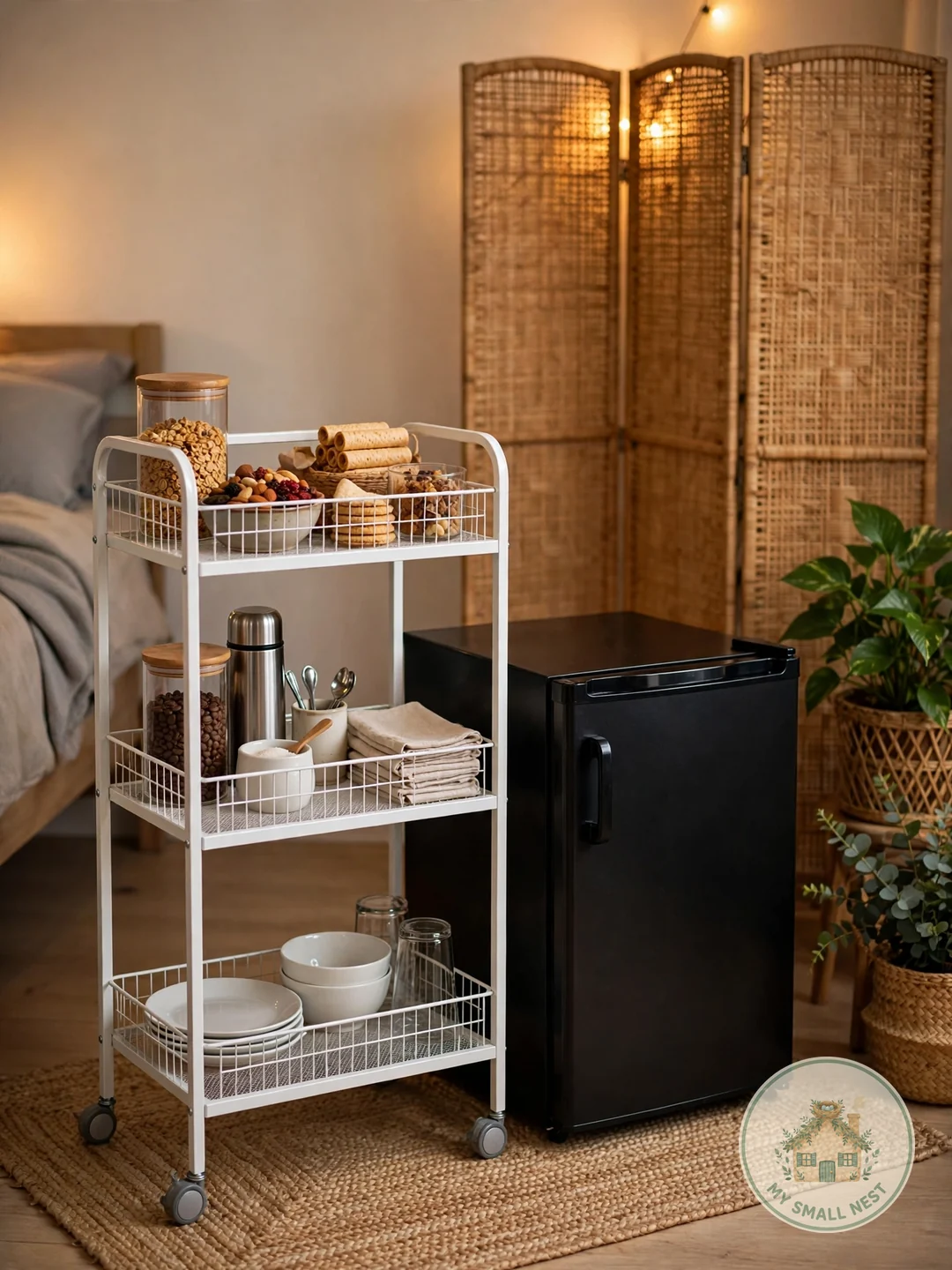
Once you have a mini fridge, its top surface becomes prime real estate, and a slim rolling cart beside it keeps everything else contained. A three-tier metal or bamboo cart — about 15 inches wide and 30 inches tall — holds snacks, coffee supplies, dishes, and condiments without eating into your desk space. It also doubles as a microwave stand in many dorms, since most small microwaves fit perfectly on the top shelf.
Choose one with locking wheels so it does not drift across the floor, and a sturdy frame rated for at least 25 pounds per shelf — a microwave plus dishes gets heavy. Budget options run $20 to $35 on Amazon. Position the cart as a room divider between beds: it gives each side its own little kitchen zone and cuts down on snack-theft drama.
Make it work: Put the heaviest items on the bottom shelf for stability. A top-heavy rolling cart with a microwave on top is a disaster waiting for one enthusiastic door slam.
 Pin it
5. Single-Serve Coffee Maker
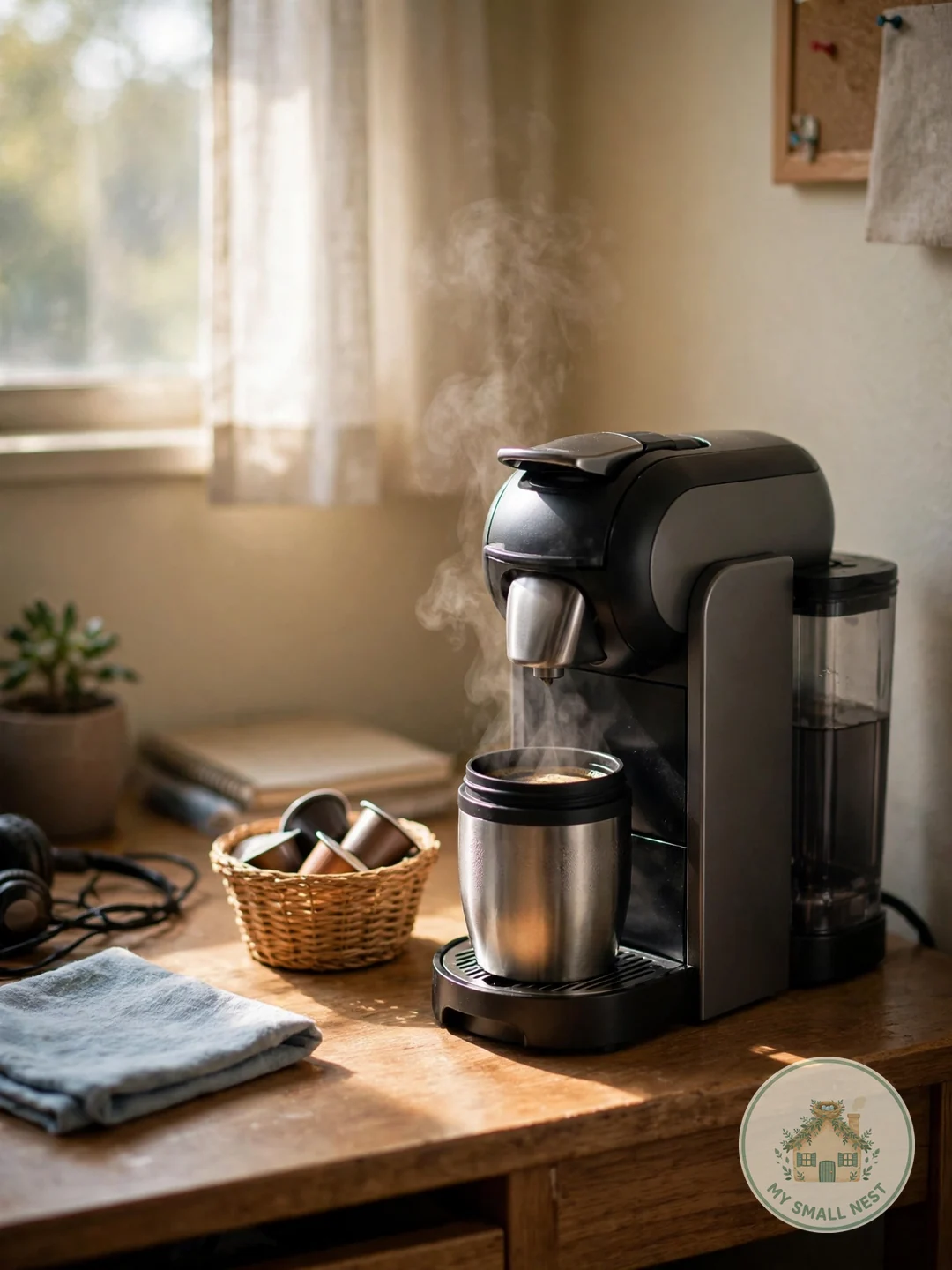
Campus coffee lines are long, overpriced, and somehow closed exactly when your 8 a.m. starts. A compact single-serve brewer costs a fraction of one semester of coffee shop runs — pennies per cup versus $5 a pop, which is roughly $600 a semester if you’re a daily buyer. The mini versions are barely a foot wide and tall, tucking easily onto a fridge cart or desk corner. Check your dorm’s appliance rules first, since some halls restrict heating appliances but allow brewers.
Reusable pod filters ($10–$15) cut waste and long-term cost dramatically — disposable pods run $0.50–$0.80 each, which adds up fast. A small electric kettle pairing covers tea and oatmeal too. Expect to spend $40 to $80 on a reliable machine; the cheapest $25 models tend to die by spring break.
Make it work: Keep a lidded travel mug by the brewer so you can grab and go to class without spills. The whole point is speed — don’t let a missing mug slow you down.
 Pin it
6. Shower Caddy
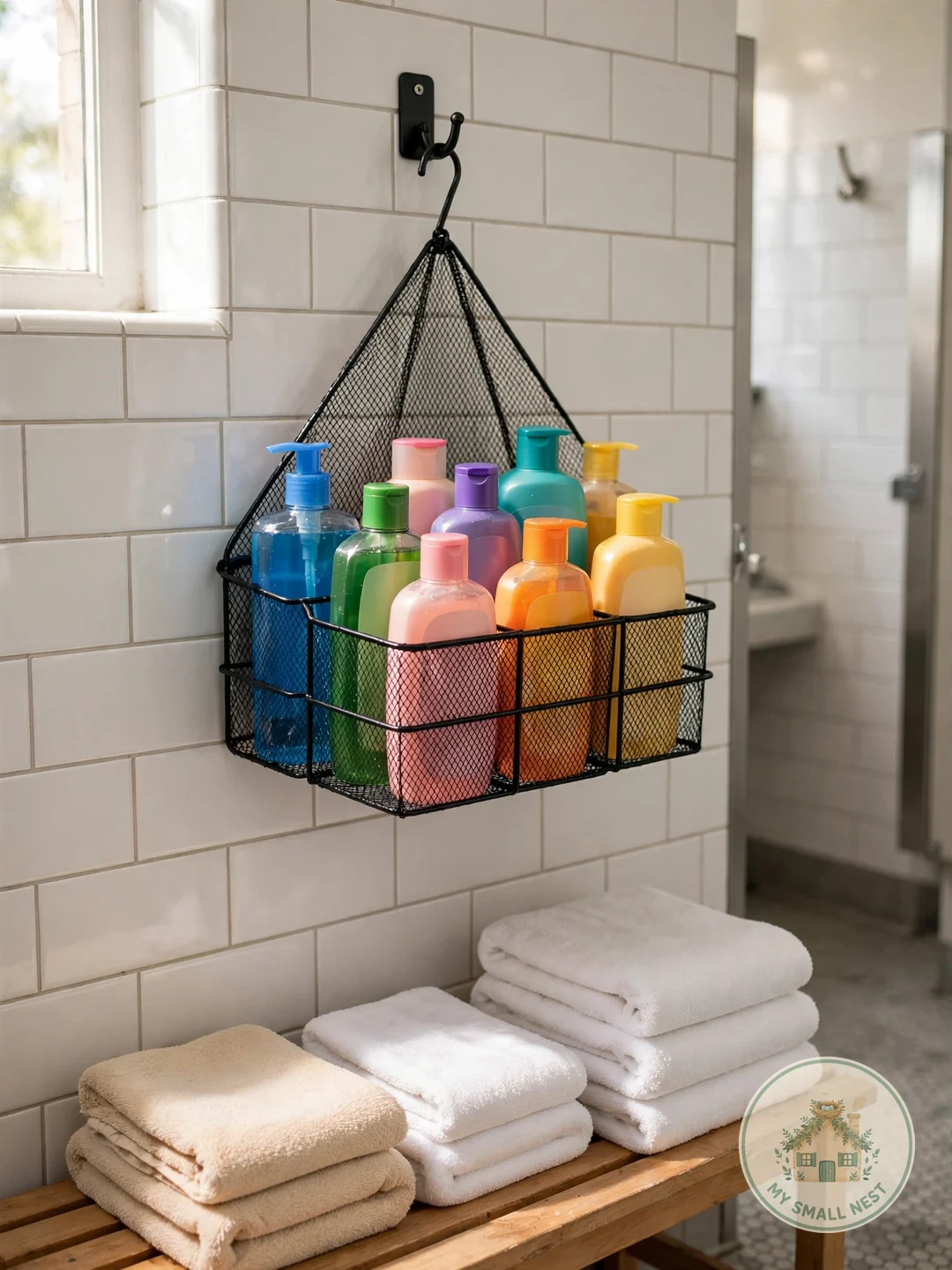
Communal bathrooms mean hauling shampoo, conditioner, soap, and skincare down the hall every single day. A mesh shower caddy with a sturdy handle and drainage holes keeps everything together, lets it dry between uses, and holds up to constant moisture. Mesh beats solid plastic because water drains instead of pooling under your bottles and growing things you don’t want to think about.
Pick one with a few compartments — tall bottles stand in the main pocket, smaller items like razors sit in the side mesh. These run under $15. Also grab a pair of shower flip-flops ($5–$10): dorm shower floors are not something you want bare feet on, ever. Label your bottles with a waterproof marker — mix-ups in the shower room happen more than you would think.
Make it work: Hang the caddy on your bedpost or a hook, not the floor. Floor-stored caddies stay damp, get grimy, and grow mildew by October.
Emma’s tip: I lived with communal bathrooms my freshman year, and the mesh caddy was non-negotiable — but here’s what nobody told me: buy the caddy with a reinforced handle, not the flimsy $6 one. Mine snapped mid-hallway in week three, and chasing shampoo bottles down a dorm corridor at 7 a.m. is a memory I didn’t need. The $12 version lasted all four years.
 Pin it
7. Cloud Slippers
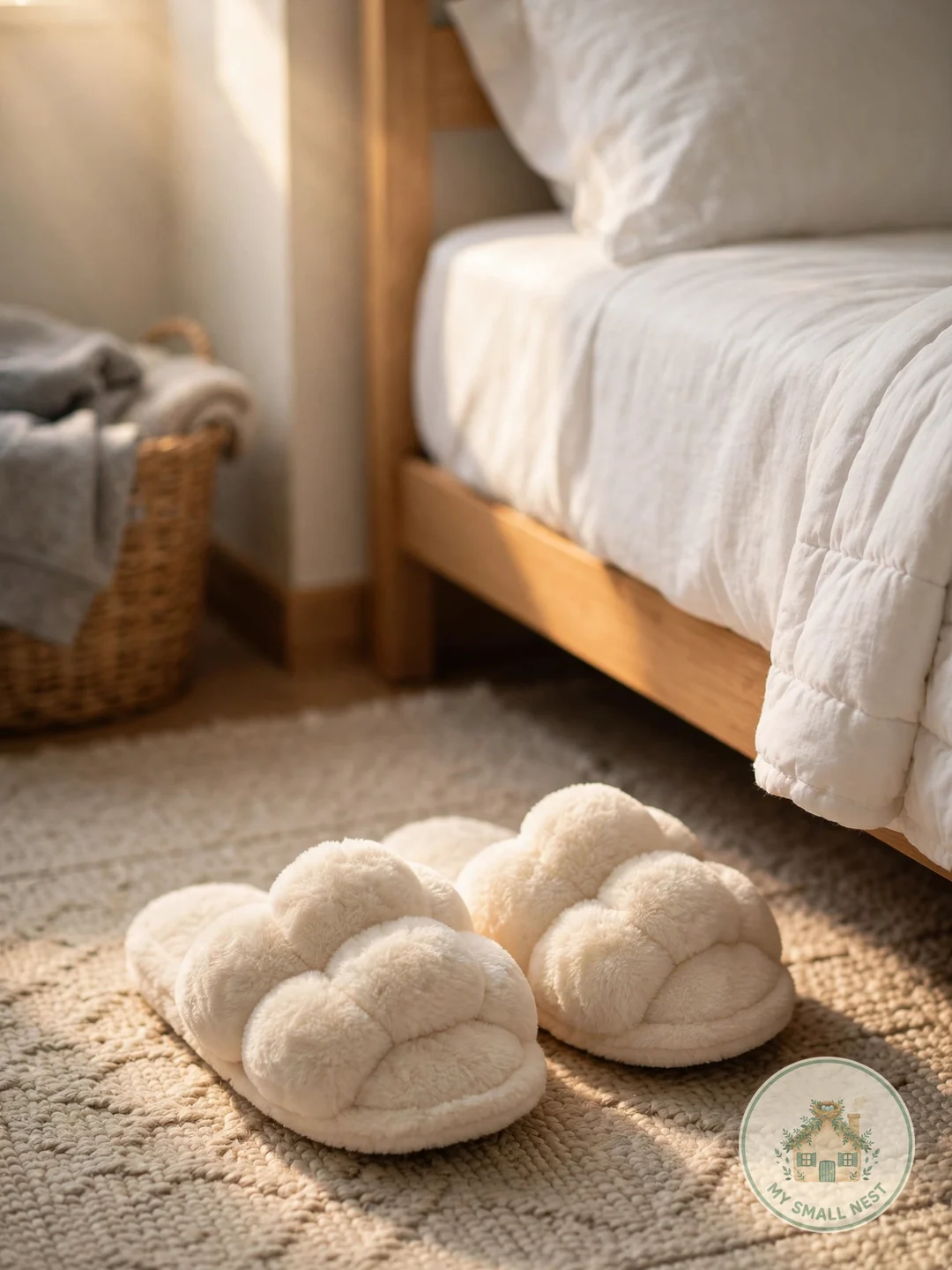
Dorm floors are cold, sticky, and shared, so a pair of plush cloud slippers earns its keep daily. The thick cushioned sole feels amazing after a long day of walking campus, they slip on in seconds for 2 a.m. bathroom runs, and they keep your feet off questionable flooring. EVA foam styles are light, supportive, and easy to wipe clean — important when they double as your quick-errand shoe.
Choose a size that fits snugly, since oversized slippers become a trip hazard on dorm stairs. Most quality pairs run $20 to $30 and last the whole year, surviving daily wear from bedroom to classroom and back. Keep a separate cheap pair of flip-flops strictly for the shower, so your cozy slippers stay dry and clean — never mix the two jobs.
Make it work: If your slippers start smelling by mid-semester, a sprinkle of baking soda overnight fixes it. Dorm rooms are small; smells don’t hide.
 Pin it
8. Bedside Caddy
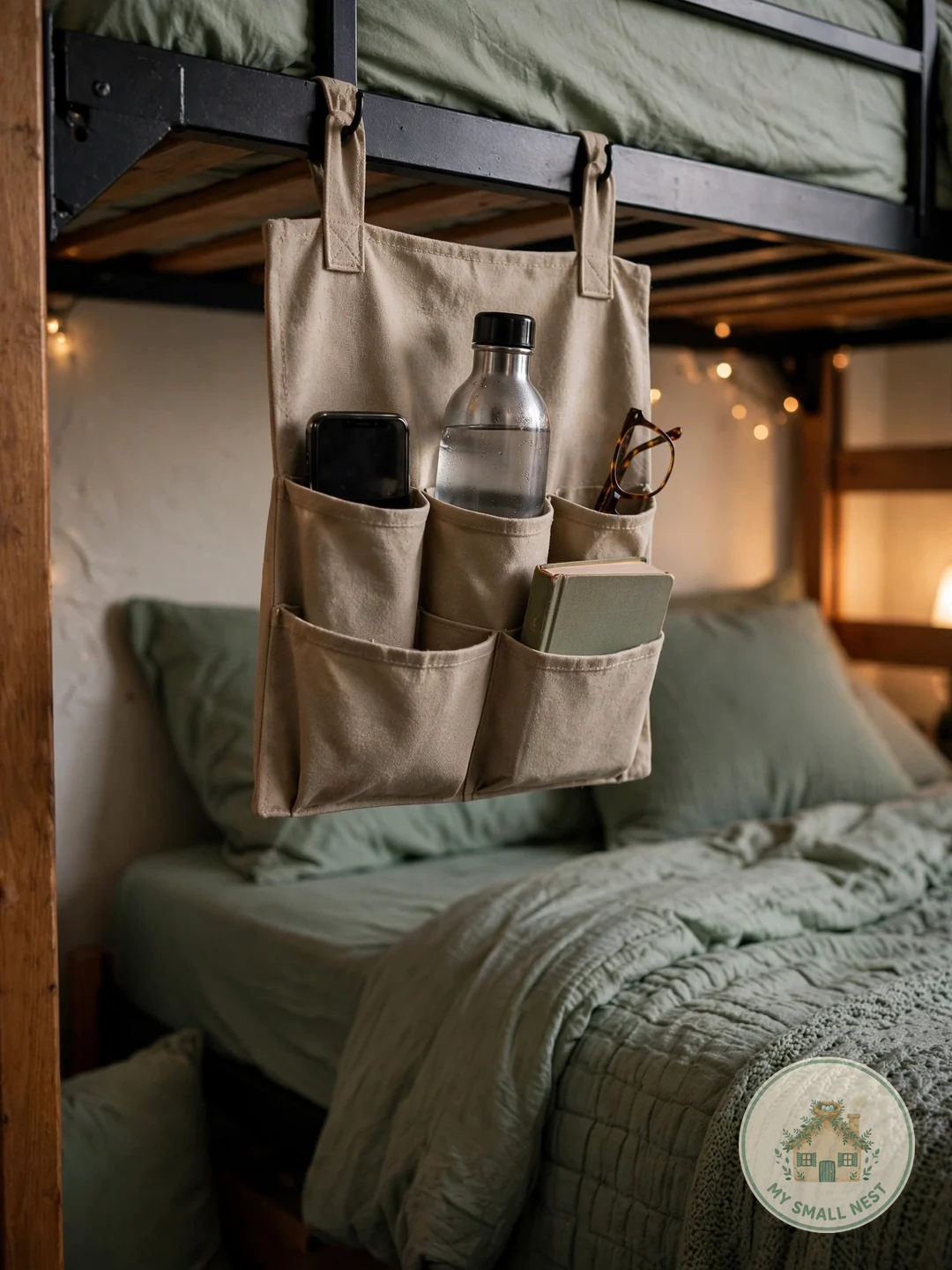
If you loft your bed to gain floor space, reaching the floor for your phone or water bottle becomes an Olympic event at 3 a.m. A bedside caddy slides between the mattress and frame (or hooks over the rail) with pockets for your phone, charger, glasses, water bottle, and late-night snacks. No more rolling over a phone screen or stepping on earbuds in the dark.
Fabric organizers with reinforced dividers ($10–$20) hold more than cheap mesh ones and don’t sag by midterms. Make sure it has a dedicated tall pocket for a water bottle so it does not tip — a tipped water bottle at 3 a.m. is a mattress disaster. Thread your charging cable through the caddy’s grommet or pocket edge so your phone charges right where you can reach it.
Make it work: If your bed isn’t lofted, a caddy still beats a nightstand you don’t have room for. It’s $15 of organization in a room with zero surfaces.
 Pin it
9. Surge-Protector Power Strip
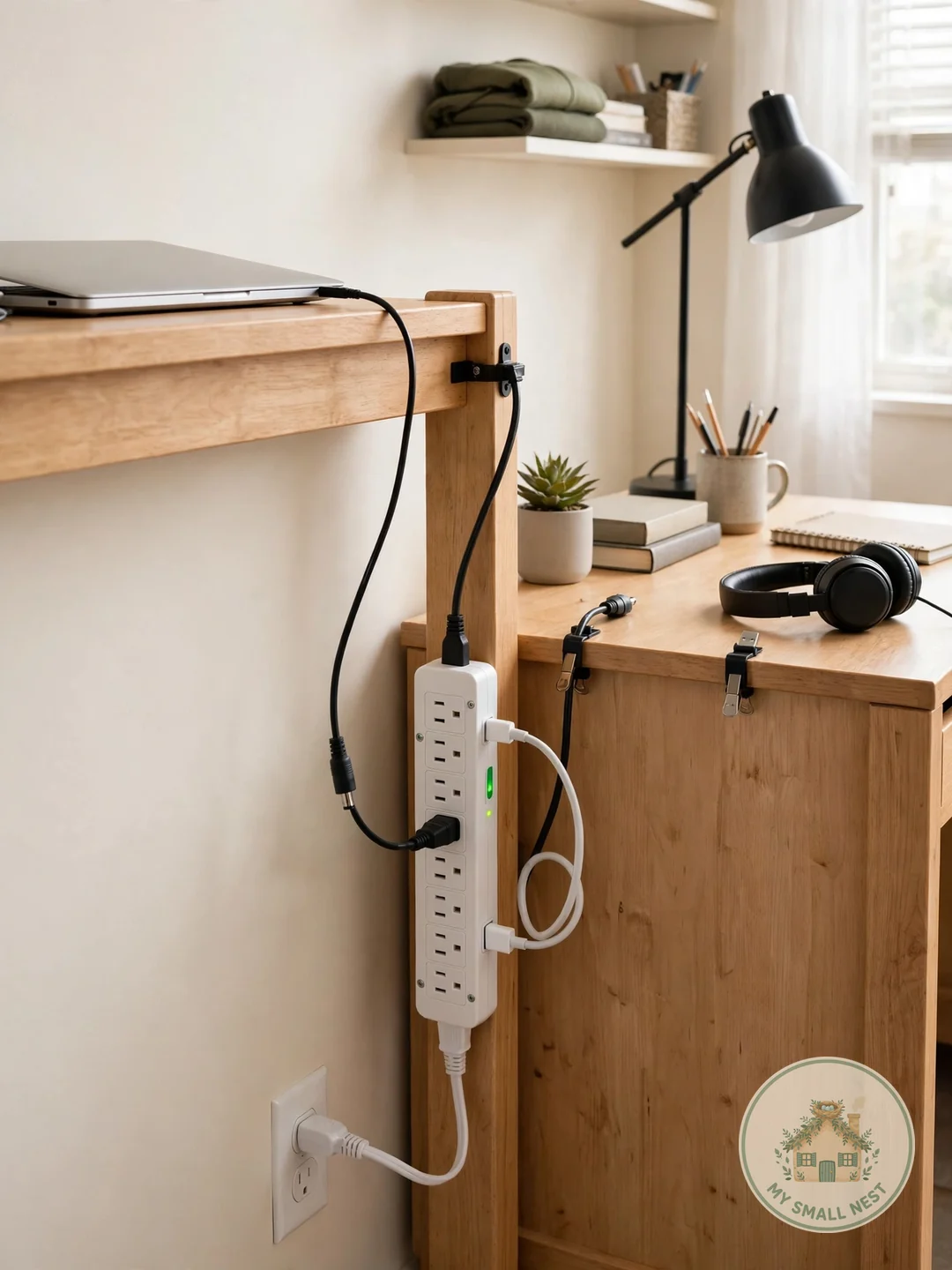
Dorm rooms famously have one or two outlets for your entire life: phone, laptop, lamp, fan, and everything else. A surge-protector power strip with a 6 to 10-foot cord turns one outlet into eight, protects your electronics from campus power spikes, and reaches across the room from awkwardly placed plugs. A flat plug design sits flush against the wall so furniture can push back fully.
Check your housing policy — many schools require surge protectors and ban plain extension cords, and some will confiscate non-compliant ones on move-in day. Expect $15 to $25 for a quality one with USB ports built in. Mount the strip to the side of your desk or bed frame with adhesive strips so outlets stay within arm’s reach instead of buried behind furniture.
Make it work: Get the 10-foot cord, not the 6-foot. Outlets are always four feet farther than you measured, and the longer cord costs $3 more.
Emma’s tip: In my 380 sq ft studio I have exactly four outlets, so I live by the power-strip rules — and the one that matters most: surge protector, not just a power strip. A plain $8 strip gives you outlets; a $20 surge protector gives you outlets plus insurance against the power flicker that fries a $1,200 laptop. My neighbor learned this the $1,200 way. Don’t be my neighbor.
 Pin it
10. Lighted Vanity Mirror
Dorm lighting is harsh, dim, or both, which makes getting ready an exercise in guesswork. A compact lighted mirror with adjustable brightness and a daylight setting shows what your makeup and hair actually look like outside — not just under the greenish fluorescent that’s lying to you. Folding or stand-up styles around 8 to 10 inches fit easily on a desk or dresser without claiming the whole surface.
Rechargeable models ($20–$35) mean no cord clutter, and a full charge usually lasts weeks of daily use — a small luxury that makes 7 a.m. routines far less painful. Look for adjustable color temperature (warm to daylight); single-temperature mirrors are half as useful. Angle the mirror near your desk lamp or a window for the best light, and fold it flat when your roommate needs the desk for studying.
Make it work: Use the daylight setting for makeup and the warm setting for winding down. Doing makeup under warm light and walking into daylight is how you discover your foundation is three shades off — in public.
 Pin it
11. Reusable Dinnerware Set
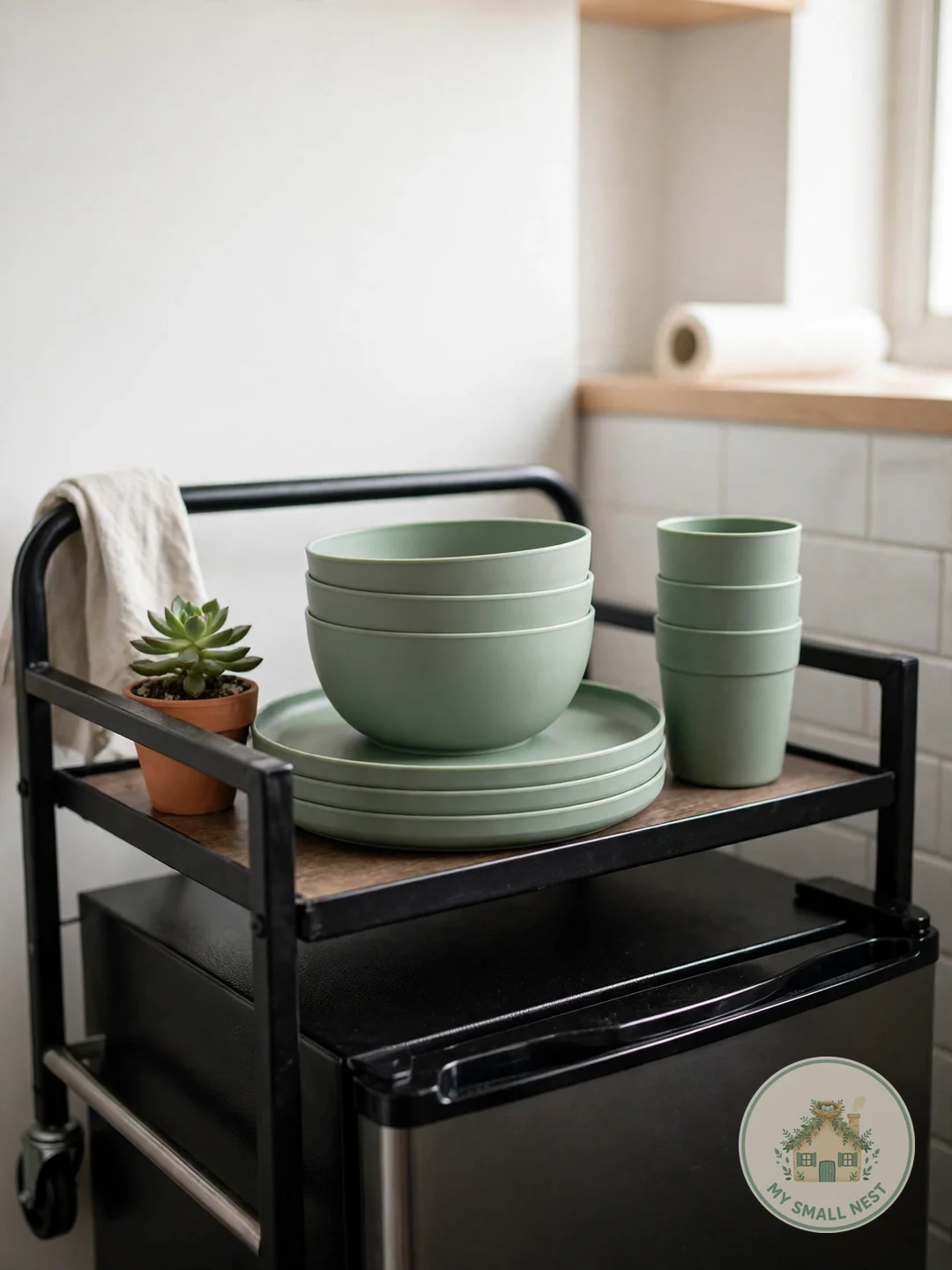
You will eat in your room more than you plan — late-night snacks, reheated leftovers, cereal at midnight. A small reusable set of plates, bowls, cups, and cutlery beats a mountain of disposable waste and the sad ritual of eating from a box. BPA-free plastic or bamboo sets survive drops on dorm floors and stack tightly in a small cabinet.
A four-piece set costs $15 to $25 and lasts all four years, which beats buying disposables every month — both on cost and on the mountain of trash. Toss in a few lidded containers ($10–$15 for a set) for leftovers and a drying mat that rolls up for storage. Wash dishes the same day; a tiny drying mat by the sink keeps you honest and prevents the dreaded room-smell of forgotten bowls.
Make it work: Keep dish soap and a sponge in a small caddy, not loose. A “dish kit” you can carry to the bathroom sink and back is the difference between washing up and letting it pile.
 Pin it
12. Desk Organizer Set
Your dorm desk is your office, study hall, and vanity all in one, and without organizers it becomes a paper avalanche within days. A coordinated set — a desktop file tray, pen cup, and small drawer unit — corrals notebooks, chargers, and stationery into defined zones. Stacking or nesting designs use vertical space so the actual work surface stays clear for your laptop and textbooks.
Measure your desk depth first; many dorm desks are only about 24 inches deep, so slim organizers win. Sets run $20 to $40, and matching pieces make the whole corner look intentional rather than improvised. Give every category a home on day one — papers in the tray, pens in the cup, tech in the drawer — so the system runs itself all semester.
Make it work: Leave 40% of the desk surface empty on purpose. A desk that’s full on day one has nowhere to go but the floor by week three.
Emma’s tip: My studio desk is 32 inches of everything — office, dining table, craft station — and the vertical organizer was the breakthrough. I added a $18 stacking tray unit that goes up instead of out, and it freed nearly a foot of desk depth. In a dorm, vertical is the only direction you have: walls and the air above the desk are free real estate.
 Pin it
13. Stick Vacuum
Dorm floors get shockingly gross — hair, crumbs, dust bunnies, and whatever your roommate tracks in from the quad. A lightweight cordless stick vacuum handles it in five minutes without the ordeal of borrowing the hall vacuum (if one even exists). Look for a model under 8 pounds with a wall-mount or slim stand, since floor space is sacred.
Battery life of 25 to 40 minutes is plenty for a dorm room, and washable filters keep running costs at zero. Decent options start around $70 to $120 — split it with your roommate and it is a no-brainer for the whole year. Set a weekly Sunday vacuum date with your roommate so the floor never reaches the point of no return.
Make it work: The roommate split only works with a written agreement: who stores it, who charges it, what happens at move-out. Five minutes of awkward now beats a $120 argument in May.
 Pin it
14. Closet and Drawer Organizers
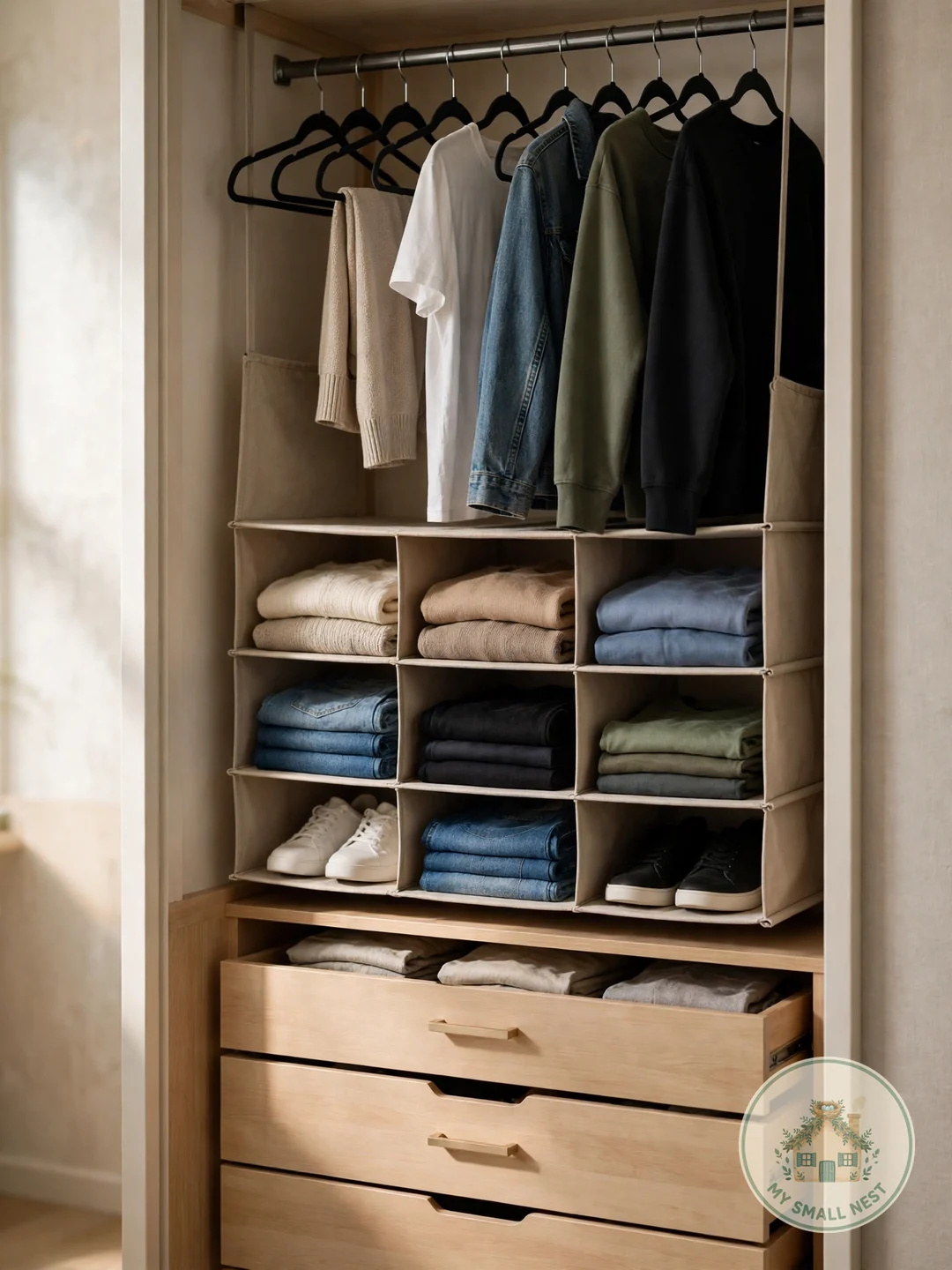
Dorm closets are narrow and deep — clothes vanish into the back never to be seen again. Slim non-slip hangers instantly double usable rod space compared to bulky plastic ones, and a hanging shelf organizer adds five cubbies for folded clothes, bags, and shoes. Inside drawers, spring-loaded dividers or small fabric boxes keep socks, underwear, and accessories sorted instead of avalanching.
A pack of 30 slim hangers ($12–$15) plus a hanging organizer ($15–$20) costs about $25–$35 total — one of the cheapest upgrades on this list. Uniform hangers also make the closet look instantly tidier, which helps when half your wardrobe is visible to the room. Do a closet reset every month — rehang what migrated and pull anything you have not worn for donation.
Make it work: Hang clothes by category and color just once, on move-in day. Future-you, getting dressed at 7:50 for an 8 a.m., will be grateful for the 30 seconds this saves every morning.
 Pin it
15. Under-Bed Storage Bins
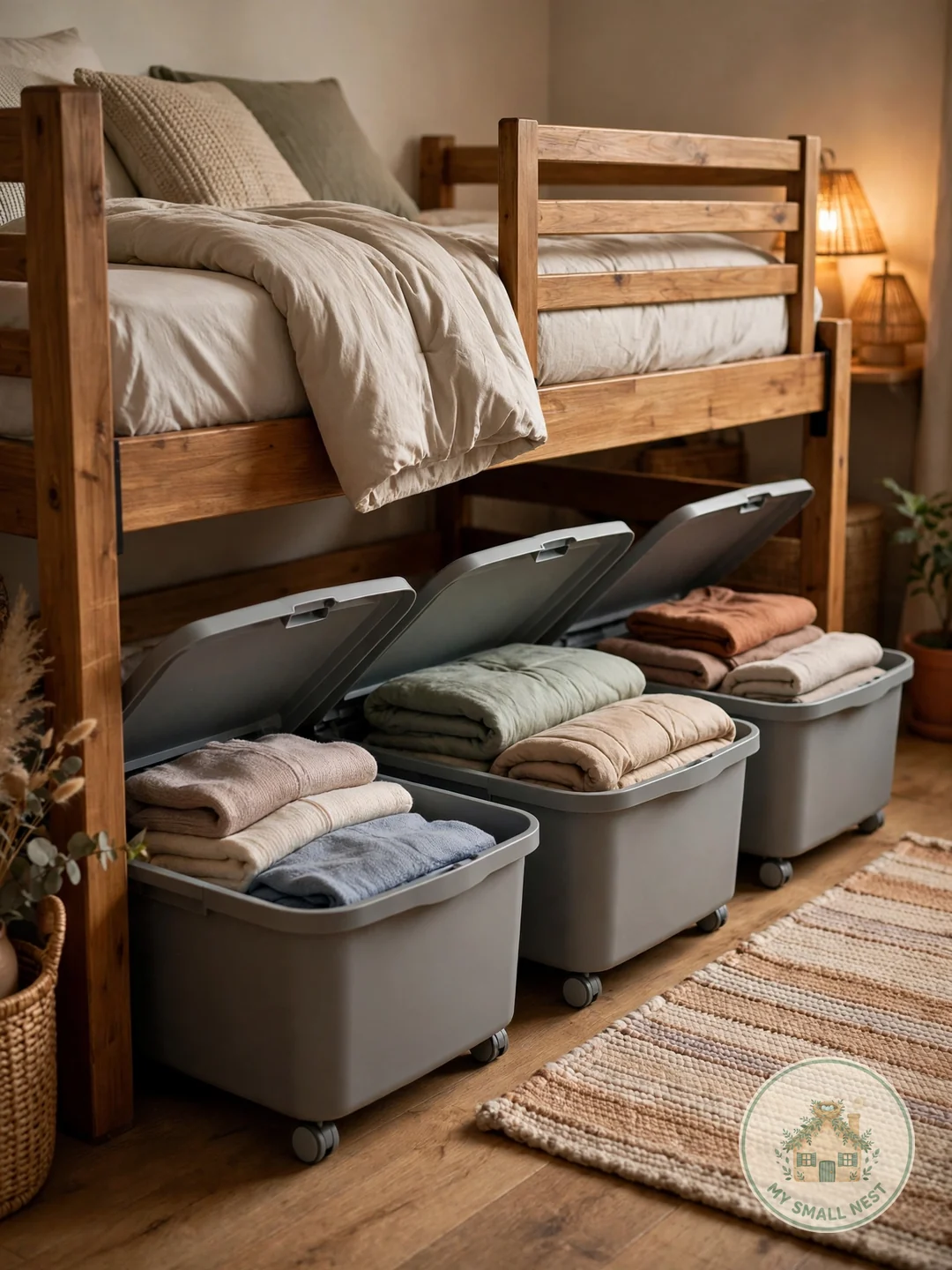
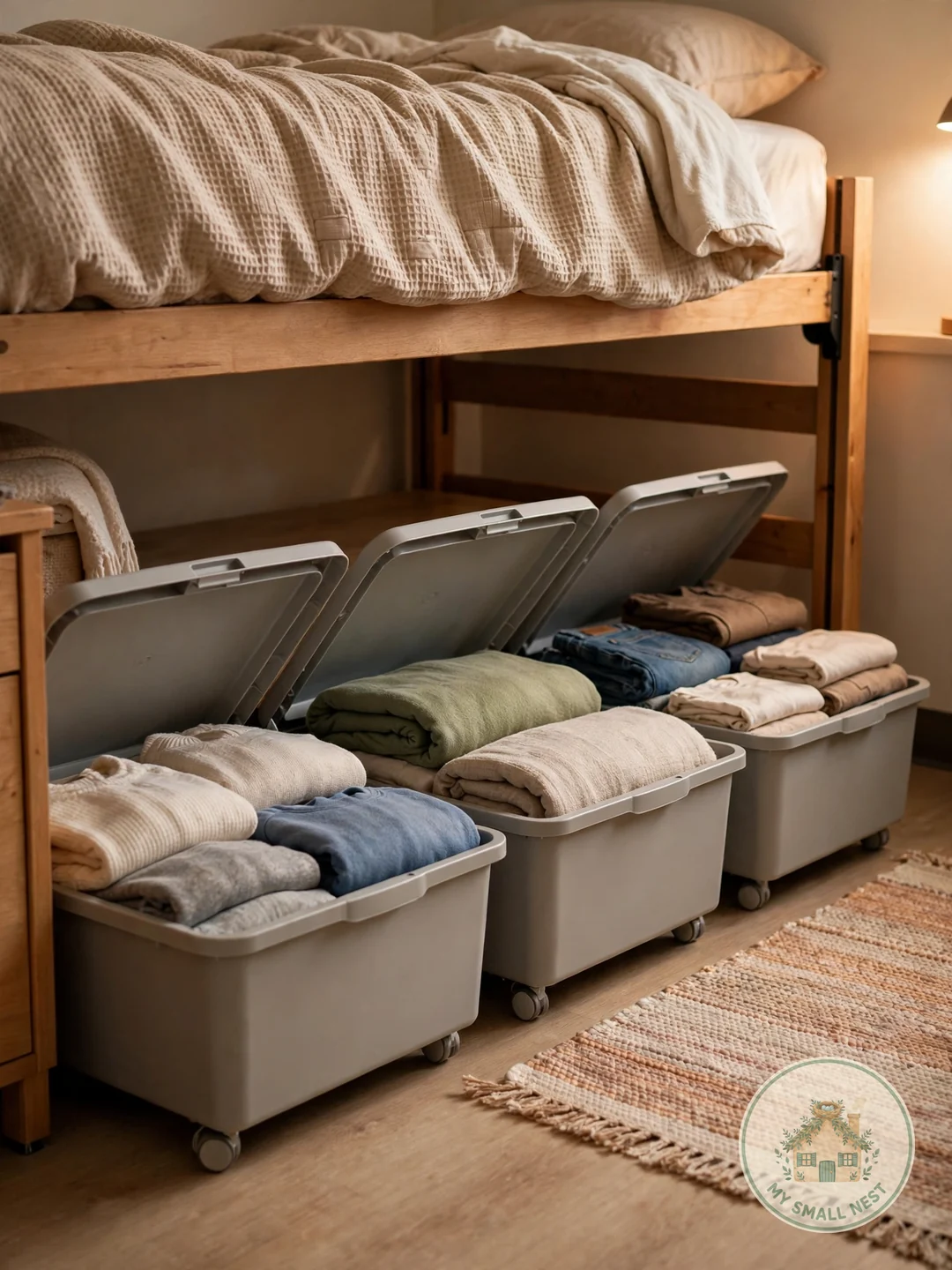
The space under a raised or lofted dorm bed is the biggest hidden square footage in your room — often a full 30 by 80 inches of untouched storage. Low-profile rolling bins (under 8 inches tall) slide underneath and swallow off-season clothes, extra bedding, snacks, and textbooks. Clear or labeled bins mean you can find things without dragging everything out.
Look for bins with lids to keep dust out, and measure your bed clearance first — it varies by dorm, and nothing is sadder than bins that don’t fit. A set of two or three runs $25 to $40, and smooth-rolling wheels mean you can pull them out silently at 2 a.m. without waking your roommate. Store least-used items at the back and daily essentials at the front, like a tiny warehouse with a proper front counter.
Make it work: If your bed isn’t lofted, $15 bed risers add 5–7 inches of clearance — instantly creating under-bed storage where there was none. Check that risers are allowed first; most schools permit them.
Emma’s tip: Under-bed storage is the entire reason my 380 sq ft studio works — I have six rolling bins under my bed holding off-season clothes, gift wrap, tools, and files. The system: label every bin on two sides with a $5 label maker, and keep an inventory note on your phone. When you can find the winter coat in October without emptying all six bins, you’ll understand.
 Pin it
16. Mini Desk Fan
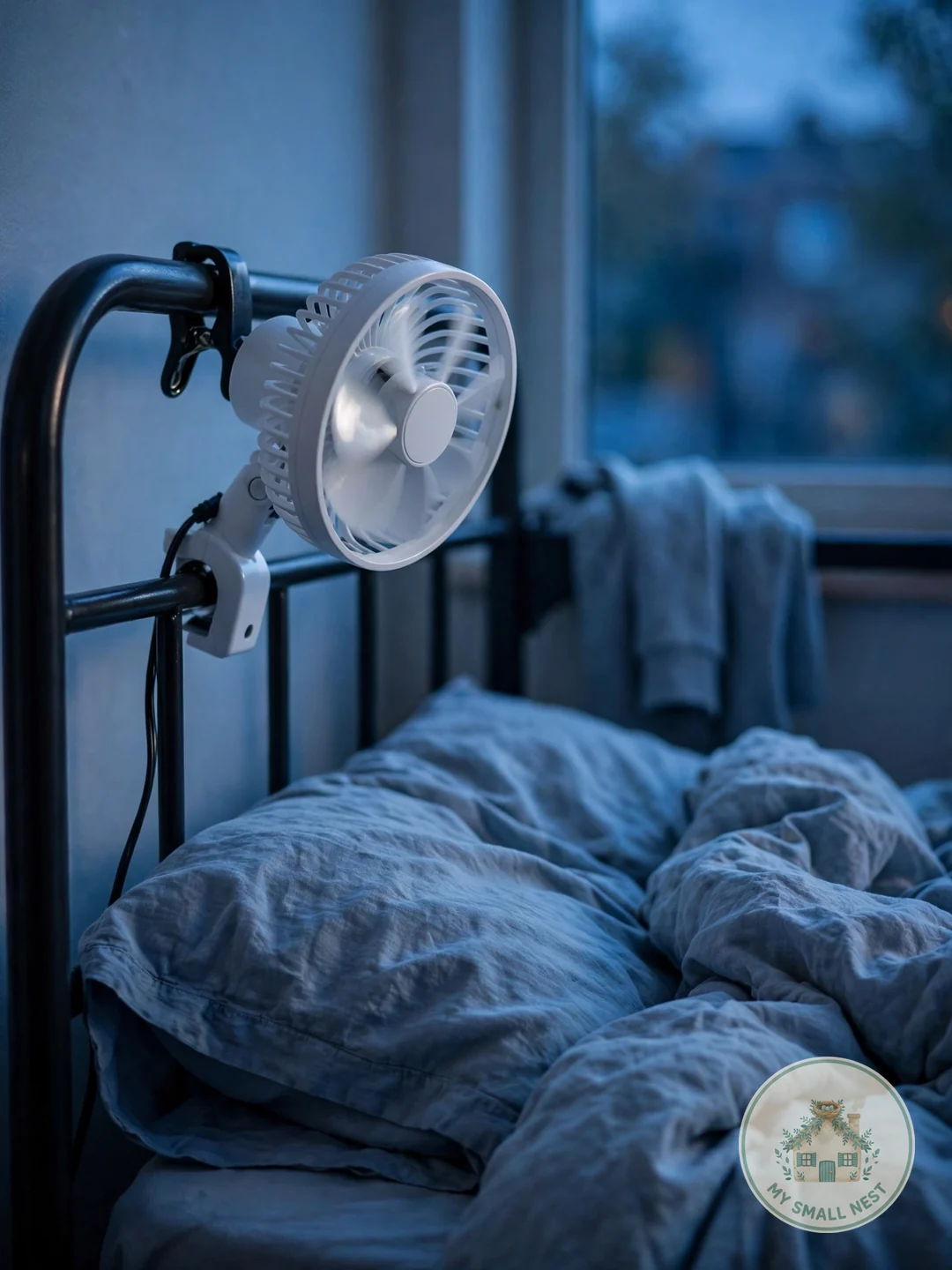
Old dorm buildings trap heat, and a stuffy room kills both sleep and focus. A compact 6 to 8-inch desk fan moves serious air without taking over your desk, and many models include a clip mount so it can hang on a bed frame or shelf instead. Quiet settings matter — you do not want to be the roommate whose fan roars through your 2 a.m. study session.
USB-powered fans ($15–$25) plug into your power strip or laptop, and many run whisper-quiet on the lowest setting. Some double as white noise, which is a genuine bonus for light sleepers in thin-walled dorms. Aim the fan to pull cooler air from near the window across your bed for the best overnight comfort — fan placement matters as much as fan power.
Make it work: A fan plus a damp towel on hot nights beats no AC surprisingly well. It’s not air conditioning, but it’s the difference between sleeping and staring at the ceiling.
 Pin it
17. Electric Kettle
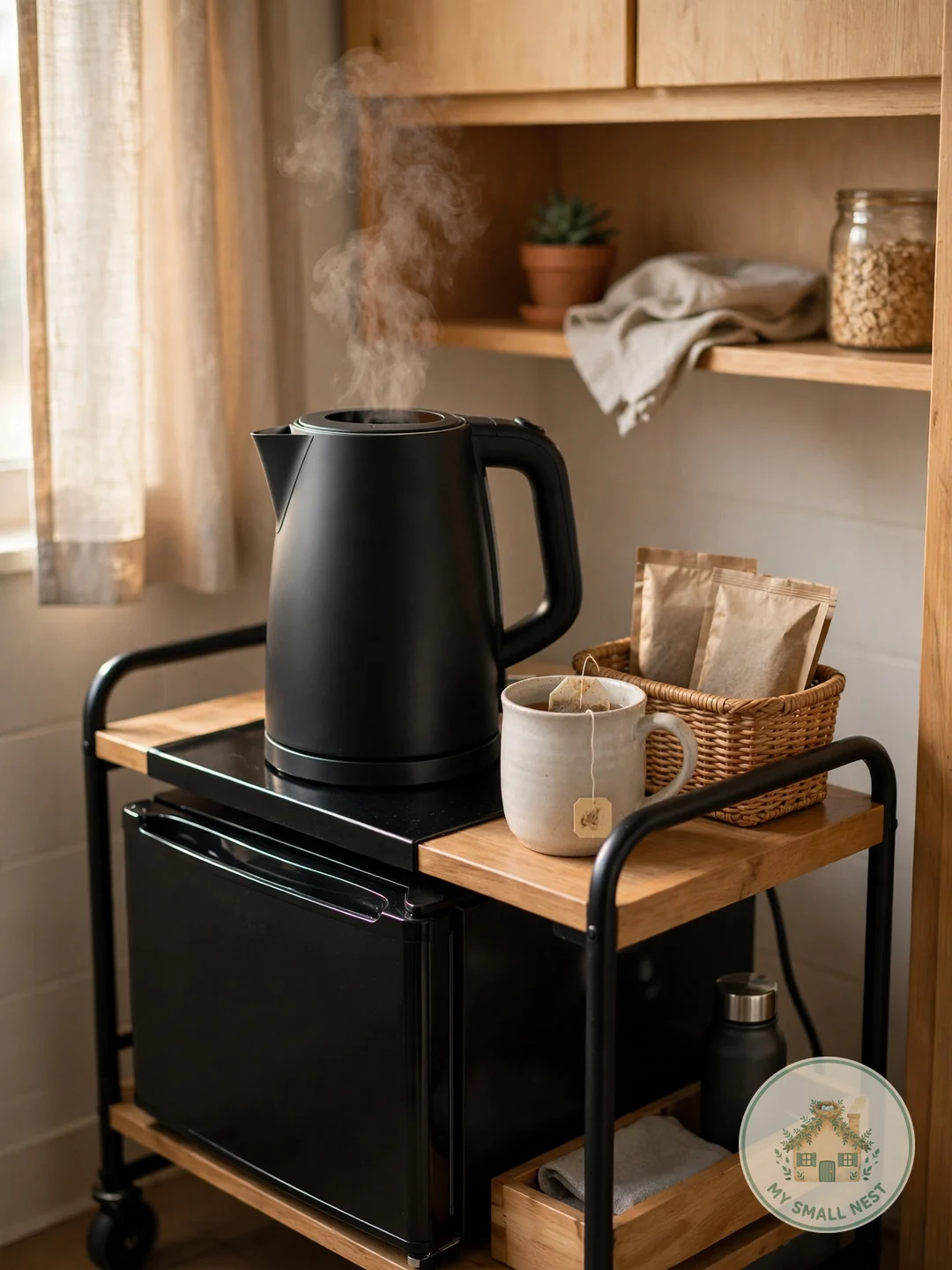
Not everyone is a coffee person, and even coffee lovers want tea, hot chocolate, or instant oatmeal without trekking to the dining hall. A 1-liter electric kettle boils water in about three minutes with an auto shut-off for safety — important in a room full of papers and fabric. Gooseneck models pour precisely and look great; wide-mouth ones are easier to clean. A stainless interior is worth seeking out over plastic.
Compact kettles cost $20 to $35 and sit happily on your fridge cart, taking up less space than a coffee mug collection. Confirm your dorm allows them, since some restrict heating appliances — auto shut-off models are more likely to be approved. Keep a small caddy of tea bags, instant oatmeal packets, and a mug right next to the kettle for a grab-and-go breakfast station.
Make it work: Descale monthly with a 50/50 vinegar-water boil if you have hard water. A scaled kettle takes twice as long to boil and dies young.
 Pin it
18. Bedside Lamp with USB Ports
Overhead dorm lighting is either blinding or broken, and your roommate will not love it blazing at midnight. A small bedside lamp with warm LED settings and built-in USB charging ports solves lighting and charging in one footprint. Clip-on or small-base designs attach to a bed frame, shelf, or desk edge without claiming precious surface space you need for books and tech.
Dimmable models ($20–$30) let you wind down without the harsh fluorescent glare, and warm light is kinder before sleep — no more blinding your roommate with the overheads. Look for both USB-A and USB-C ports; the C port charges modern phones and earbuds twice as fast. Use the lamp’s lowest warm setting as your nightly wind-down signal — your brain will learn that dim glow means sleep time.
Make it work: Position the lamp on your side of the bed, shade angled toward your pillow. Light that spills to your roommate’s side is a fast track to a roommate meeting.
Emma’s tip: This was the last thing I bought for my studio and the thing I use most — a $24 clip lamp with USB ports on my bed frame. It replaced my phone-charging cable stretched across the room (a trip hazard), the harsh overhead I hated, and the separate charger brick. Three problems, one $24 purchase, zero footprint. If your budget only stretches to five items on this list, make this one of them.
 Pin it
Common Mistakes to Avoid
Buying Before Checking Housing Rules
Every dorm has different appliance and size limits. That perfect microwave or string-light setup means nothing if it gets confiscated on move-in day. Read your housing handbook first, then shop — it takes twenty minutes and saves hundreds.
Skipping the Mattress Topper
It is tempting to spend the budget on cute decor first, but nothing ruins freshman year like months of terrible sleep. Comfort before cute — the topper is the one purchase almost every upperclassman wishes they had made sooner. Decor can wait until October; sleep can’t.
Overpacking Decorations
Dorm rooms are roughly 100 square feet per person, and wall space fills up fast. Bring a few meaningful pieces, then wait until you are in the room to see what fits. Boxes of unused decor just become expensive clutter you’ll ship home in May.
Forgetting Cleaning Supplies
Nobody plans for the mystery smell or the dust-bunny colony, but they arrive by week three. A stick vacuum, surface wipes, and a small trash routine from day one keep a tiny shared room livable — and keep roommate tensions low. Clean rooms have fewer fights; it’s practically science.
Frequently Asked Questions
What are the most important dorm room essentials to buy first?
Start with sleep and power: a mattress topper, cooling pillows, and a surge-protector power strip. Then add the mini fridge, shower caddy, and cleaning basics. Buy these before move-in week, because stores sell out fast and prices spike once the semester starts — July is the cheapest month.
How much should I budget for dorm room essentials?
A comfortable setup with the 18 items on this list runs roughly $400 to $700 total. Split big-ticket items like the mini fridge and vacuum with your roommate to cut costs in half, and watch for summer sales — July and August bring the deepest dorm discounts of the year.
Can I bring a mini fridge and coffee maker to my dorm?
Most colleges allow mini fridges under 4.5 cubic feet, but appliance rules vary. Always check your housing handbook before buying — some schools restrict wattage, heating elements, or require Energy Star models. When in doubt, email your residence life office before move-in day, not after.
What size mattress topper fits a dorm bed?
Almost all college beds are Twin XL (38 by 80 inches), which is five inches longer than a standard twin. A Twin XL topper in 2 to 3 inches of memory foam fits perfectly — bring Twin XL sheets and a mattress protector in the same size to match.
How do I keep a small dorm room organized all semester?
Give everything a home on day one: under-bed bins for bulk storage, a desk organizer for school supplies, a bedside caddy for nightly items, and a weekly 10-minute reset. Small rooms stay tidy when every item has a designated spot — the mess only wins when things are homeless.
Your dorm room is small, but with the right essentials it becomes the cozy little home base you actually look forward to coming back to — soft bed, cold drinks, everything in its place. Start with the sleep and power basics, add the comfort upgrades, and do not wait until move-in week when the shelves are empty.
Save this list, share it with your roommate to split the big purchases, and enjoy the best-organized dorm on the hall. You have got this — freshman year is going to be great.


What readers are saying
No comments yet — yours could be the first.