 My Small Nest
Here’s what nobody tells you about round tables: a centerpiece that looks perfect from your chair can look completely lopsided from the seat across from you. I learned this the hard way with a tall, dramatic vase that blocked my dinner guest’s face all evening — we basically shouted around it for two hours. Round tables need a different approach than long rectangular ones, and most styling advice ignores that.
In this guide, you’ll find 15 round table centerpiece ideas that look beautiful from every angle — all 360 degrees — and work for dining tables, entryway tables, and coffee tables on real budgets. Each one includes sizing tips and a practical styling trick so you can recreate the look today, not “someday.”
Who this is for: anyone staring at a bare round table wondering why it looks unfinished — and anyone who’s ever bought a “gorgeous” centerpiece that only looked good from one side.
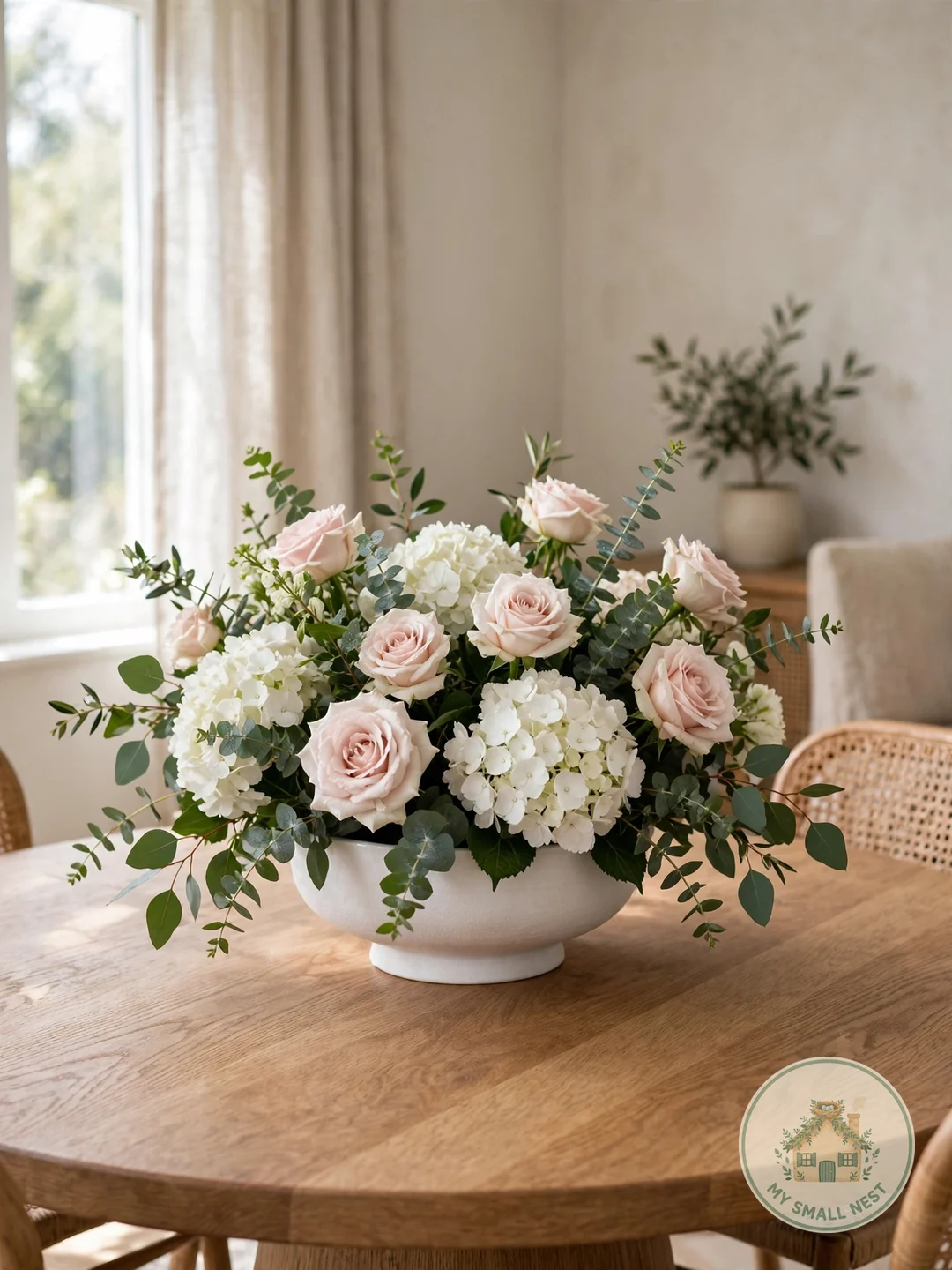
1. Overflowing Fresh Flower Arrangement
Fresh flowers remain the gold standard of round table centerpiece ideas for one simple reason: they look stunning from all 360 degrees, with no “back” to worry about. Choose a low, wide vase or compote bowl (about 10–12 inches wide, $15–$25 at HomeGoods or thrift stores) so the arrangement spreads outward rather than shooting straight up and blocking conversation across the table.
For a round dining table between 42 and 48 inches, keep the total arrangement under 14 inches tall so sightlines stay open. Grocery store bouquets work beautifully — buy two bunches ($8–$12 each), strip the lower leaves, and cut stems at varying heights for a loose, garden-style look. Eucalyptus, hydrangeas, and roses are especially forgiving for beginners because they fill space fast.
Make it work: Change the water every two days and trim a half inch off the stems each time — your arrangement will easily last 10 days instead of five. That’s two dinner parties from one $20 grocery run.
 Pin it
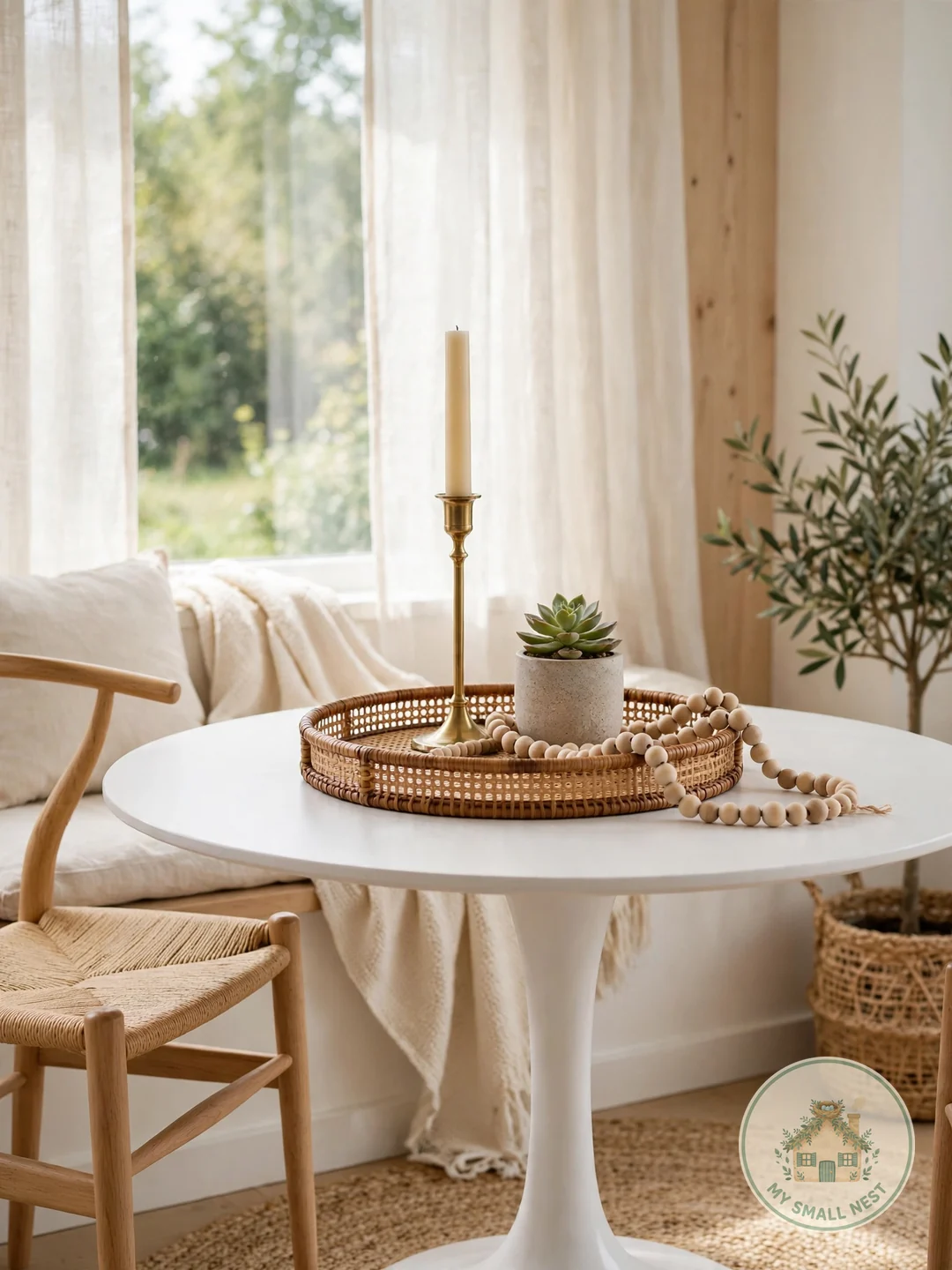
2. Layered Decorative Tray
A tray is the secret weapon of effortless table styling. It corrals everything into one intentional-looking zone, which matters even more on a round table where items drift and look scattered. Pick a round tray 14–18 inches in diameter for a standard dining table ($20–$35 at Target or World Market), or 10–12 inches for a small entryway table.
Build in layers: something tall (a candlestick or small vase), something medium (a candle or tiny plant), and something low and textural (a stack of coasters, a small bowl, a decorative bead garland). Odd numbers look best — three or five objects beat four every time. Rattan, wood, and hammered metal trays each bring a different mood, from coastal to rustic to modern.
Make it work: Lift the whole tray off when you need the table for dinner or game night — instant clear surface, zero restyling required. This alone justifies the tray.
 Pin it
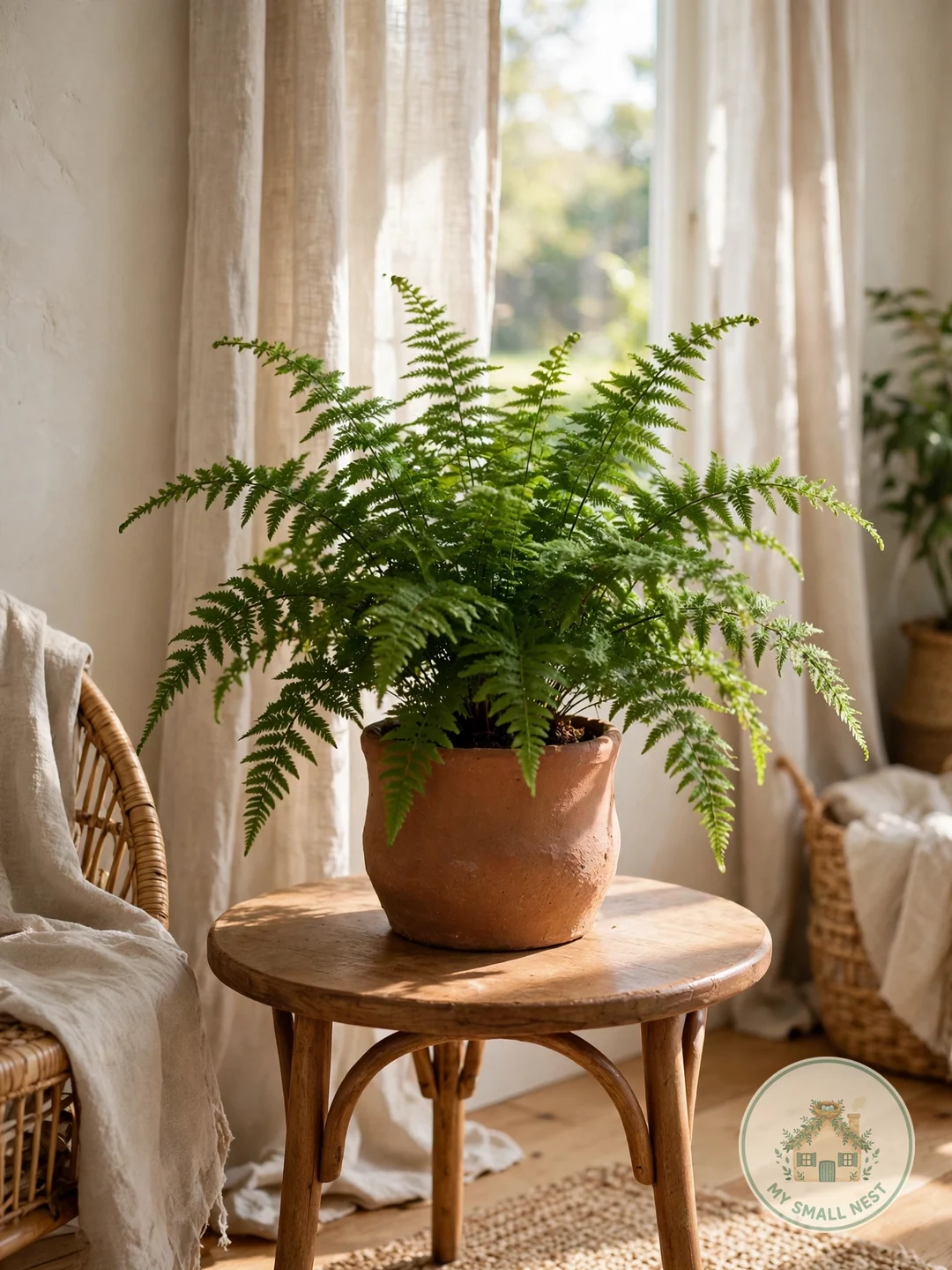
3. Sculptural Potted Plant
A living plant brings movement and freshness that no object can match, and it never needs replacing the way cut flowers do. On a round table, choose a plant with a full, rounded silhouette — a bushy fern, a round topiary ball, or a trailing pothos in a pedestal planter — so the shape echoes the table itself. Round on round always looks intentional.
Scale matters: the plant and pot together should be roughly one-third the diameter of the table. A 6–8 inch pot suits a 36-inch bistro table, while a 48-inch dining table can handle a 12-inch statement planter ($25–$45 at nurseries or IKEA). Terracotta, matte ceramic, and woven baskets are all timeless choices that suit nearly any decor style.
Make it work: Rotate the pot a quarter turn every week so the plant grows evenly instead of leaning toward the window. A lopsided plant ruins the symmetry you’re paying for.
Emma’s tip: I keep a pothos in a $12 IKEA pot on my small round dining table in my 380 sq ft studio — it’s the only “centerpiece” that has survived two years, three seasons of decor trends, and my complete inability to keep cut flowers alive past day six. If you, like me, are a flower killer, start here.
 Pin it
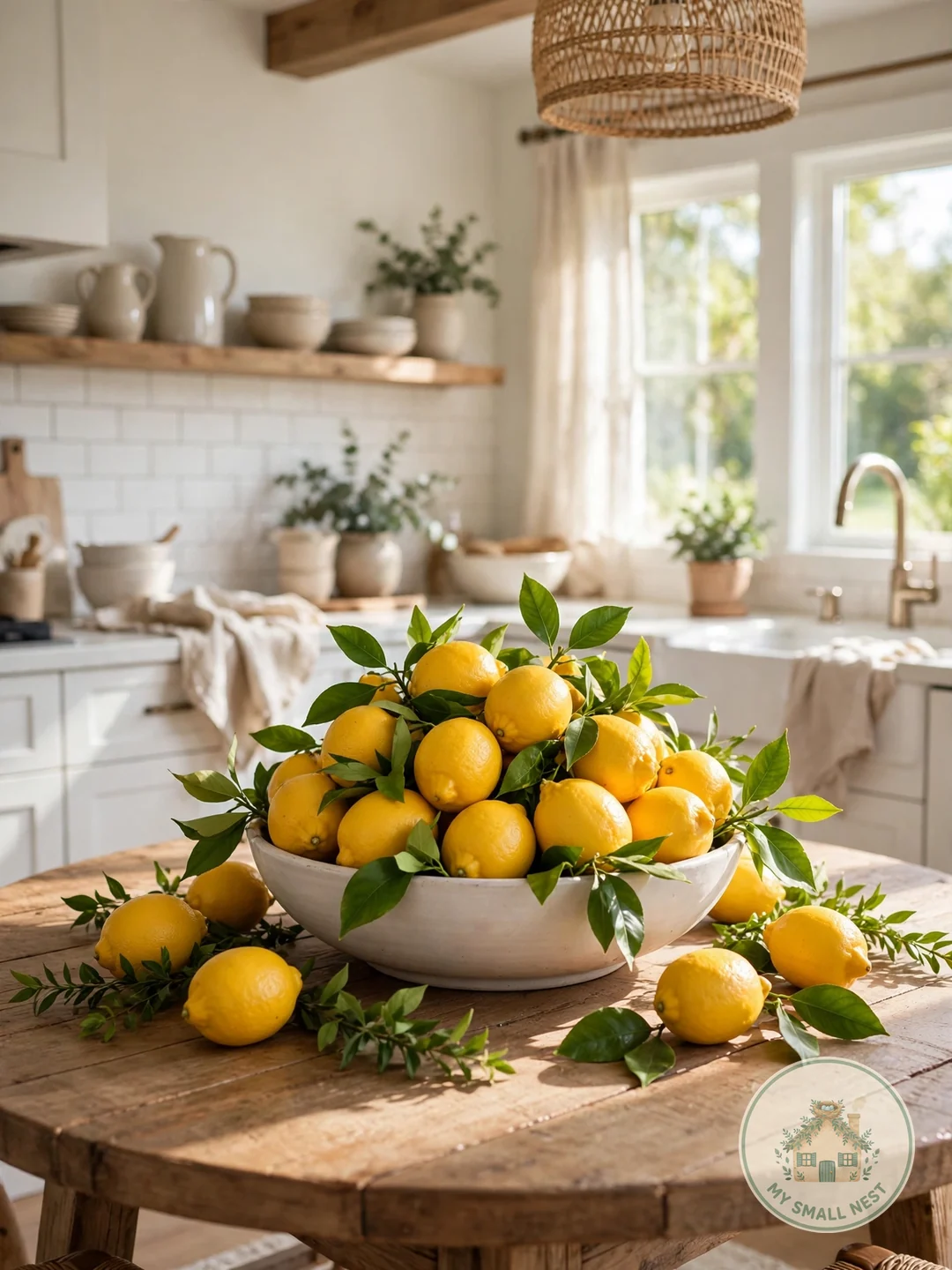
4. Abundant Seasonal Fruit Bowl
Few round table centerpiece ideas are as effortlessly abundant as a generous bowl of fruit. A wide, shallow bowl piled with lemons, clementines, green apples, or pears adds instant color and a welcoming, lived-in feeling — and unlike purely decorative objects, it gets eaten and refreshed naturally. Zero waste, zero dusting.
For the most striking look, stick to one or two fruit colors rather than a rainbow mix: all lemons in a white bowl, or deep red apples in a dark wood bowl. A bowl 12–14 inches wide and 4–5 inches deep ($18–$30) is the sweet spot for a dining table. Citrus lasts two to three weeks at room temperature, making it the lowest-maintenance option on this list.
Make it work: Tuck a few sprigs of greenery or eucalyptus between the fruit for a styled, farmers-market look that costs almost nothing — a $4 bundle from the grocery store lasts weeks.
 Pin it
5. Cluster of Mixed-Height Candles
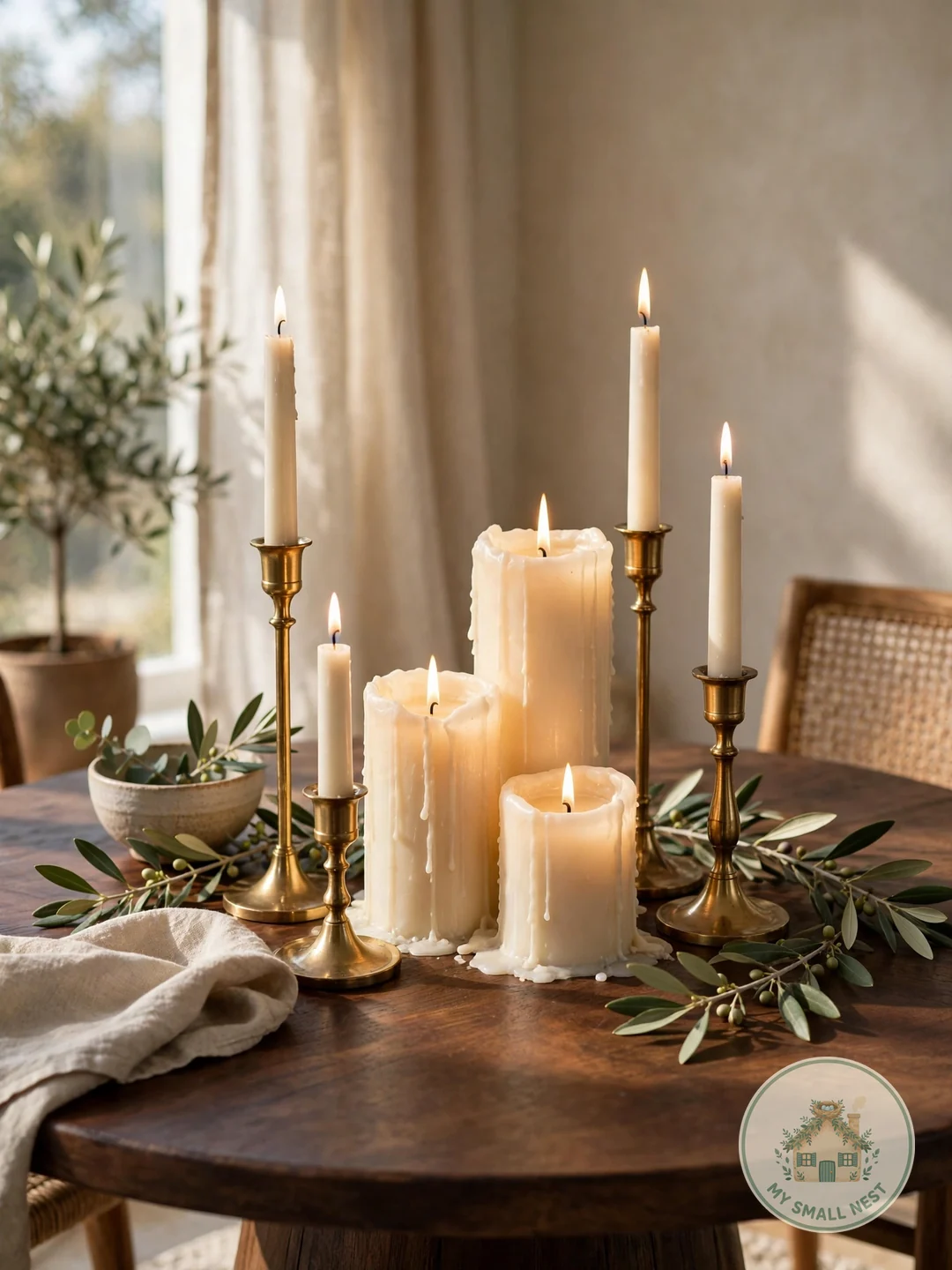
Candle groupings are pure magic on round tables because the circular table shape naturally suits a circular cluster. Combine pillar candles, taper candles, and tea lights in groups of five to seven, varying heights by at least 3–4 inches between pieces for a dynamic, collected look. A full cluster costs $20–$40 depending on candle quality.
Stick to one color family — all ivory, all honey-toned beeswax, or all moody charcoal — and let the heights and textures (smooth pillars, ribbed glass hurricanes, brass holders) create the interest. Keep the cluster within a 12-inch footprint in the center so place settings still fit comfortably around a 48-inch table. Battery-operated candles with timers ($15–$25 for a set) are a brilliant set-and-forget option for entryway tables.
Make it work: Place the tallest candle slightly off-center rather than dead center — it looks more artful and keeps sightlines open for conversation.
 Pin it
6. Stacked Coffee Table Books
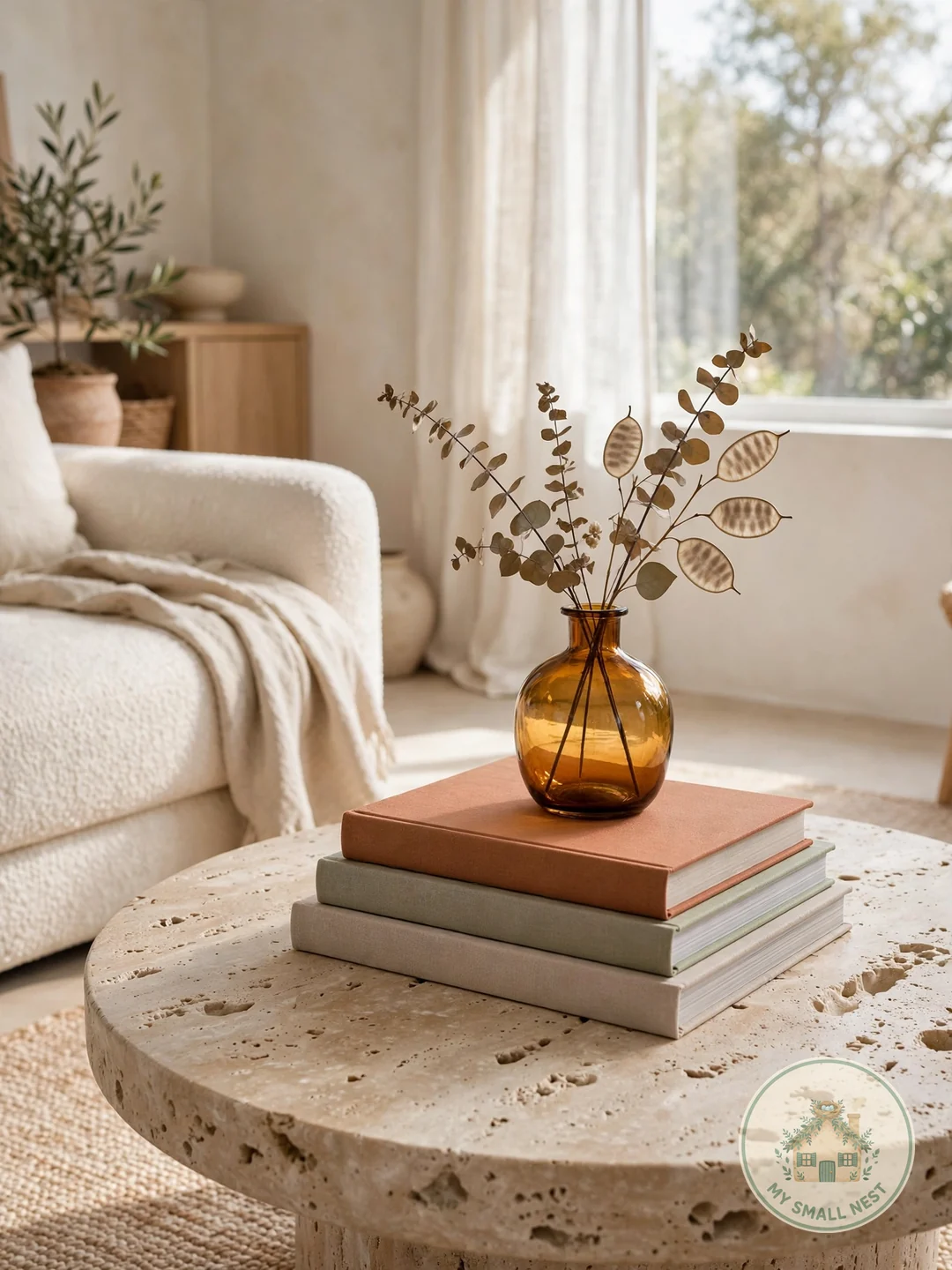
On larger round tables — especially coffee tables and oversized entryway tables — a stack of beautiful books creates the height and visual weight a single small object can’t. Choose two or three books with covers you genuinely love, largest on the bottom (around 10–12 inches long), and top the stack with a small object like a candle, a bud vase, or a sculptural stone.
This works best when the books reflect your actual interests — travel photography, interiors, gardening, fashion — because guests will pick them up and flip through. Thrift stores are treasure troves for gorgeous hardcovers at $2–$3 each; just check that the spines and covers are in good shape. Two thrifted books and a $5 candle beat a $60 “decor set” every time.
Make it work: Turn the top book at a slight angle instead of stacking everything perfectly straight — it looks styled rather than stored. Ten degrees of rotation is the difference.
Emma’s tip: I keep a stack of three thrifted design books ($7 total) on the coffee table in my 380 sq ft studio, and they’re the most-touched decor I own — guests always pick one up. The trick: only display books you’d genuinely recommend. Mine are dog-eared and annotated, and that’s exactly why they work as decor.
 Pin it
7. Rustic Wooden Dough Bowl
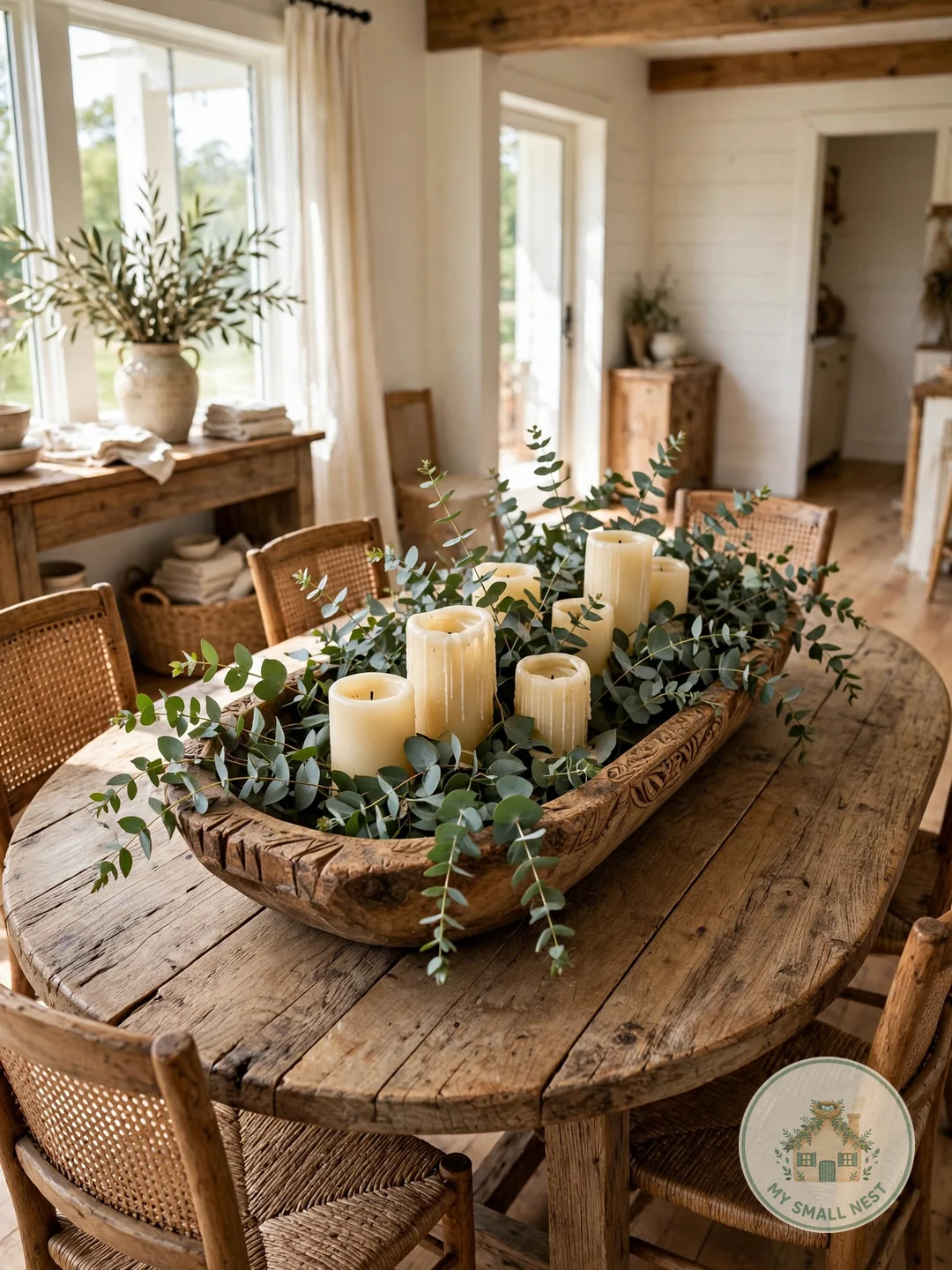
The humble dough bowl might be the hardest-working vessel in home decor. Its long, low shape contrasts beautifully with a round table, and it holds just about anything: faux greenery, a row of pillar candles, pinecones in fall, ornaments at Christmas, or a simple tangle of wooden beads year-round. One $25–$45 bowl, endless identities.
Look for a hand-carved bowl 18–24 inches long for a dining table, or 12–15 inches for a smaller accent table. Because dough bowls are low (usually 4–6 inches tall), they never block conversation — a huge advantage over tall vases. Fill it generously; a sparse dough bowl looks sad, while an overflowing one looks abundant and intentional.
Make it work: Line the bowl with a linen runner or faux moss first, then nestle your fillers in — it hides gaps and makes everything look lush for about $6 of moss.
 Pin it
8. Glowing Lantern Display
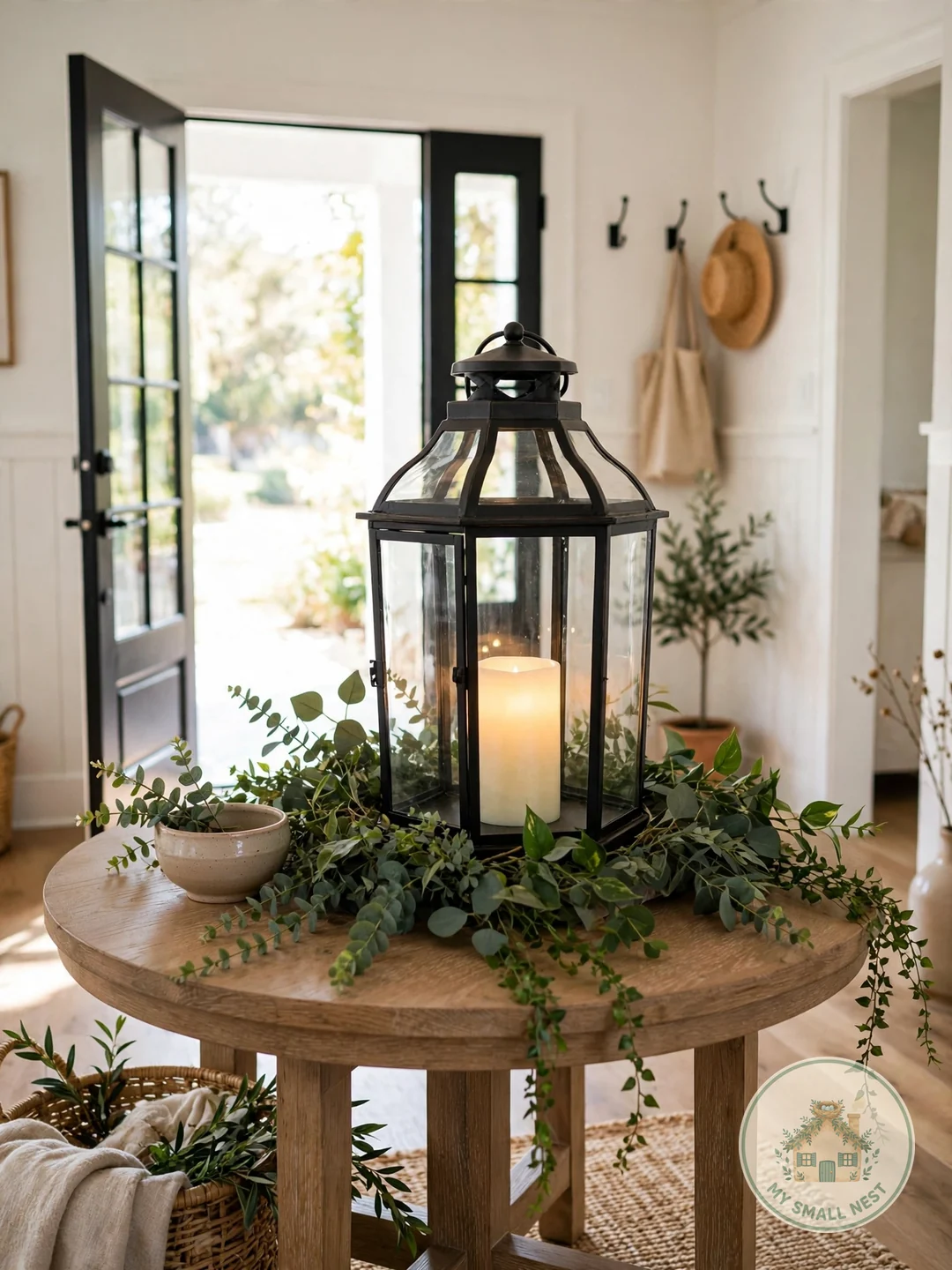
Lanterns bring architecture to a tabletop — their frames add height and structure while the glass keeps things feeling light. One large lantern (14–18 inches tall, $25–$45) makes a confident single-piece centerpiece on an entryway or accent table; a trio of graduated sizes ($40–$70 for three) looks incredible on a dining table.
Style around the base with a loose ring of greenery, small pumpkins in autumn, or simple linen fabric to soften the transition between lantern and table. A flameless candle inside means you get the glow without worrying about open flames near curtains or little hands. Black metal lanterns suit modern farmhouse style, while brass or rattan versions lean coastal and traditional.
Make it work: Put your lantern on a round placemat or charger one size larger than its base — it grounds the piece, protects the table, and costs about $5.
Emma’s tip: I tried the lantern look on my round studio table and learned the scale lesson the expensive way — my first lantern was 22 inches tall and completely swallowed my 36-inch table. Measure your table first: the lantern should be no more than half the table’s diameter in height, or it stops being a centerpiece and starts being a lighthouse.
 Pin it
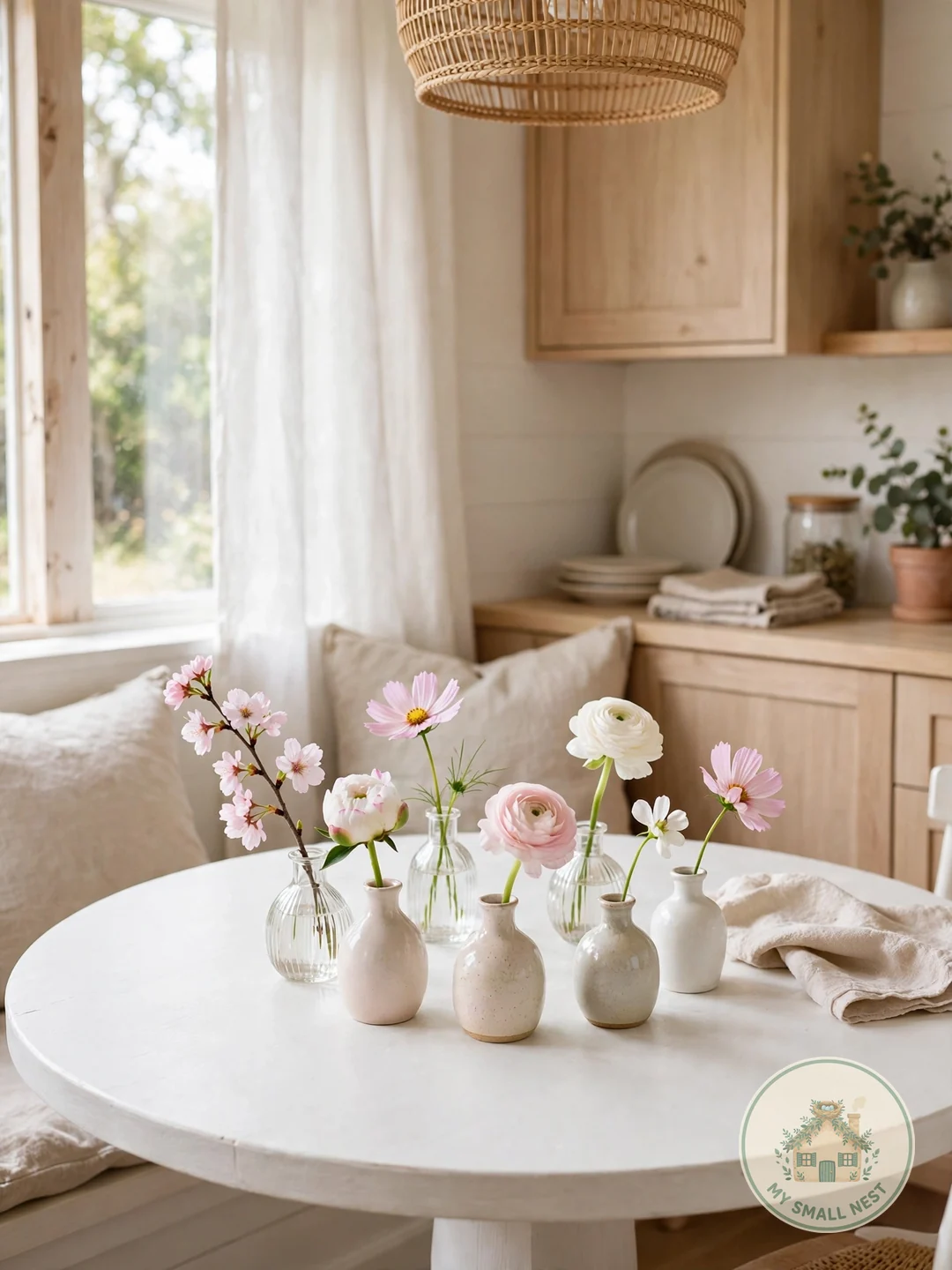
9. Collection of Small Bud Vases
Instead of one big arrangement, try a constellation of five to seven bud vases clustered in the center of your round table. Each vase holds just one to three stems, so the whole look feels relaxed, personal, and a little bit artistic — like a tiny gallery of flowers.
Mix vase heights (4–8 inches) and materials — clear glass, milk glass, small ceramic pitchers, even vintage bottles ($1–$4 each at thrift stores) — but keep the flowers in a tight color palette so the collection reads as intentional rather than random. This is also the most budget-friendly floral option: a single $10 grocery bouquet divided among seven vases looks far more generous than the same bouquet in one vase.
Make it work: Arrange the vases in a loose circle about 10 inches across, tallest in the middle, so the cluster reads as one centerpiece from every seat. Step back and check from three different chairs.
Emma’s tip: This is my go-to for dinner parties in my 380 sq ft studio — I keep seven thrifted bud vases ($14 total) in a kitchen cabinet, and one grocery bouquet split seven ways looks like I spent $60 at a florist. Guests always ask about “the arrangements,” plural, which never stops being funny.
 Pin it
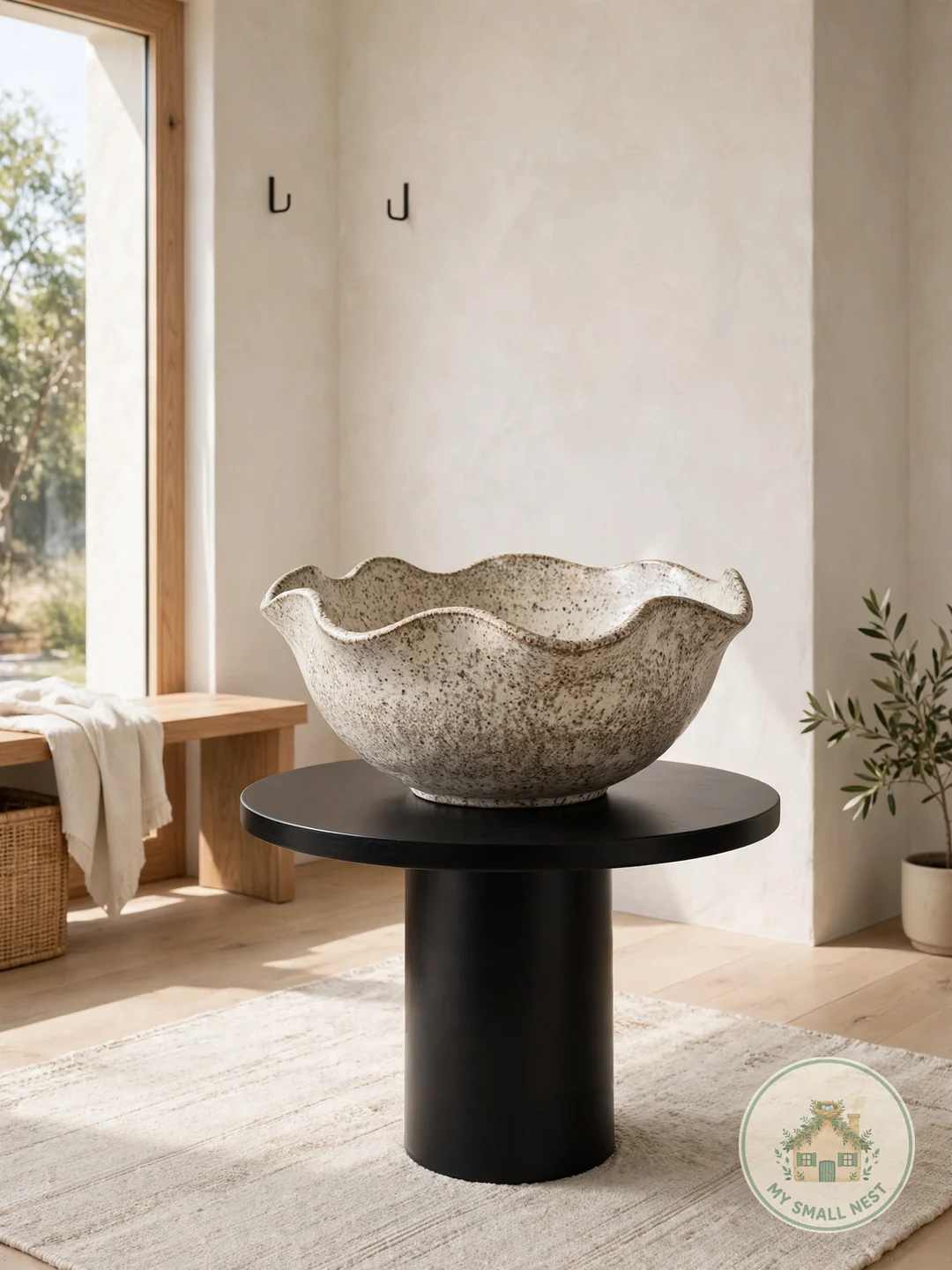
10. Statement Decorative Bowl
Sometimes the bravest choice is also the simplest: one extraordinary bowl, standing alone. A hand-thrown ceramic bowl, a carved stone vessel, or a turned wood bowl with beautiful grain ($30–$80 at artisan markets or Etsy) needs no filler to earn its place — its form is the decoration.
This minimalist approach shines on round pedestal tables and modern entryway tables where you want a clean, gallery-like moment. Choose a bowl 10–14 inches wide with an interesting profile — a wide lip, an organic wobble, a striking glaze. Set it slightly off-center for a designer touch, or dead center for calm symmetry.
Make it work: If the bowl feels too empty at first, add just three of one thing — three moss balls, three artichokes, three large shells — and stop there. Three is styled; four is a collection; five is clutter.
 Pin it
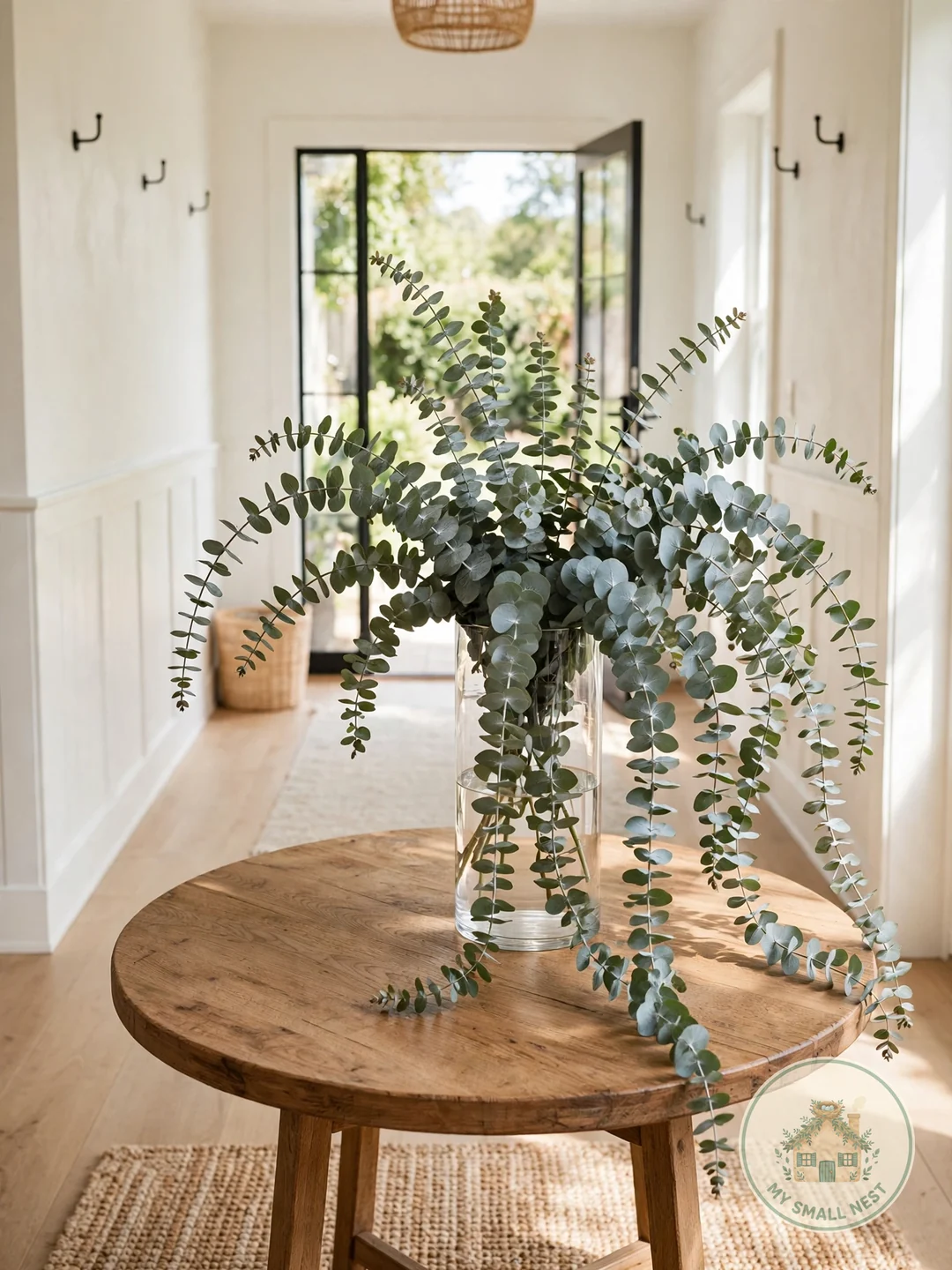
11. Fresh Eucalyptus and Greenery Stems
If you love that airy, Pinterest-perfect look, a tall vase of eucalyptus or mixed greenery is the fastest way to get it. Silver dollar eucalyptus, seeded eucalyptus, olive branches, and ruscus all have that soft, romantic drape that photographs beautifully and makes a room feel instantly fresh.
Go tall here: stems 24–30 inches in a 10–12 inch vase ($15–$25) create gorgeous height on an entryway or dining table — height is fine here because nobody sits across an entryway table. Eucalyptus dries gracefully, so your $12–$18 bundle looks good for weeks, then transitions into a dried arrangement without any effort. It costs a fraction of a full floral arrangement and makes twice the impact.
Make it work: Strip the lowest 6 inches of leaves so stems sit cleanly in the vase — it looks more professional and keeps the water clearer for much longer.
 Pin it
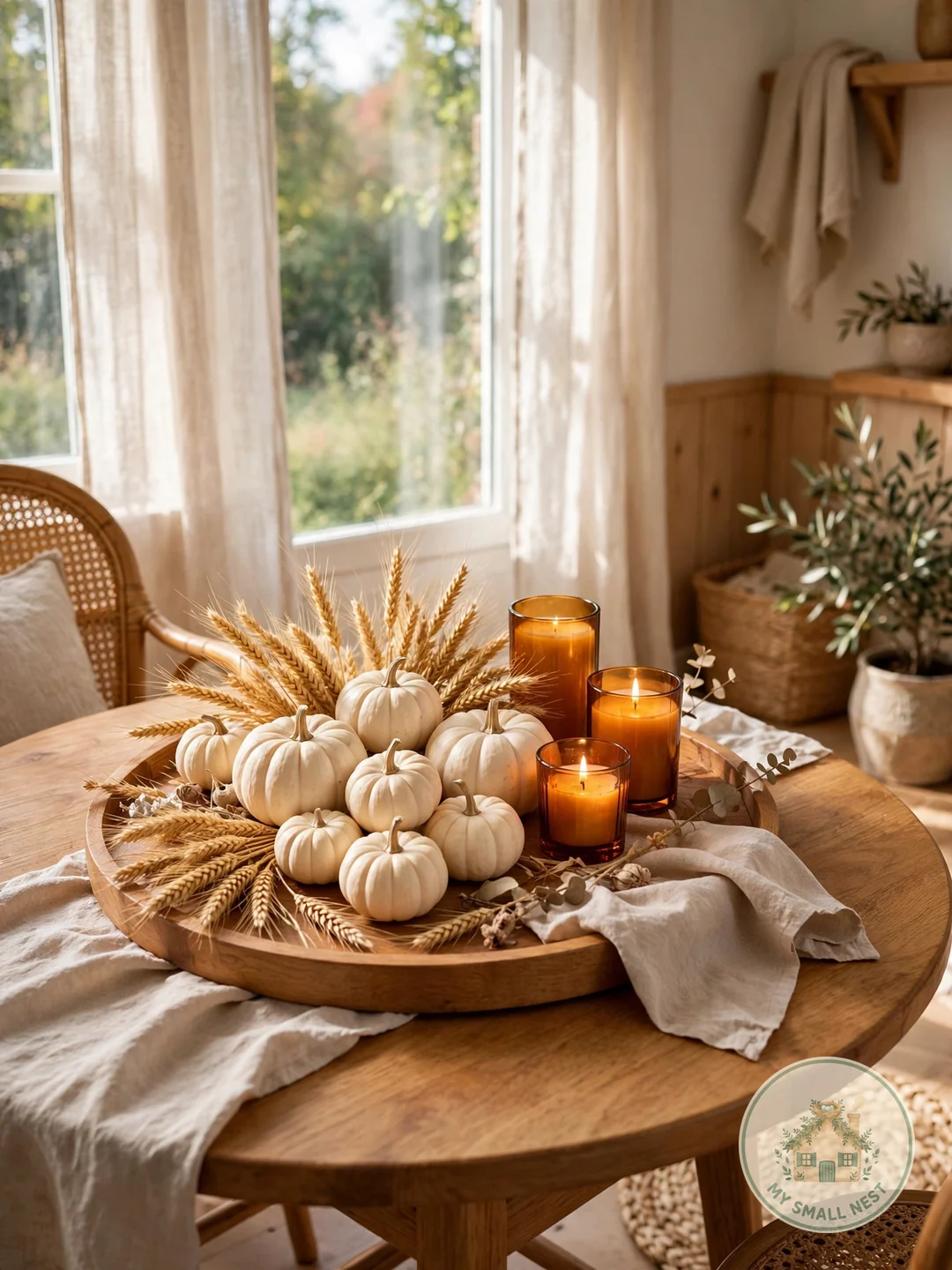
12. Rotating Seasonal Display
The smartest round table centerpiece ideas are the ones that evolve. Dedicate your table to the seasons: mini pumpkins and dried wheat in fall, fresh pine and cranberries in winter, tulips and pastel eggs in spring, citrus and seashells in summer. Swapping one box of seasonal fillers takes ten minutes and makes your whole home feel current.
Keep a neutral base that works year-round — a wooden tray ($20–$30), a white vase, a dough bowl — and only change the fillers ($10–$15 per season from craft stores or the dollar store). Store off-season items in a single labeled bin so the swap is painless. This approach saves serious money compared to buying a whole new centerpiece every few months.
Make it work: Add one unchanging anchor piece (a favorite candle or small sculpture) so the display still feels like “you” even as the seasons change. The anchor is what makes it yours; the fillers are what make it seasonal.
Emma’s tip: I keep exactly one labeled bin — “table seasons” — in the top of my studio closet, and the whole swap takes me ten minutes with a podcast on. In a 380 sq ft studio, the one-bin rule isn’t optional; if the seasonal stuff doesn’t fit in one bin, some of it doesn’t stay. Constraints make you curate better.
 Pin it
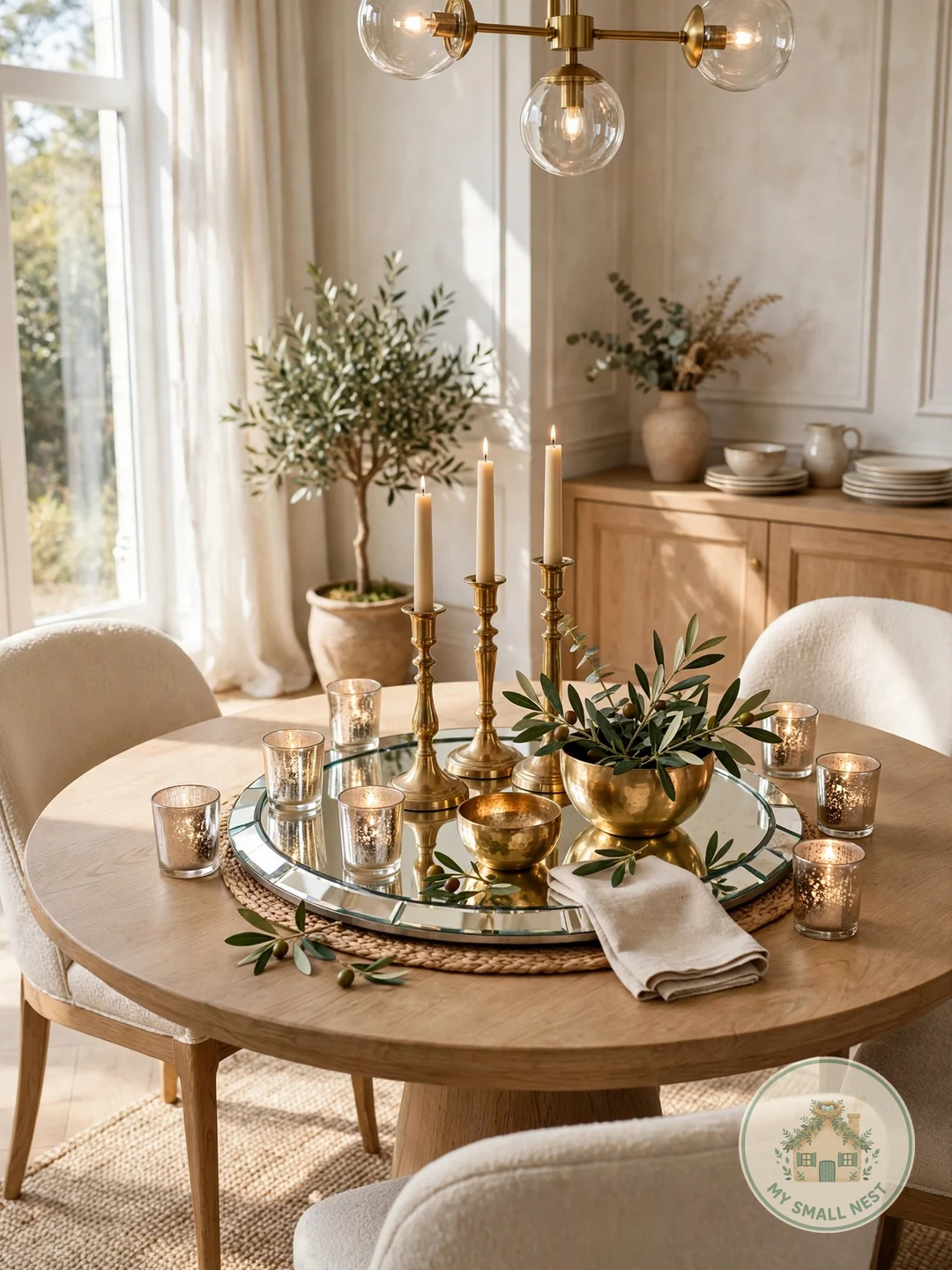
13. Mirrored Base with Mixed Metallics
For instant glamour, start with a round mirror as your base — a 12–16 inch beveled mirror tile or mirrored tray ($12–$20 at craft stores). It doubles the visual impact of everything you place on it by reflecting candlelight and doubling the perceived fullness of your arrangement, which is especially magical in the evening.
Layer mixed metallics on top: brass candlesticks ($8–$15 each thrifted), a mercury glass votive or two, maybe a small gold-accented bowl. Keep to warm metals (brass, gold, copper) or cool metals (silver, chrome, nickel) rather than mixing both families. This look is stunning for holiday dinners, New Year’s Eve, or any time you want your dining table to feel dressed up.
Make it work: Put small felt pads ($3 for a sheet) under the mirror so it never scratches your table — and it won’t slide when someone bumps the table mid-dinner.
 Pin it
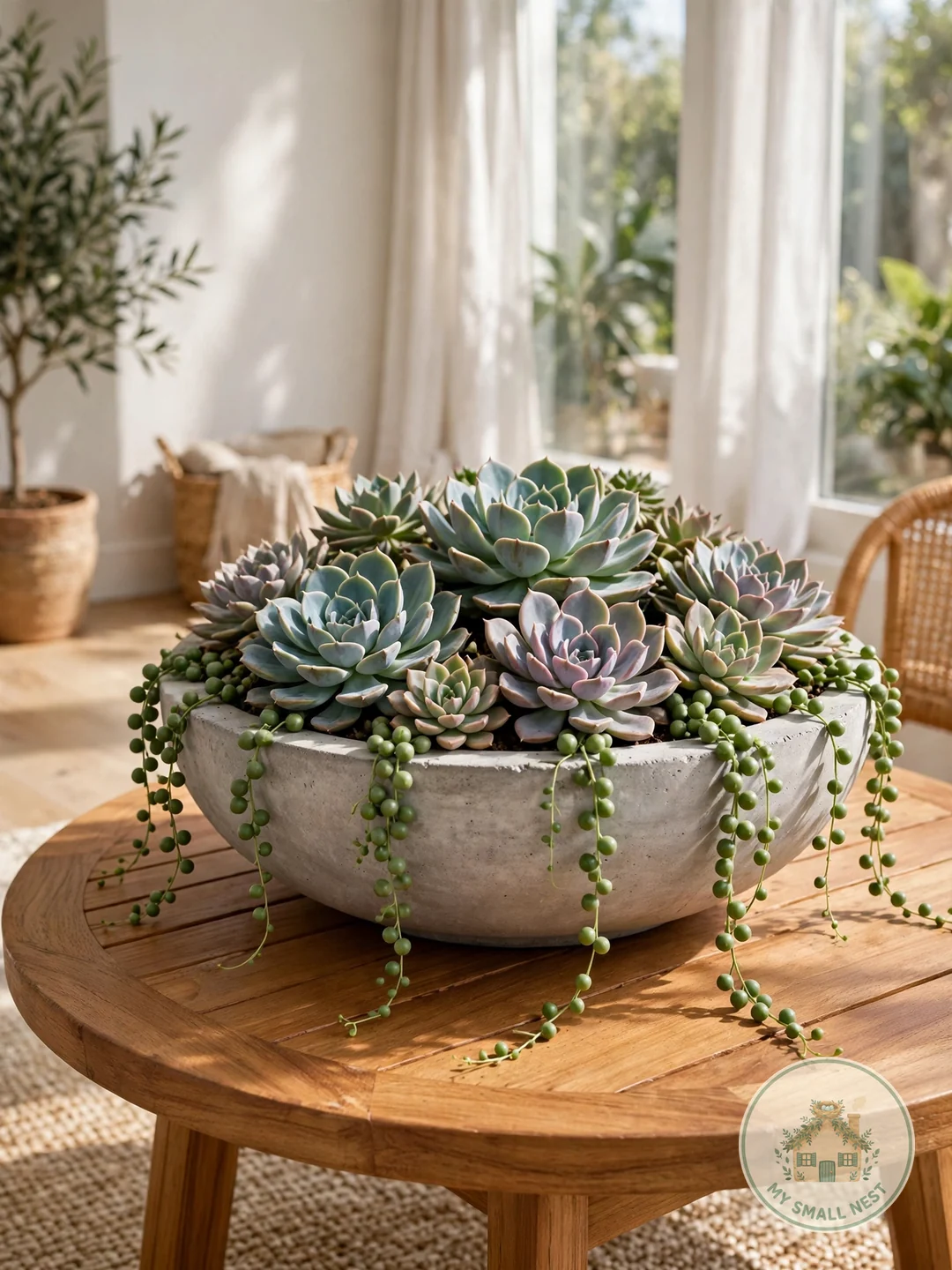
14. Low Succulent Garden
A shallow planter filled with succulents is the ultimate low-maintenance living centerpiece. Succulents need water only every week or two, they thrive in bright light, and their sculptural rosettes look like living art from every angle around a round table.
Choose a wide, shallow container — a 12–14 inch concrete bowl ($20–$35) or a low ceramic planter about 3–4 inches deep — and pack it with a mix of shapes: rosette echeverias, trailing string-of-pearls spilling over one edge, a tall haworthia for height contrast. Small succulents run $3–$6 each at nurseries and IKEA; you’ll need 7–10 for a full look. Top the soil with small pebbles or sand for a finished, desert-garden look.
Make it work: Water deeply but infrequently — wait until the soil is completely dry, then soak until water drains out the bottom. The #1 succulent killer is kindness: too much water, too often.
 Pin it
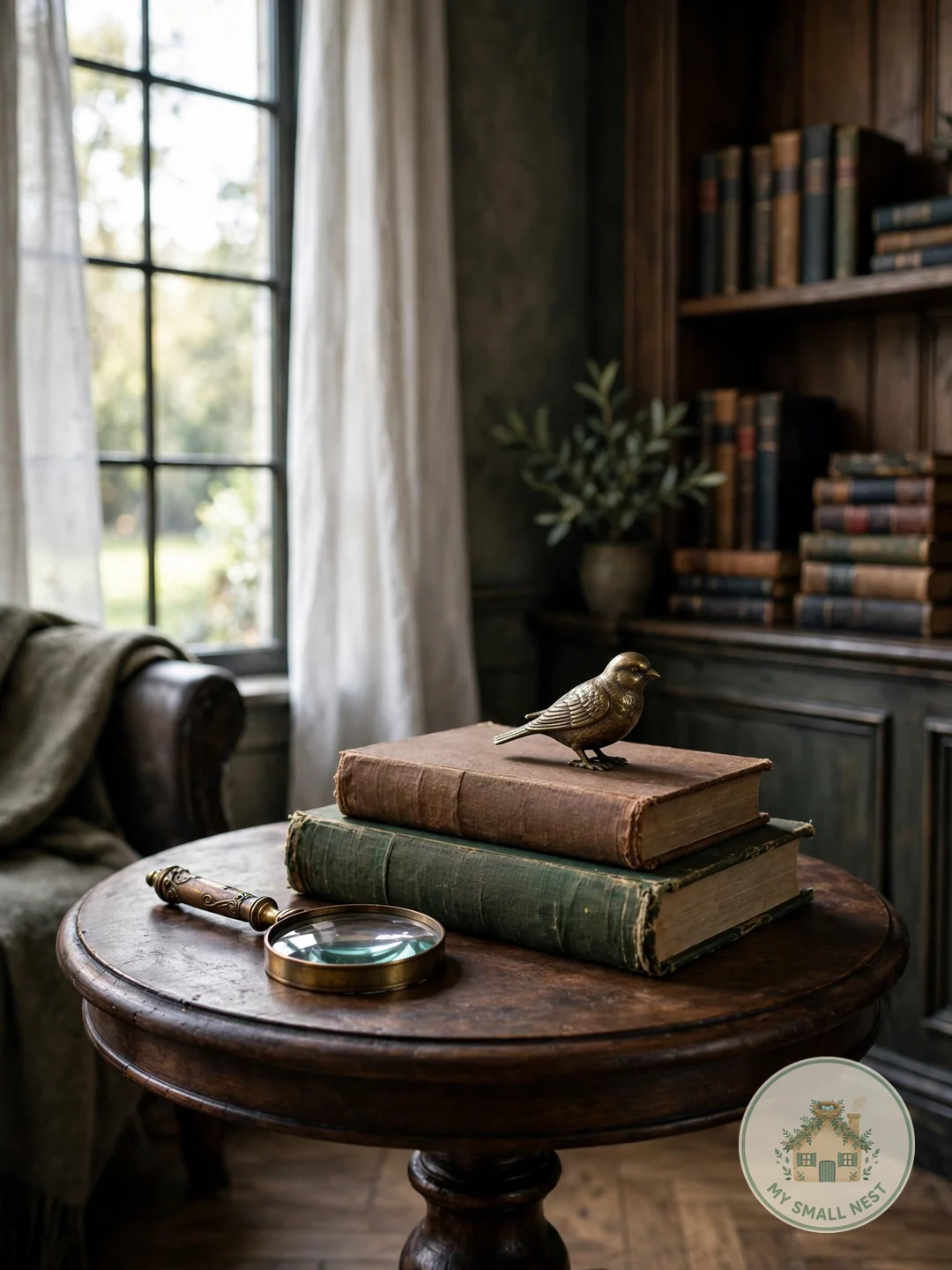
15. Vintage Books and Brass Accents
For a collected, storied look, pair a short stack of vintage or vintage-look books with small brass objects — a tiny telescope, a brass bird figurine, an antique magnifying glass. The warm metal against aged paper and cloth bindings creates a rich, library-like feeling that makes a round side or entryway table feel deeply personal.
Hunt for books with beautiful cloth bindings in muted tones (forest green, oxblood, navy, tan) at thrift stores and estate sales, usually $1–$2 each. Brass finds run $3–$10 at flea markets. Two books plus one brass object is plenty — this look is about curation, not clutter. It works especially well in traditional, moody, or eclectic homes.
Make it work: Rub a tiny bit of coconut oil on tarnished brass finds — it cleans gently and leaves a soft, aged glow instead of a harsh shine. Wipe off the excess so it doesn’t transfer to the books.
Emma’s tip: My studio’s entryway table is exactly this look — two $1 thrifted clothbound books and a $5 brass candlestick — and it’s the corner guests photograph most. Total investment: $7 and one Saturday morning at a flea market. The “collected over time” look can’t be bought in a set; it has to be hunted, and that’s what makes it interesting.
 Pin it
5 Mistakes to Avoid
Going too tall on a dining table
Anything over 14 inches tall blocks eye contact across the table and makes meals awkward — measure, don’t eyeball. Save dramatic height for entryway and accent tables where nobody sits across.
Using a rectangular arrangement on a round table
Long, linear runners and rectangular trays fight the table’s shape. Round or clustered arrangements always look more natural on round tables — work with the circle, not against it.
Forgetting the 360-degree view
A centerpiece with a clear “front” looks unfinished from the other side. Walk all the way around the table and style it to look complete from every chair before you call it done.
Overcrowding a small table
On tables under 36 inches, one confident piece beats five small ones. Leave at least a few inches of breathing room around your centerpiece — negative space is part of the styling.
Choosing high-maintenance pieces for busy tables
Fresh flowers that need daily water changes don’t belong on the table where kids do homework. Match the maintenance level to how the table is actually used, honestly.
FAQs
What are the best round table centerpiece ideas for everyday use?
The best everyday options are low-maintenance and sturdy: a potted plant, a decorative bowl, a tray with a candle and small plant, or a dough bowl with greenery. Choose pieces that survive daily life and can be lifted off easily when you need the table surface — if it can’t be moved in five seconds, it won’t survive real life.
How tall should a dining table centerpiece be?
Keep dining table centerpieces under 14 inches tall so guests can see each other comfortably. For entryway, coffee, or accent tables where nobody sits across from each other, you can go as tall as you like — 24 to 30 inches creates beautiful drama.
How do I style a small round table?
On small round tables under 36 inches, use a single statement piece rather than a grouping — one sculptural vase, one lantern, or one beautiful bowl. Keep the footprint to about one-third of the table’s diameter so the table doesn’t feel crowded.
What can I use as a centerpiece if I have no budget?
Shop your own home first: a bowl of fruit from the kitchen, branches clipped from the yard in a jar, books you already own topped with a candle, or a tray gathering small objects from around the house. Some of the prettiest centerpieces cost nothing at all — the styling is the value, not the stuff.
How often should I change my table centerpiece?
Refresh fresh flowers weekly, but a well-chosen permanent centerpiece — plants, bowls, lanterns, trays — can stay for months. Many people do a light seasonal refresh four times a year, swapping just the fillers while keeping the same base pieces.
Styling a round table gets so much easier once you think in circles instead of lines — clustered, rounded arrangements that look good from every seat. Pick the idea that fits your table’s size and your real life, start with pieces you already own, and don’t be afraid to rearrange until it feels right.
Found a favorite among these round table centerpiece ideas? Save this post for your next refresh, and share it with a friend whose table could use a little love.
What readers are saying
No comments yet — yours could be the first.