 My Small Nest
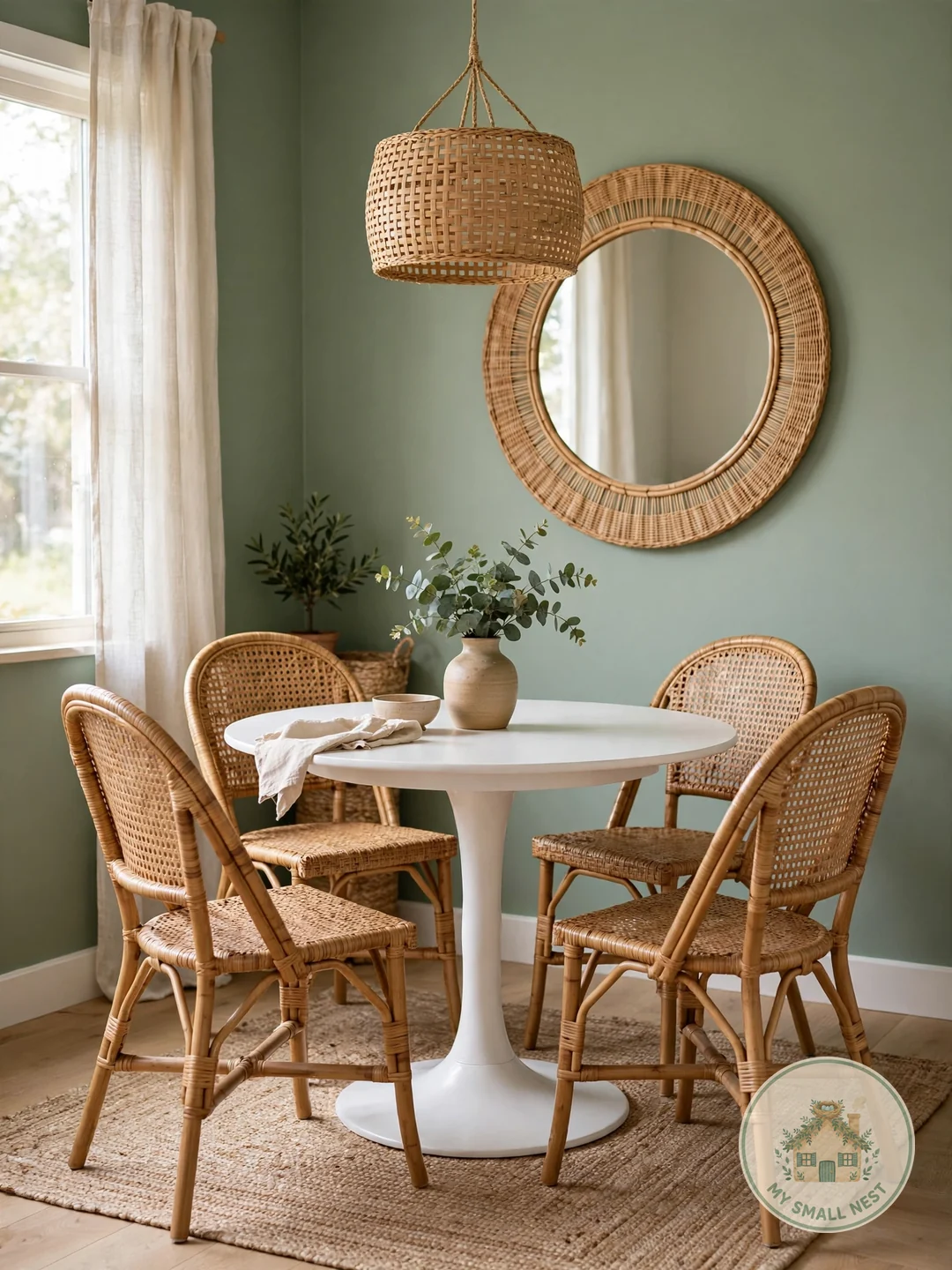
My dining room is a six-foot corner wedged between the kitchen counter and the front door, so when I say small dining rooms can still feel special, I have earned the opinion. The trick is not more square footage — it is choosing pieces that pull double duty and light that flatters.
These 8 small dining room decor ideas are for anyone feeding people in under 100 square feet: round tables that seat four, mirrors that visually double the room, thrifted finds, and lighting that makes Tuesday takeout feel like a reservation. Most cost under $50, and renters can skip straight to the no-drill picks.
1. Go Round, Not Rectangular
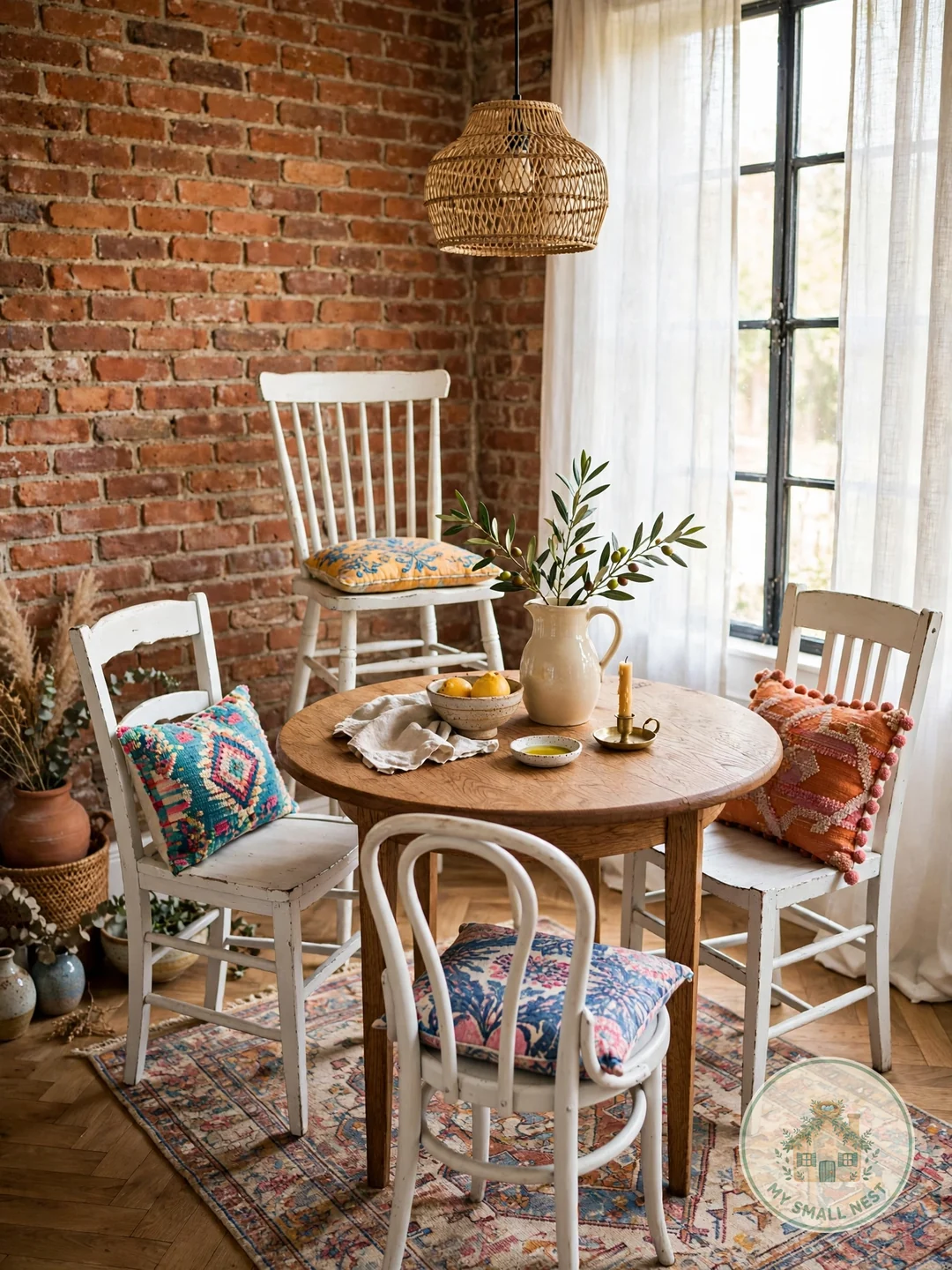
A round table is the small dining room’s best friend: no sharp corners to bruise hips on, better traffic flow, and it seats four comfortably at just 36-42 inches across. Choose a pedestal base instead of four legs and every chair tucks in fully, which buys you an extra 4-6 inches of walkway on every side. Facebook Marketplace is full of solid wood round pedestals for $40-$80 — check the base for wobble before you pay.
Make it work: Leave at least 30 inches between the table edge and the wall; in truly tight rooms, pair a 36-inch table with a bench on one side instead of two chairs. If the table rocks on uneven floors, felt pads on one leg cost $3 and solve it forever.
 Pin it
2. A Big Mirror on the Wall
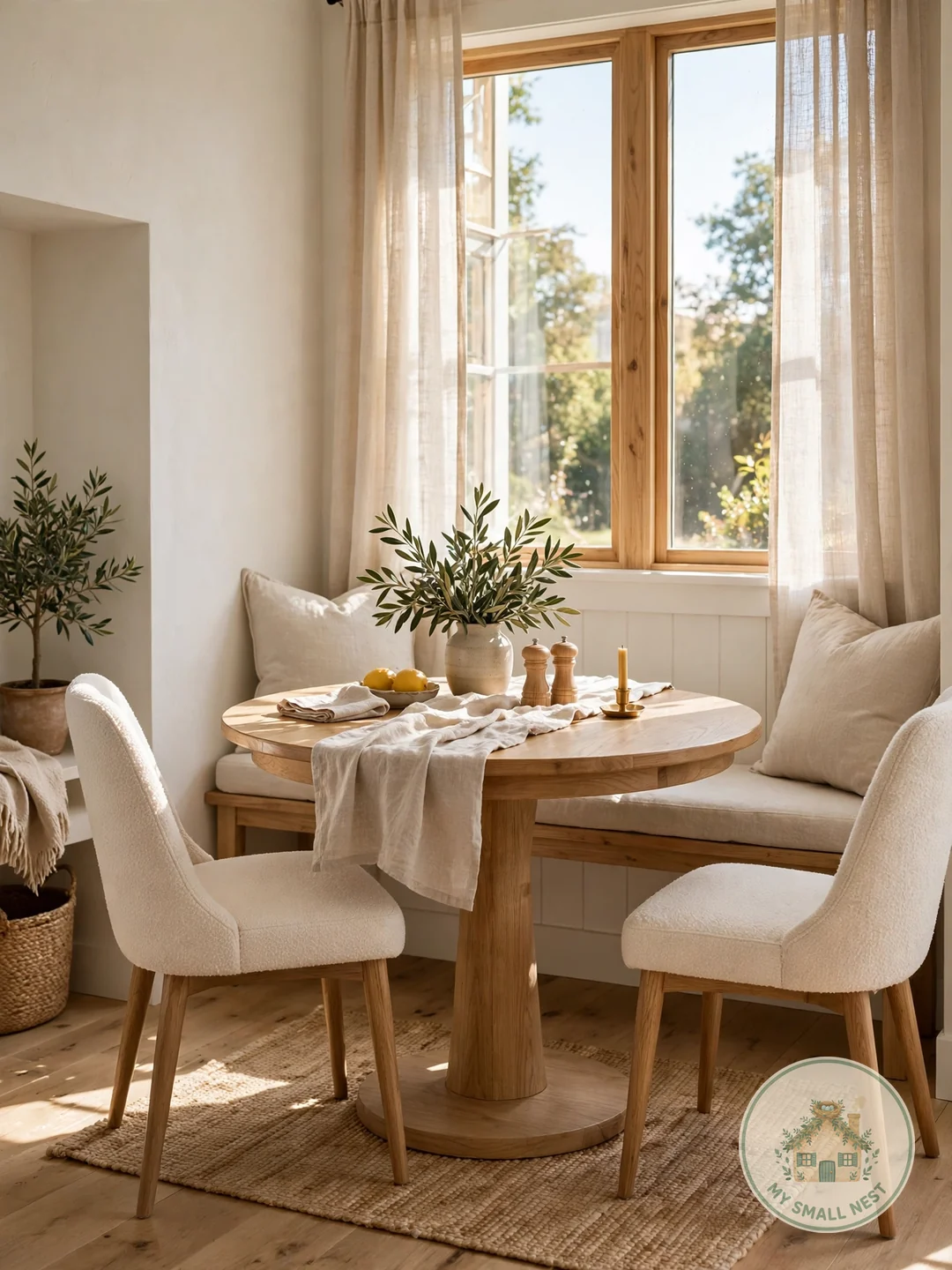
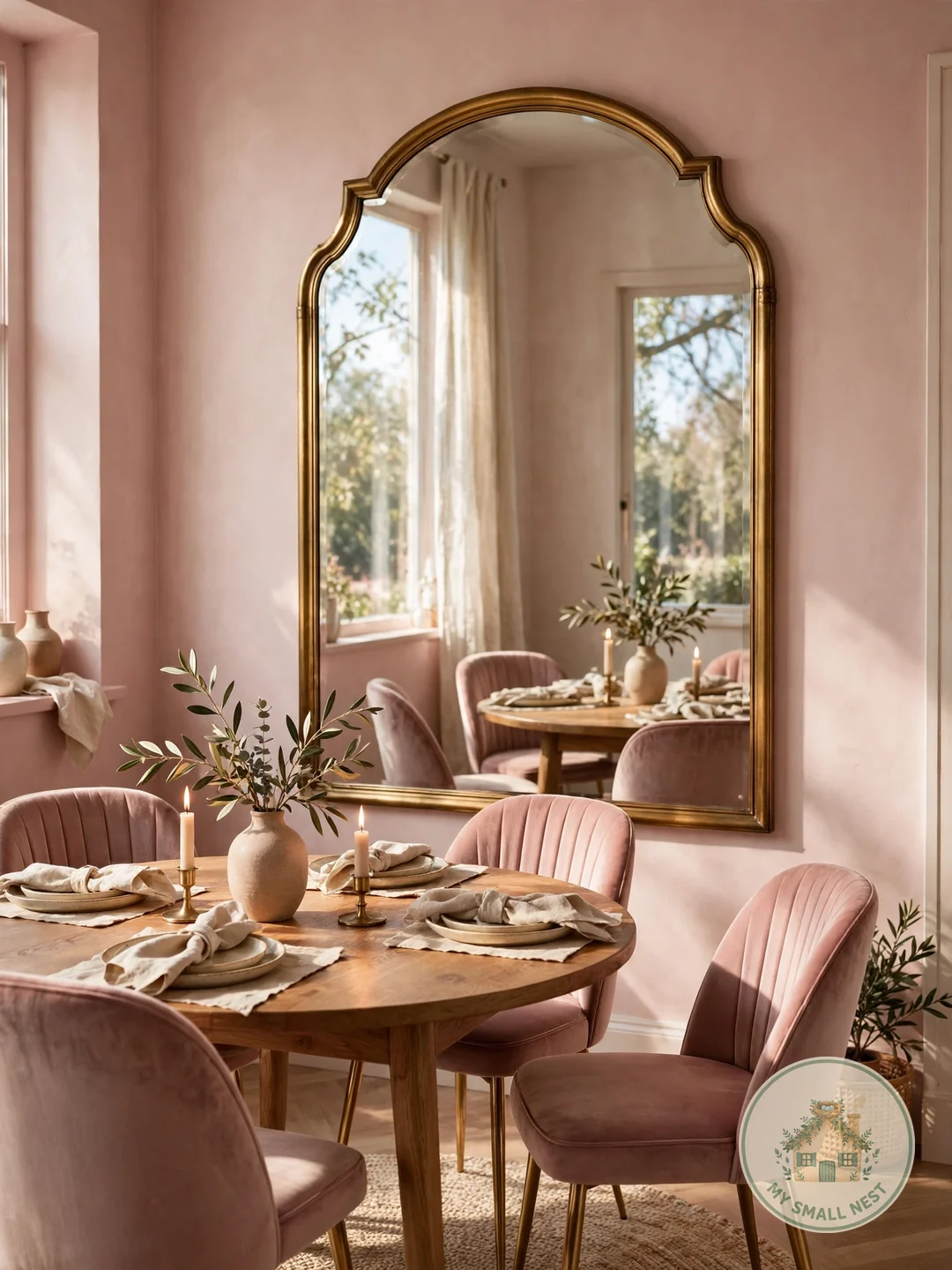
A large mirror on the dining room wall is the oldest small-space trick because it genuinely works — it doubles the light, reflects the table setting, and visually doubles the room. Thrift stores are full of big mirrors for under $30 waiting for a coat of spray paint on the frame; I found a 3-foot arched one at Goodwill for $12. Lean it instead of hanging it if your lease forbids anchors — a leaning mirror on a sideboard looks intentional.
Make it work: Hang or lean the mirror where it reflects a window or your pendant light, not a blank wall — a mirror is only as interesting as what it reflects. Wipe it with glass cleaner once a month; a dusty mirror dims the whole room.
 Pin it
3. A Pendant Hung Low
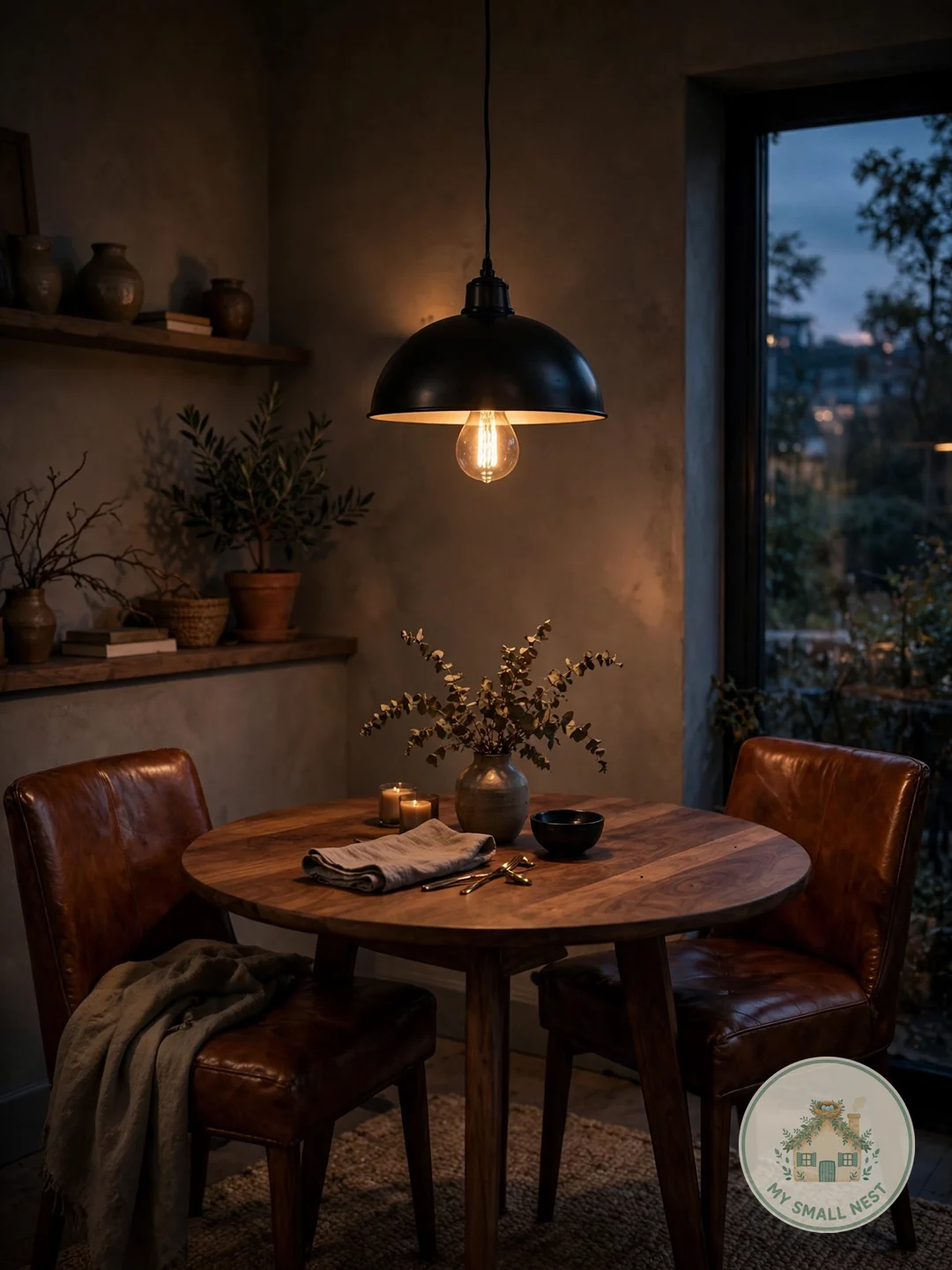
A pendant hung 28-32 inches above the table creates an intimate pool of light that makes a corner dining spot feel like a restaurant. A plug-in pendant needs no electrician, and woven or paper shades from IKEA or Target run $25-$40. Pick a warm 2700K LED bulb — cool bulbs make food look unappetizing. I tried this in my studio and the difference was instant: dinners went from “eating at a desk” to “date night at home.”
Make it work: Size the pendant to about one-half to two-thirds the table’s diameter — a shade that is too small looks lost, and one too large overwhelms a petite table. Run the cord to the nearest outlet and hide it with a $8 cord cover painted to match the wall.
 Pin it
4. Bench Seating on One Side
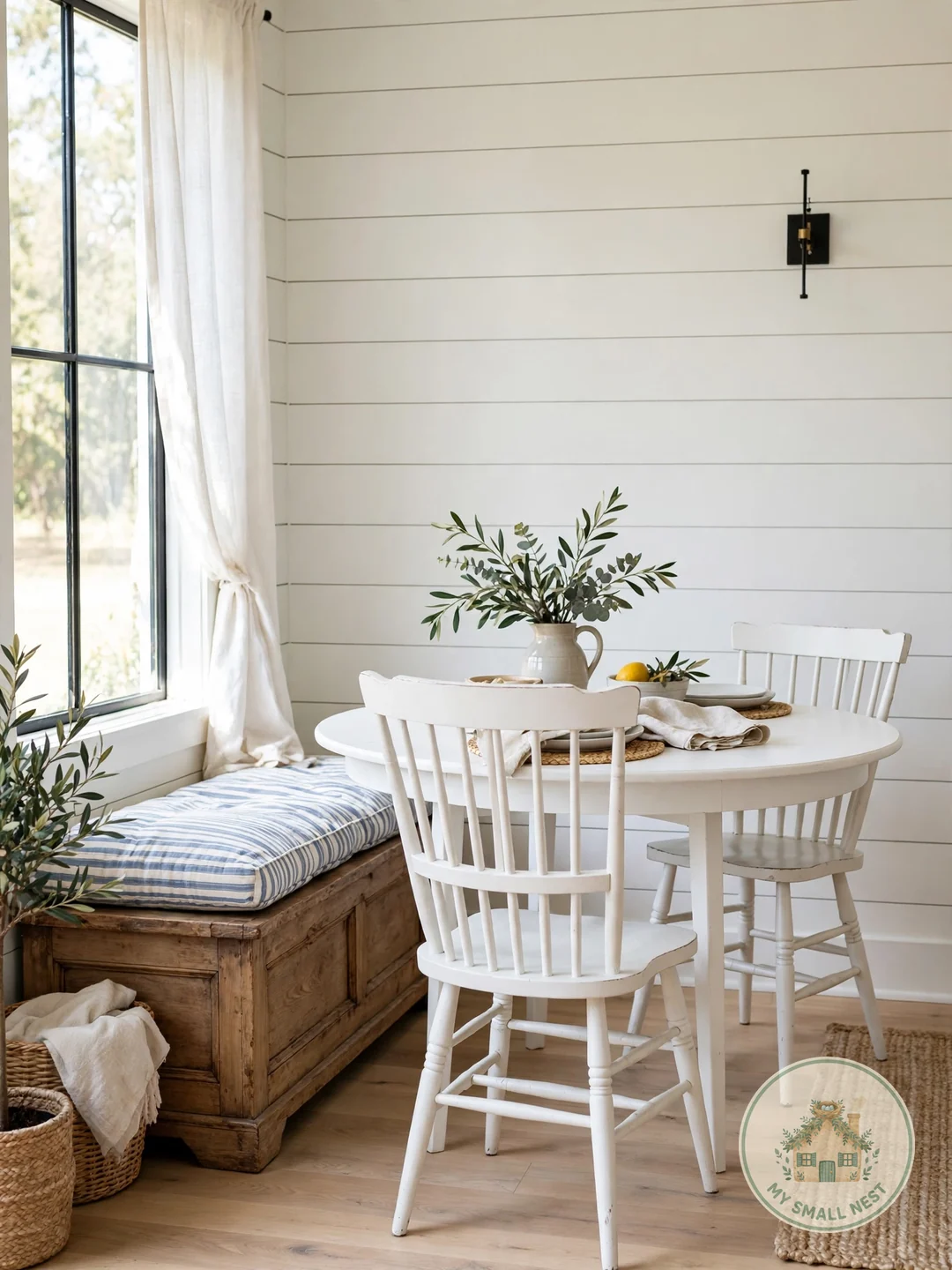
Swapping two chairs for a bench instantly frees up floor space because benches tuck fully under the table when not in use. A simple backless bench from a thrift store ($15-$25) plus a 2-3 inch thick cushion becomes the most flexible seat in the room — it seats two adults or three kids side by side. Stash a secondhand trunk or storage ottoman nearby for the cushion when you need the bench bare.
Make it work: Choose a cushion in a wipeable fabric like outdoor canvas; a bare wood bench looks charming but nobody lingers on it through dessert. Measure your table height — a standard 18-inch seat height pairs with a 30-inch table.
 Pin it
5. A Rug to Zone the Space
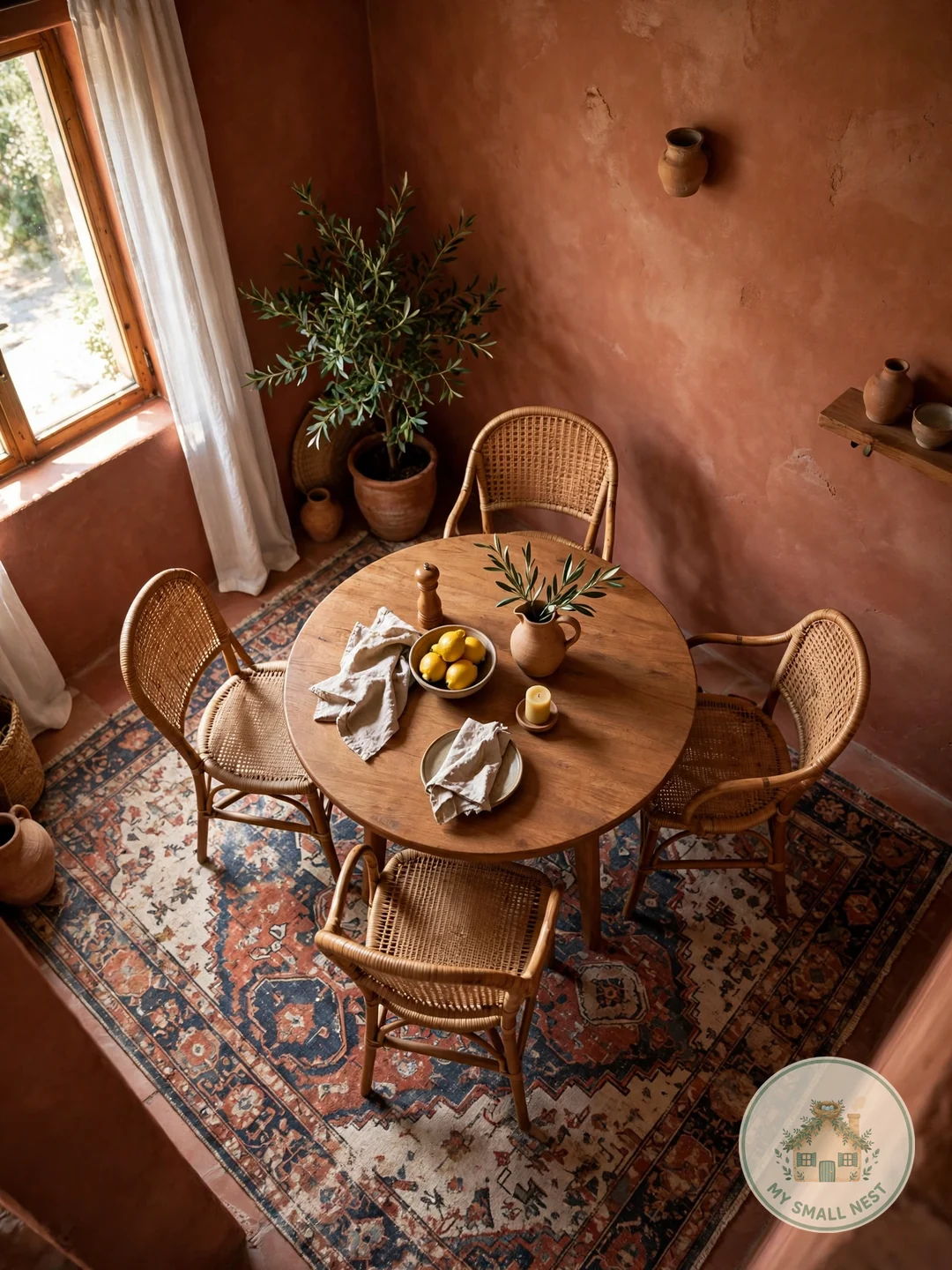
A rug does more than soften the floor — it visually zones the dining area, which makes an open-plan corner feel like a real dining room. Choose a flatweave or low-pile washable rug so chairs glide easily, and size it so all chair legs stay on the rug even when pulled out. Ruggable and washable rugs from Target start around $80 for a 5×7, and you will be grateful the first time pasta sauce hits the floor.
Make it work: Add 24 inches to your table’s dimensions on every side — for a 42-inch round table, look for a rug around 7-8 feet across. Put a rug pad underneath ($20 at Home Depot) so chairs don’t snag the edges.
 Pin it
6. A Slim Bar Cart Station
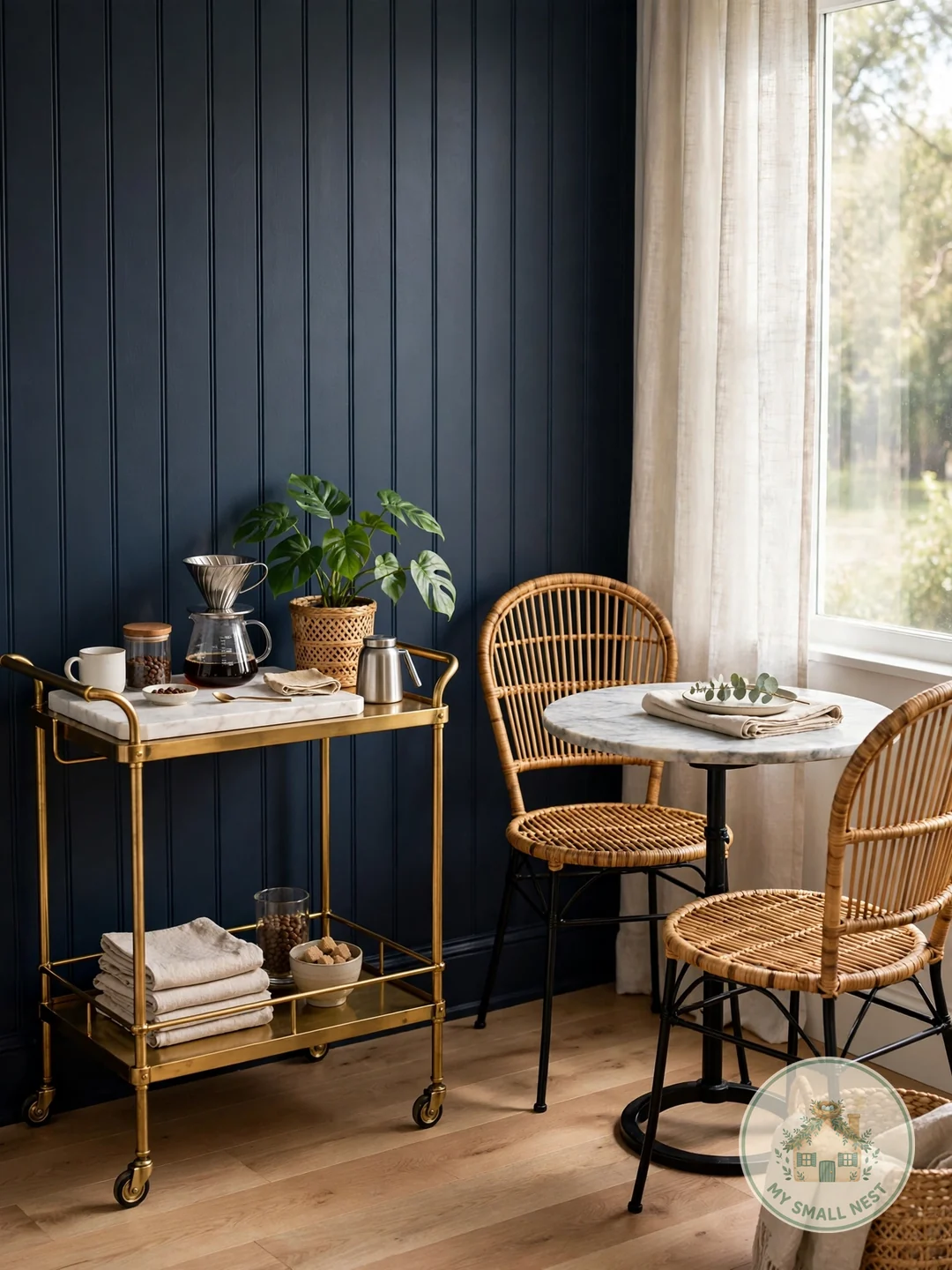
A slim bar cart parked against the dining room wall works as a serving station, coffee bar, or extra storage without the bulk of a sideboard. At about 16 inches deep, it fits where full-depth furniture cannot, and it rolls away when you need the floor space. IKEA’s RASKOG-style carts and thrifted tea carts run $20-$45. I tried this in my studio — my cart holds the coffee maker, two mugs, and the sugar jar, and it rolls into the kitchen corner when friends come over.
Make it work: Style the top with a tray, a small plant, and whatever you actually use daily — a cart that holds your morning coffee setup earns its footprint; a dusty display one does not. Lock the wheels once it’s positioned so it doesn’t drift.
 Pin it
7. Art That Costs Almost Nothing
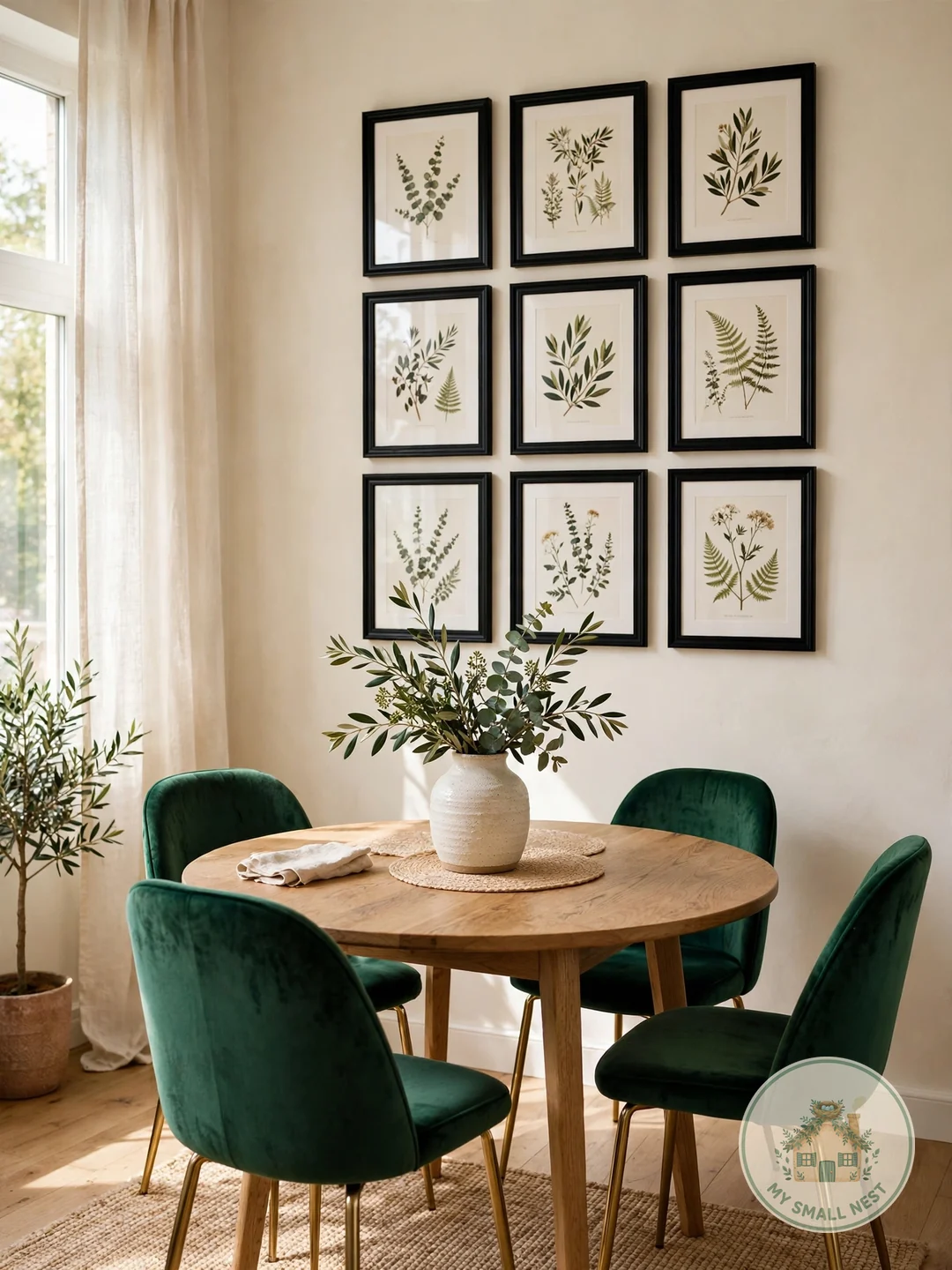
One gallery wall of thrifted frames or a single oversized art print gives a small dining room personality without eating a single inch of floor space. Walls are free real estate — use them. A cohesive frame color (all black, all natural wood) keeps a mixed collection looking intentional, and printing your own travel photos at 11×14 costs about $8 each at a drugstore. Total gallery wall: often under $40.
Make it work: Hang art with its center at 57-60 inches from the floor — gallery height — so it relates to seated eye level rather than floating near the ceiling. Use a paper template taped to the wall before you commit to nails.
 Pin it
8. Thrifted Mix-and-Match Chairs
Matching dining sets are expensive; thrifted chairs cost $5-$10 each and look charming. An eclectic mix around a simple table looks deliberately curated — the collected-over-time look designers charge thousands to fake. Check chair height against your table (18 inches seat for a 30-inch table) and sit-test every chair before buying — wobble is fixable with wood glue, but a cracked seat is not.
Make it work: Unite the mix with one repeated element: paint all the chairs the same color, or recover all the seats in the same fabric. One common thread turns random into designed. A quart of chalk paint ($16) covers about four chairs.
 Pin it
Mistakes to Avoid
Choosing an Oversized Table
A table that leaves less than 30 inches of clearance turns every meal into an obstacle course. Measure first — in small dining rooms the right-size table beats the dream table every time.
Skipping the Rug (or Choosing One Too Small)
A postage-stamp rug under a dining table chops the room into awkward pieces. Either size the rug so all chair legs stay on it, or skip the rug entirely — a too-small rug is worse than none.
Hanging the Pendant Too High
A pendant floating near the ceiling does nothing for ambiance. Hang it 28-32 inches above the tabletop so it creates that intimate pool of light that makes small dining rooms feel magical.
Using Only Harsh Overhead Light
One bright ceiling fixture makes a small dining room feel like a cafeteria. Layer in a dimmable pendant or a nearby floor lamp with warm 2700K bulbs for evening meals.
Blocking Traffic Flow
Every extra piece of furniture narrows the paths around the table. Keep walkways at least 30 inches wide and choose pieces that tuck away — benches, folding chairs, rolling carts — over bulky permanent ones.
FAQs
What is the best table shape for a small dining room?
Round, without question. A round table has no corners to bump into, seats more people per inch of diameter than a rectangle, and keeps traffic flowing around it. A 36-42 inch round table comfortably seats four in a small dining room and leaves the space feeling open instead of blocked.
How can I make my small dining room look bigger on a budget?
Hang a large mirror to double the visual space, keep the palette light, and choose furniture with visible legs. A rug sized to fit all chair legs anchors the zone. These moves cost little — a thrifted mirror and a washable rug — but transform how big the room feels.
What small dining room decor works in a rental?
Focus on freestanding pieces: a round pedestal table, a plug-in pendant or arc floor lamp, a large leaning mirror, and a rug. Removable peel-and-stick wallpaper on one wall adds drama with zero damage. Skip anything that needs hardwiring or wall anchors you cannot patch in an afternoon.
Can I mix and match dining chairs in a small space?
Yes — mismatched chairs are actually ideal for small dining rooms because you can thrift them one at a time for a few dollars each. Keep one unifying element, like the same wood tone or the same seat color, so the mix looks curated rather than random. It is the most budget-friendly seating strategy there is.
How do I decorate a dining area that is part of an open-plan living room?
Define the dining zone with a rug, a pendant hung low over the table, and lighting that differs from the living area. Keep the color palette consistent with the living room so the zones feel connected, not competing. A bench on one side of the table saves the walkway space an open plan needs.
A small dining room is not a limitation — it is an invitation to be intentional. With a round table, the right light, and a few thrifted treasures, your tiny dining space can feel like the coziest restaurant in town.
Try one idea this weekend. If this post helped, save it to your dining room board and share it with a friend making the most of a small space.
What readers are saying
No comments yet — yours could be the first.