 My Small Nest
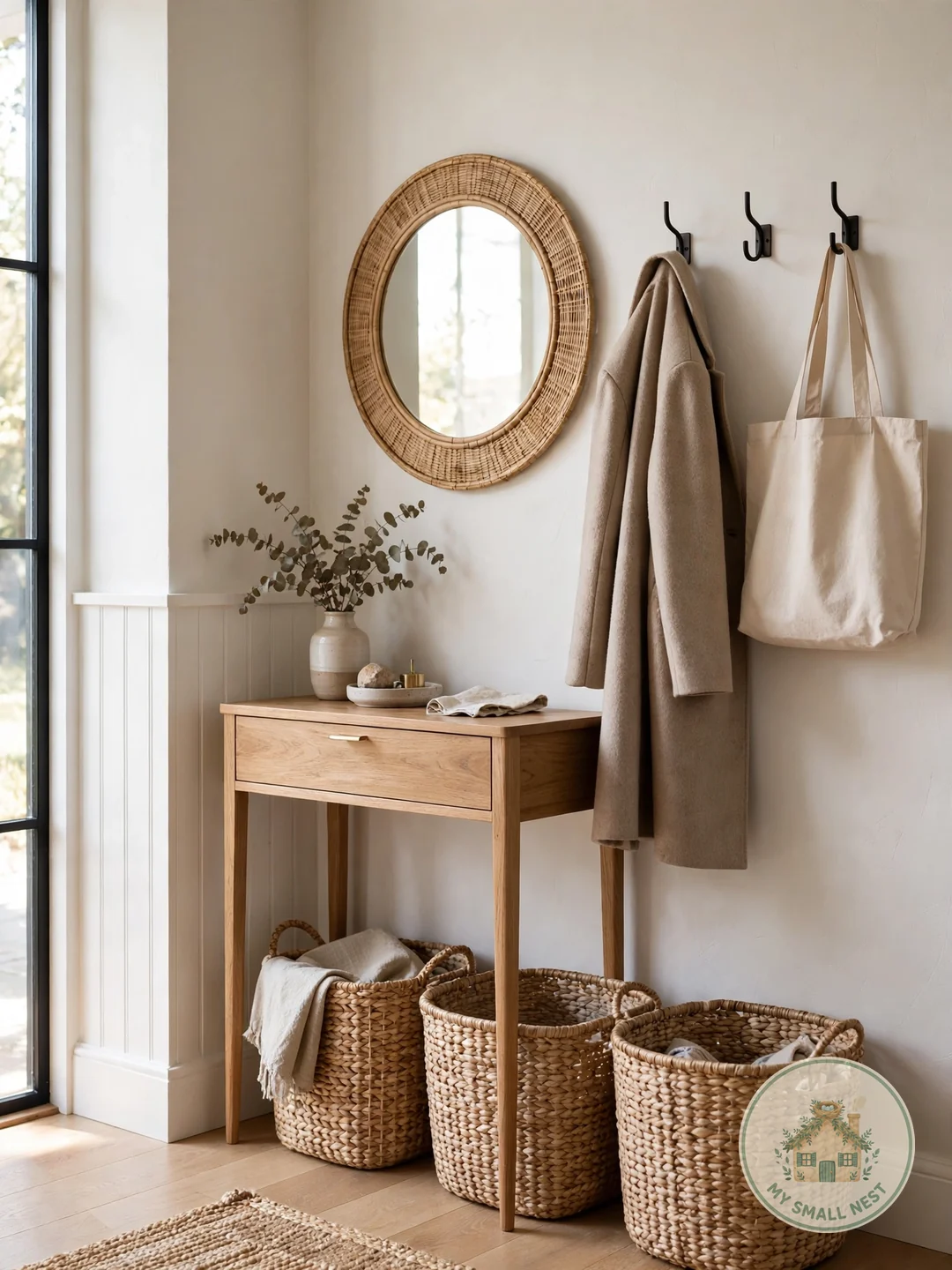
Your entryway is the first thing you see when you come home — and the first thing guests notice. But in a small home, it is often just a pile of shoes by the door and keys lost somewhere in the chaos. My studio has no foyer at all — just a 4-foot wall by the door — so I built every one of these ideas into that tiny strip.
These 8 small entryway storage ideas use slim furniture, wall space, and hidden compartments to tame shoes, coats, keys, and clutter — most for under $100, and nearly all renter-friendly. This is for anyone whose “entryway” is really just the first few feet inside the front door.
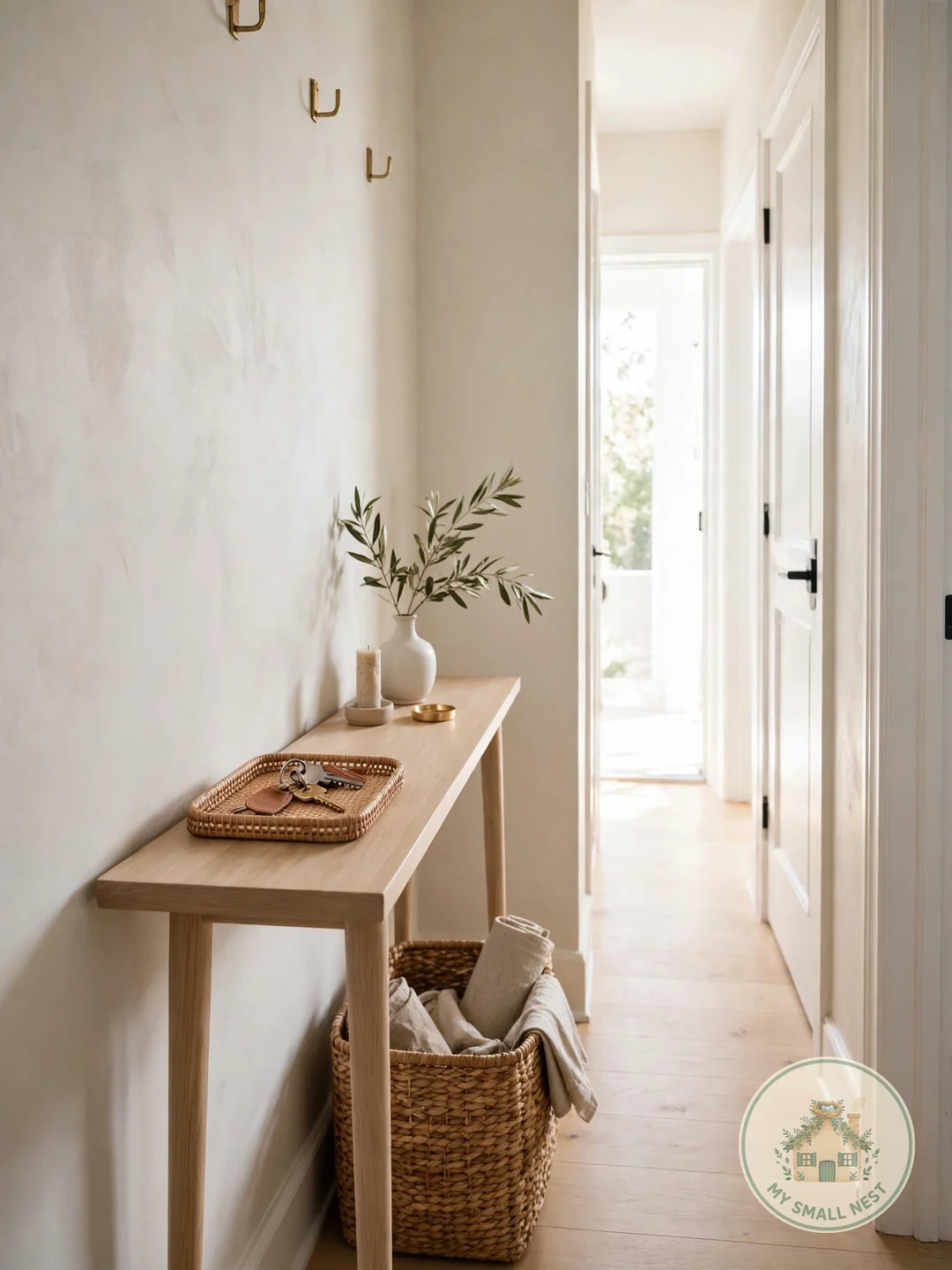
1. Choose an Ultra-Slim Console Table
A console just 8-10 inches deep gives you a landing spot for keys, mail, and a small lamp without blocking the walkway. Look for one with a lower shelf for baskets — narrow consoles run $60-120 new at IKEA or Target, or under $30 secondhand on Facebook Marketplace. Measure your wall first: the console should leave at least 30 inches of clear floor space in front of it, or the entry becomes an obstacle course.
Make it work: Keep that 30 inches of clear space sacred — the minute the path narrows, the entry feels cramped no matter how pretty the table is.
 Pin it
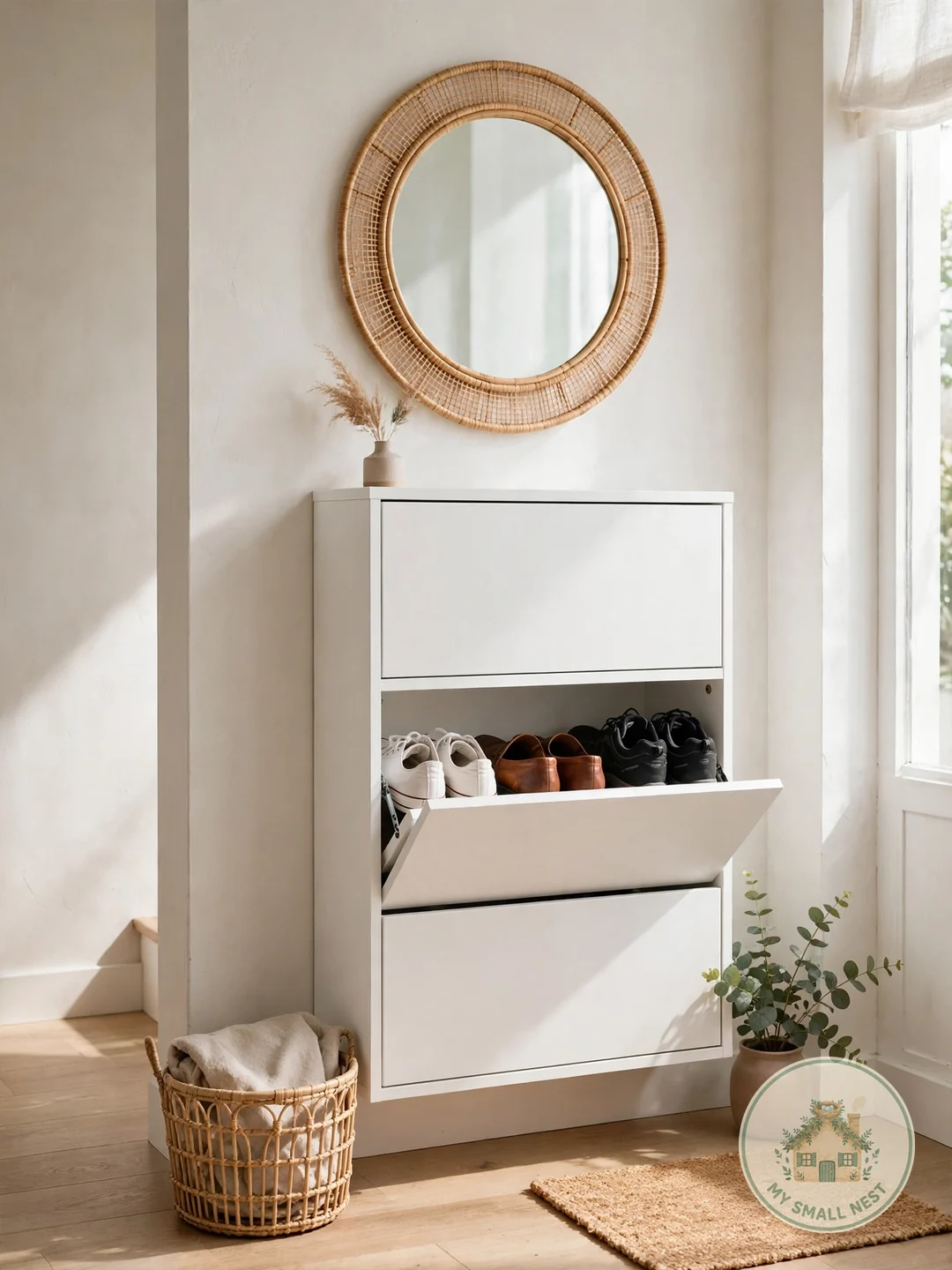
2. Hide Shoes in a Tilt-Out Cabinet
A tilt-out or flip-down shoe cabinet is only about 10 inches deep but hides 6-12 pairs behind closed doors — and the top works as a display shelf for a lamp or catch-all tray. It is the single best small entryway storage upgrade for killing shoe piles. Most models cost $70-130 at IKEA (the HEMNES and TRONES are the go-tos) or Amazon, and they assemble in under an hour.
Make it work: Label each compartment by family member so shoes actually go back where they belong.
 Pin it
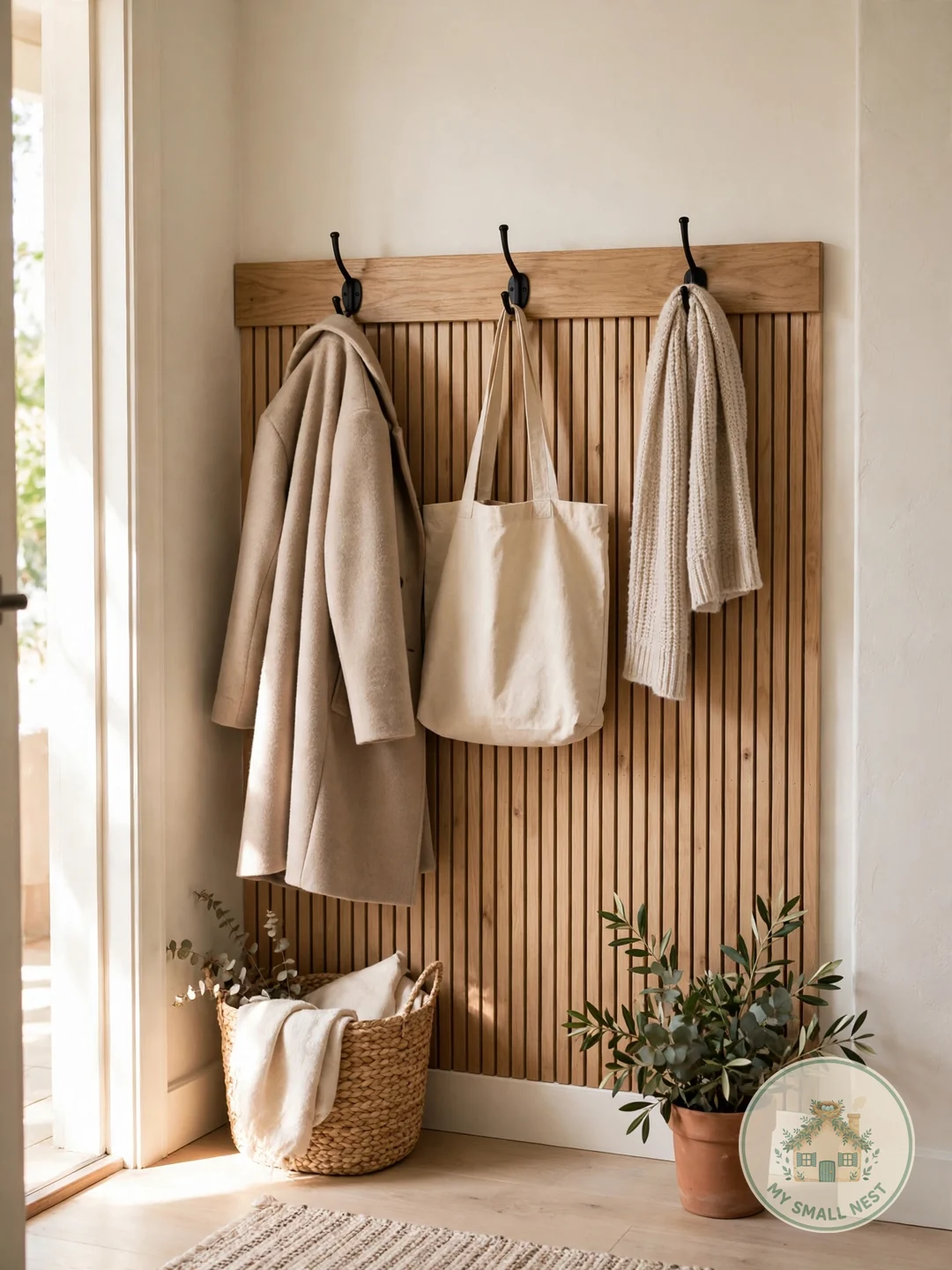
3. Mount a Row of Sturdy Wall Hooks
Hooks beat a coat closet for daily items because grabbing and hanging takes two seconds — no doors, no hangers, no excuses. Mount a row of sturdy hooks at 60 inches high for coats, with lower pegs at 40 inches for kids’ bags and dog leashes. A solid wood hook rail costs $20-35 at Target or IKEA; renters can use adhesive hooks rated for 7+ pounds each, which hold a winter coat with no holes in the wall.
Make it work: One hook per person for the daily coat, plus one spare — when the hooks fill up, something moves to the closet.
Emma’s studio note: I tried this in my studio — three $8 adhesive hooks beside my door hold my jacket, tote, and dog leash, and my landlord never has to know. Two seconds to hang, zero holes in the wall, and my coat finally stopped living on the back of a chair.
 Pin it
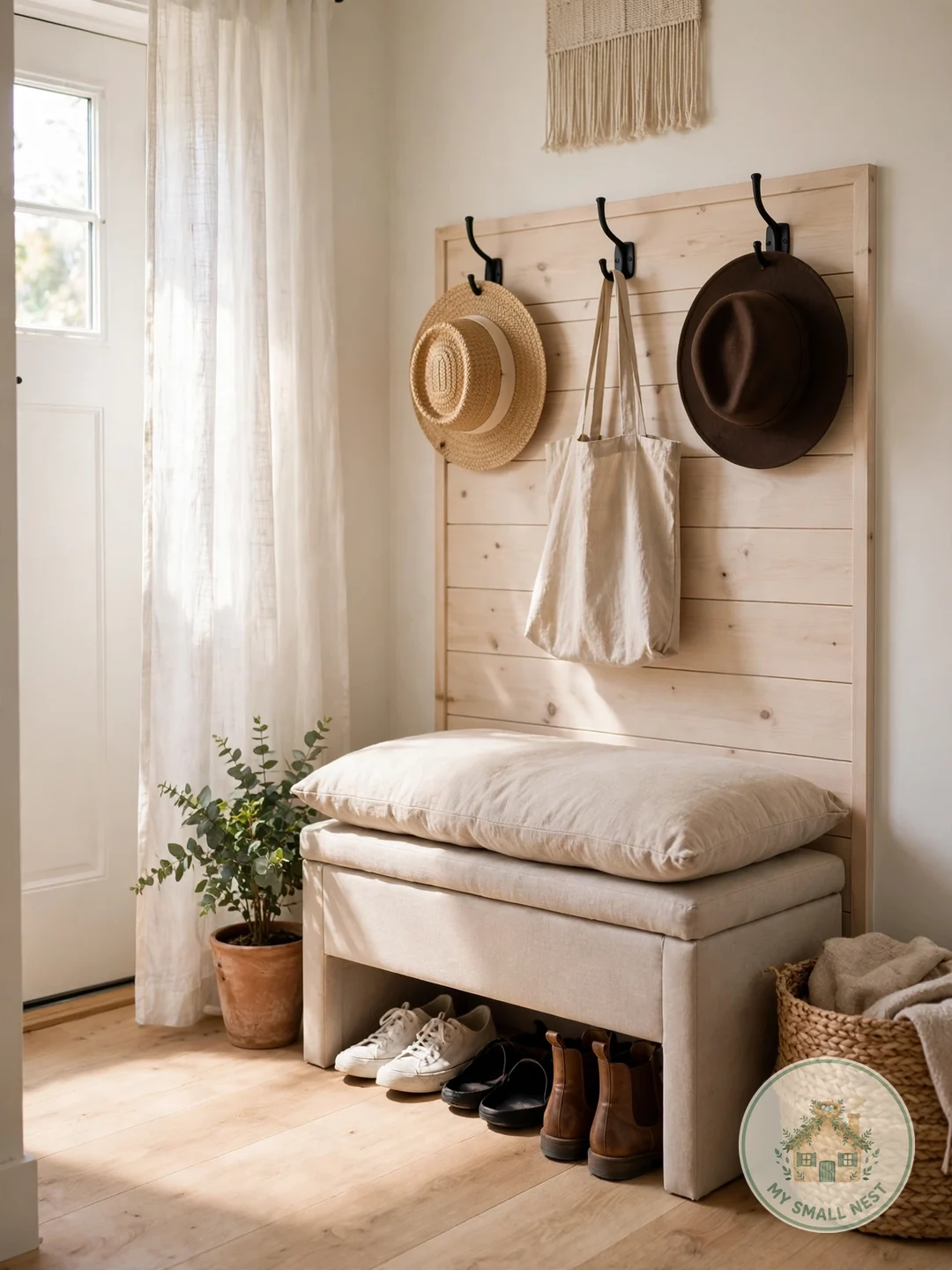
4. Add a Compact Storage Bench
A storage bench 30-36 inches wide and 14 inches deep gives you a seat for tying shoes plus hidden space for gloves, hats, and seasonal gear. Topped with a $20 cushion, it reads as intentional furniture instead of a storage box. Budget options start around $50 at Walmart or IKEA; check Facebook Marketplace for solid wood steals under $40.
Make it work: Store only out-of-season or rarely used items inside so the bench never becomes a junk drawer.
 Pin it
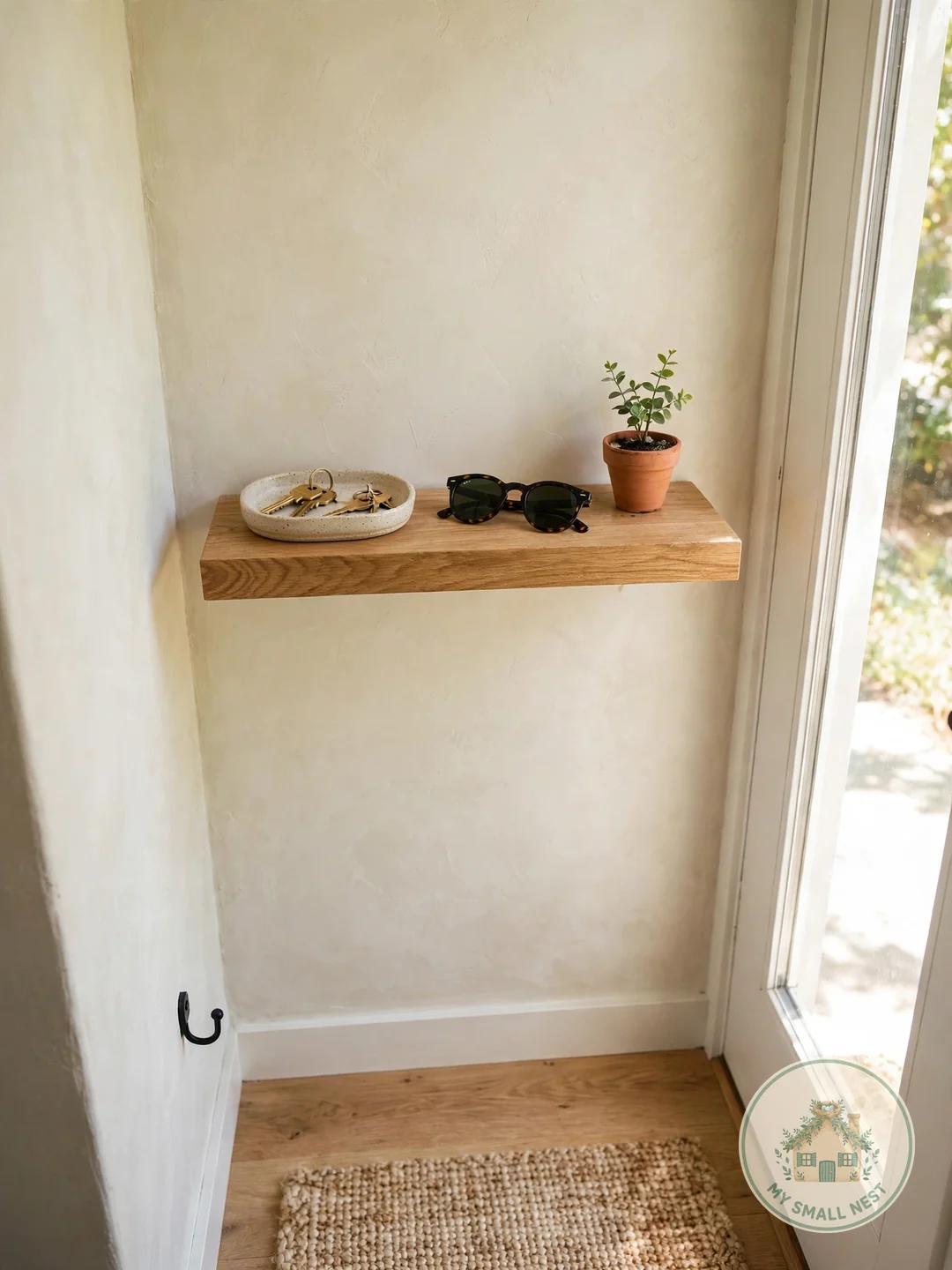
5. Float a Shelf for Grab-and-Go Items
One floating shelf at eye level holds a catch-all tray, a small plant, and sunglasses — everything you grab on the way out — while the floor below stays completely clear. A 24-36 inch shelf with brackets costs under $25 at IKEA or Home Depot and installs in 20 minutes with basic wall anchors. It is the highest storage-per-dollar move in this whole list.
Make it work: One decorative item, one functional tray — if the shelf fills up, it is a sign to declutter, not to add another shelf.
 Pin it
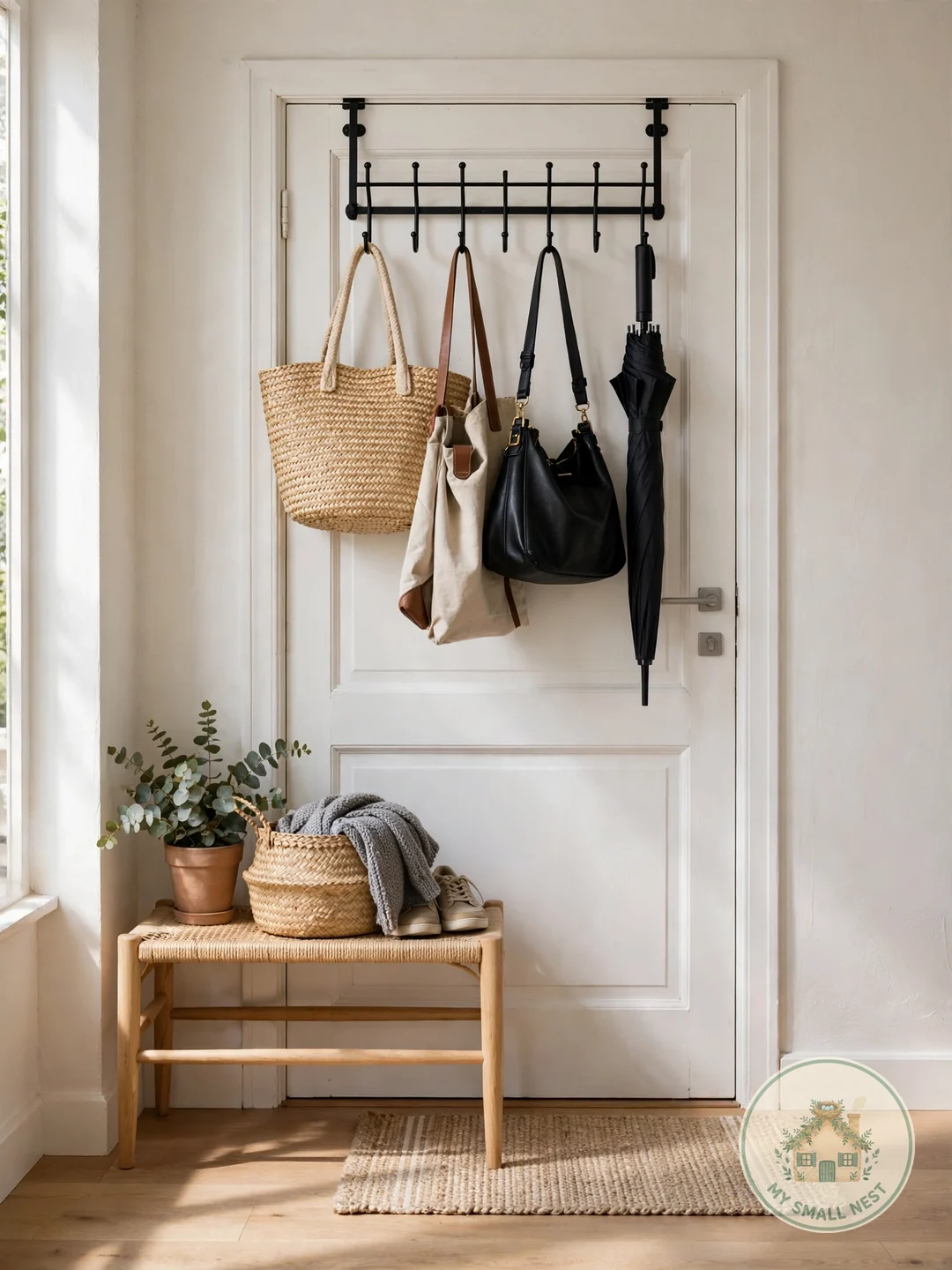
6. Use Over-the-Door Organizers
The back of your entry closet door — or even the front door itself — is free real estate. An over-the-door hook rack ($12-20 at Target or Amazon) holds bags, umbrellas, and leashes, while a hanging shoe organizer on the closet door swallows scarves, gloves, and small items. No tools, no holes, five minutes to hang — the most renter-friendly idea here.
Make it work: Choose a rack with felt or foam backing so it does not scratch or dent the door.
Emma’s studio note: My front door wears an over-the-door rack with five hooks — umbrella, tote, keys on a carabiner, dog leash, reusable grocery bags. It is the hardest-working $15 in my apartment, and it leaves the walls completely untouched.
 Pin it
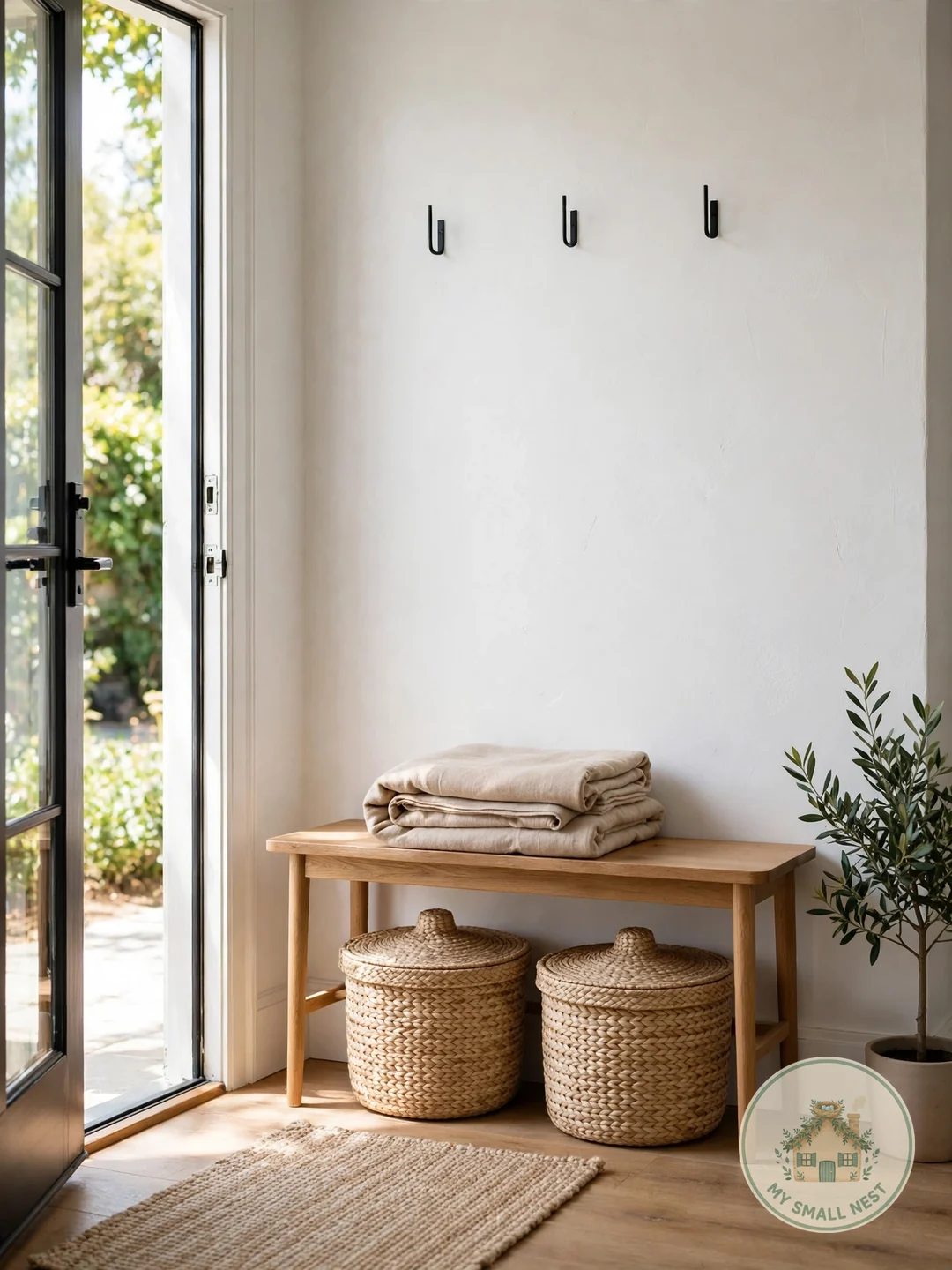
7. Corral Odds and Ends in Baskets
A lidded basket per person tucked under the console catches the random stuff — gloves, dog leashes, reusable bags, spare chargers — that otherwise migrates across the whole house. Baskets in natural fibers look like decor, not clutter control, and cost $10-15 each at IKEA, Target, or HomeGoods. One basket per person is the magic formula; more than that and you are just hiding clutter in bulk.
Make it work: Do a 60-second basket reset each evening so every morning starts calm.
 Pin it
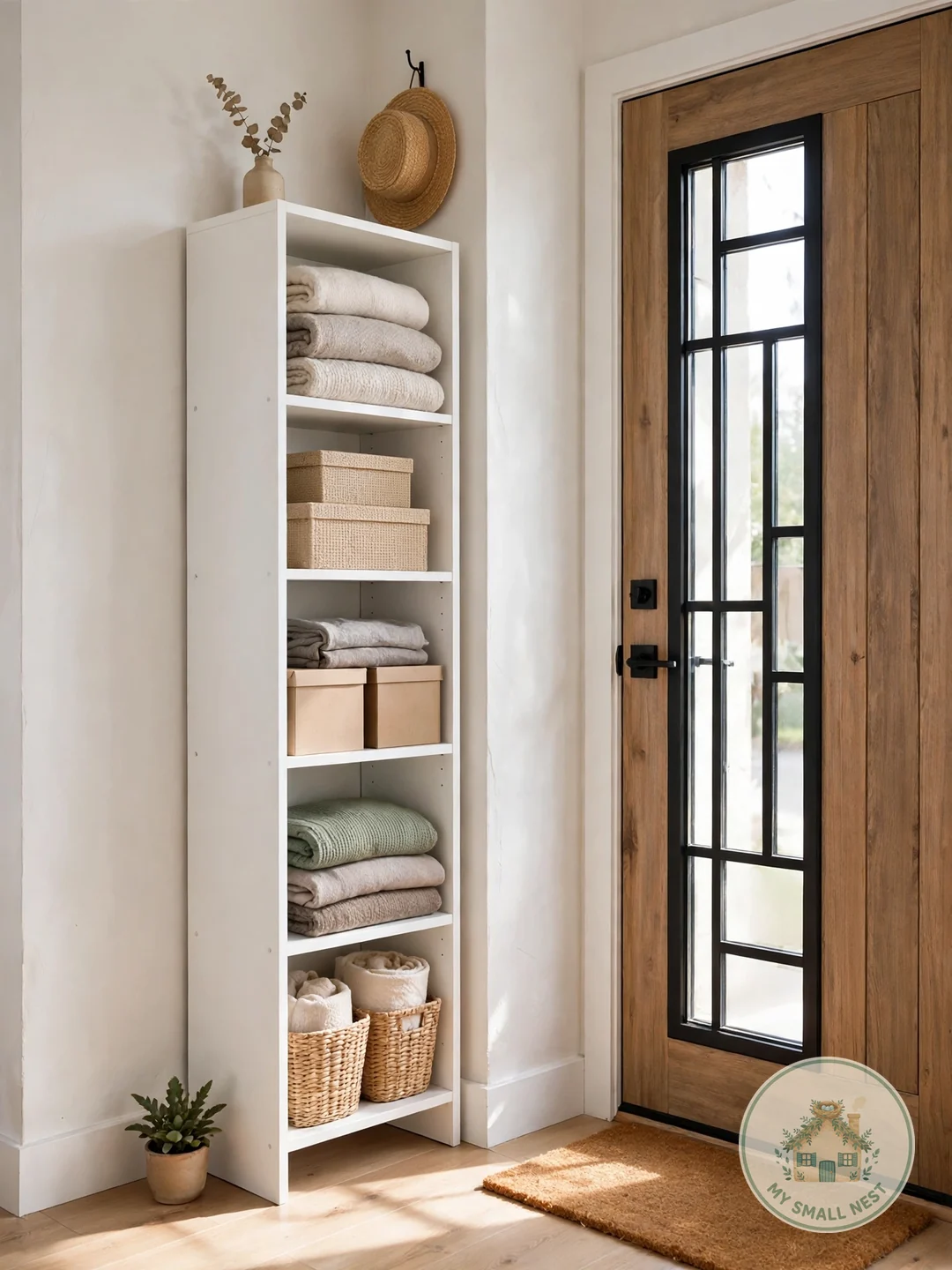
8. Go Vertical with a Narrow Tower
A tall, narrow cabinet or leaning ladder shelf uses vertical space for less-used items — spare umbrellas, gift wrap, cleaning supplies — without eating any floor area. A 12-inch-deep tower fits beside most doors and costs $40-80. Anchor tall pieces to the wall with $8 furniture straps so they are tip-proof, especially in homes with kids or pets.
Make it work: Daily items at hand height, seasonal things up high where you will not need them often.
 Pin it
Mistakes to Avoid
Blocking the walkway
Furniture deeper than 10-12 inches in a narrow entry creates a daily obstacle course. Measure your clear path and keep 30 inches minimum.
Storing everything by the door
The entryway should hold daily grab-and-go items only. Out-of-season coats and rarely worn shoes belong in a closet, not the foyer.
Skipping a landing spot for keys
Without one dedicated tray or hook, keys wander the whole house. A $10 tray by the door saves daily frustration.
Using open shoe piles
Open racks collect visual chaos fast. Closed storage — a cabinet or lidded bench — keeps the entry looking calm.
Forgetting vertical space
Walls, doors, and the space above eye level are free storage. Hooks and shelves there cost little and change everything.
FAQs
How do I add storage to a very small entryway?
Go vertical: wall hooks, a slim floating shelf, and an over-the-door organizer add storage without touching the floor. A narrow 8-10 inch deep console holds keys and mail while leaving walkway space. Every inch of wall counts in a tiny entryway.
What is the best small entryway storage for shoes?
A tilt-out shoe cabinet (about 10 inches deep) hides 6-12 pairs behind closed doors and doubles as a console. For the cheapest fix, a slim stackable shoe rack inside a closet or behind a door keeps pairs off the floor for under $25.
How can I organize keys and mail by the front door?
Mount a small key rack with hooks and a magnetic mail holder or wall pocket right at eye level beside the door. The rule is simple: give every item a landing spot within arm’s reach of where you enter, and clutter never piles up.
Can a bench work in a narrow entryway?
Yes — choose a storage bench 30-36 inches wide and no more than 14 inches deep so it hugs the wall. It gives you a seat for tying shoes and hides seasonal items inside. Just keep at least 30 inches of clear walkway in front of it.
How do I make a rental entryway functional without drilling?
Use adhesive wall hooks (rated for coats), an over-the-door hook rack, a freestanding slim console, and stackable crates. All of these add serious small entryway storage with zero holes in the wall.
Your entryway may be small, but it works hard every single day — it is worth five minutes of styling attention. Start with hooks for what you grab daily, then add storage that hides the rest. Save this guide to plan your own setup, and share it with anyone whose front door is a drop zone.
What readers are saying
No comments yet — yours could be the first.