 My Small Nest
Blankets have a way of taking over a home. One lives on the couch, another migrates to the bedroom, a third gets draped over a chair “temporarily” — and suddenly every room has a rumpled pile of throws. In a small home, that cozy chaos can make the whole place feel cluttered.
The good news? The right blanket storage ideas do double duty: they keep every throw organized and within reach, while actually making your home look more styled. Below you’ll find 15 practical ideas — with measurements, budget tips, and styling tricks — so you can pick the ones that fit your space and your routine.
1. Keep a Big Woven Basket by the Sofa
A large woven basket beside the sofa is the fastest blanket storage win there is. Toss folded or loosely rolled throws inside and they’re always within arm’s reach for movie nights, yet contained enough to look intentional instead of messy. This is the five-minute fix that solves the “blankets everywhere” problem overnight.
Size matters more than you’d think. For a standard sofa, look for a basket at least 18 inches tall and 20 inches wide — that holds four to six throw blankets comfortably. If your basket is too small, blankets spill over and the whole thing reads as clutter. Go slightly bigger than you think you need.
Budget tip: thrift stores and discount home shops almost always have sturdy woven baskets for a fraction of boutique prices — I found mine at a thrift store for $6, and it holds four throws easily.
Make it work: Roll each blanket loosely instead of folding it — rolled throws take up less space, show off pretty colors and textures at the top of the basket, and are easier to pull out one-handed.
 Pin it
2. Lean a Blanket Ladder Against the Wall
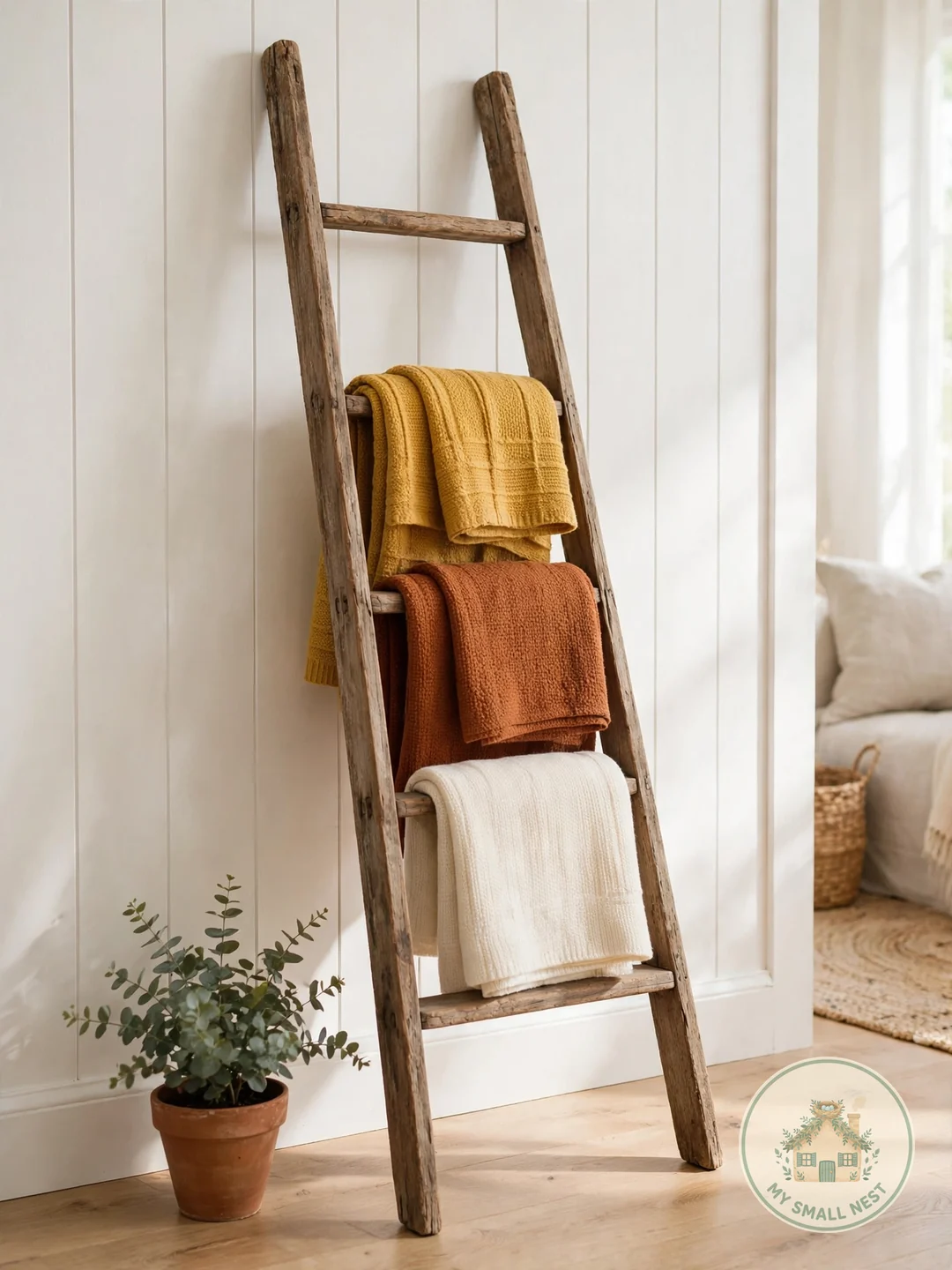
A leaning blanket ladder turns your prettiest throws into wall decor. Drape two or three folded blankets over the rungs and you’ve added color, pattern, and texture to a blank wall — while keeping your go-to throws aired out and easy to grab. It works especially well in narrow spaces where a basket would eat up floor space.
Standard blanket ladders run 5 to 6 feet tall with 4 to 6 rungs, which fits most living rooms and bedrooms. Place it at a slight angle (about 10 to 15 degrees from the wall) and make sure the feet have rubber caps so it doesn’t slide on hard floors.
Budget tip: a basic wooden ladder-style towel rack from a discount store works exactly the same and often costs under twenty dollars.
Make it work: Display only your three prettiest throws on the ladder and store the rest elsewhere — a ladder crammed with six blankets looks messy, while three look styled.
 Pin it
3. Tuck Throws Inside a Storage Ottoman
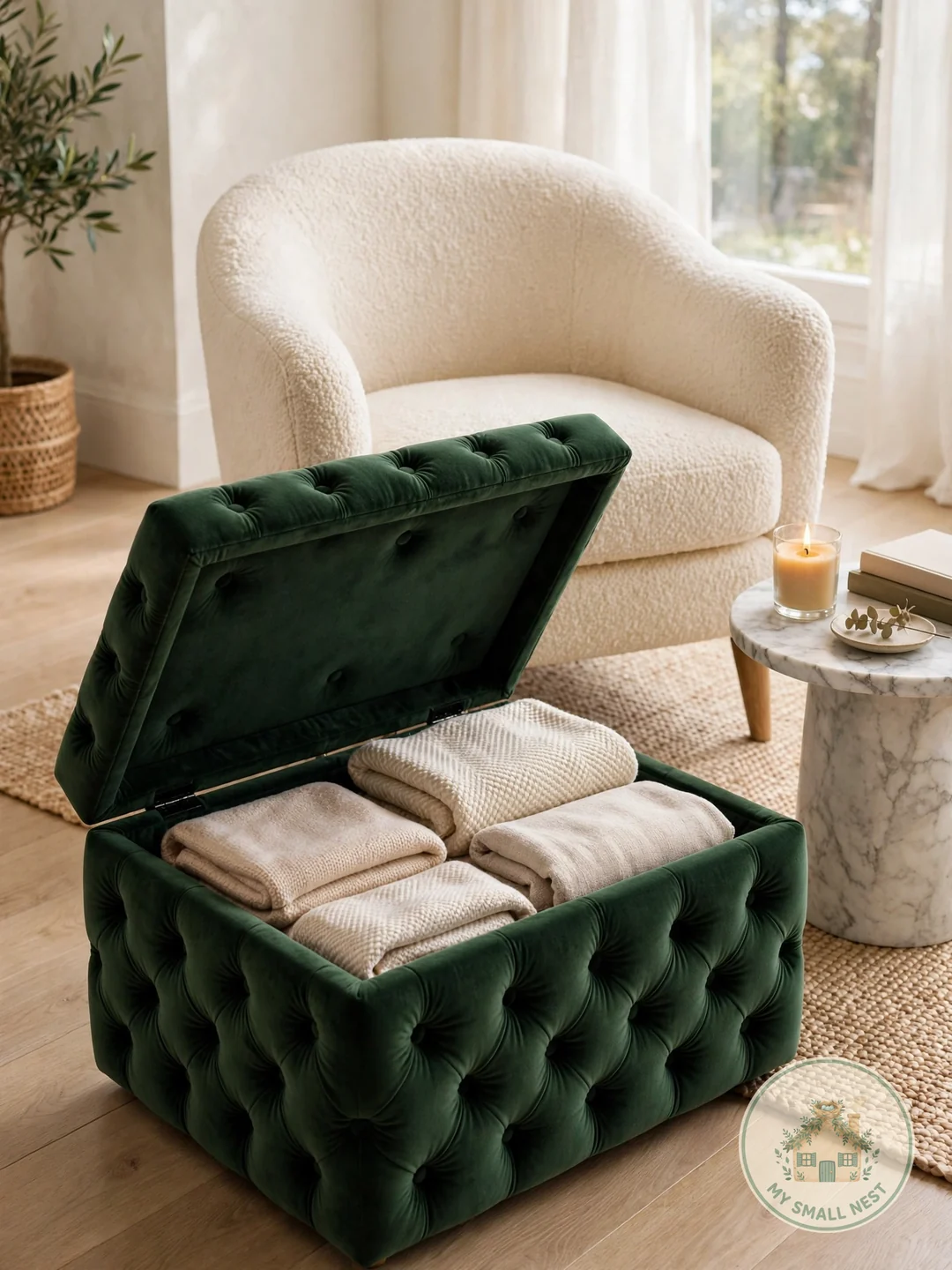
A storage ottoman is the secret weapon of small-space blanket storage. It gives you extra seating, a footrest, or even a coffee-table stand-in, while hiding two to four folded blankets inside its hollow core. A round ottoman even softens a room full of square, angular furniture. When guests arrive unexpectedly, one lift of the lid swallows the living-room blanket explosion.
Look for an ottoman at least 30 inches wide if you want to store full-size throws; cube ottomans around 17 inches square typically hold just one or two. Hinged lids with a soft-close mechanism are worth the upgrade — they won’t slam on fingers and stay open while you dig through blankets.
Budget tip: storage ottomans go on deep clearance at the end of summer and after the holidays — I tried this in my studio and snagged a $40 ottoman for $18 in a January clearance. It holds my two heaviest winter throws and doubles as my coffee table.
Make it work: Keep the ottoman’s lid clutter-free so it stays easy to open, and store the blankets you reach for least at the bottom so daily favorites sit on top.
 Pin it
4. Roll Blankets Into a Tall Floor Basket
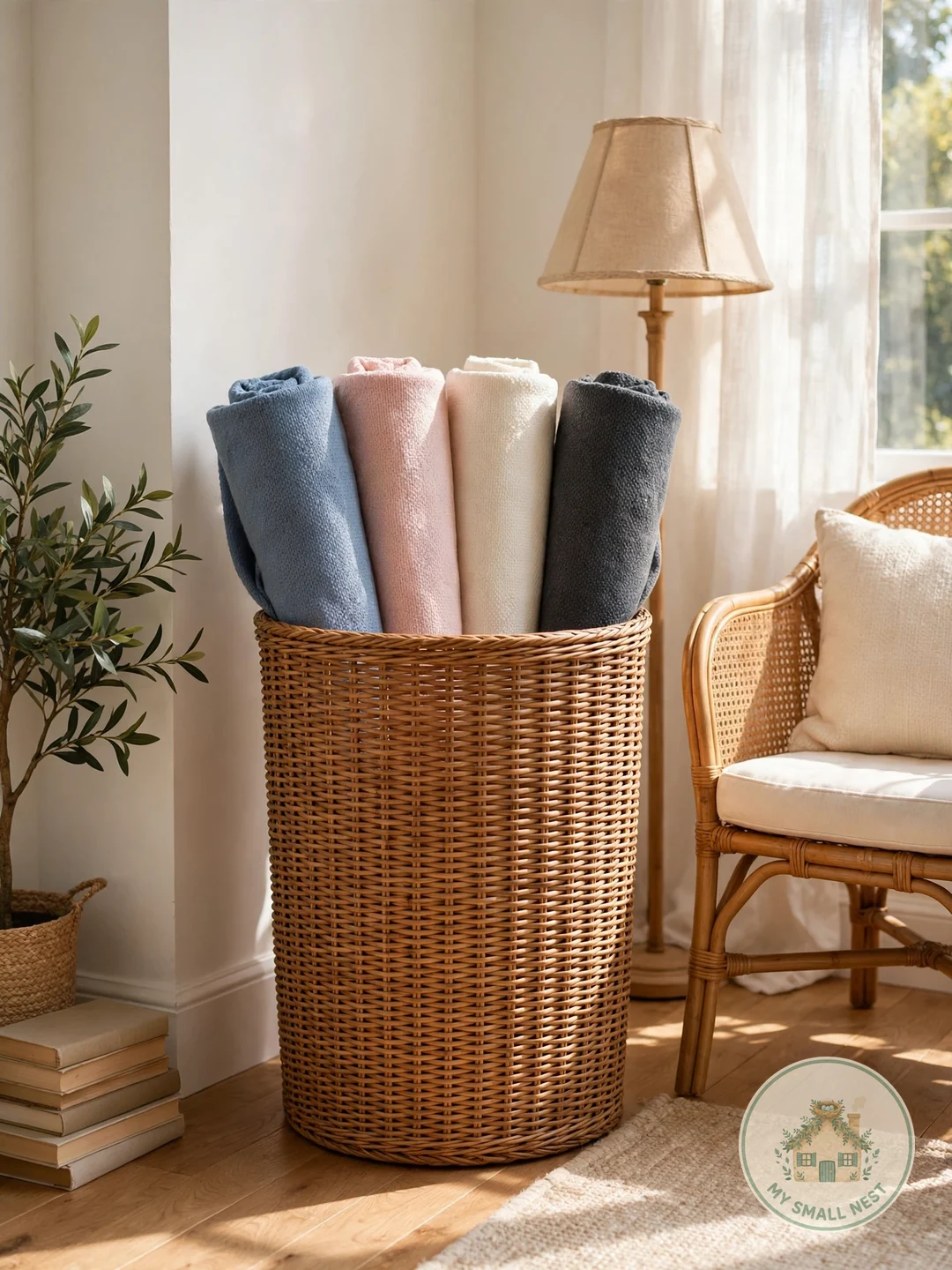
Rolling blankets instead of folding them is a small change with a big payoff: rolled throws compress better, resist wrinkles, and look boutique-hotel neat when lined up in a tall, narrow basket. A tall floor basket — sometimes sold as a laundry hamper or planter basket — turns a dead corner into vertical blanket storage that holds six to eight throws.
Choose a basket 24 to 30 inches tall with a diameter of 14 to 18 inches; that footprint fits beside a bookshelf or in a hallway corner. Roll each blanket tightly from one end, then stand the rolls upright like a bouquet so you can see every color and pattern at a glance.
Budget tip: tall woven hampers cost far less than specialty “blanket baskets” and do the identical job — check the laundry aisle, not the decor aisle.
Make it work: Sort rolls by weight — light summer throws on top, heavy winter blankets at the bottom — so you naturally reach for the right season first.
 Pin it
5. Use a Storage Bench at the Foot of the Bed
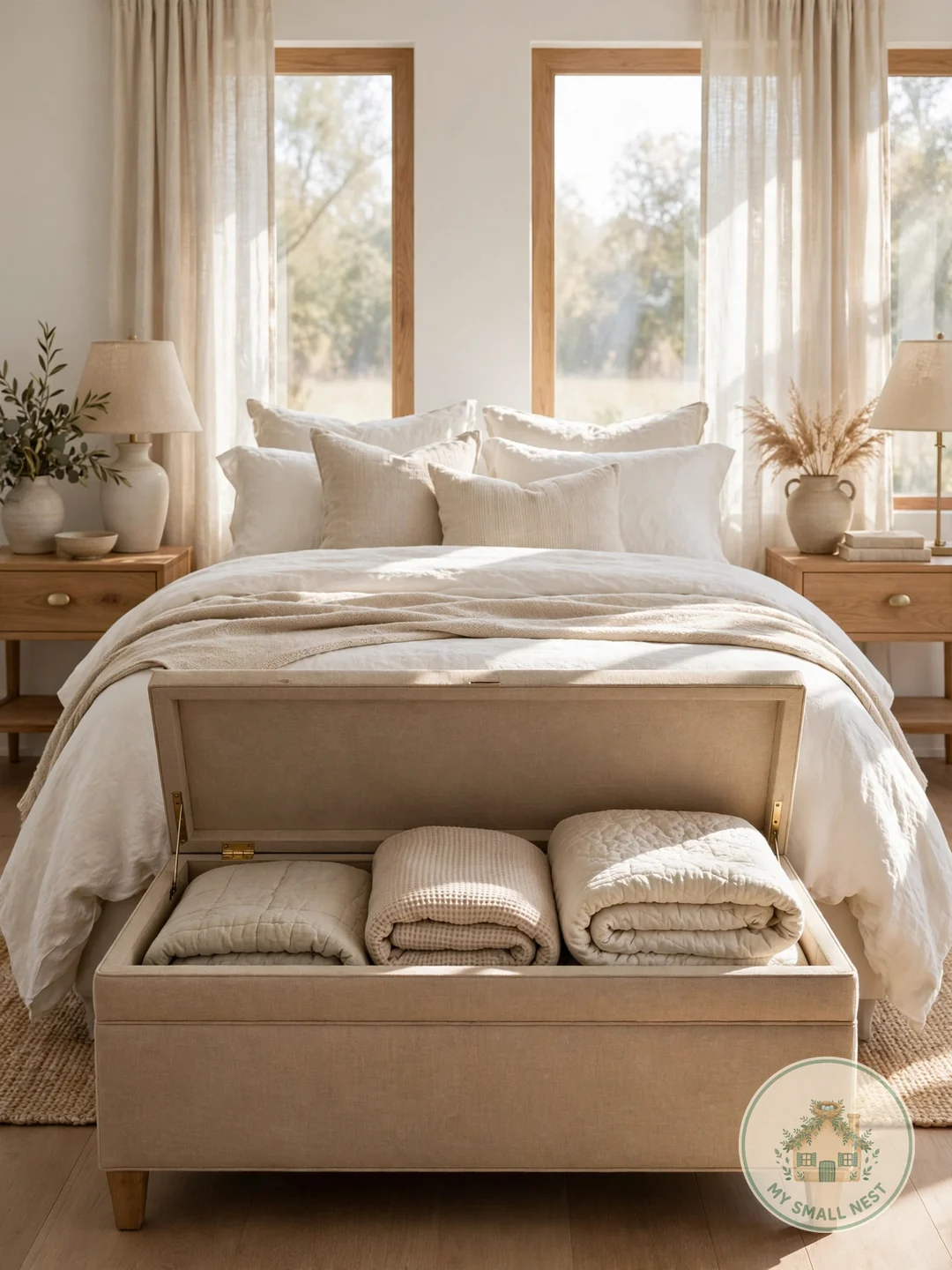
The foot of the bed is prime real estate for blanket storage. A storage bench there corrals spare quilts, duvets, and guest blankets right where you need them at night, while giving you a perch for putting on shoes in the morning. It reads as intentional bedroom furniture, not storage — which is exactly the point.
Measure your bed first: the bench should be roughly the same width as the mattress (about 60 inches for a queen) and no taller than the top of the mattress, usually 18 to 22 inches high. Inside, you’ll typically fit two folded queen quilts or four to six throws.
Budget tip: upholstered storage benches are one of the most marked-down furniture categories — sign up for a home store’s email list and wait for a 20-percent-off sale before buying.
Make it work: Store tonight’s extra blanket on top of the bench (folded, styled) and the spares inside — the bench becomes both decor and a blanket station.
 Pin it
6. Style Folded Stacks on Open Shelving
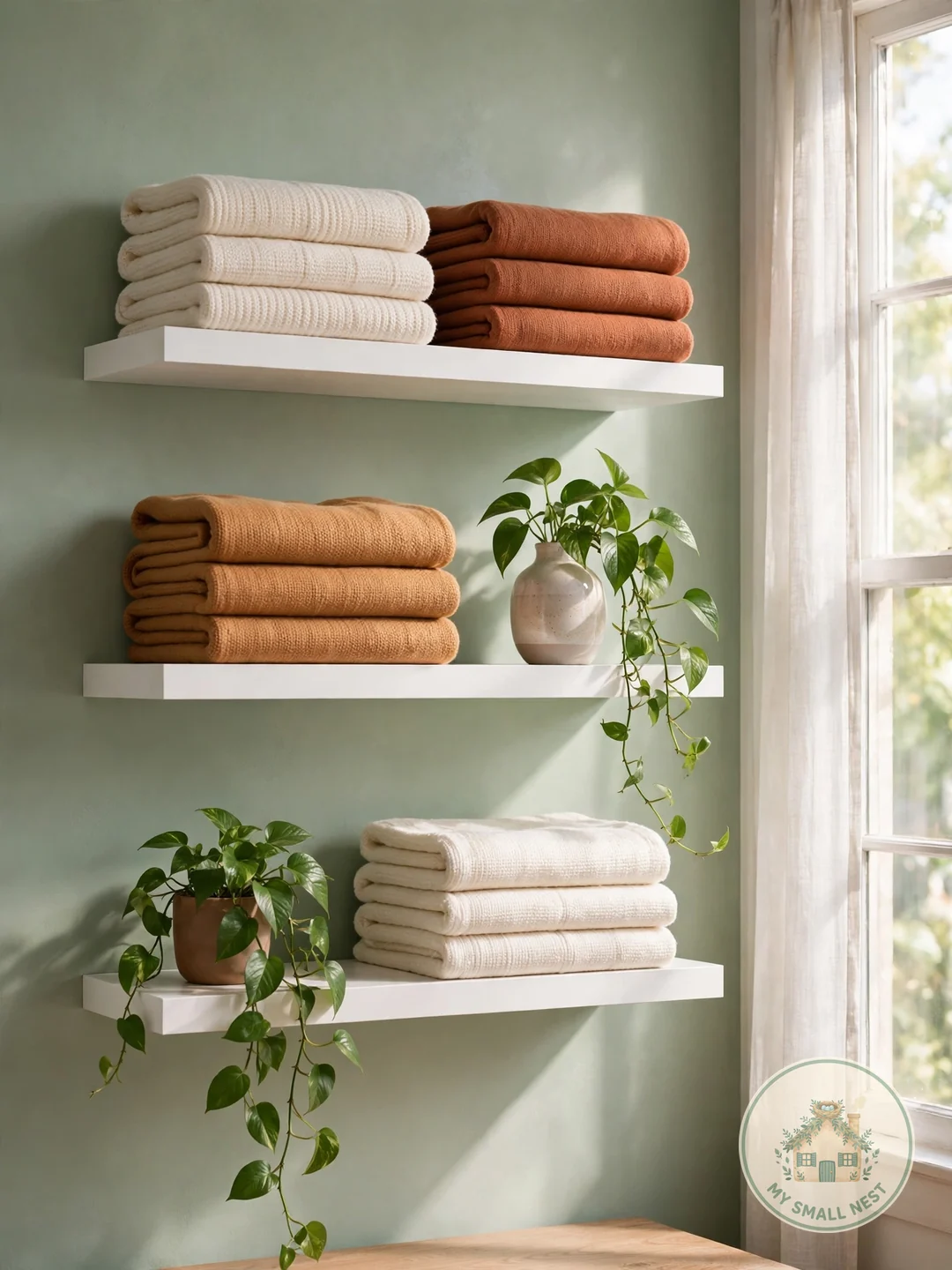
Neatly folded blankets can be decor in their own right. A stack of throws on open shelving adds softness to a room full of hard surfaces — bookshelves, built-ins, or even a simple wall-mounted shelf. Group blankets by color family (all neutrals, all blues) and the stack reads as styling; mix randomly and it reads as clutter.
Fold throws into uniform rectangles about 12 by 16 inches so the stack looks crisp, and cap each stack at four to six blankets so it stays stable. Leave a little breathing room on each side of the stack — shelves crammed edge to edge feel chaotic.
Budget tip: floating shelves from a hardware store cost a few dollars each and install in minutes. Two 36-inch shelves above a dresser create a whole blanket display wall for under thirty dollars.
Make it work: Place the blankets you use most on the lowest, easiest-to-reach shelf, and put pretty-but-rarely-used ones up high where they’ll stay neat.
 Pin it
7. Compress Out-of-Season Blankets With Vacuum Bags
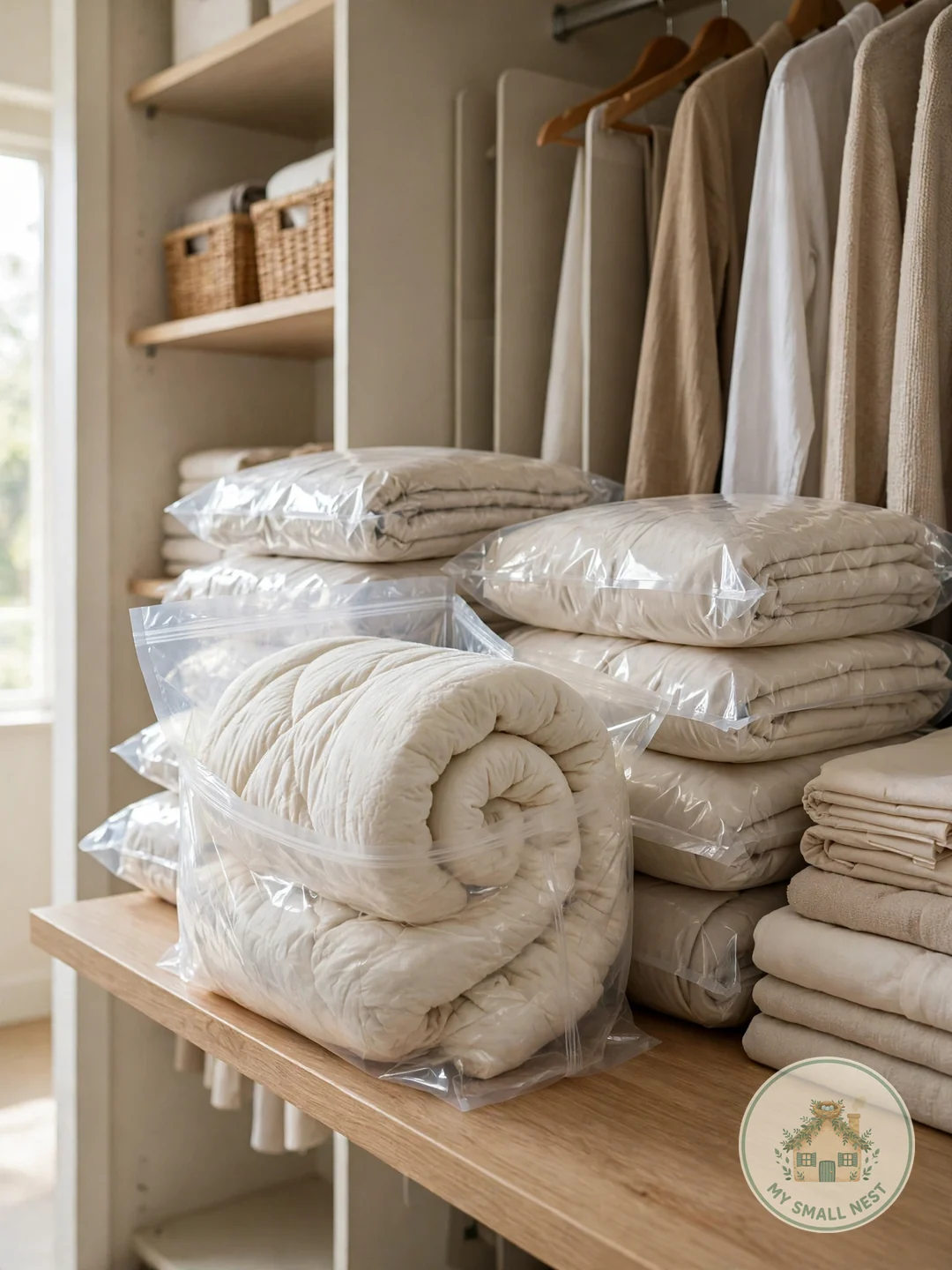
Bulky winter comforters and heavy wool blankets eat closet space all summer. Vacuum storage bags shrink them to a fraction of their size — often cutting volume by up to 75 percent — so a whole season’s worth of bedding slides onto one closet shelf or under the bed. It’s the single best trick for small homes with limited linen storage, and in my 380 sq ft studio it’s non-negotiable: my winter duvet would eat a third of my closet without them.
Use a standard vacuum cleaner (not the hand-pump kind) for the tightest seal, and don’t overstuff: one queen comforter per jumbo bag is the sweet spot. Always wash and fully dry blankets before sealing — trapped moisture is what causes that musty storage smell.
Budget tip: a multipack of jumbo vacuum bags costs less than one storage bin and protects better — and they slide into gaps no bin can fit.
Make it work: When you swap seasons, do the bag swap in one session — pull out summer throws and bag the winter ones the same day, so nothing lingers in a hallway pile for weeks.
 Pin it
8. Invest in a Classic Blanket Chest
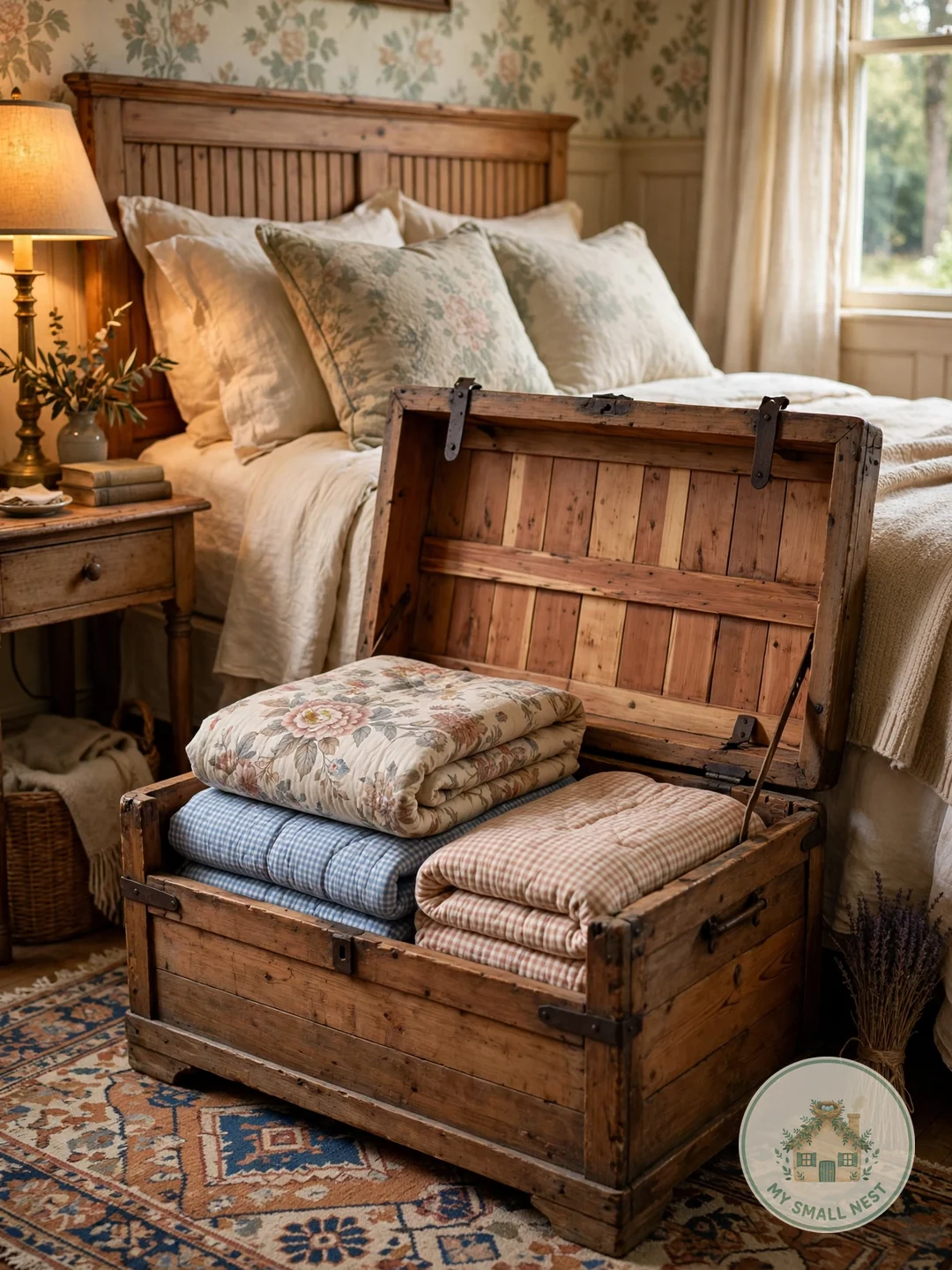
Some storage never goes out of style. A blanket chest — also called a hope chest or cedar chest — at the foot of the bed or against a living room wall swallows an impressive amount of bedding while looking like a beautiful piece of furniture. Unlike bins and bags, it earns its floor space by being genuinely good-looking.
A standard chest (around 45 inches wide, 18 deep, 20 high) holds three to four folded queen blankets or a full set of seasonal bedding. Look for safety hinges that hold the lid open — old chests without them can slam shut.
Budget tip: solid wood blanket chests are thrift-store staples and often cost less than flat-pack furniture while lasting decades longer. A coat of paint modernizes a dated finish in an afternoon.
Make it work: Lay a folded throw or a small tray on top of the chest so it doubles as a surface for a lamp or books — never let it become a dumping ground.
 Pin it
9. Hang Throws on Oversized Wall Hooks
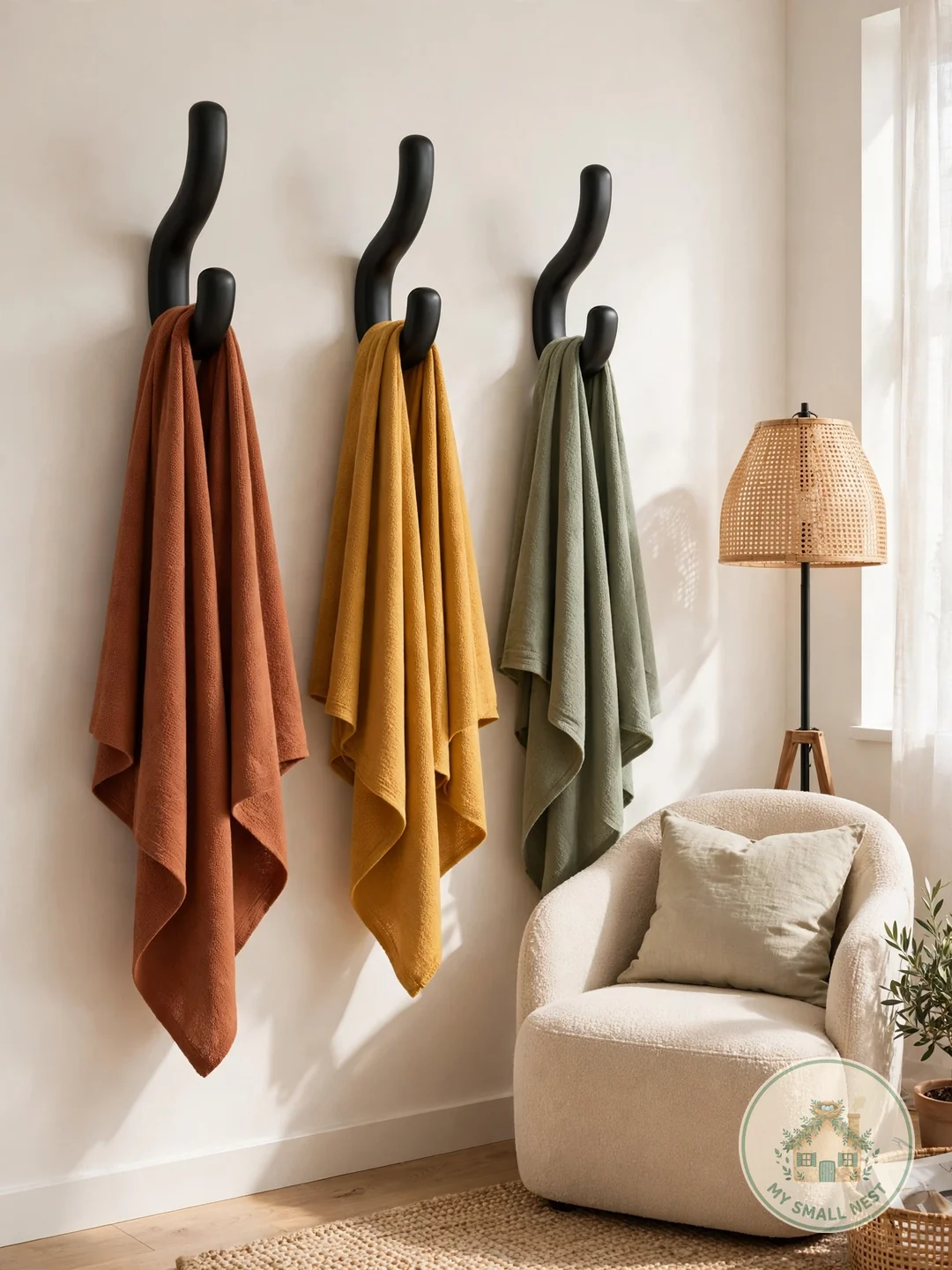
Oversized wall hooks are the minimalist’s answer to blanket storage: one hook, one throw, zero floor space used. Hang your daily-use blanket by the reading chair or beside the bed and it stays aired, visible, and grabbable — no folding required. A row of three to five hooks turns a hallway or bedroom wall into a casual blanket gallery.
Choose hooks rated for at least 5 pounds each (wet wool is heavier than you think) and mount them into studs or use heavy-duty wall anchors — a hook that rips out of drywall is worse than no hook. Space hooks 12 to 18 inches apart so blankets hang without overlapping into a tangled mess.
Budget tip: individual large hooks from a hardware store cost a few dollars each — a fraction of boutique “blanket hook” sets.
Make it work: Reserve hooks for the one or two blankets you actually use daily; everything else belongs in closed storage, or the wall starts looking like a laundry line.
 Pin it
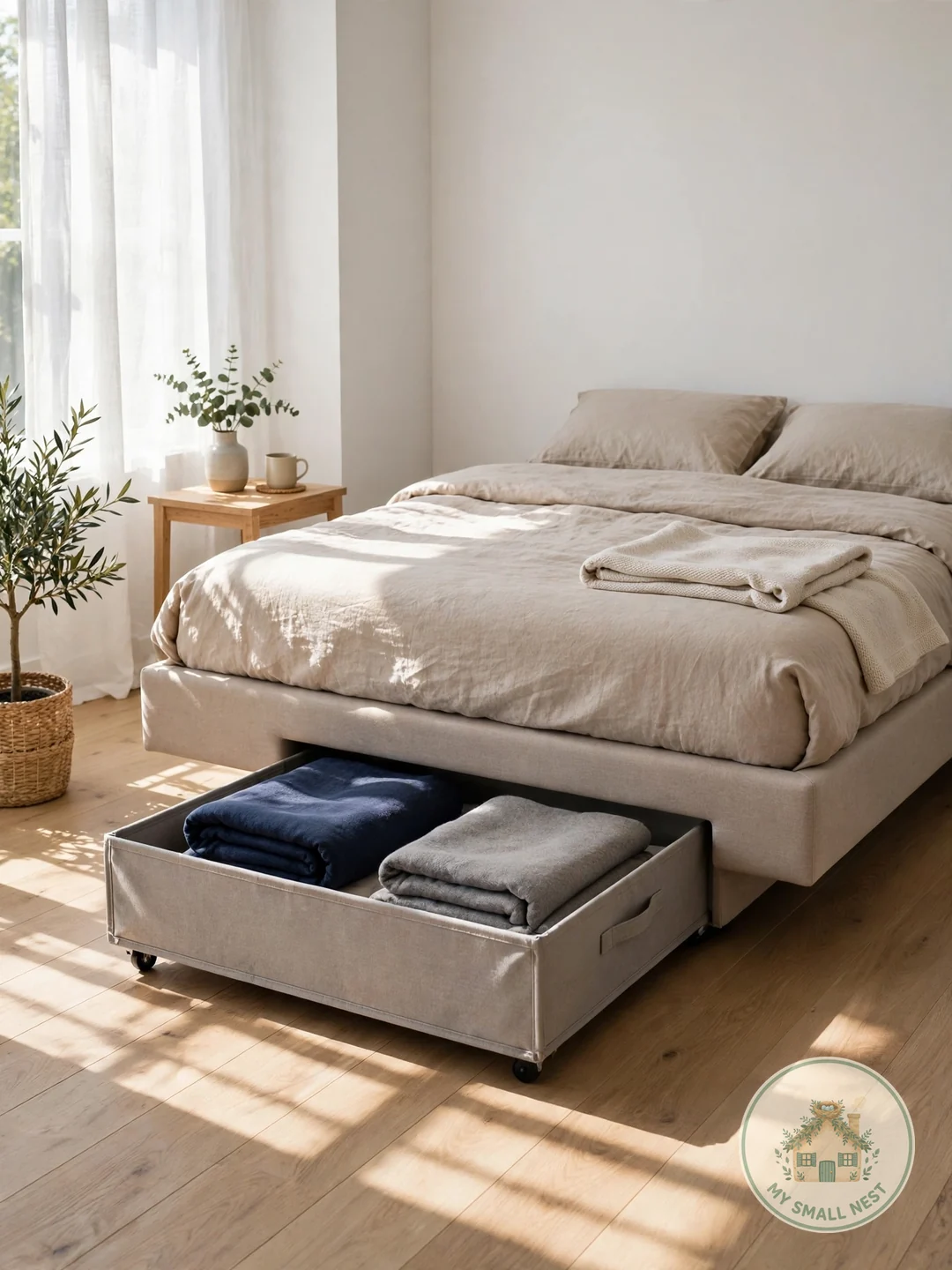
10. Slide Flat Boxes Under the Bed
The space under the bed is the most underused storage zone in most homes — and it’s perfect for blankets. Flat under-bed boxes keep spare throws dust-free and out of sight, yet only a pull away when temperatures drop. Because the boxes are hidden, this is the ideal spot for the practical-but-not-pretty blankets.
Measure your clearance first: most bed frames offer 6 to 8 inches of space, and low-profile boxes are made to fit exactly that. Boxes with wheels glide out easily on hard floors; on carpet, look for ones with sturdy handles. Clear or labeled boxes save you from pulling out three boxes to find the right blanket.
Budget tip: wrapping paper storage boxes (the long flat kind sold after the holidays) are the perfect dimensions for under-bed blanket storage and cost next to nothing on clearance — I tried this in my studio and two $4 clearance boxes now hold my entire spare-blanket collection.
Make it work: Store only freshly laundered blankets under the bed and toss in a lavender sachet per box — enclosed spaces go musty fast without airflow.
 Pin it
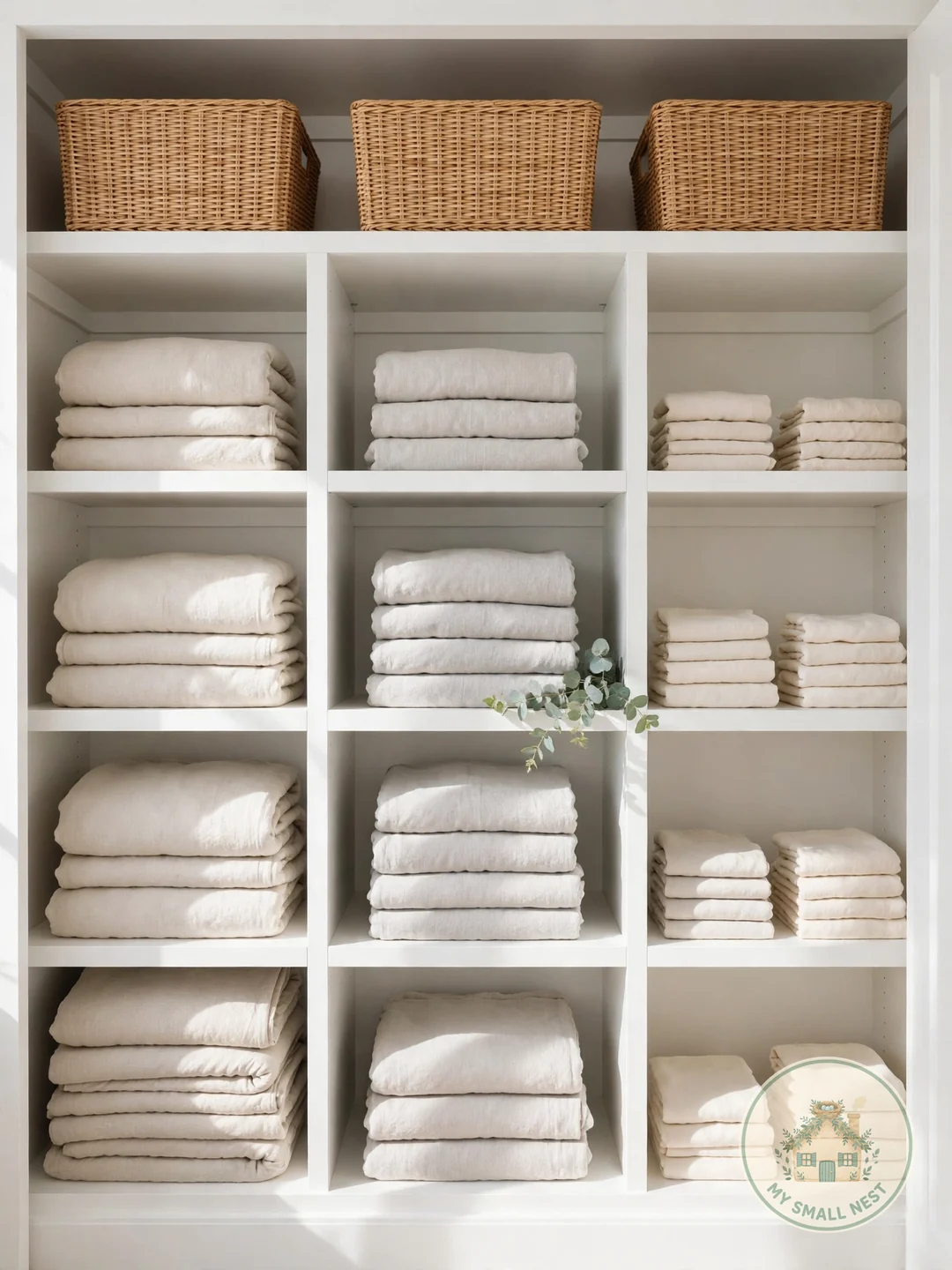
11. Sort the Linen Closet by Size and Season
If your blankets live in a linen closet, a little system beats a bigger closet. Sort throws by size (baby, throw, twin, queen/king) and then by season, and you’ll stop unfolding three wrong blankets to find the right one. Shelf dividers keep the stacks from toppling into each other — the number-one reason linen closets devolve into chaos.
Give each category its own shelf or cubby, and keep daily-use throws at eye level between 48 and 60 inches high. Bulky seasonal bedding goes up top in labeled bins; rarely-used guest blankets go on the bottom shelf.
Budget tip: cardboard shelf dividers and a label maker (or just painter’s tape and a marker) cost almost nothing and transform a closet in under an hour.
Make it work: Do a ten-minute closet reset each season: pull everything out, refold what shifted, and move the current season’s blankets to the prime eye-level shelf.
 Pin it
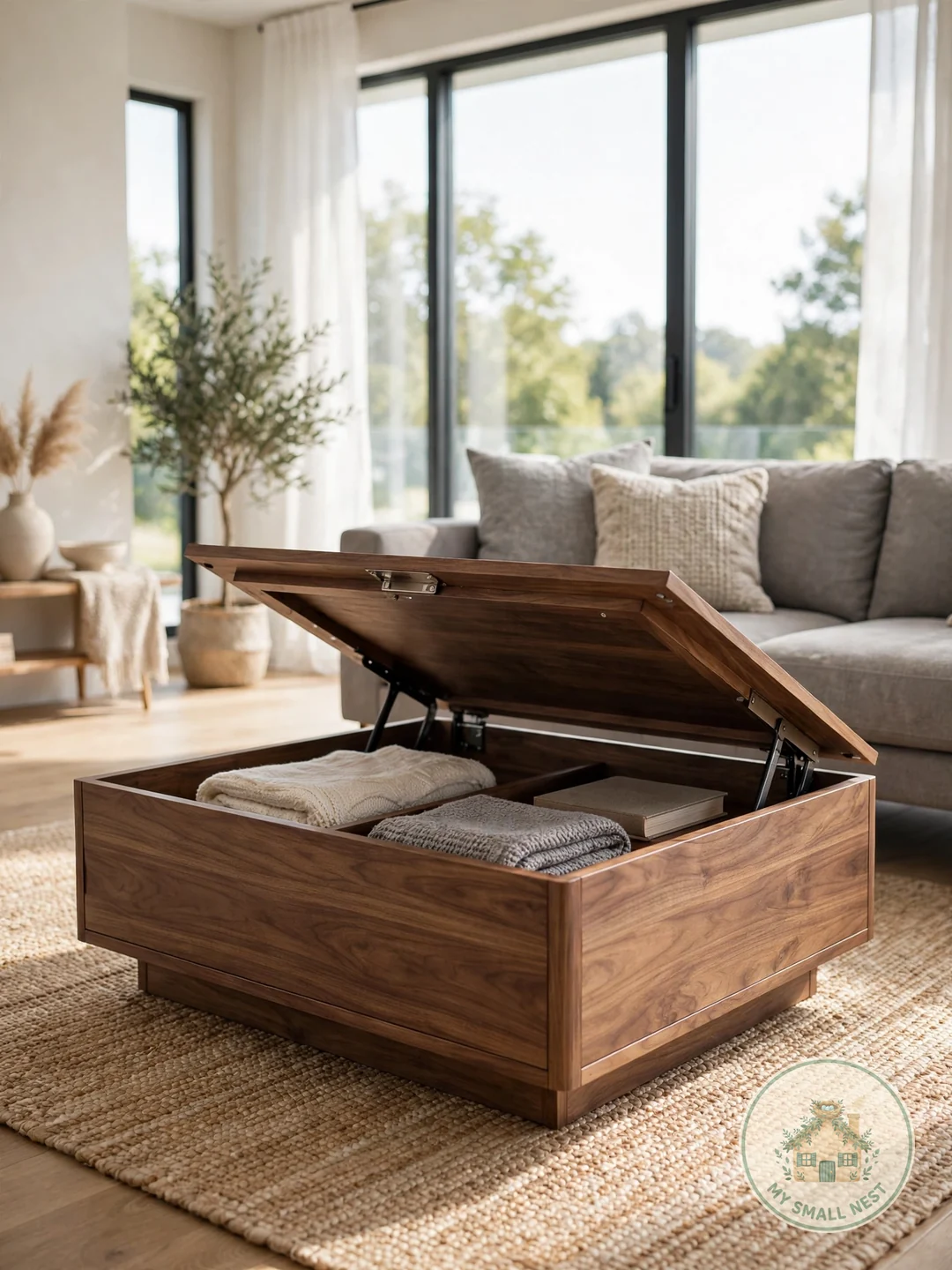
12. Choose a Lift-Top Coffee Table With Hidden Storage
A lift-top coffee table is blanket storage hiding in plain sight. The interior compartment swallows two to three folded throws (plus the remotes and magazines), and the lifting top brings your coffee or laptop to a comfortable height — a genuine upgrade for small living rooms where the coffee table does triple duty.
Check the interior depth before buying: you want at least 5 to 6 inches of usable depth to fit folded throws without forcing the lid. Tables around 40 inches long offer the best blanket capacity without overwhelming a small room. Look for sturdy lift mechanisms with safety stops, and a finish that wipes clean — this table will see daily use.
Budget tip: lift-top coffee tables are frequently discounted during furniture holiday sales; floor models at outlet stores can run 40 percent off and usually just need a wipe-down.
Make it work: Keep one “couch blanket” folded inside at all times so there’s always a throw within reach — and one less blanket draped permanently over the sofa arm.
 Pin it
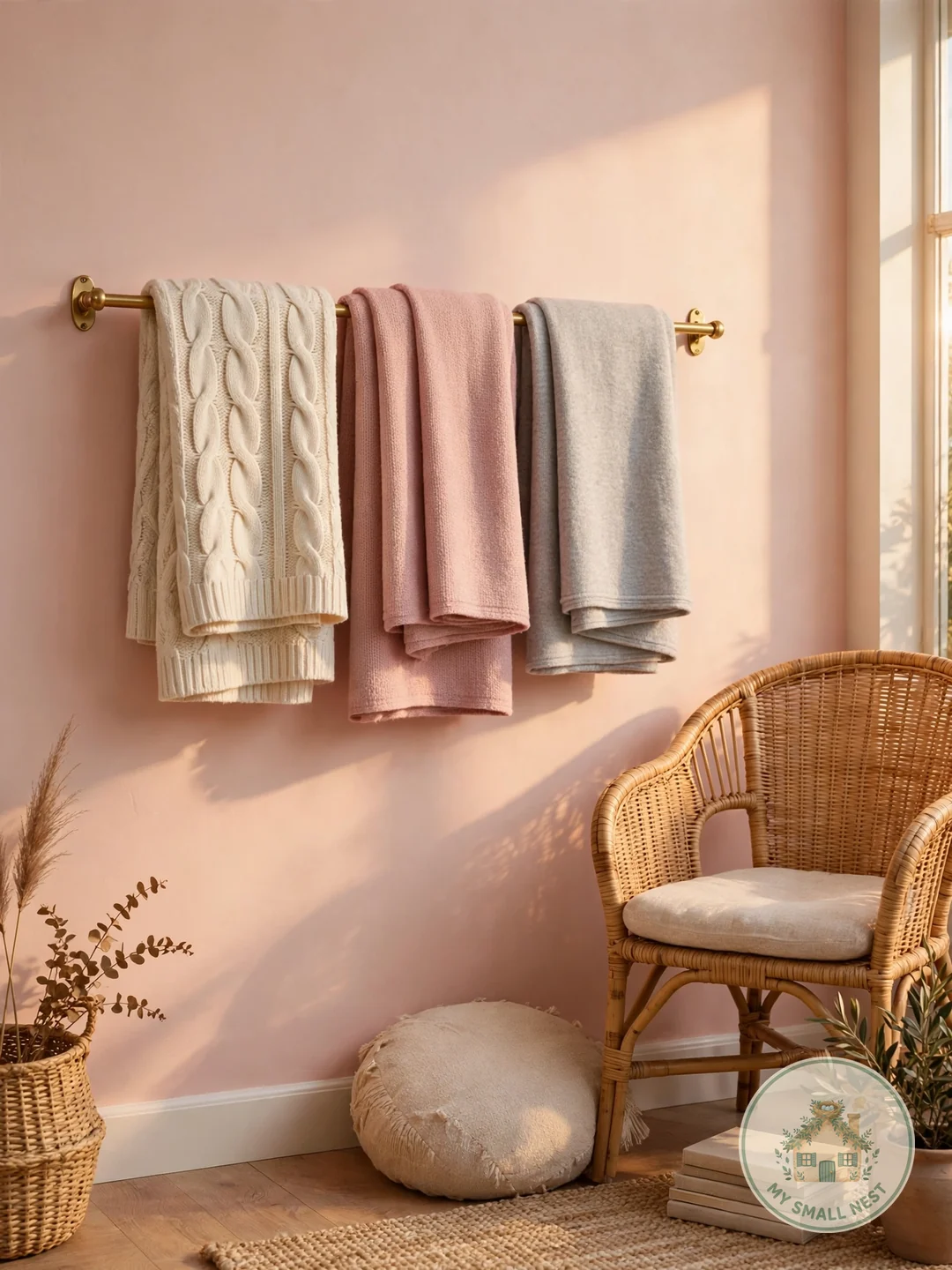
13. Mount a Decorative Wall Rail for Daily Throws
A wall-mounted rail — think a brass bar, a wooden dowel on brackets, or even a repurposed curtain rod — gives your most-used throws a permanent, pretty home. Hang two or three blankets folded over the bar near the couch or reading nook, and they stay wrinkle-free, aired out, and part of the room’s styling instead of crumpled on furniture.
Mount the rail 48 to 60 inches high so blankets hang without pooling on the floor, and leave at least 24 inches of bar length per throw so they don’t bunch. Secure it into studs; a rail holding three damp-after-wash throws carries real weight.
Budget tip: a basic curtain rod and two brackets from a hardware store create this look for under fifteen dollars — spray-paint the rod brass or matte black for a high-end finish. I tried this in my studio with a $9 tension-style setup, and my two daily throws finally stopped living on the couch arm.
Make it work: Hang throws with the prettiest side facing out and rotate them seasonally — the rail doubles as effortless seasonal decor.
 Pin it
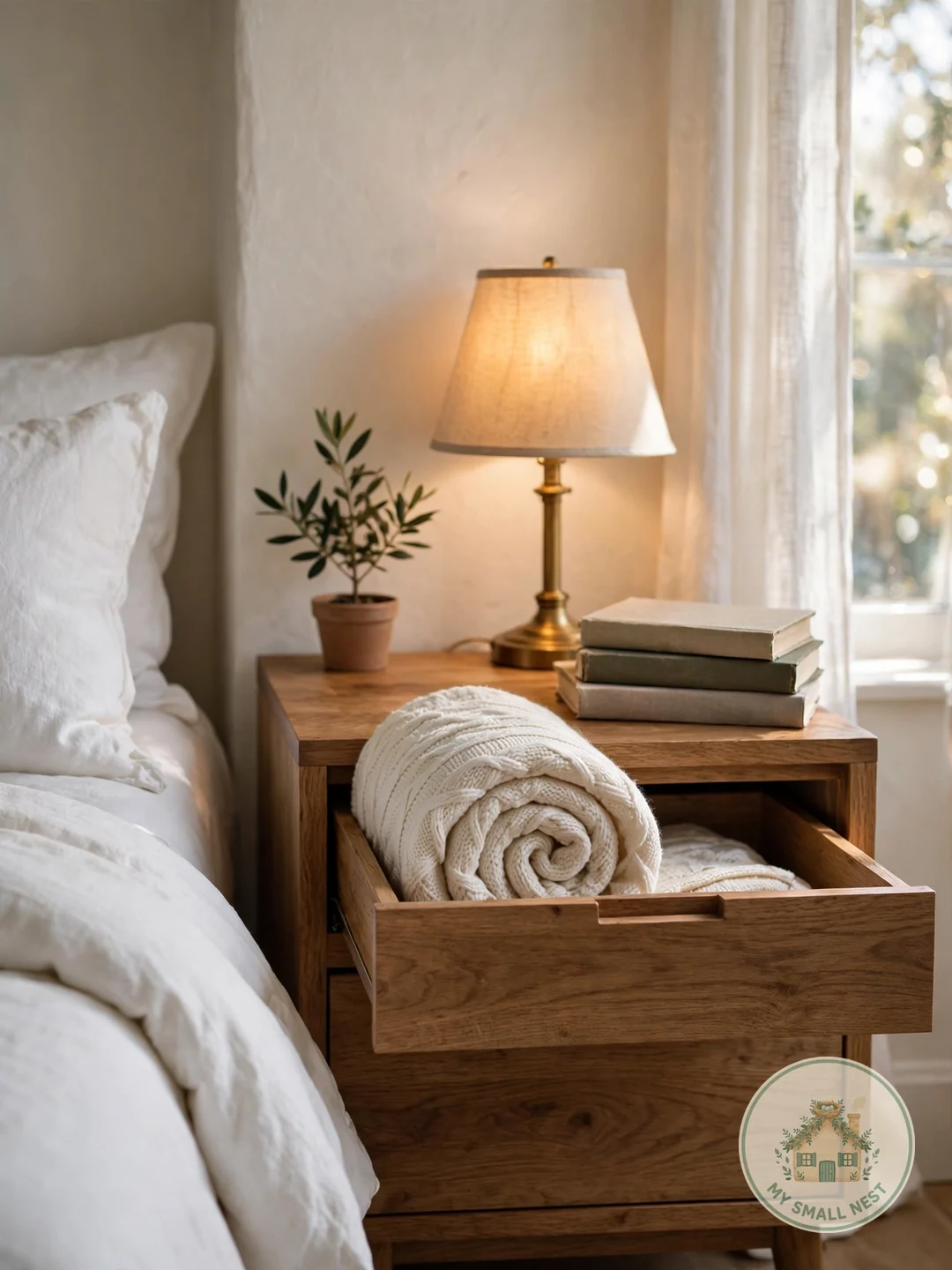
14. Turn a Nightstand Drawer Into a Throw Drawer
Here’s an idea most people overlook: dedicate one nightstand drawer to a bedside throw. A lightweight blanket within arm’s reach of the bed solves the 2 a.m. chill without a trip to the closet — and it keeps the extra blanket off the floor, where it usually ends up. In small bedrooms, this beats adding another piece of furniture.
This works best with nightstands that have deep drawers (at least 6 inches deep); a tightly rolled throw fits easily. Choose a breathable cotton or bamboo throw rather than something bulky, so the drawer still closes smoothly.
Budget tip: this idea costs nothing if you already own the nightstand — it’s pure reorganization. A rolled throw takes up less drawer space than a folded one.
Make it work: Pick a throw in a color you love seeing every morning, since it’ll be the first thing you touch — the drawer trick only sticks if the blanket feels like a treat, not clutter.
 Pin it
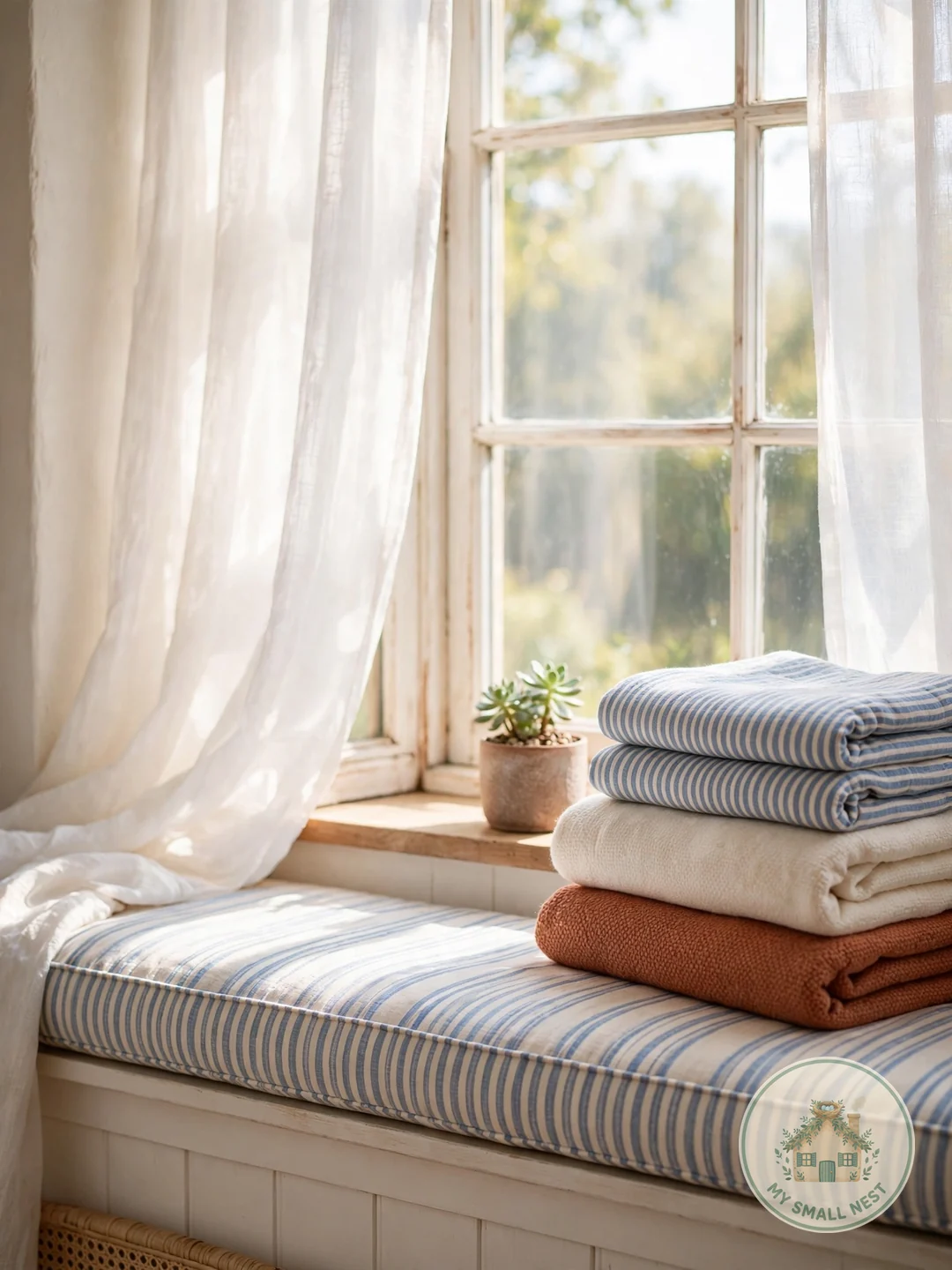
15. Create a Window-Seat Blanket Nook
If you have a window seat, bench, or even a wide deep windowsill, you’ve got a ready-made blanket nook. Line it with a cushion, stack two or three folded throws at one end, and suddenly the sunniest spot in your home is also blanket central. It’s the coziest reading spot imaginable — and the blankets are stored exactly where they’re used most.
A cushion 3 to 4 inches thick makes the seat comfortable for long reads, and a seat depth of at least 18 inches fits an adult comfortably. Store throws folded in a neat stack rather than draped everywhere, so the nook keeps its inviting look.
Budget tip: no built-in window seat? A sturdy low bench or even two cube storage ottomans pushed under a window create the same nook for very little money.
Make it work: Add one small basket at the end of the seat for the current read and a rolled throw — the nook stays tidy when everything has its own spot.
 Pin it
5 Blanket Storage Mistakes to Avoid
1. Stuffing damp blankets into closed storage
Blankets that aren’t fully dry develop mildew and musty smells fast in bins, bags, or chests. Always wash and completely dry throws before storing them away for the season.
2. Buying storage before decluttering
New baskets and boxes can’t fix having twelve blankets for a two-person home. Donate the pilled, stained, or never-used ones first — then buy storage for what remains.
3. Storing everything in one giant pile
A single deep bin where blankets get buried means the bottom ones never see daylight and everything wrinkles. Shallow layers, rolls, or sorted zones keep every throw accessible.
4. Ignoring weight limits on hooks and rails
Heavy wool blankets rip undersized hooks straight out of drywall. Check weight ratings and mount into studs or use proper anchors for anything beyond a light throw.
5. Hiding daily-use blankets too well
If your everyday throw lives in a vacuum bag on the top closet shelf, you’ll stop putting it away. Keep the one or two blankets you grab daily visible and within arm’s reach.
Blanket Storage Ideas: FAQs
What is the best way to store throw blankets in a small apartment?
Use dual-purpose storage: a storage ottoman, lift-top coffee table, or under-bed boxes hide blankets without adding furniture. Keep one or two daily throws visible in a basket or on hooks, and vacuum-seal out-of-season bedding to reclaim closet space.
How do you store blankets so they don’t smell musty?
Always store blankets freshly laundered and fully dry. Add lavender sachets or cedar blocks to enclosed storage, avoid airtight plastic for long-term storage of natural fibers, and air out stored blankets every few months if possible.
Should you fold or roll blankets for storage?
Rolling wins for most blanket storage ideas: rolled throws take up less space, resist deep creases, and let you see every blanket at a glance in a basket. Fold only when you want crisp, uniform stacks for open-shelf display.
How many throw blankets should you keep?
A good rule is two to three per frequently used room — enough for cozy options without clutter. Keep one per bed plus one or two spares for guests, and donate anything pilled, stained, or untouched for over a year.
Can vacuum storage bags damage blankets?
They’re safe for most synthetic and cotton blankets, but avoid long-term compression of down, feather, or natural latex fills, which can lose loft. Never vacuum-seal damp items, and let compressed blankets breathe for a day before use.
Blankets are meant to be enjoyed, not wrestled with. With the right blanket storage ideas, every throw has a home — the everyday favorites within arm’s reach, the seasonal ones tucked away neatly, and all of them making your space look cozier instead of more cluttered. Start with just one idea from this list this weekend (the basket-by-the-sofa trick takes five minutes) and build from there. And if you found a favorite, save this post to your organization board so it’s there when blanket season rolls back around.

What readers are saying
No comments yet — yours could be the first.