 My Small Nest
Move-in day is closer than you think, and the difference between a dorm room you love and one you merely tolerate comes down to what you pack before you get there. The wrong buys waste money and floor space you don’t have; the right ones make 180 square feet feel twice as big.
We rounded up 18 freshman dorm supplies that college students genuinely swear by this year — from the mattress topper everyone calls non-negotiable to the small organizers that tame the chaos. Every pick includes real measurements, honest prices, and the pro tips that make them actually work in a real dorm. This is your pack list, not a wish list.
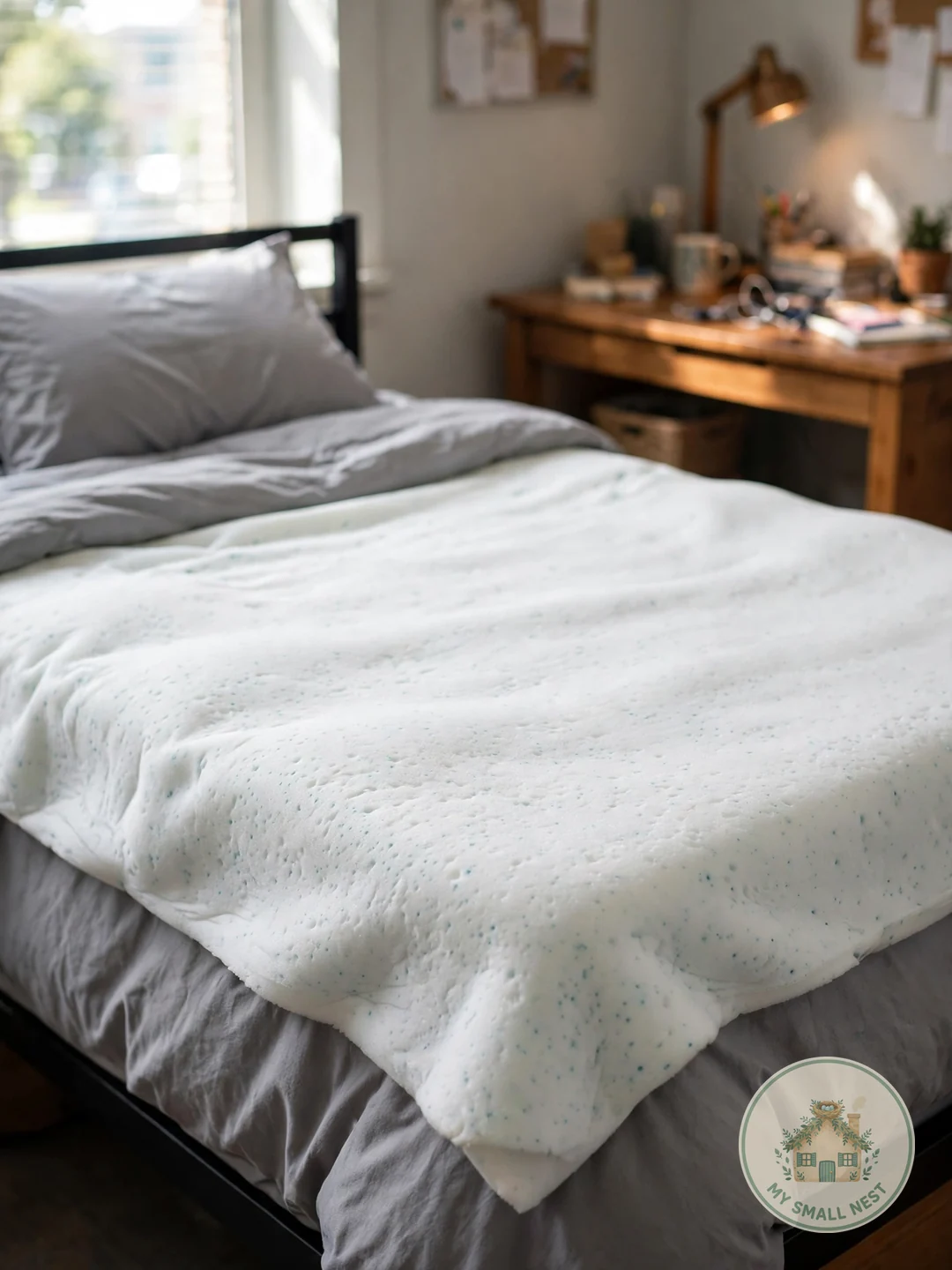
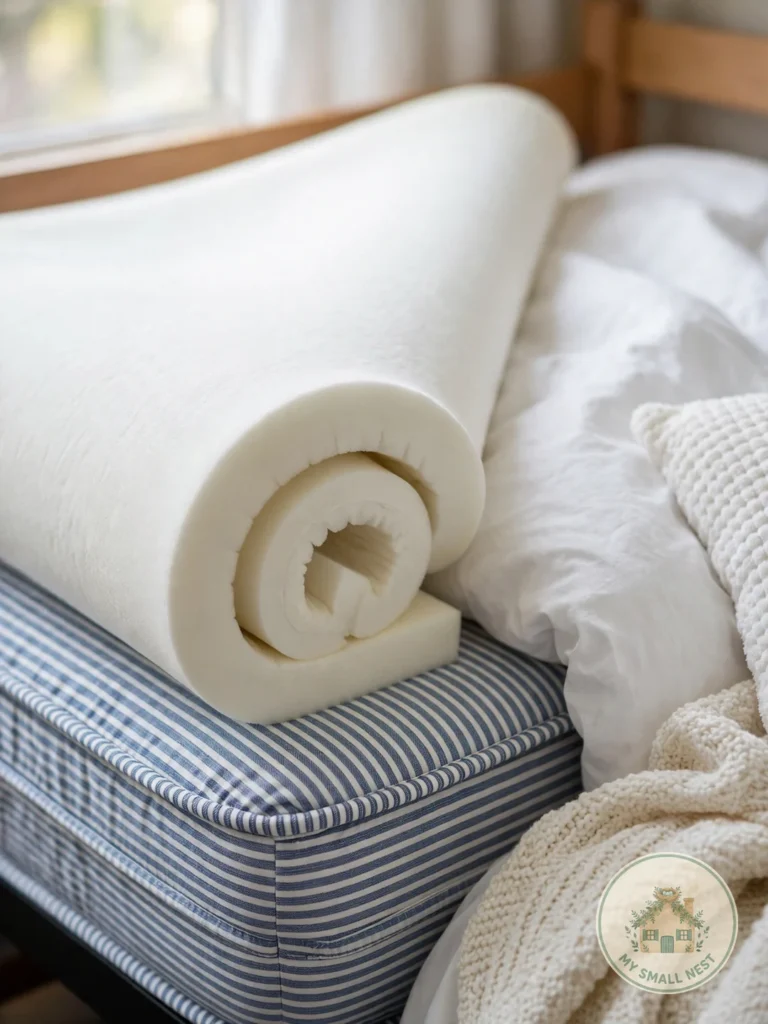
1. Memory Foam Mattress Topper
Dorm mattresses are notoriously thin, lumpy, and wrapped in crunchy vinyl — and a topper is the single fastest way to fix that. A 2 to 3-inch gel-infused memory foam topper (look for CertiPUR-US certified foam) adds the cushioning that lets you actually fall asleep instead of tossing around all night. Twin XL is the standard dorm size, so measure your bed first — most dorm beds run 36 x 80 inches. Students swear by 3-inch versions for real back support, while 2-inch works if your bed sits high or you are on a budget. Expect to spend $40-$80 for a quality one.
Make it work: Unroll it the second you arrive on move-in day and let it expand for 24-48 hours before sleeping on it, and add a washable waterproof topper cover underneath your fitted sheet so spills and dorm grime never reach the foam.
 Pin it
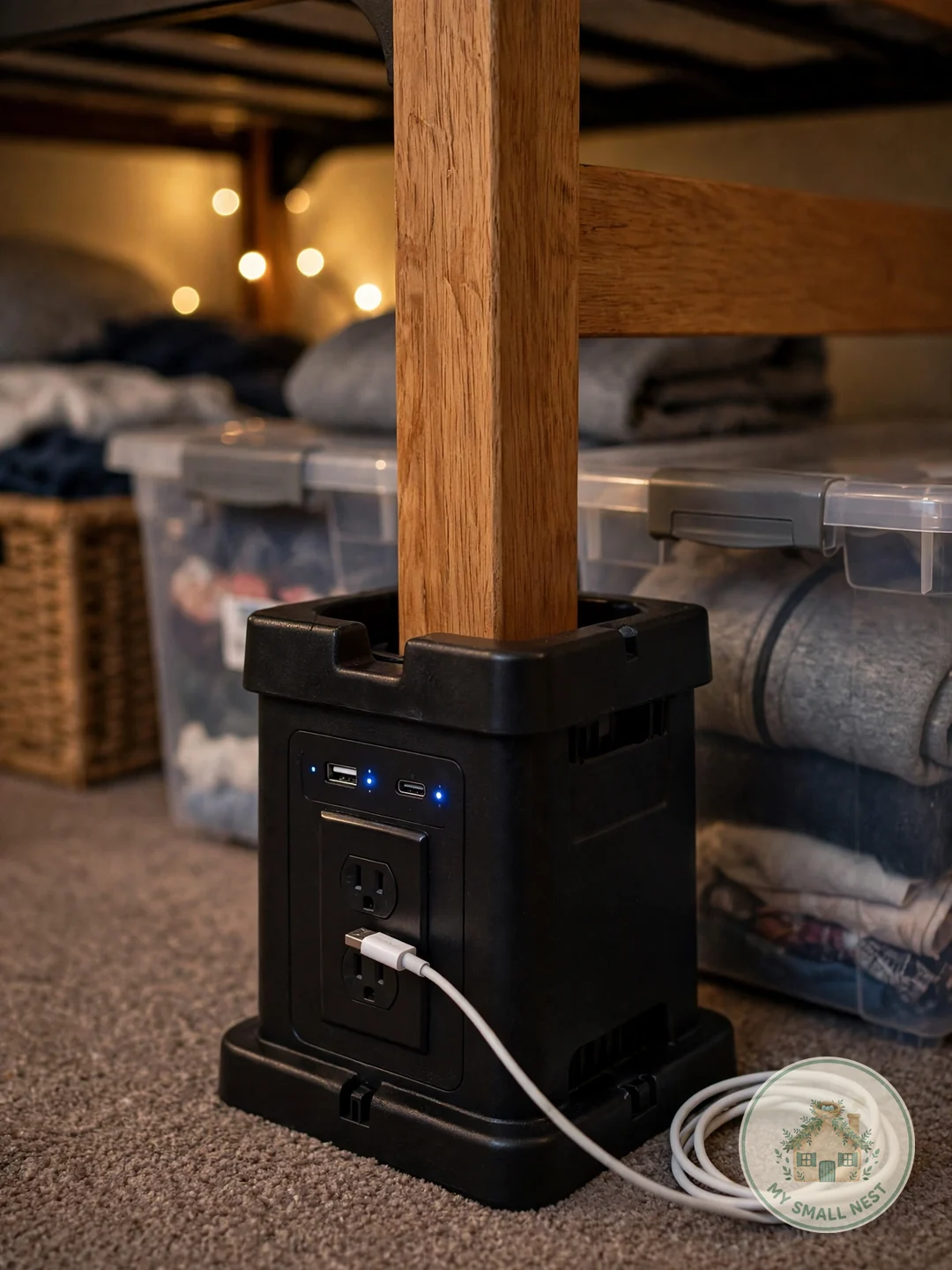
2. Bed Risers with USB Outlets
Raising your dorm bed is the oldest dorm hack in the book — and these risers do double duty. A set of four heavy-duty risers lifts your bed 7 to 8 inches, creating instant under-bed storage for bins, laundry, and a mini fridge, while the built-in USB ports and AC outlets mean you can charge your phone and laptop right from the bed frame. Look for risers rated for at least 1,200 pounds of total capacity and a snug 3-inch top socket that actually grips the bed leg, because wobbly risers are a real hazard. Budget tip: plain risers cost under $15, while the outlet versions run $25-$40.
Make it work: Measure your bed leg diameter before buying, since dorm beds vary from 2 to 3.5 inches, and stick felt pads between the riser and the leg so nothing squeaks when you roll over at night.
 Pin it
3. Wedge Pillow Headboard
Instead of stacking five pillows that slide everywhere, this one upgrade gives your dorm bed an instant headboard. A plush wedge pillow, usually 24-30 inches wide, props against the wall and turns your bed into a real reading and study spot — no more leaning on a cold cinderblock wall during late-night cram sessions. Look for a tufted or quilted cover in a color that matches your bedding; many come with a side pocket for your phone, glasses, and remote. Prices range from $35-$60, and they double as lumbar support when you are hunched over a laptop. Students say it is the coziest seat in the whole room.
Make it work: Choose a removable, machine-washable cover since dorm walls collect dust fast, and pair it with a clip-on reading light so you can study in bed without waking your roommate.
Emma’s note: I tried the wedge pillow in my studio, where my bed doubles as my reading chair — the side pocket alone was worth the $45, because my phone finally stopped vanishing into the bedding. One caution: measure your bed width first. My first one was 6 inches too narrow and looked like a lost throw pillow for a month.
 Pin it
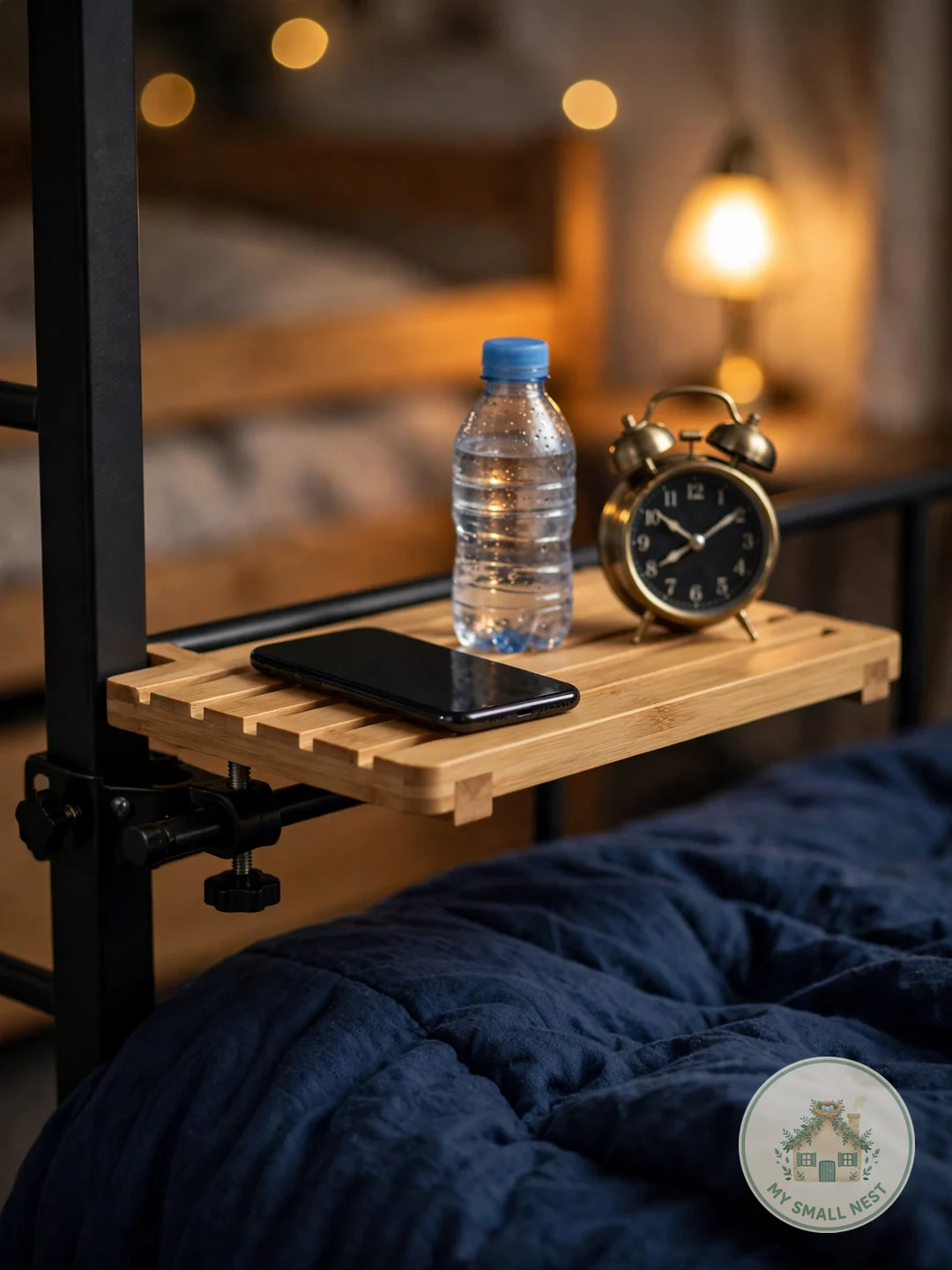
4. Clip-On Bedside Shelf
When you loft your bed, your nightstand effectively disappears — and this little shelf brings it back. This compact bamboo or wood shelf, about 15 x 9 inches, clamps directly onto your bed frame, bed rail, or a nearby desk edge, giving you a spot for your phone, glasses, water bottle, and alarm clock within arm’s reach. Most models support up to 15 pounds and install without a single tool, so you will not violate any dorm furniture rules. Students love them because they take zero floor space, and most versions cost under $25. It is the smallest upgrade with one of the biggest quality-of-life payoffs.
Make it work: Tighten the clamps fully and test with a full water bottle before trusting it overnight, and pick one with a raised lip so your phone does not slide off when the bed shakes.
 Pin it
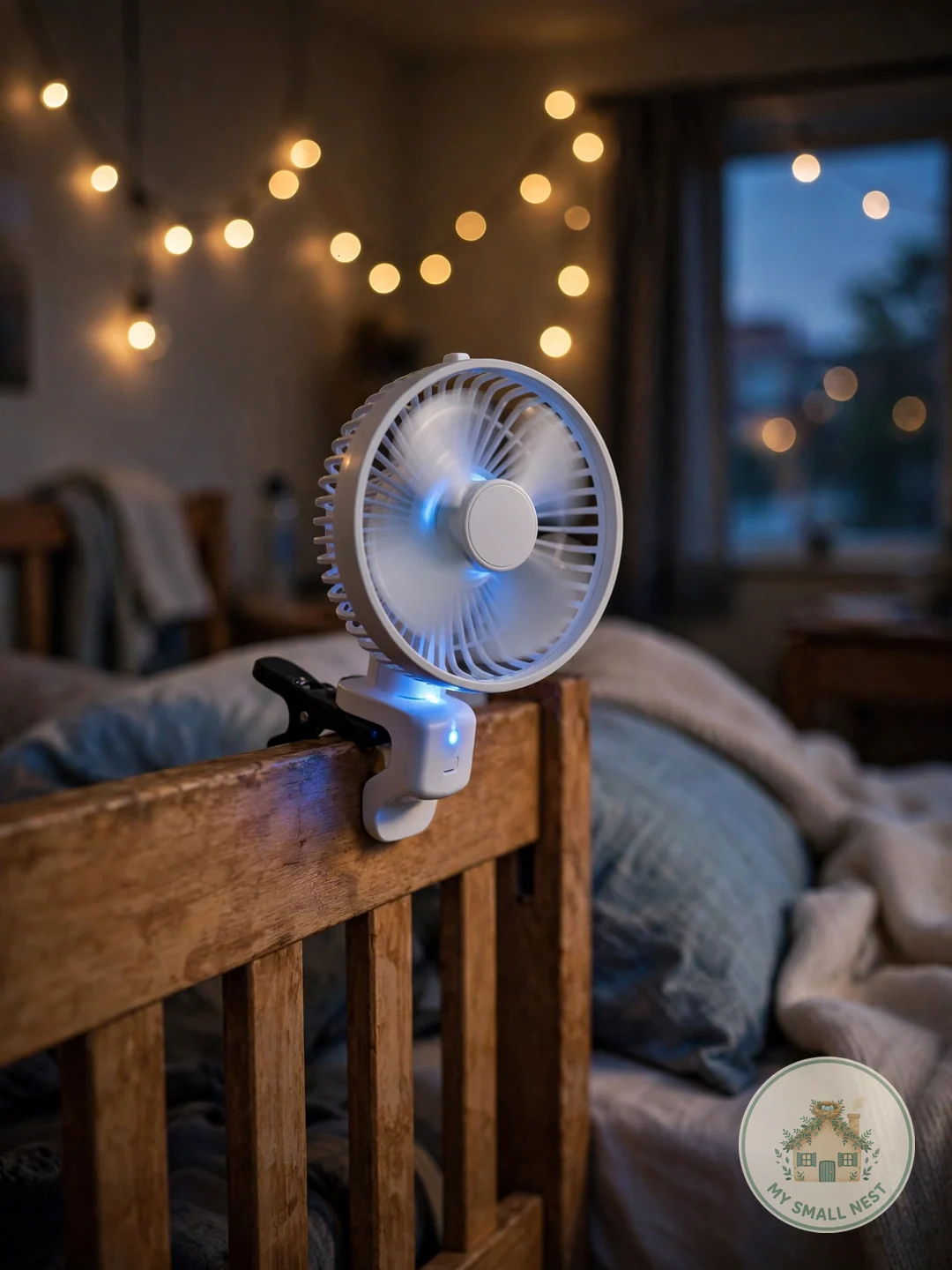
5. Bedside Clip-On Fan
Dorm rooms are famous for two things: broken thermostats and roommates with opposite temperature preferences. A compact clip-on fan, 6 to 8 inches, attaches to your bed frame, desk, or shelf and gives you personal airflow without blasting the whole room. Look for a USB-rechargeable model with 3 or more speed settings and a noise level under 40 decibels — anything louder will drive your roommate crazy. Many models now double as a 360-degree rotating fan with a soft night-light mode, and they run $20-$30. It is also a lifesaver during those first hot weeks of the semester before the heat kicks off.
Make it work: Charge it via your laptop or bedside outlet during the day so it is ready at night, and clip it at the foot of your bed aimed upward for a cooling cross-breeze that does not dry out your face.
 Pin it
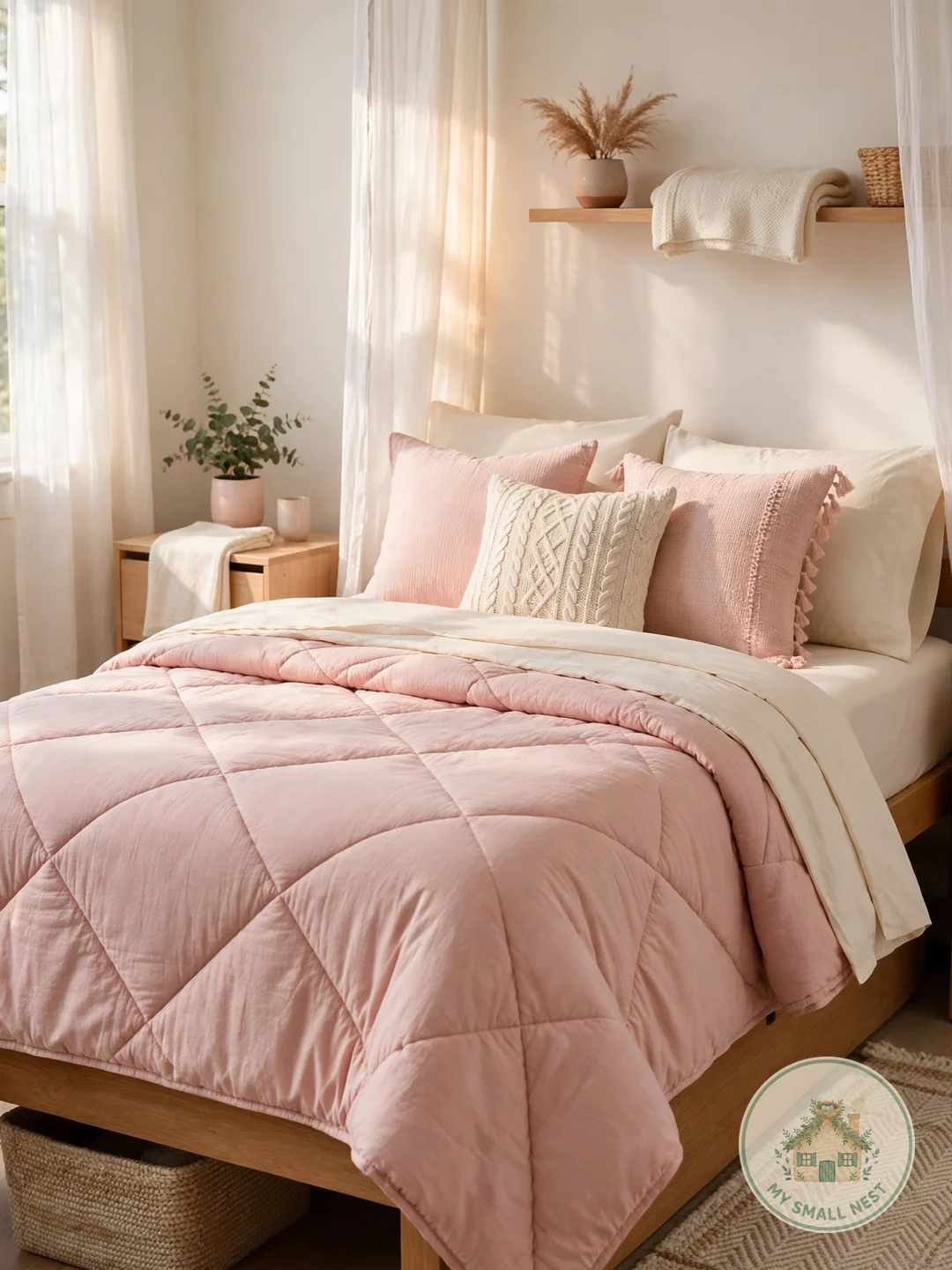
6. Twin XL Bedding Bundle
A matching bedding bundle is the easiest way to make a chaotic dorm room look put-together on day one. Look for a 6 to 8-piece Twin XL bundle, 36 x 80 inches, the non-negotiable dorm size, that includes a comforter, fitted and flat sheet, pillowcases, and often a throw pillow or two. Microfiber sets are budget-friendly at $40-$60 and wash well in dorm machines; cotton or brushed microfiber feels better and breathes more. Students say buying the bundle beats piecing things together — everything matches and it ships in one box, which matters when you are packing a car to the roof.
Make it work: Buy a second fitted sheet so you are never stuck sleeping on a bare mattress on laundry day, and wash the comforter in the large-capacity dorm machines only, never the small top-loaders that cannot handle the bulk.
 Pin it
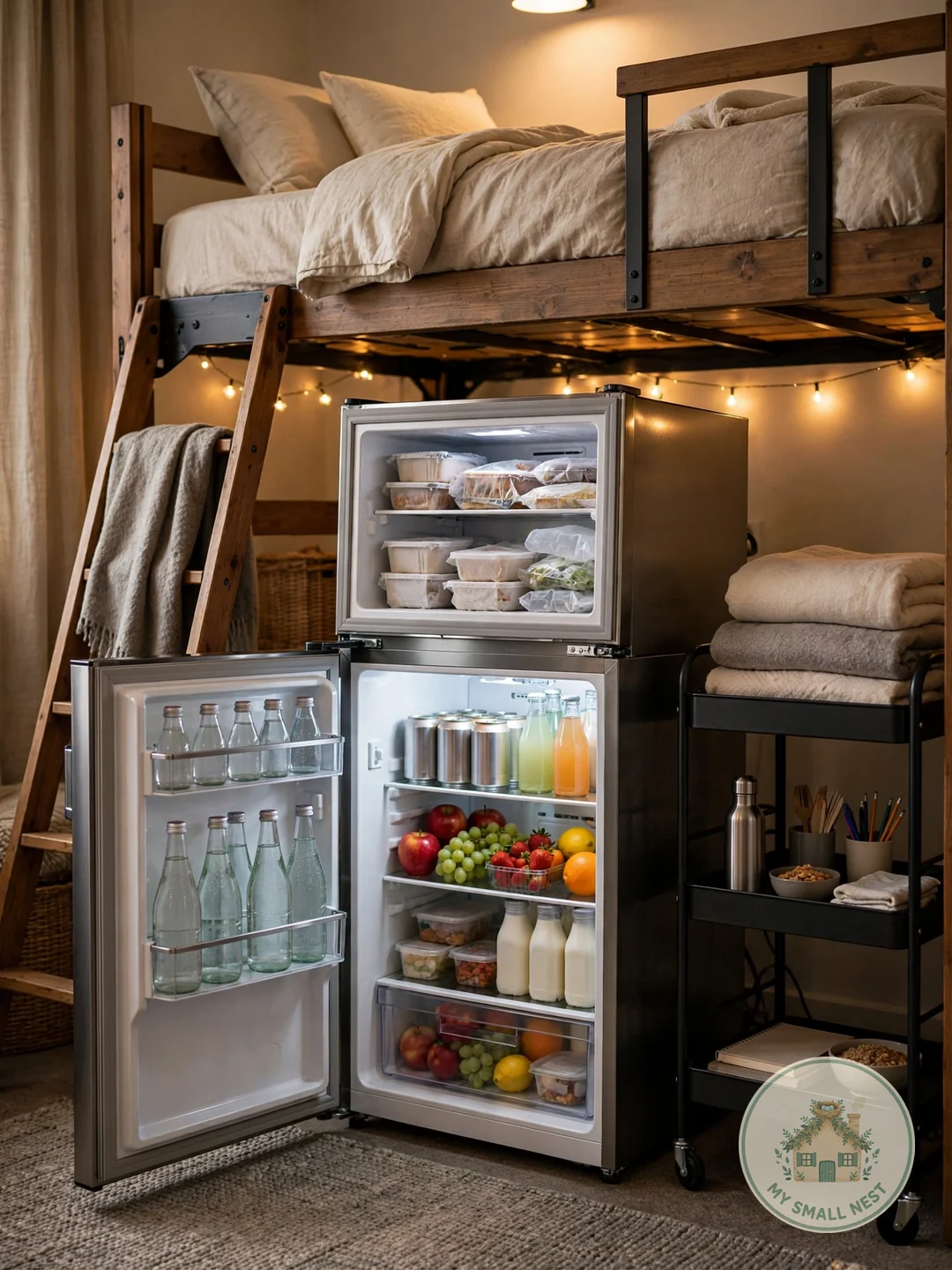
7. Mini Fridge with Freezer Compartment
A mini fridge is the dorm upgrade students call life-changing — and the freezer compartment is the part most people underrate. A 3.2 to 3.5 cubic foot model fits drinks, leftovers, fruit, and meal-prep containers, while the small freezer holds ice packs, frozen meals, and ice cream. Look for a flat-back design that is easier to push against the wall, reversible doors, and an Energy Star rating so it does not spike the electric bill. Expect $150-$220 for a reliable brand, and check your dorm’s size policy first — most schools cap fridges at 4.0 cubic feet. Splitting the cost with your roommate makes it an easy yes.
Make it work: Defrost the freezer compartment monthly since these ice up fast, and keep a small box of baking soda inside from day one to stop smells before they start.
Emma’s note: My studio fridge is a full-size hand-me-down, but I lived with a 3.2 cubic foot mini for a year in my first apartment — the flat-back design mattered more than I expected, because it sat flush and gave me back 4 inches of walkway. If you split one with a roommate, agree in writing who keeps it in May. Trust me on this one.
 Pin it
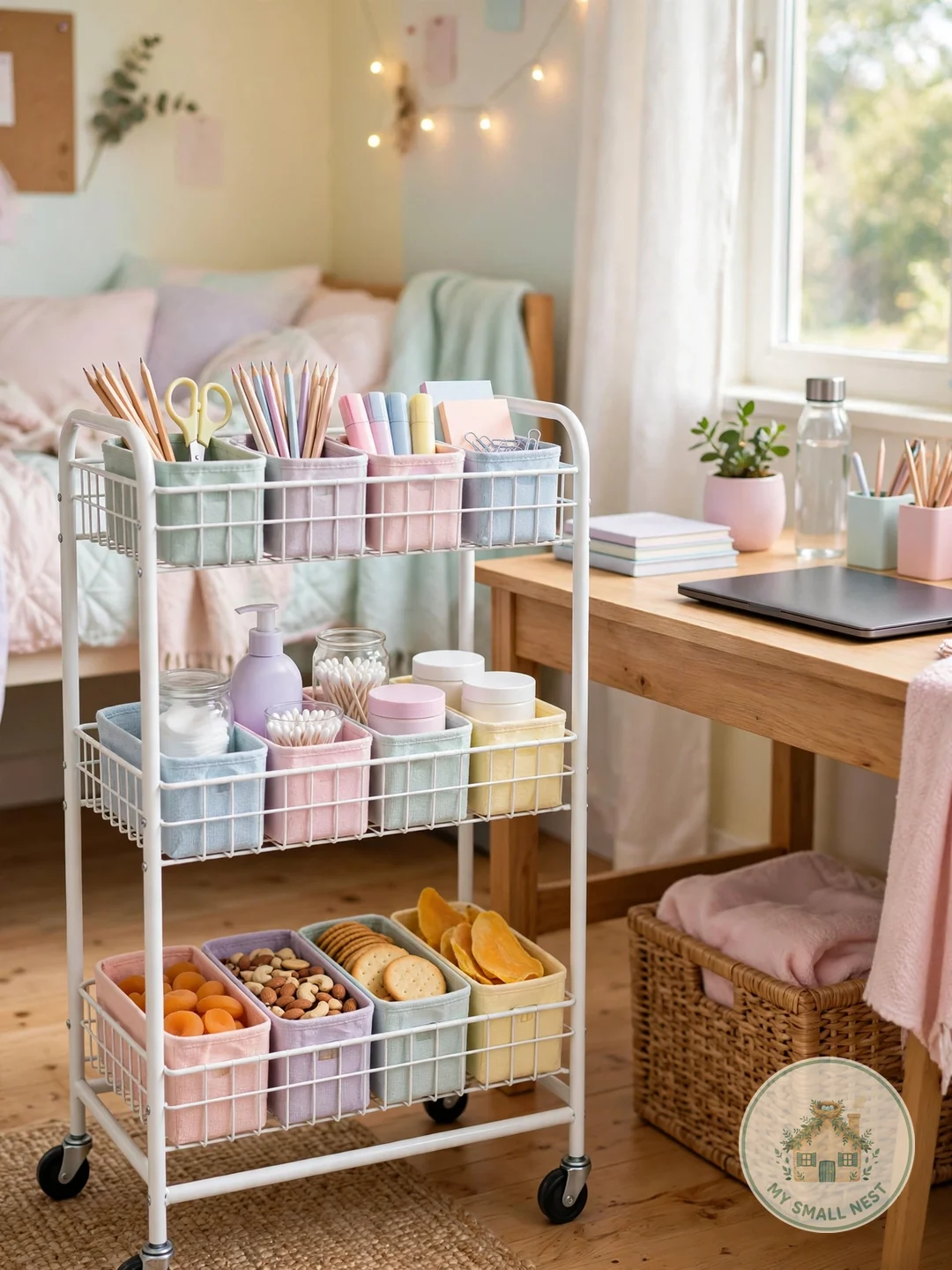
8. Rolling 3-Tier Storage Cart
If dorm rooms had a mascot, it would be this rolling cart — you have seen it in every dorm tour online for a reason. This slim 3-tier metal cart, about 17 x 11 x 30 inches, rolls anywhere you need it: beside your desk for school supplies, by your bed for snacks and chargers, or in the closet as extra shelving. The wheels lock, the tiers adjust, and it assembles in about 10 minutes with no tools. At $25-$40, it is one of the cheapest ways to add real storage. Students divide it by zone — top tier for daily grab items, middle for supplies, bottom for bulky stuff — and it moves with you for all four years.
Make it work: Stick small bins or baskets on each tier so nothing slides off when you roll it, and lock at least two wheels whenever it is parked to keep it from drifting across the room.
 Pin it
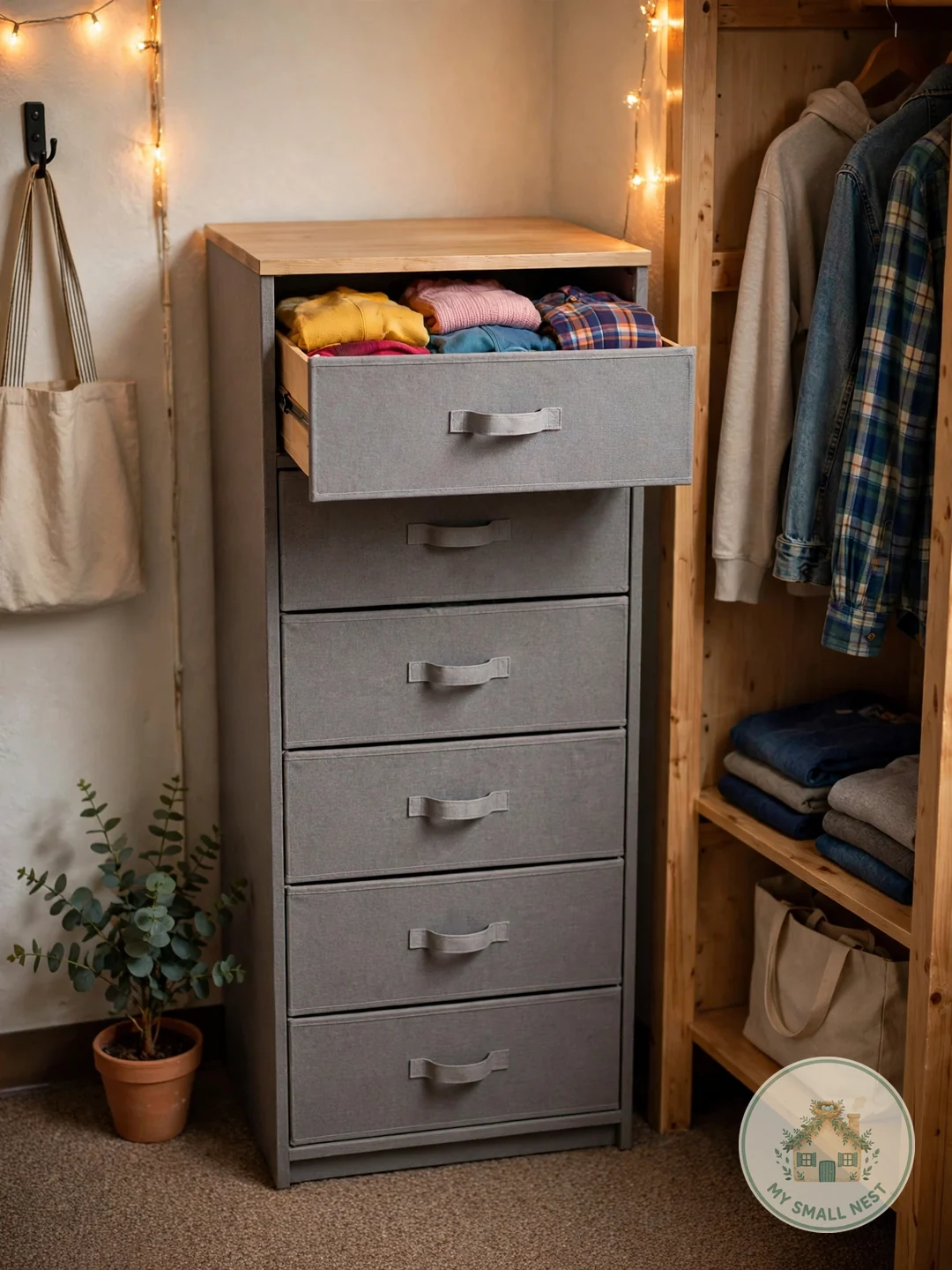
9. Slim Fabric Storage Dresser
Dorm dressers are tiny and usually half-claimed by your roommate — this fills the gap. A slim 4 to 6-drawer fabric dresser, roughly 24 x 12 x 34 inches, slides into closet gaps, beside the bed, or under a lofted desk, and each deep drawer holds folded clothes, workout gear, or school supplies. The steel frame keeps it sturdy, and the fabric drawers are light enough to move solo on move-in day. Most cost $35-$55 and come in colors that blend with any dorm palette. It is the fastest way to double your clothing storage without taking up real floor space.
Make it work: Reinforce the bottom of each drawer with a piece of cardboard so heavy items like jeans do not sag, and label the drawer fronts with sticky labels during the first week while you are building the habit of where things live.
 Pin it
10. Under-Bed Rolling Storage Bins
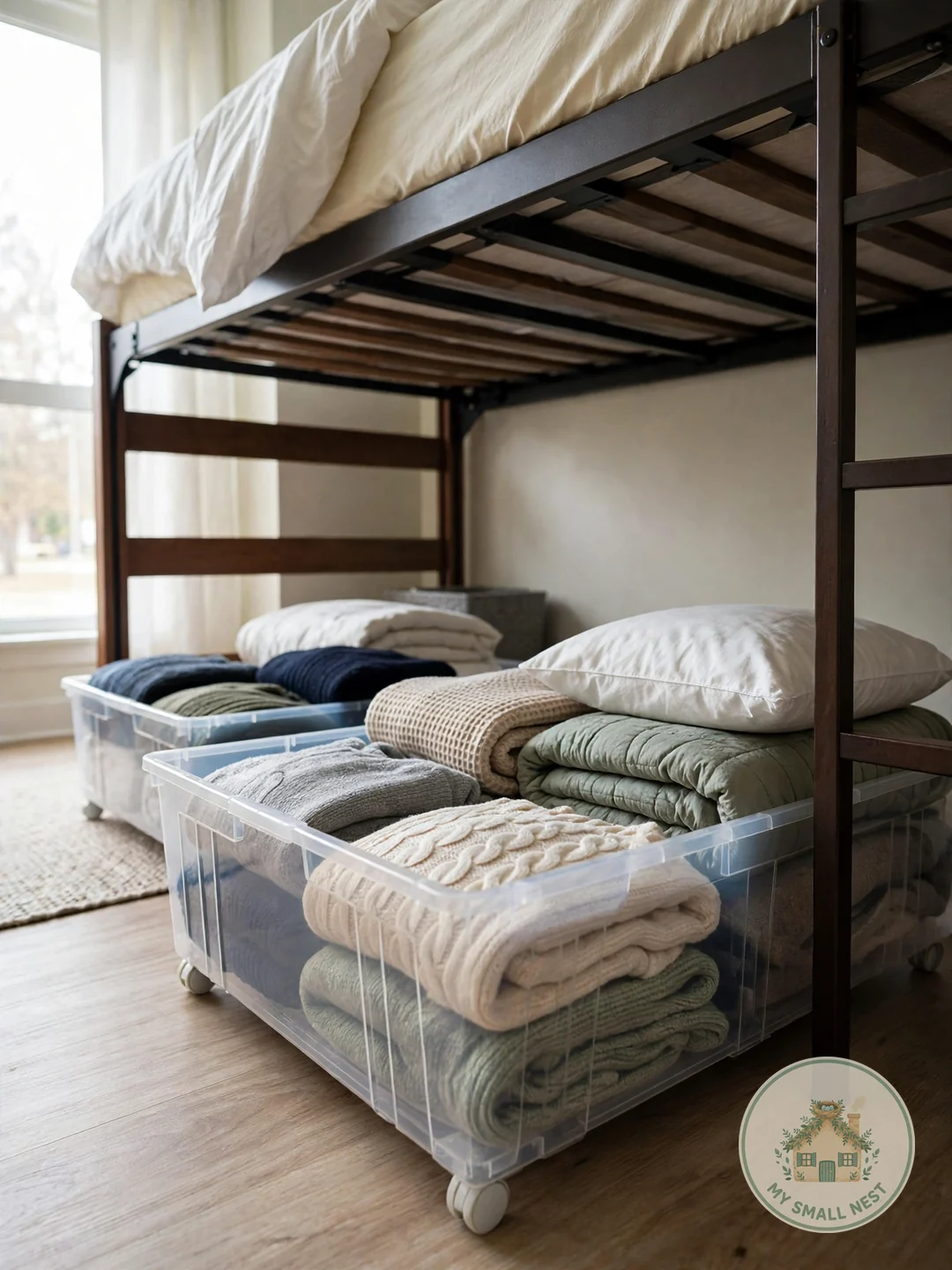
Under your bed is the biggest unused storage zone in a dorm room — bins unlock it. Low-profile rolling bins, about 32 x 17 x 7 inches, slide under even partially raised beds and hold off-season clothes, extra bedding, textbooks, or bulk snacks. Look for clear or translucent lids so you can see what is inside without pulling every bin out, and real rolling wheels — not just a bin that drags and scratches the floor. A 2-pack runs $25-$35. Students say these are where winter coats and spare sheets live all semester, completely out of sight and out of the way.
Make it work: Measure your under-bed clearance before buying, since standard raised dorm beds give 24-30 inches but some only give 8, and drop a dryer sheet in each bin to keep stored clothes smelling fresh.
 Pin it
11. Quick-Dry Mesh Shower Caddy
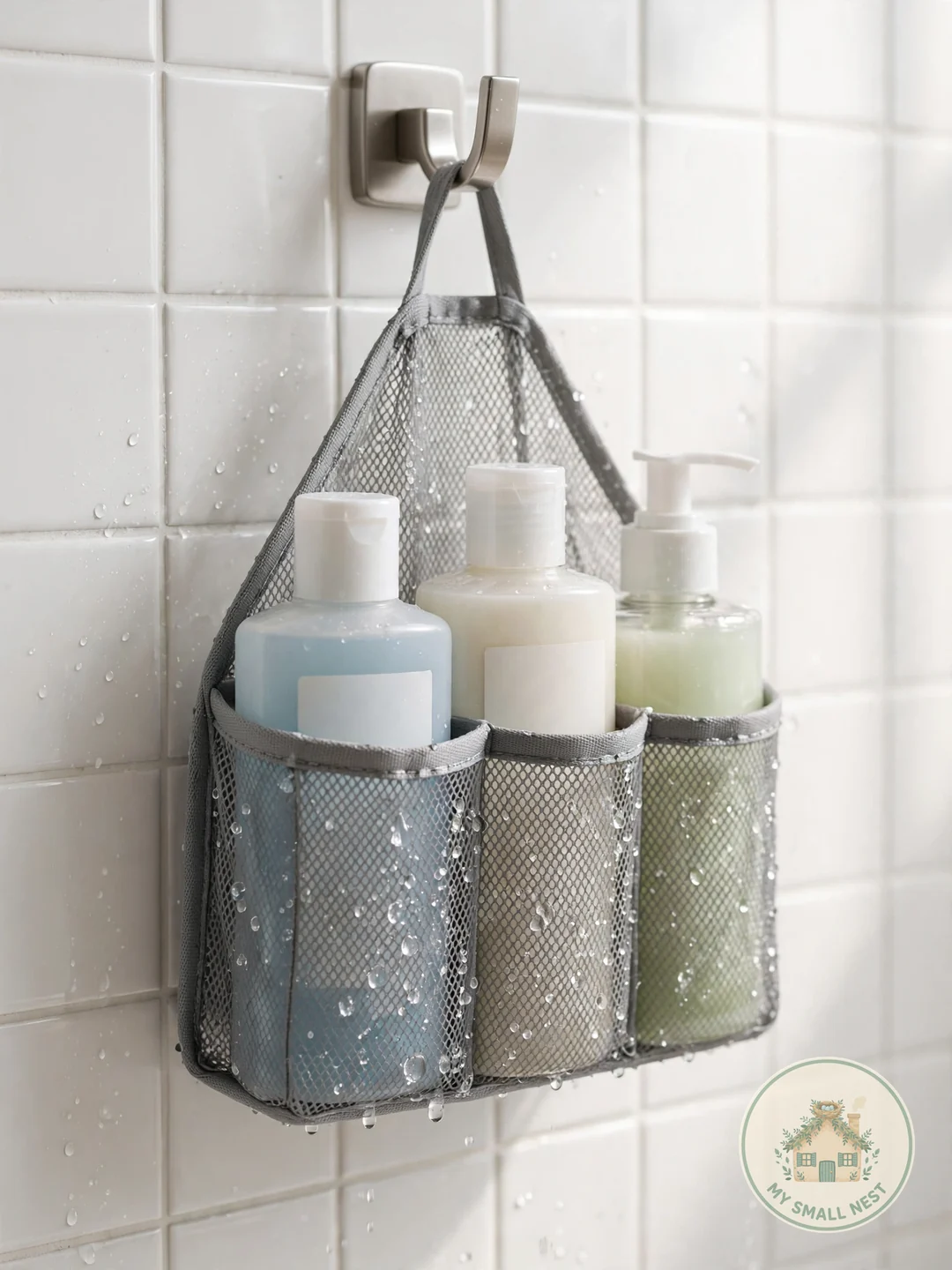
In a communal bathroom, your shower caddy lives a hard life — the mesh ones survive it. A quick-dry mesh shower caddy holds full-size shampoo, conditioner, body wash, and razors, then drains and dries fast so nothing gets mildewy. The open mesh also lets you see everything at a glance, which beats digging through a plastic tote with wet hands. Look for one with multiple pockets, including a small zip pocket for valuables, and a sturdy handle — around $10-$15. Thousands of students pick these over plastic caddies because they never pool water or grow that mystery smell by mid-semester.
Make it work: Hang it on your dorm door hook or bedpost between showers and never leave it in the communal shower, and toss it in the laundry every couple of weeks to keep it fresh.
Emma’s note: I never had a communal dorm bathroom, but I’ve lived the shared-bathroom life in a house with four roommates — the mesh caddy was the only thing that survived, because everything else turned into a mildew experiment. The zip pocket is non-negotiable: it’s where your razor and anything you don’t want borrowed lives.
 Pin it
12. Cushioned Cloud Shower Shoes
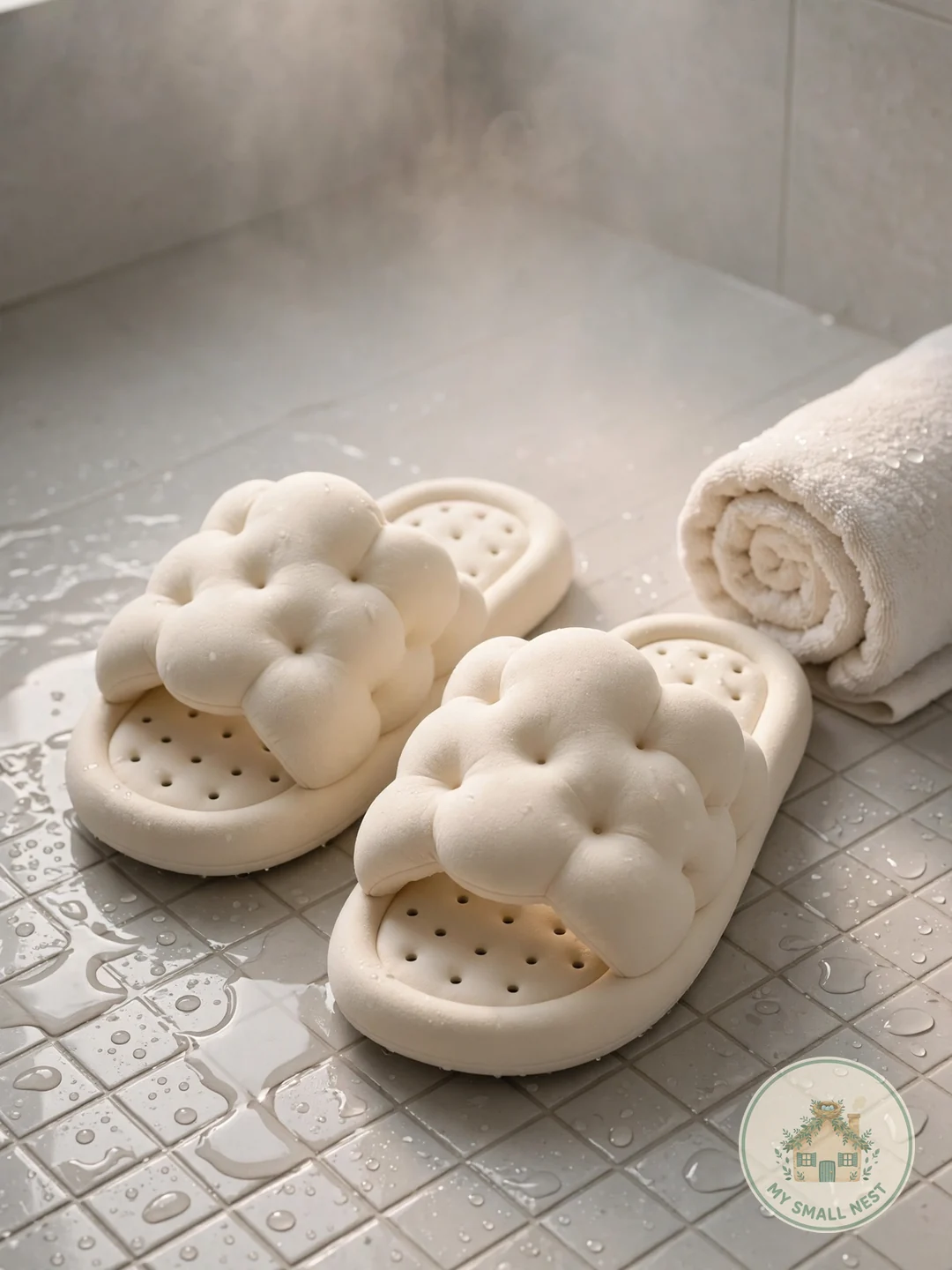
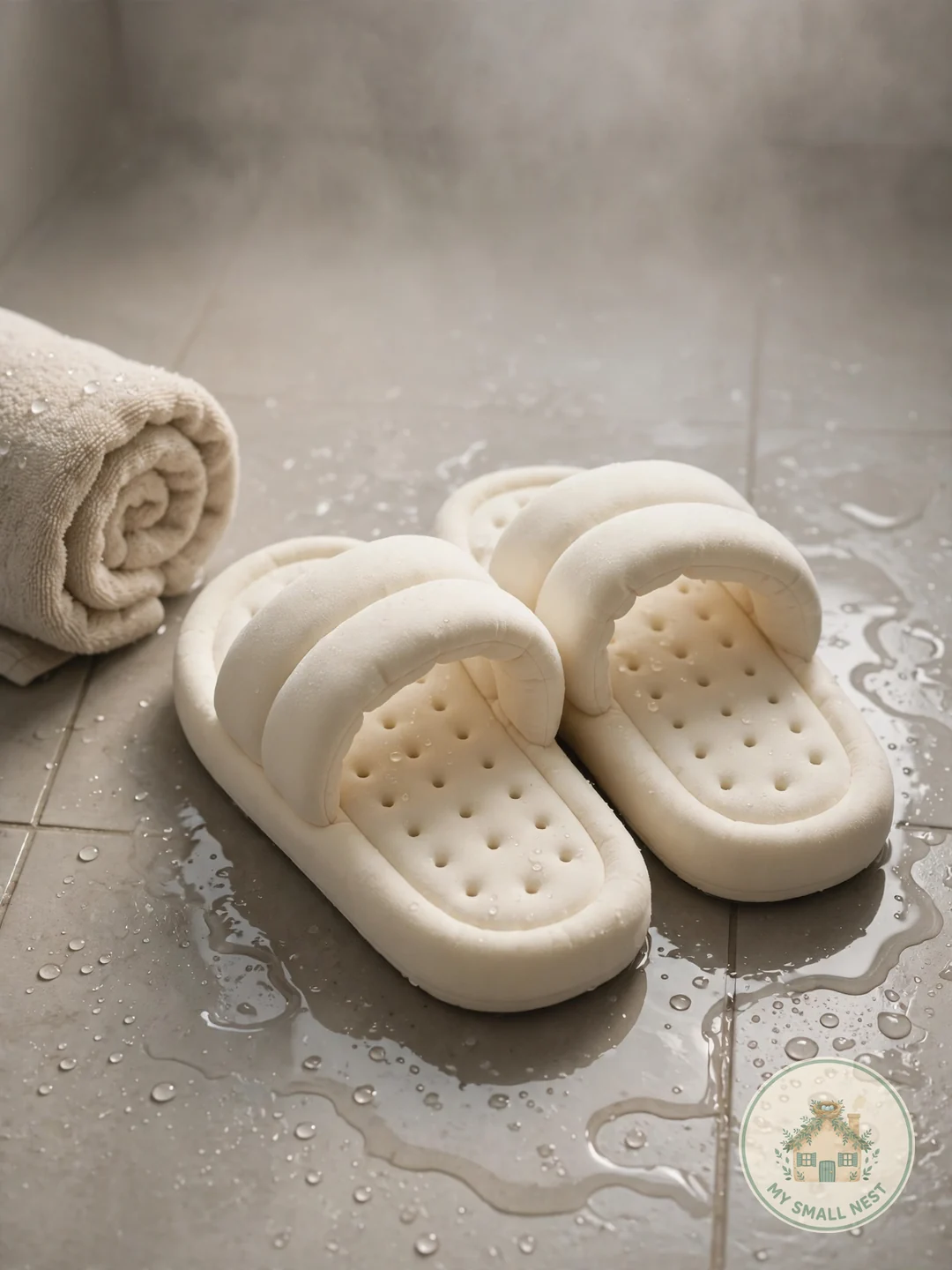
Nobody should walk barefoot in a communal dorm shower — and these make the rule easy to follow. Cloud-style shower slides have thick, cushioned EVA soles with drainage holes so water flows through instead of pooling, plus a textured grip that keeps you steady on slick tile. They are lightweight, dry fast, and cost $12-$20 — a tiny price for avoiding athlete’s foot and mystery germs. Students say the cushioned sole also makes long shower waits way more comfortable, and they double as quick slip-ons for hallway laundry runs. This is the dorm supply you will use literally every single day.
Make it work: Buy them a half size up from your normal shoe size, since feet expand in hot water and cramped showers, and rinse them after each use and stand them upright to drain so they do not grow mildew.
 Pin it
13. Single-Serve Coffee Maker
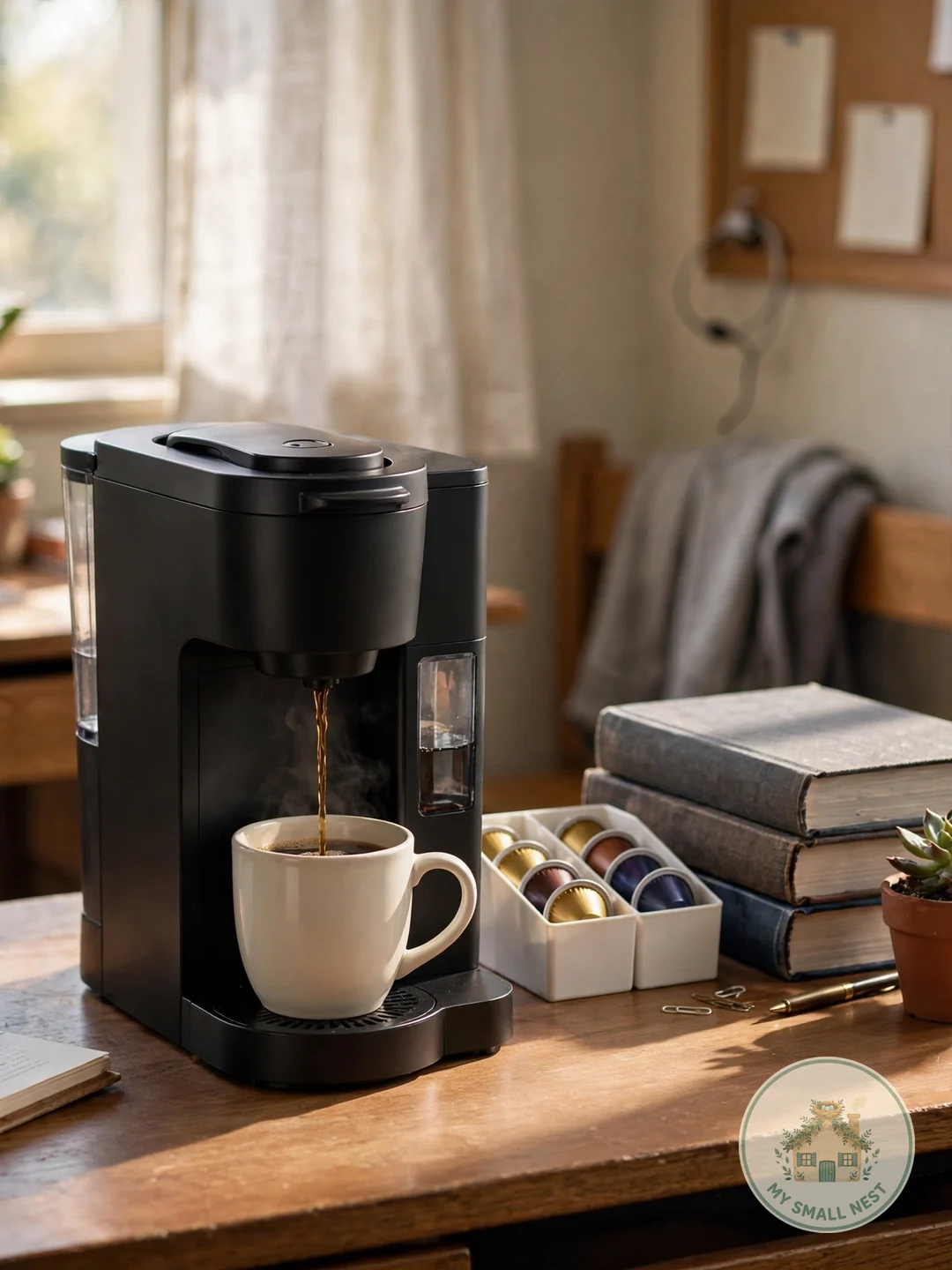
The campus coffee line is long, the prices add up fast, and 8 a.m. lectures do not wait — a single-serve coffee maker pays for itself within weeks. A compact pod-style machine, about 12 inches tall, fits on a desk or dresser and brews a cup in under two minutes with just a mug and water. Reusable pods cut the cost to pennies per cup and keep the trash down. Expect $50-$90 for a solid model. Check your dorm’s appliance rules first — most allow low-wattage coffee makers, but some require auto-shutoff models. Late-night study sessions will thank you.
Make it work: Run a water-only cycle every few weeks to descale it, since dorm water is notoriously hard, and store pods in a small drawer organizer so they do not take over your desk.
 Pin it
14. Noise-Cancelling Earbuds
Dorm noise is unpredictable — hallway parties, snoring roommates, 2 a.m. fire drills — and good earbuds are your control dial. A solid pair of noise-cancelling earbuds, with active noise cancellation plus a transparency mode, lets you study in chaos, sleep through hallway noise, and take calls without broadcasting to the whole floor. Battery life matters: aim for 6 or more hours per charge with a case that adds 20 more. Prices range from $40 for budget winners to $150 and up for premium models, and the difference shows up in call quality and fit. They are worth every penny by midterms.
Make it work: Try all the included ear-tip sizes, since a real seal doubles the noise blocking, and switch on transparency mode whenever you walk across campus at night so you stay aware of your surroundings.
 Pin it
15. 39-Piece Mini Tool Kit
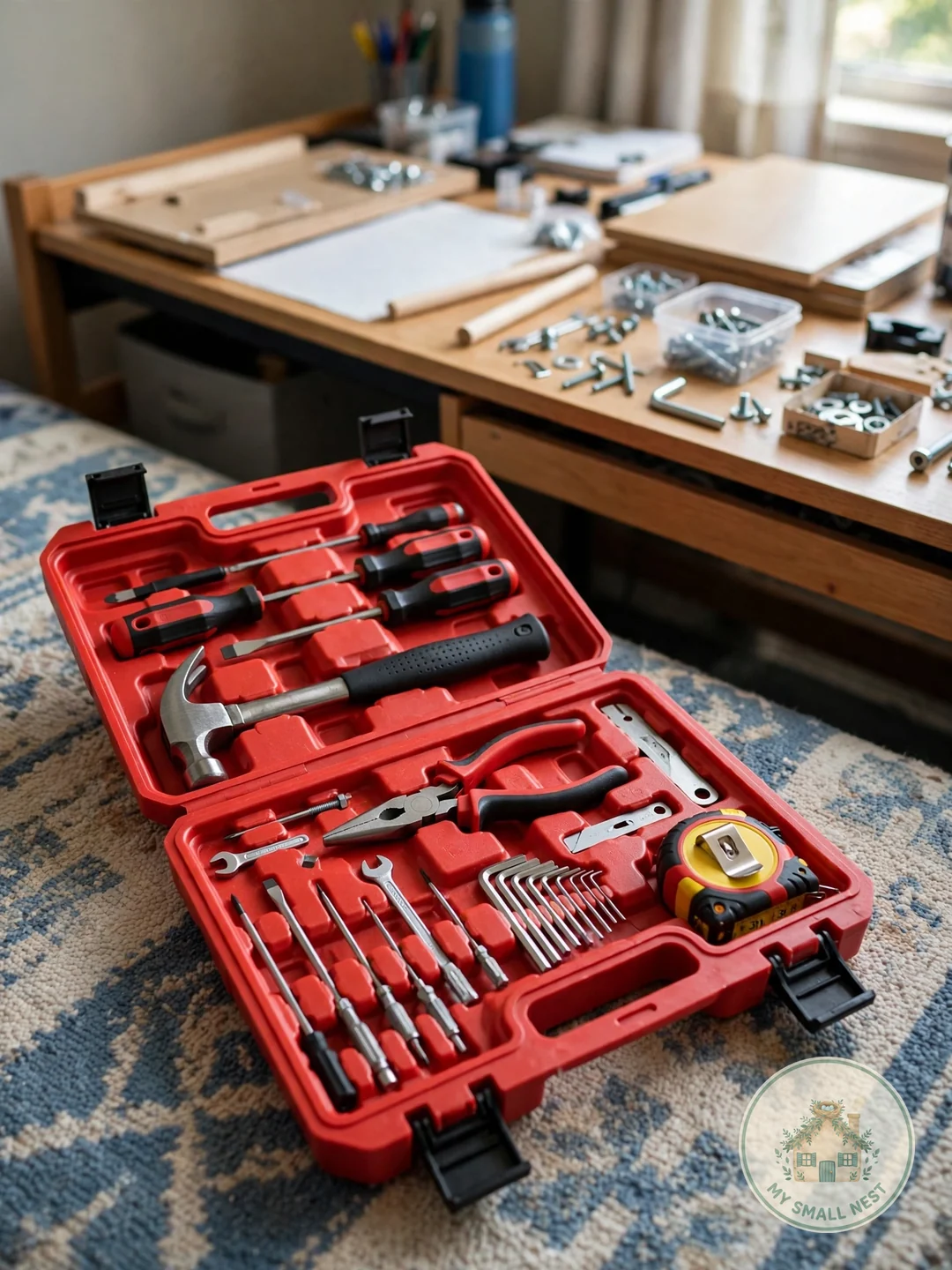
Things break in dorms — wobbly desk chairs, loose bed frames, picture hooks that need hanging — and this tiny kit fixes all of it. A 39-piece kit in a compact case includes a screwdriver with common bits, a small hammer, pliers, a tape measure, hex keys, and wall-hanging hardware, all for $15-$25. It is also genuinely useful for assembling the furniture you will buy across all four years, not just freshman year. Students say it is the gift their parents gave that they actually used, and it fits in a desk drawer when the job is done. Borrow-proof and dorm-proof.
Make it work: Label the case with your name and room number, since tool kits are the most-borrowed-and-lost dorm item, and keep the hammer and pliers in the case — the two tools people reach for most are the first ones to go missing.
Emma’s note: I bought a nearly identical 39-piece kit when I moved into my studio for $19, and three years later it has fixed a wobbly chair, hung every shelf I own, and assembled two bookcases. The tape measure alone has saved me from three bad furniture buys. Label it — mine has walked to a neighbor’s apartment twice.
 Pin it
16. Dry-Erase Wall Calendar Board
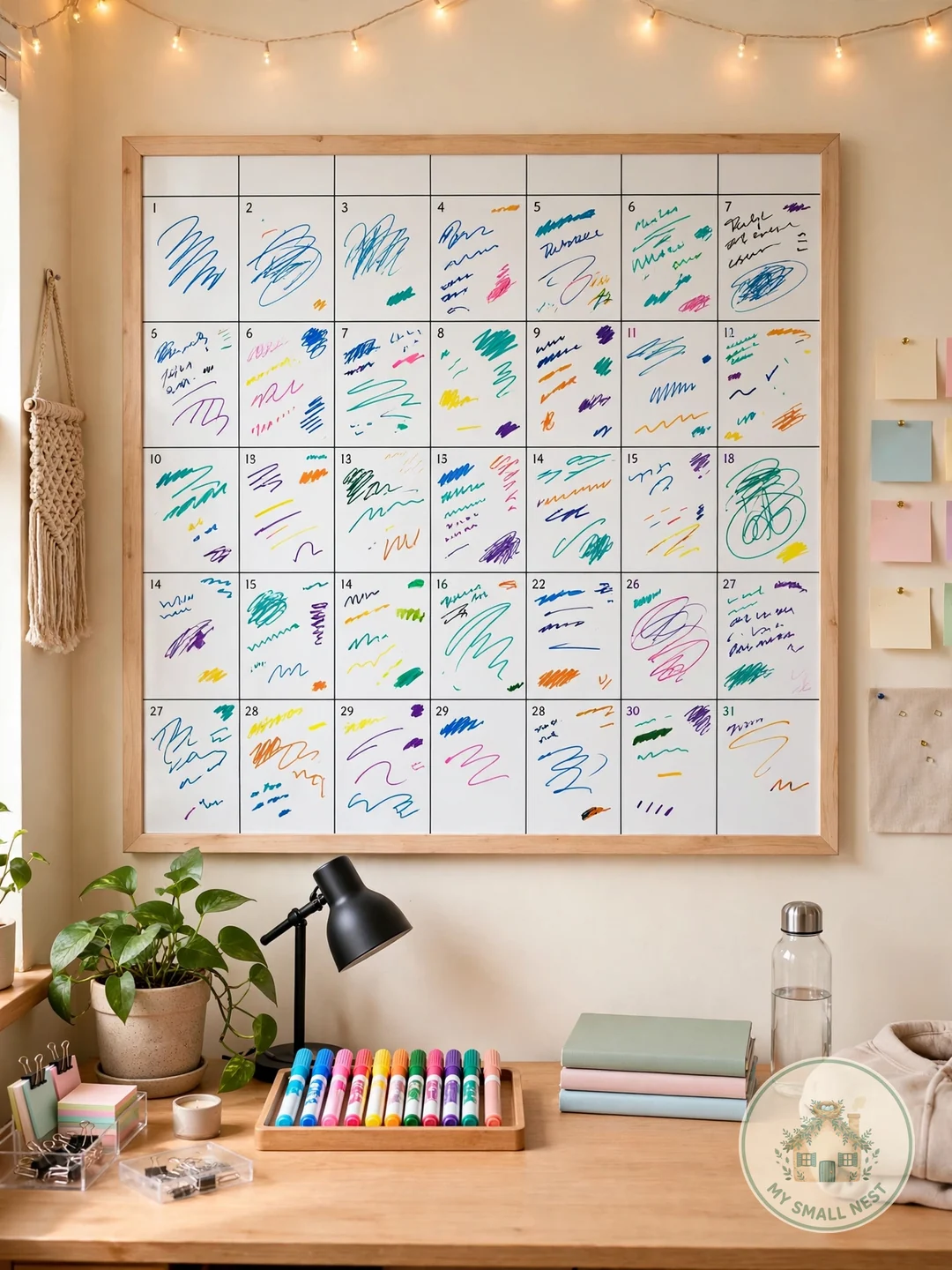
A wall calendar board is the dorm command center — and the dry-erase ones actually get used. A large monthly dry-erase board, about 24 x 36 inches, hangs with damage-free adhesive strips and gives you a full view of exams, deadlines, and social plans at a glance. Look for one with a magnetic surface so you can pin syllabi and ticket stubs, plus a marker tray that keeps pens from vanishing. Most cost $20-$35. Students who plan on paper say this beats a phone calendar for actually seeing the month ahead, and roommates love it for coordinating shared schedules and quiet hours.
Make it work: Color-code with different markers — red for exams, blue for assignments, green for fun — and snap a phone photo at the start of each week so your schedule survives even if someone erases it.
 Pin it
17. Over-the-Door Full-Length Mirror and Hooks
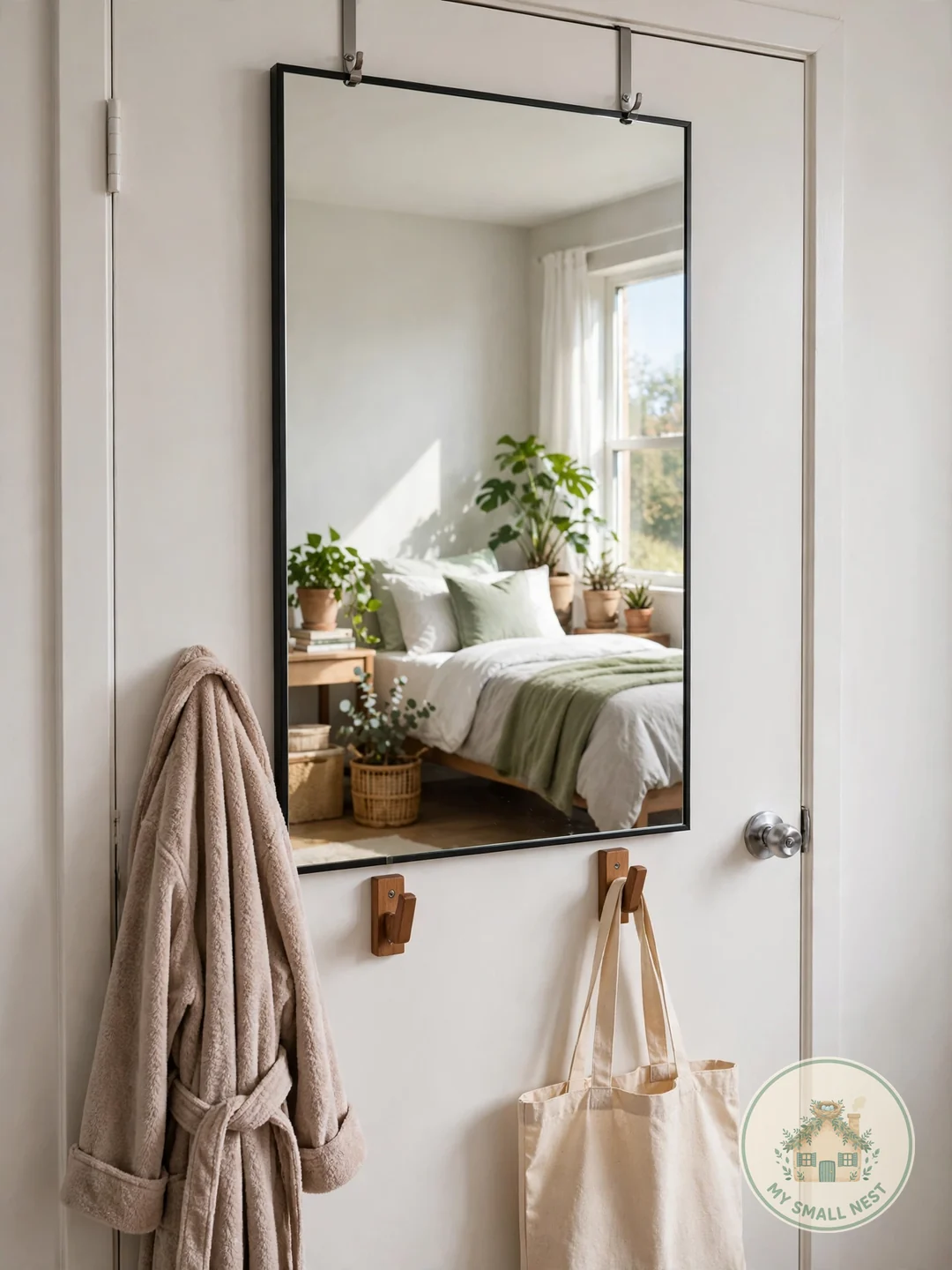
Dorm rooms almost never come with a full-length mirror — and over-the-door versions solve two problems at once. A shatterproof over-the-door mirror, about 14 x 48 inches, hangs without a single screw using adjustable brackets, and many models add hooks on top or behind for robes, towels, or tomorrow’s outfit. Acrylic mirrors are lighter and dorm-safe; real glass looks clearer but costs more. Expect $25-$45. It is also the piece that makes a tiny room feel twice as big by bouncing light around. Every dorm tour photo looks better with one of these in the background.
Make it work: Measure your door thickness before ordering, since dorm doors run thicker than standard home doors and cheap brackets will not fit, and hang tomorrow’s outfit on the hooks each night to make chaotic mornings calmer.
 Pin it
18. Stackable Vanity and Jewelry Organizers
Dorm desks double as vanities, and without organizers both jobs suffer. A set of stackable acrylic organizers — a drawer unit for makeup and skincare plus a rotating or tray-style jewelry holder — keeps everything visible and tangle-free in about one square foot of desk space. Acrylic wipes clean, stacks vertically, and lets you see what you own so you actually use it. A 3 to 4-piece set runs $20-$35, far cheaper than replacing jewelry lost in a desk drawer. Students say the rotating jewelry tower alone saves their necklaces from becoming a knotted mess, and the drawer unit keeps skincare off the desk surface.
Make it work: Anchor necklaces on individual hooks instead of tossing them in a tray, since tangles happen in days, and keep daily-use items in the top tier and occasion pieces below so mornings stay fast.
 Pin it
4 Mistakes to Avoid
1. Buying Before Measuring
The number one dorm mistake is ordering furniture and organizers before knowing your room’s dimensions. Bed leg diameter, under-bed clearance, closet width, and door thickness all vary by school. Wait for your housing assignment details or visit during orientation, then buy — returns from a dorm room are a nightmare.
2. Ignoring the Appliance Rules
Every dorm has an appliance policy, and RAs do check. Coffee makers, kettles, and oversized fridges get confiscated during room inspections. Read your housing handbook before buying anything that plugs in, and look for auto-shutoff models — some schools require them.
3. Overpacking Decor Before Move-In
It is tempting to buy a full matching room set online, but you have not seen your room yet. Wall space, lighting, and layout vary wildly. Bring the basics, live in the room for two weeks, then buy decor that fits the actual space — your wallet and your roommate will thank you.
4. Skipping the Mattress Topper
New freshmen underestimate how bad dorm mattresses are until the first sleepless night. The topper is the highest-impact purchase on this list — skip the cute throw pillows if you must, but do not skip this. Your back, your grades, and your mood will all feel the difference within a week.
FAQs
What are the must-have freshman dorm supplies?
The non-negotiables are a Twin XL mattress topper and bedding, a shower caddy and shower shoes, a mini fridge, a desk lamp, and under-bed storage. Add a power strip, laundry hamper, and a small tool kit and you have covered the first-week survival list. Everything else on this list can wait until you have seen your actual room.
How much should I budget for dorm supplies?
Most freshmen spend $300-$600 total on dorm supplies, depending on how much they already own. The big-ticket items are the mattress topper ($40-$80), mini fridge ($150-$220), and bedding ($40-$60); nearly everything else — caddies, organizers, bins — costs under $40 each. Buy the expensive items first, then fill the gaps after move-in week.
What size is a standard dorm bed?
Nearly all US dorm beds are Twin XL: 38 inches wide by 80 inches long, five inches longer than a regular twin. Always confirm with your housing office before buying bedding or a mattress topper, because a handful of schools use standard twin or full-size beds — and regular twin sheets will not stretch over a Twin XL mattress.
Which dorm supplies do students regret buying?
The most regretted purchases are full-size printers (the library prints for free), excessive matching decor bought before seeing the room, and bulky items like futons that eat floor space. Students also regret cheap mattress toppers that flatten within a month — spending a little more once beats buying twice.
Should I coordinate dorm supplies with my roommate?
Yes — talk before you buy. Coordinate who brings the mini fridge, microwave, rug, and TV so you do not end up with two of everything in a 180-square-foot room. Split the cost of shared items and put the agreement in writing, even a text thread, so move-out day stays drama-free.
Your freshman dorm room does not need to be perfect on day one — it needs the right foundation, and these 18 supplies are exactly that.
Start with the big-impact picks like the mattress topper, fridge, and storage, then layer in the organizers once you have lived in the space for a couple of weeks. Save this list, share it with your roommate before move-in day, and walk into your dorm feeling like you already live there.


What readers are saying
No comments yet — yours could be the first.