 My Small Nest
Got a hallway that’s more corridor than mudroom? You’re not alone — most of us are working with a narrow strip by the front door, not a sprawling drop zone. The good news: tight spaces just need smarter storage, not more square footage.
This guide is for renters and small-home owners wrestling with a 3-foot-wide entry: 14 narrow mudroom ideas built on slim furniture, vertical storage, and visual tricks that make a tight hallway feel organized and welcoming. Everything here is renter-friendly, budget-conscious, and sized for real hallways.
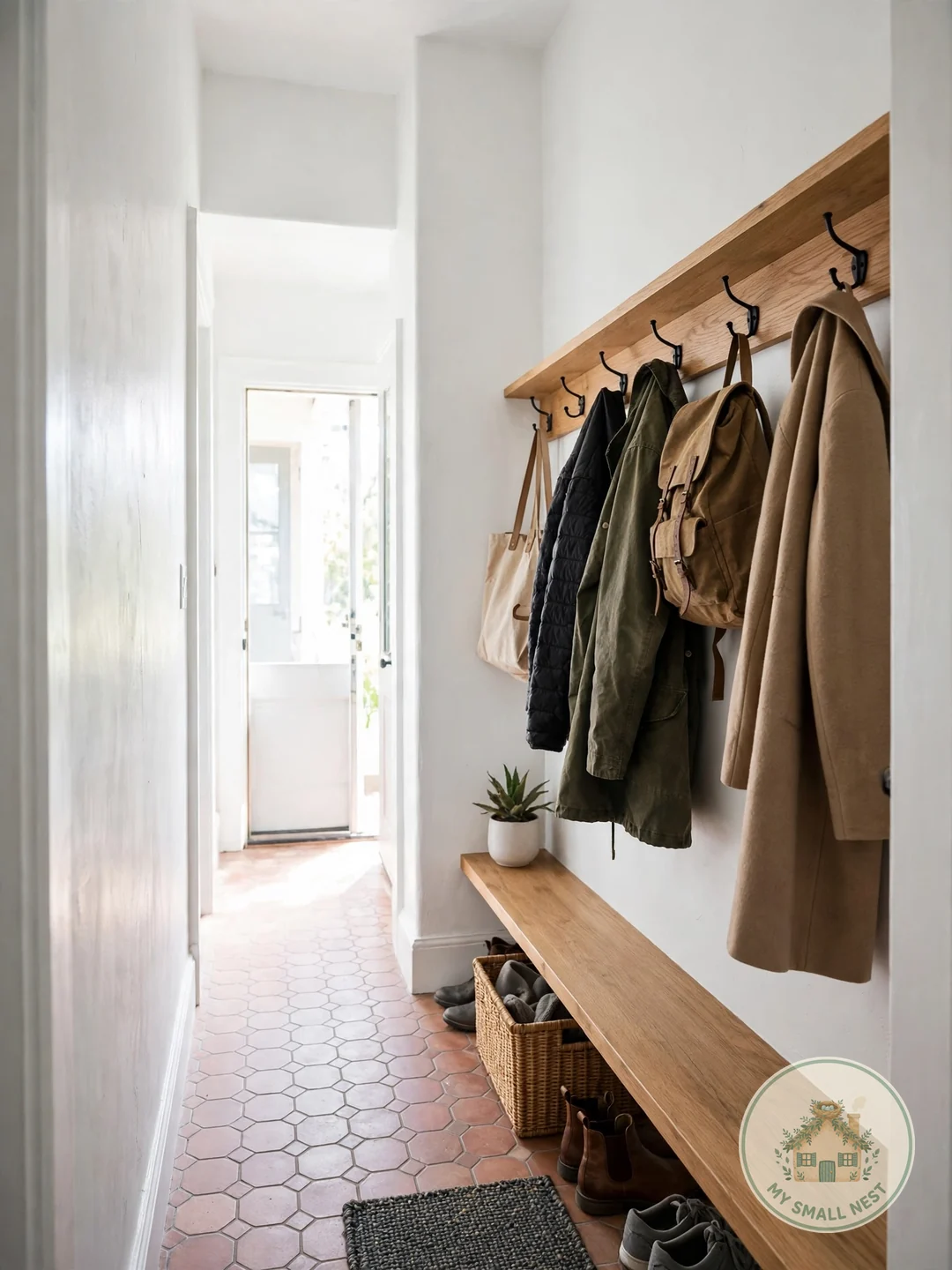
1. Mount a Slim Rail of Wall Hooks
A single rail of sturdy wall hooks uses zero floor space and holds coats, bags, and hats for the whole family. Mount a 48-inch oak rail with six to eight double hooks at 60 inches high — and add a lower row at 40 inches if you’ve got kids. Choose hooks rated for at least 15 pounds each; a winter coat plus a loaded backpack is heavier than you think.
Make it work: Assign one hook per person and add small labeled tags so there’s no “I didn’t know that was mine” chaos. In a rental, skip the drill and use heavy-duty adhesive hooks rated for the weight — a 4-pack of large Command hooks runs about $12 and holds up to 7.5 pounds per hook.
 Pin it
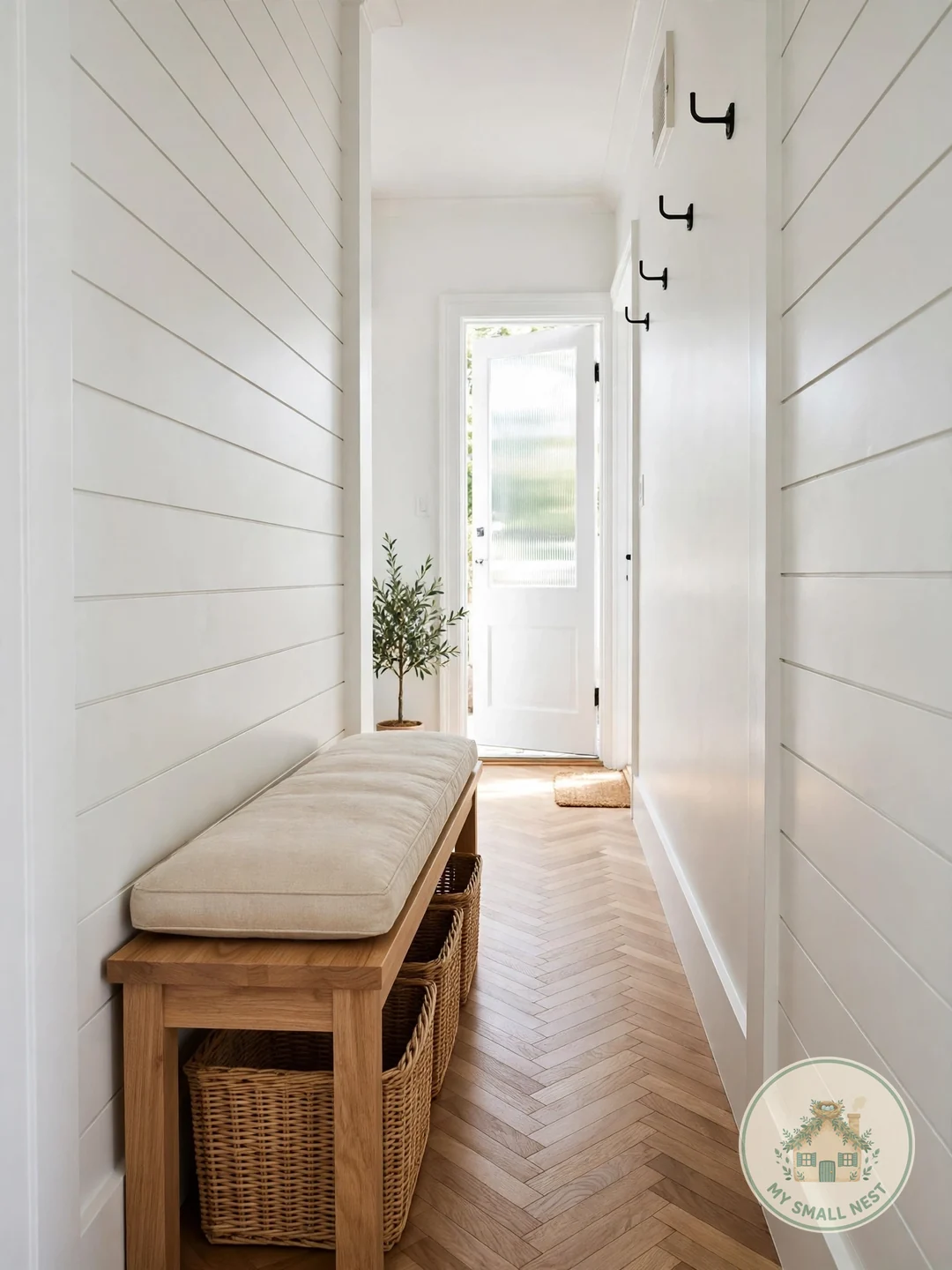
2. Choose a 12-Inch-Deep Storage Bench
A bench only 12 inches deep gives you a perch for putting on shoes without blocking the walkway — the difference between a functional mudroom and an obstacle course. Look for one with cubbies or a lift-up lid underneath for shoe storage; a 36-inch-wide bench seats one adult comfortably and fits most hallways.
Make it work: Add a washable cushion on top for comfort (IKEA bench pads run about $15) and slide labeled baskets into the cubbies — one per family member for grab-and-go mornings. Measure your hallway first: you want at least 30 inches of clear walkway left after the bench goes in.
 Pin it
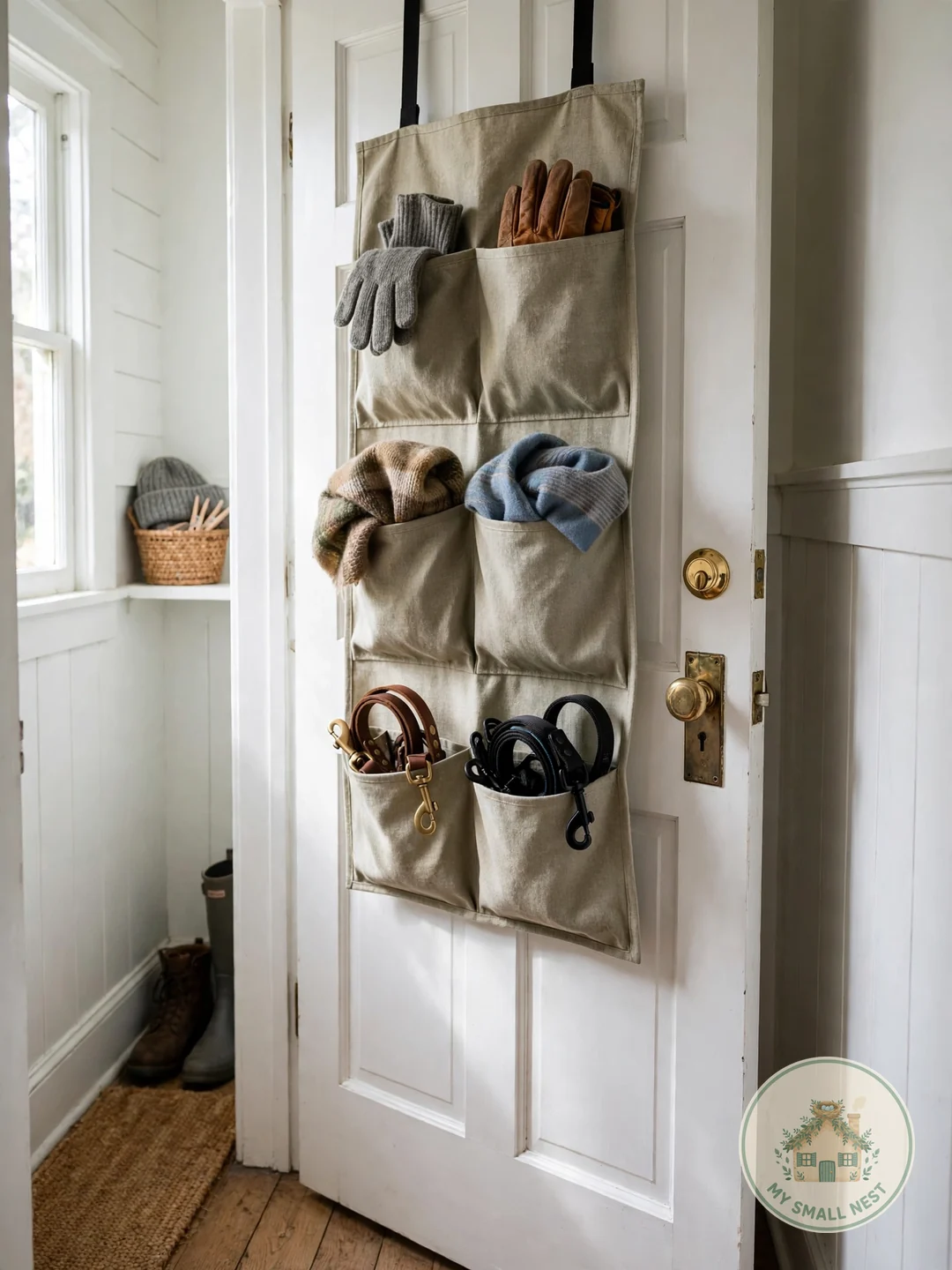
3. Use Over-Door Organizers for Small Gear
The back of the mudroom or closet door is free real estate most people ignore. Hang a clear-pocket over-door organizer for gloves, scarves, sunscreen, and pet leashes, or a row of over-door hooks for extra coats — it adds a surprising amount of storage without touching your floor plan at all.
Make it work: I tried a bulky plastic organizer in my studio first and the door wouldn’t close — lesson learned. Pick organizers with a slim profile (under 3 inches deep) so the door still opens fully, and choose felt or fabric versions over clear plastic; they look tidier and don’t show every crumpled receipt.
 Pin it
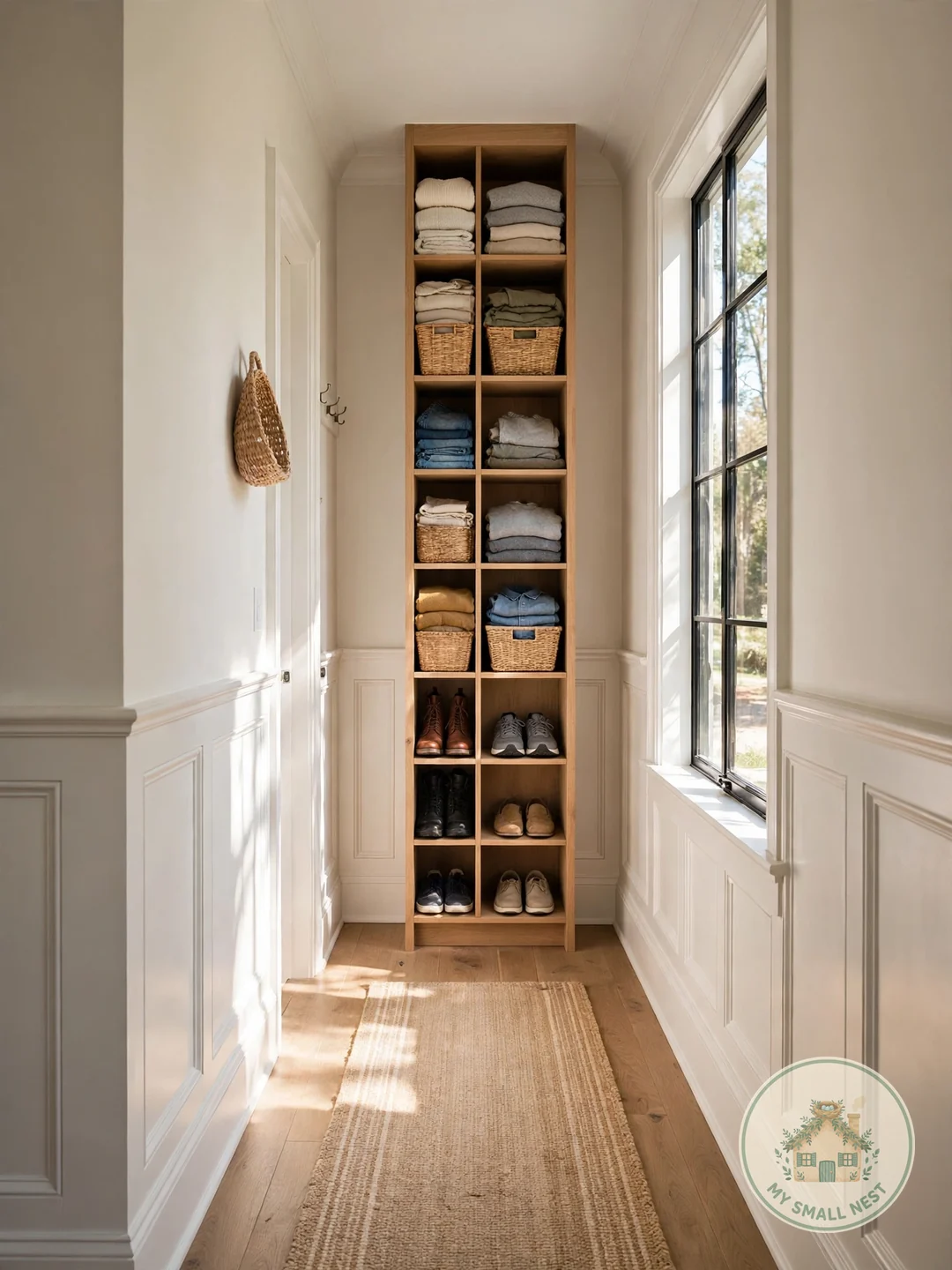
4. Go Vertical with a Slim Cubby Tower
When you can’t go wide, go tall. A cubby tower just 12 inches deep and 72 inches high holds shoes, bags, and bins in a tiny footprint — roughly the floor space of a welcome mat. Place one at the end of the hallway or in an unused corner to anchor the mudroom zone.
Make it work: Anchor tall units to the wall for safety, especially with kids around — most IKEA KALLAX-style units include the anti-tip hardware in the box. Leave the top cubbies for out-of-season items you rarely grab, and keep daily shoes at hip height or below.
 Pin it
5. Pair a Floating Shelf with Hooks Below
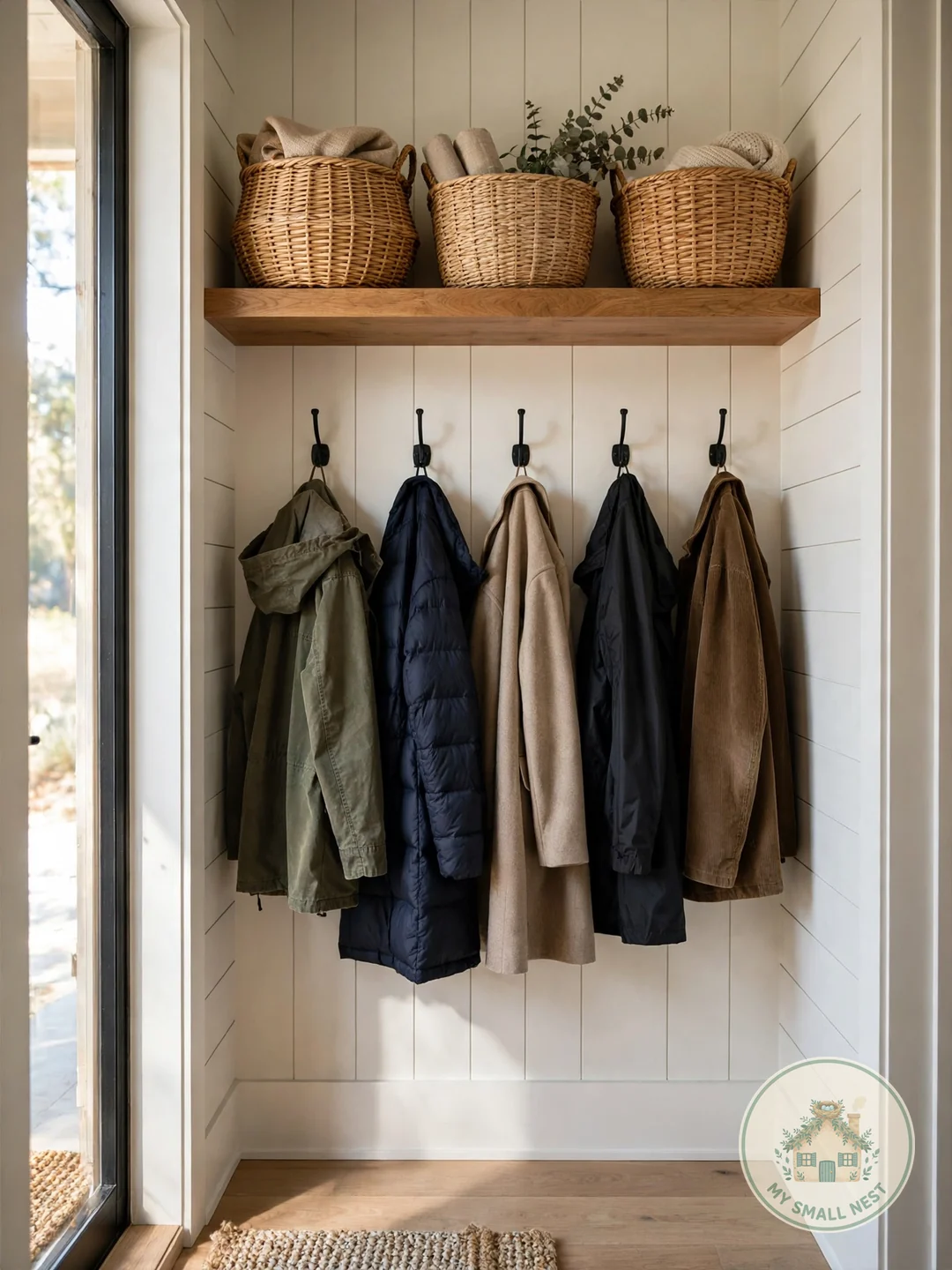
One floating shelf at 66 inches high plus a row of hooks beneath it creates a complete drop zone in just 10 inches of depth. The shelf holds baskets for sunglasses, mail, and sunscreen; the hooks take coats and tote bags. Everything visible, everything reachable, nothing on the floor.
Make it work: Use a shelf with a small lip or rail so baskets don’t slide off when the front door slams. Stain or paint the shelf to match your bench for a built-in look — a $12 quart of paint makes mismatched pieces read as one intentional unit.
 Pin it
6. Add a Magnetic Strip for Keys
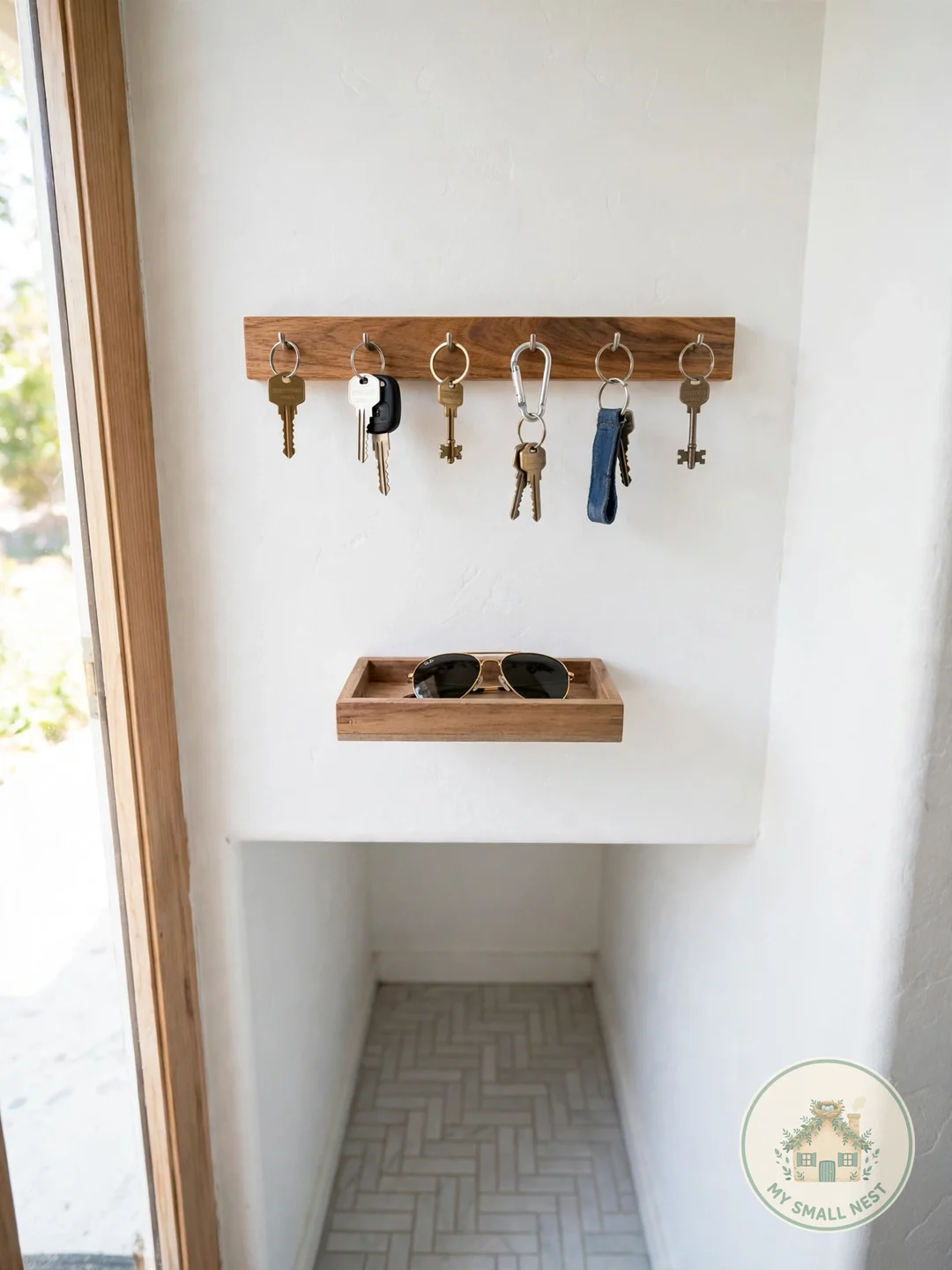
A small magnetic strip or a row of tiny hooks by the door ends the lost-keys scramble forever. Mount it at eye level right where you walk in, add a small tray beneath for wallets and sunglasses, and make it a household rule: keys live here, always.
Make it work: Choose a magnetic knife-strip-style bar in wood — about $10 to $15 on Amazon — which looks intentional, holds keys securely, and installs with two screws. I mounted one inside my studio’s entry nook and haven’t lost my keys in two years; the habit sticks because the spot is impossible to miss.
 Pin it
7. Tuck in a Slim Rolling Cart
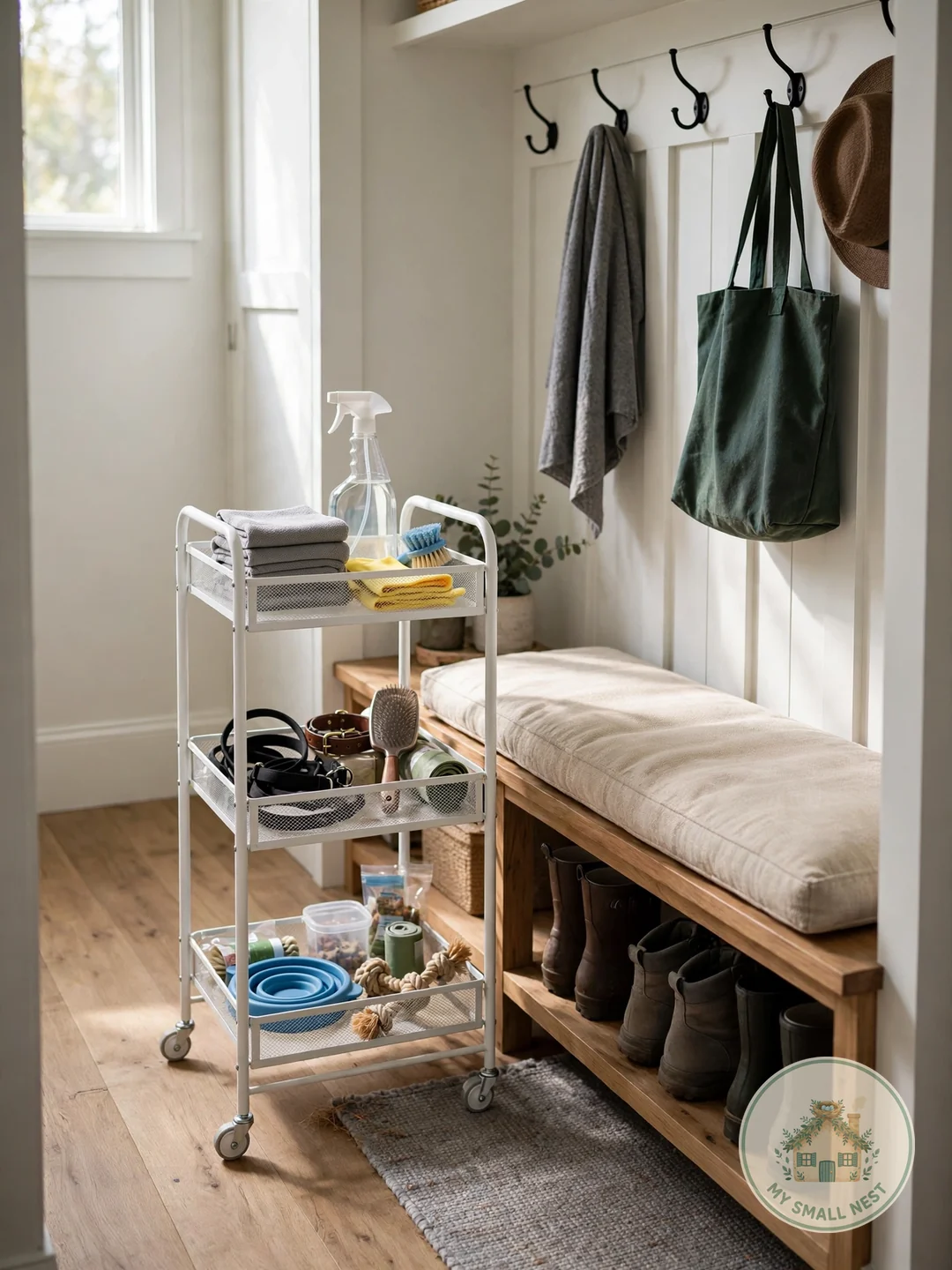
A slim rolling cart — about 10 inches wide — tucks into dead space beside a door or bench and rolls out when needed. Use it for cleaning supplies, pet gear, or kids’ sports equipment; when guests come, roll the whole thing into a closet and the hallway is instantly clear.
Make it work: Pick a cart with locking casters so it stays put on hard floors — the 3-tier IKEA RÅSKOG at $30 is the classic for a reason. Three tiers are the sweet spot; anything taller gets tippy in narrow carts, especially loaded with spray bottles.
 Pin it
8. Hang a Mirror to Double the Space
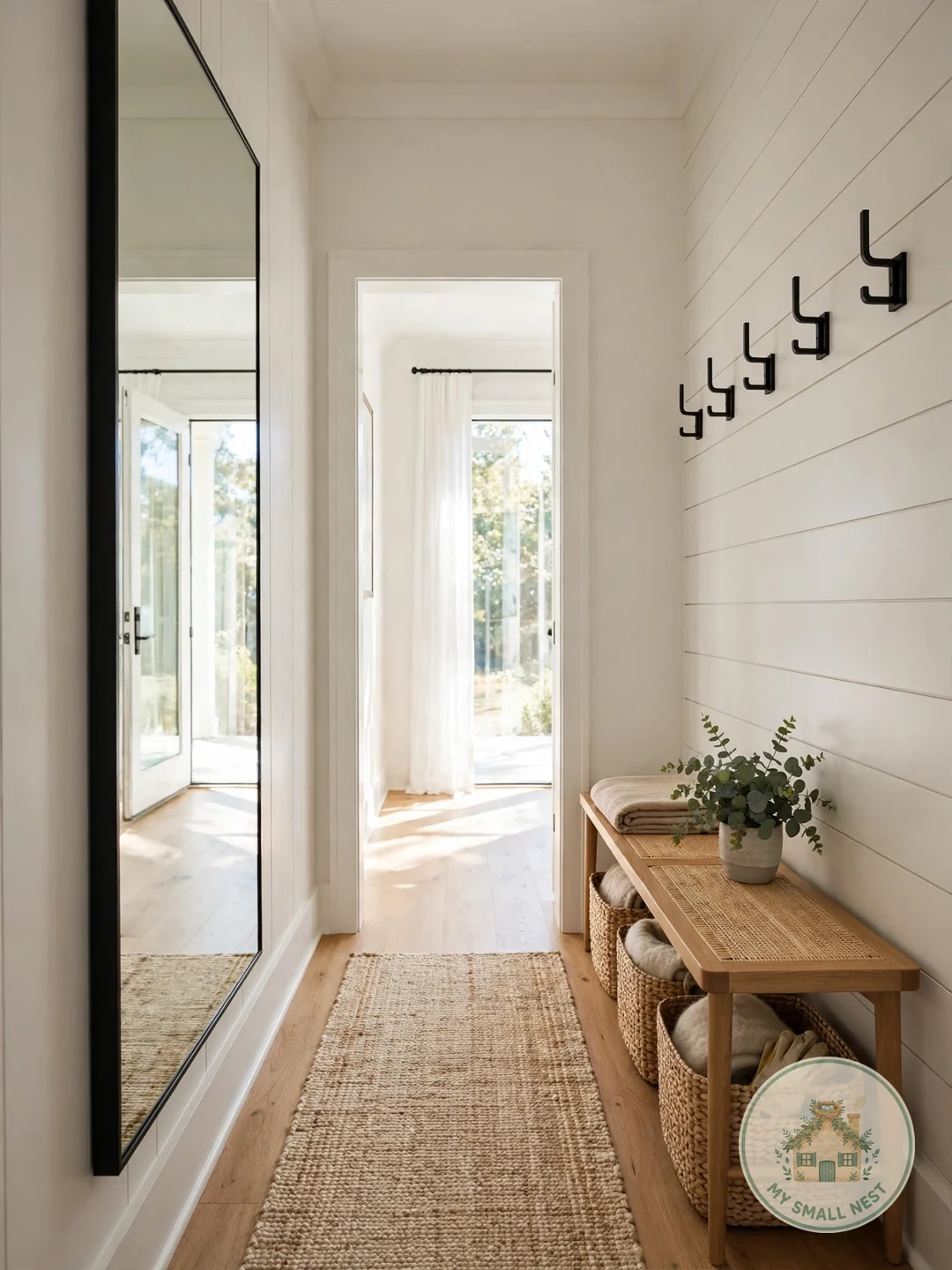
A full-length mirror on the wall opposite your storage instantly doubles the visual width of a narrow mudroom. It bounces light around the hallway and gives everyone a last check before heading out the door — lean a large one or hang it securely.
Make it work: A mirror at least 48 inches tall works best; Target’s floor mirrors start around $35. Hang it where it reflects a window or light-colored wall — not the clutter — for maximum brightening effect.
 Pin it
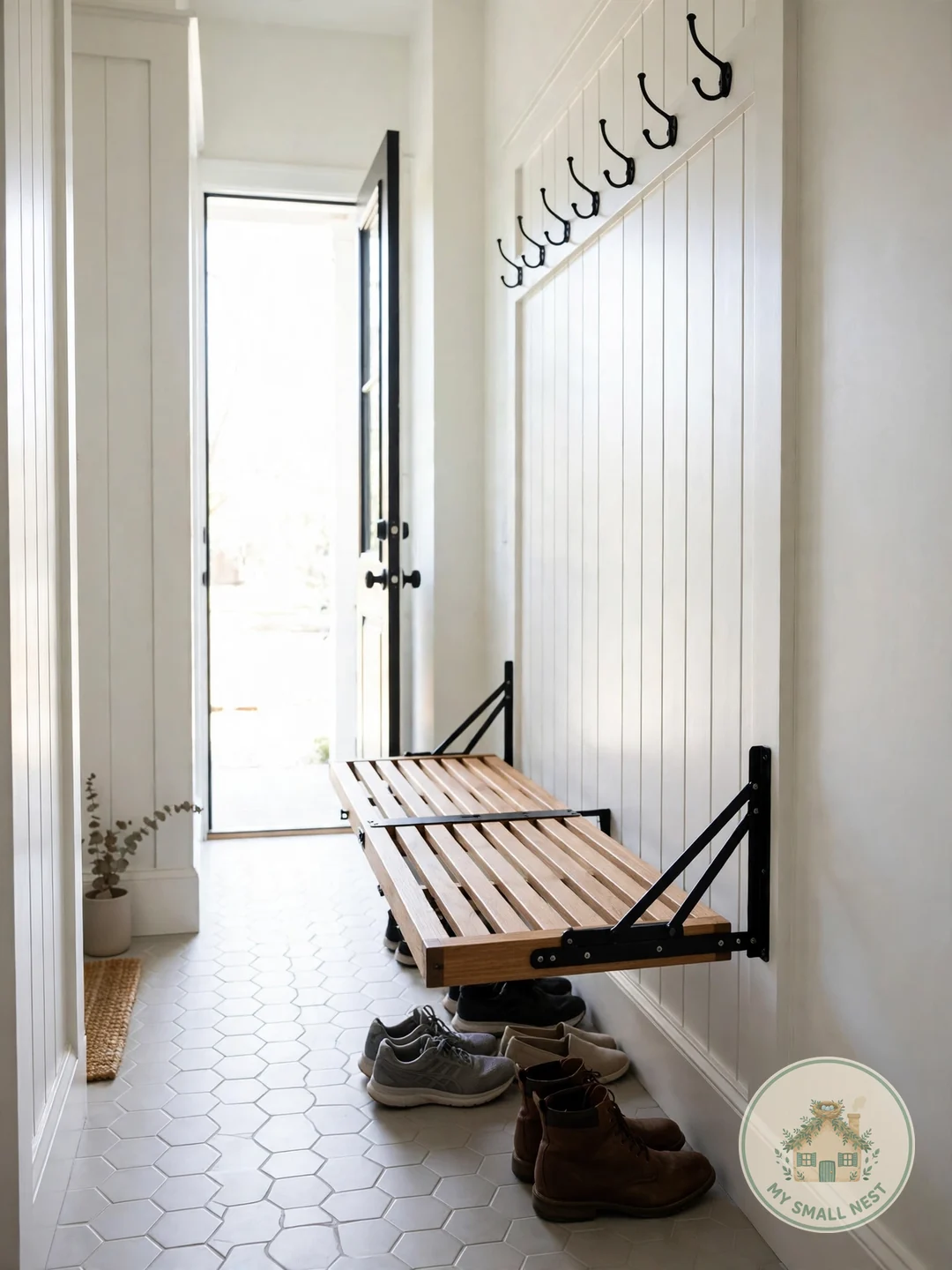
9. Install a Fold-Down Wall Bench
A wall-mounted bench that folds flat when not in use is the ultimate narrow-mudroom hack. Fold it down to sit and tie shoes, flip it up to reclaim a full 14 inches of walkway. Look for sturdy bracket hardware rated for 200-plus pounds — this is not the place to cheap out.
Make it work: Mount it at standard bench height (17 to 19 inches) and confirm it locks flat against the wall without wobbling. In a rental, check your lease first — but most landlords approve these since they use just four lag bolts into studs, easily patched later.
 Pin it
10. Corral Tall Items in One Vertical Spot
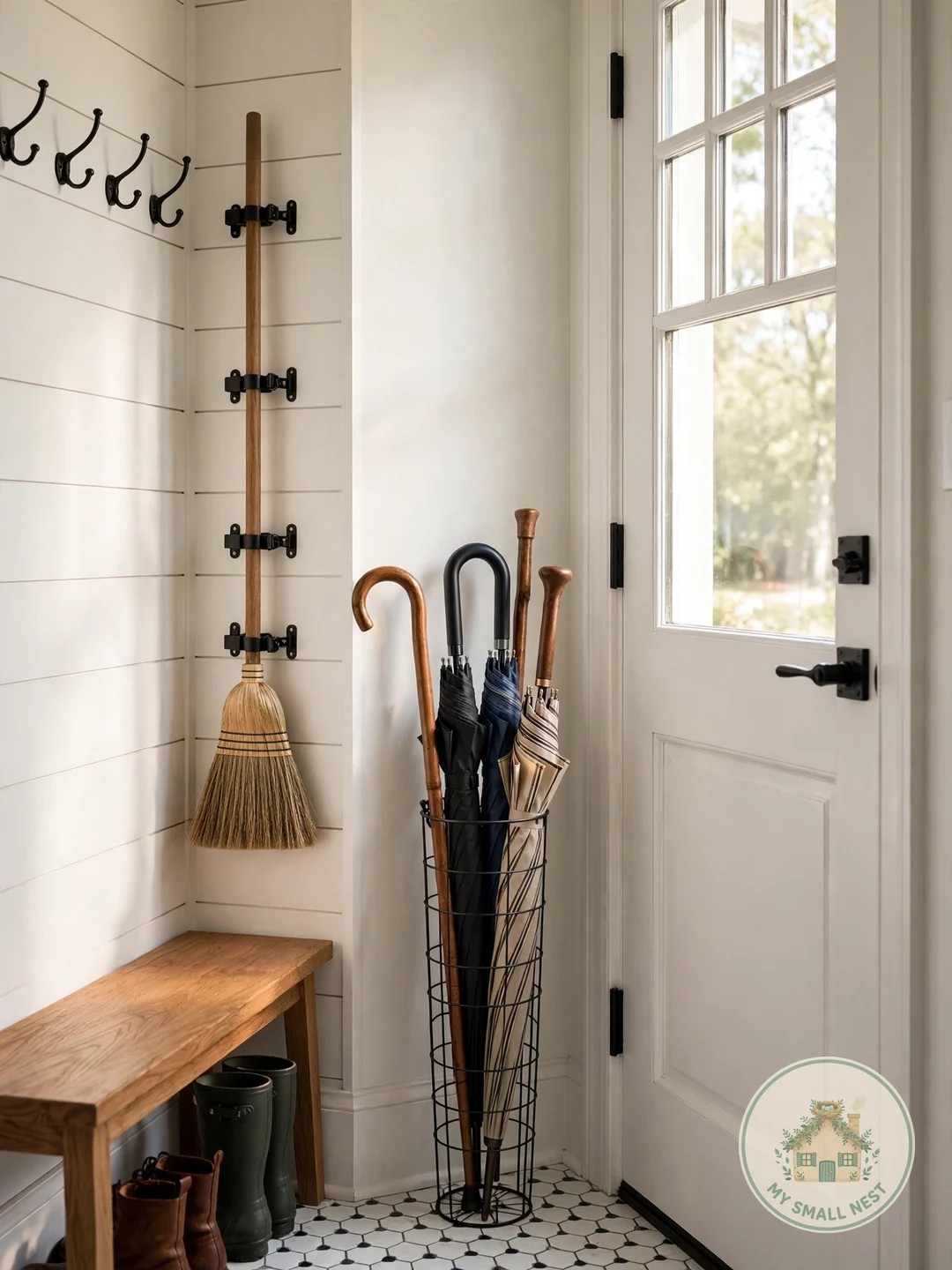
Umbrellas, walking sticks, and sports gear eat floor space fast when they’re leaning in corners. A tall, narrow holder — just 8 inches across — corrals them into one vertical spot, and wall-mounted clips for brooms and mops keep cleaning tools off the floor too.
Make it work: I keep mine right by the door in my studio so wet umbrellas never travel across the room — a $10 metal umbrella stand with a drip tray underneath protects wood floors from the puddle. Place yours at the entry point where wet gear enters, not three steps inside.
 Pin it
11. Create a Chalkboard Command Center
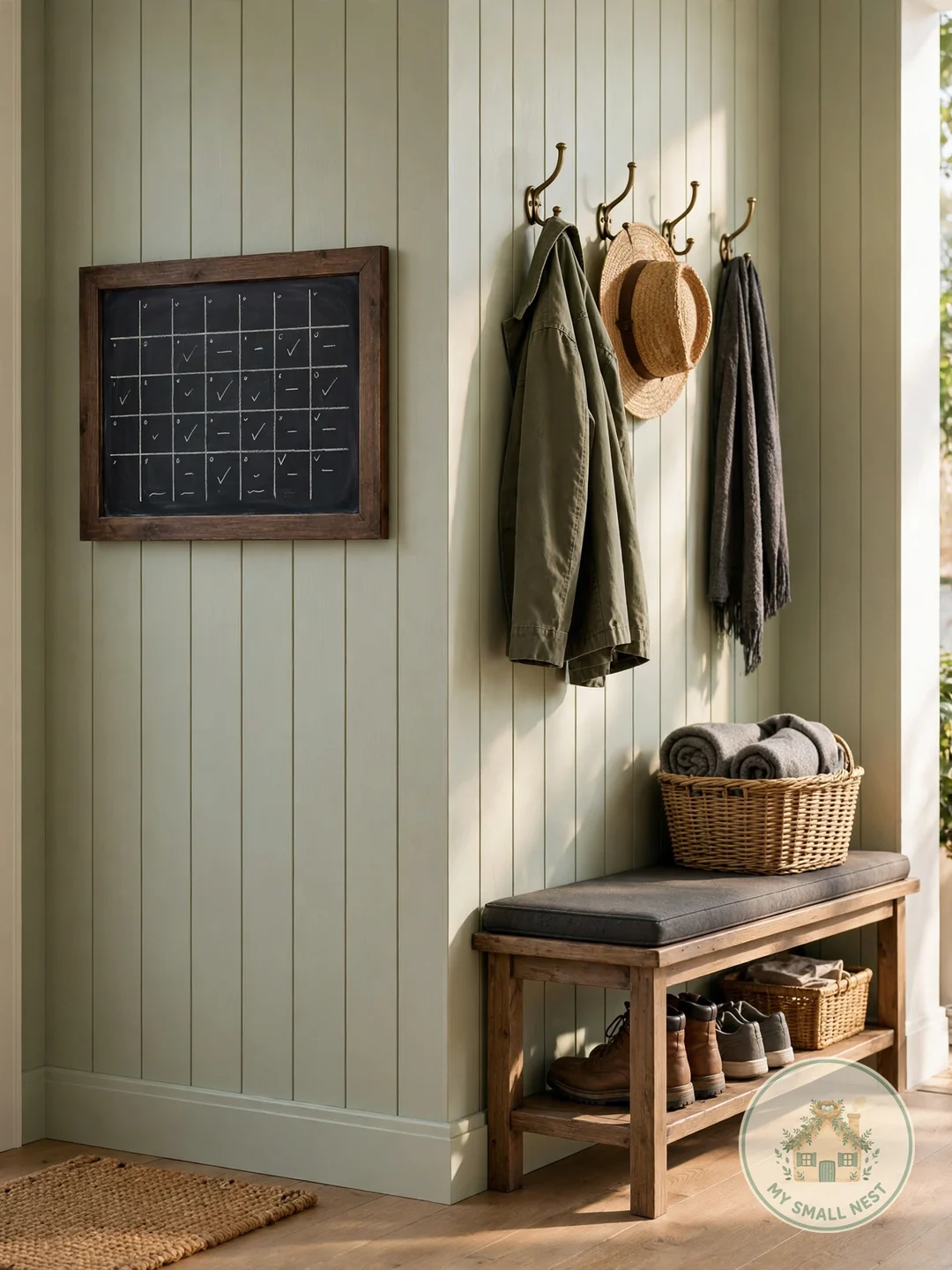
A small chalkboard or dry-erase board turns your mudroom into mission control. Track grocery lists, reminders, and the week’s schedule right where everyone passes — a 16×20-inch board fits even the narrowest wall and costs under $15.
Make it work: Divide the board into zones — one column per family member — and mount it at 60 inches high near the hooks so checking it becomes part of the coming-and-going routine. Chalk markers wipe cleaner than real chalk and don’t leave dust on dark coats.
 Pin it
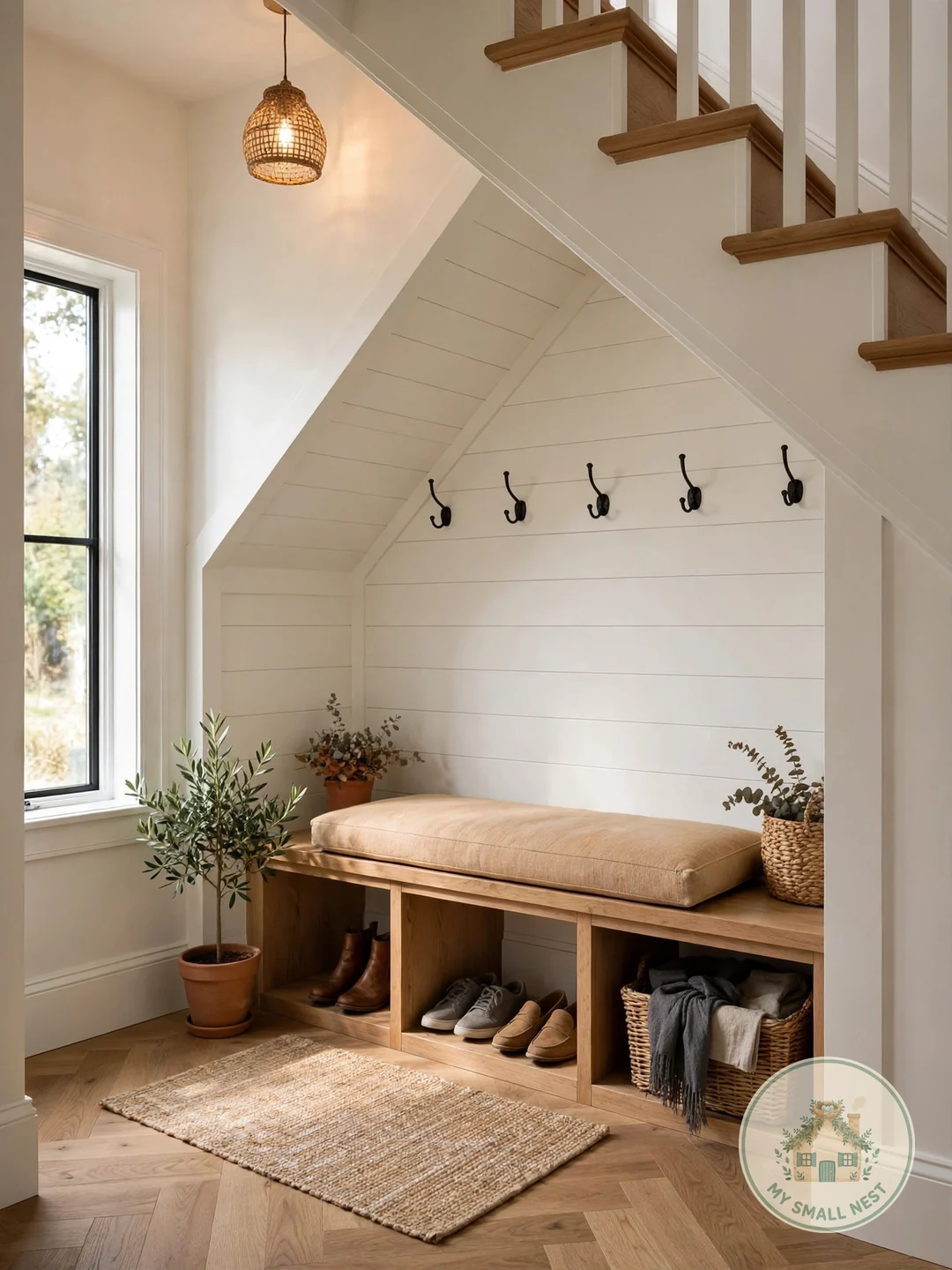
12. Convert the Under-Stair Nook
The space under stairs is often wasted — convert it into a mudroom nook. Even 3 feet of width fits hooks, a small bench, and shoe cubbies tucked under the slope. It’s naturally defined, keeps clutter out of main hallways, and feels like a custom built-in for the cost of a few boards.
Make it work: Use the tallest section for hanging coats and the low slope for shoe cubbies. Add a battery-powered puck light ($8 for a 3-pack) since under-stair spots run dark — being able to see your shoes matters more than you’d think at 7 a.m.
 Pin it
13. Use Light Colors and a Runner to Elongate
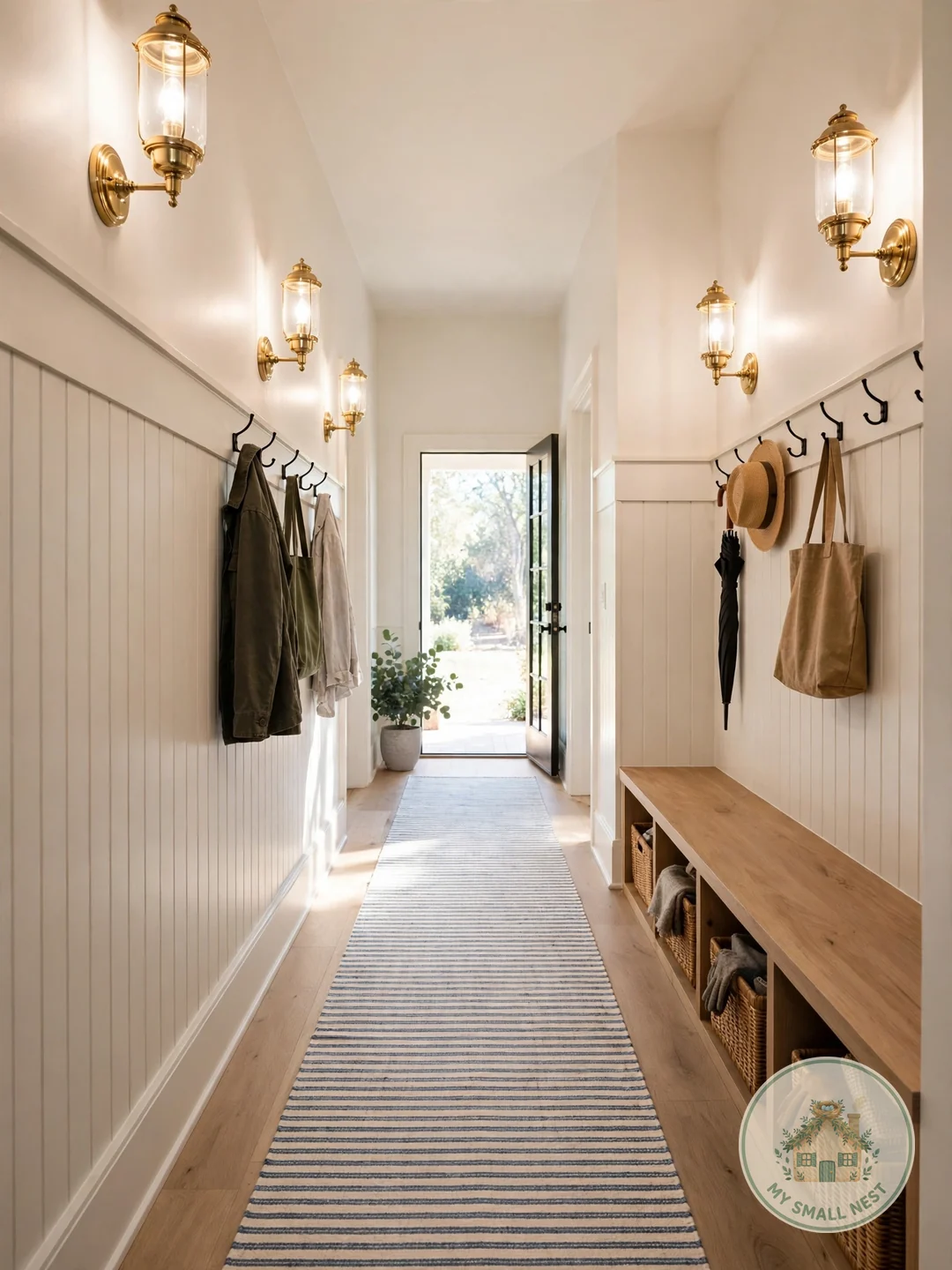
Design tricks matter enormously in tight quarters. Paint the walls a light warm white, lay a runner rug lengthwise to pull the eye through the space, and keep lighting bright — these three moves alone make a 3-foot-wide hallway feel noticeably roomier.
Make it work: Choose a low-pile washable runner — mudrooms get dirty, and a $25 machine-washable runner from Ruggable or Target beats a “good” rug you’re afraid to step on. Skip floor lamps that eat walkway space; use wall sconces or a flush-mount ceiling light instead.
 Pin it
14. Give Everyone Their Own Labeled Basket
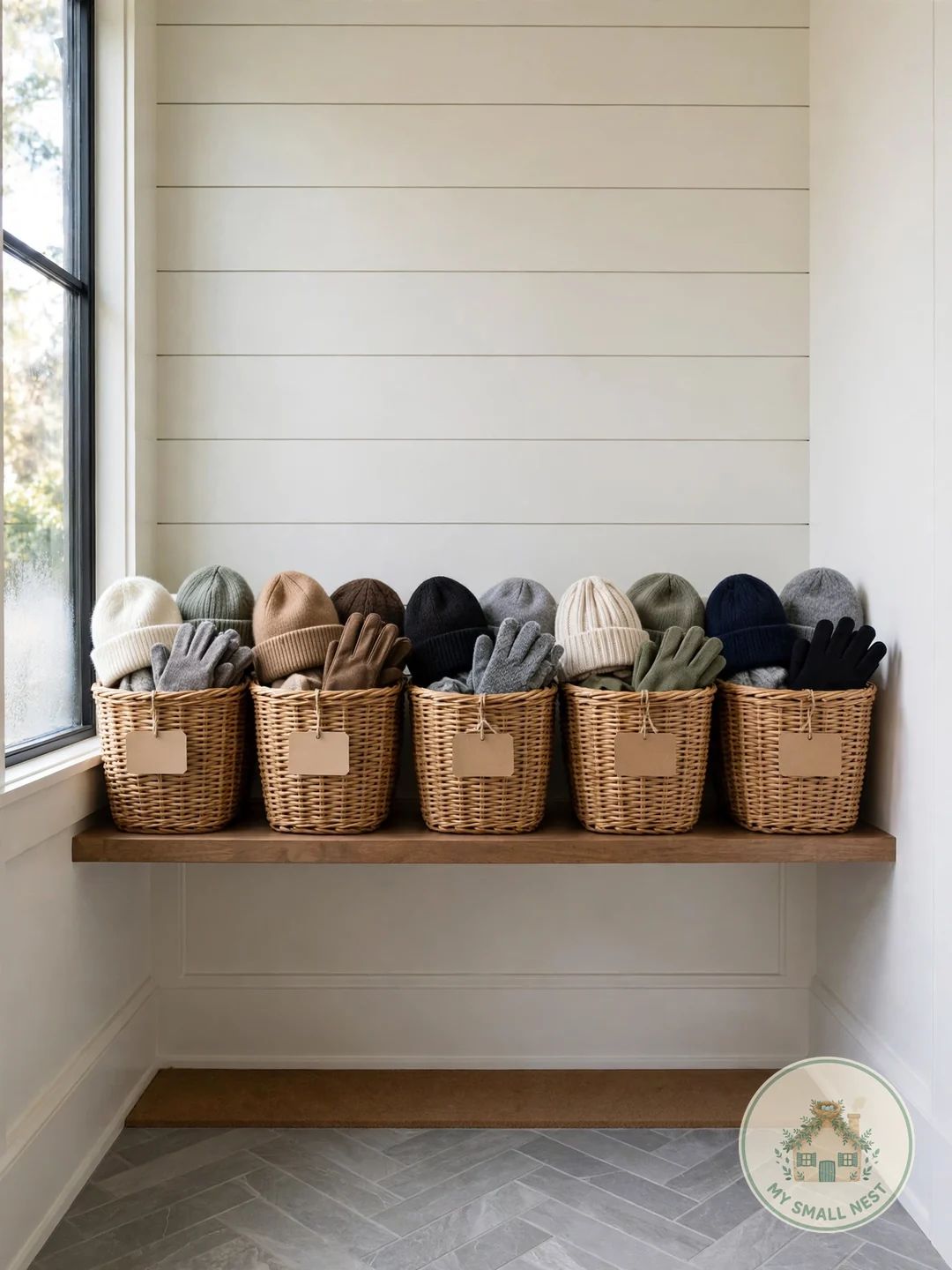
Give every family member one labeled basket or bin for daily grab-and-go items — keys, hats, gloves, sports gear. When everything has a home, the narrow space stays clear instead of becoming a dumping ground by Wednesday.
Make it work: Use identical baskets in different label colors so the wall looks tidy even when the contents aren’t — a set of four matching bins runs about $20 at Target. Slide them onto the floating shelf or into bench cubbies at kid-reachable height, or the system quietly dies within a week.
 Pin it
5 Mistakes to Avoid
Using furniture deeper than 14 inches
Standard-depth furniture swallows the walkway. Measure first and stick to slim 12- to 14-inch pieces made for tight spaces.
Letting the floor become storage
Shoes and bags on the floor shrink a narrow mudroom fast. Get everything up on hooks, shelves, or inside the bench.
Skipping the anchor on tall units
Cubby towers in tight spaces get bumped. Always anchor tall furniture to the wall — it’s a safety essential, especially with kids.
Painting it dark
Dark colors close in narrow hallways. Light, warm whites reflect light and make the space feel twice as wide.
No defined zone
Without a rug or visual boundary, mudroom clutter spreads down the hall. A runner rug marks the zone clearly.
FAQs
How narrow is too narrow for a mudroom?
You can make a mudroom work in as little as 3 feet of width. The key is keeping everything wall-mounted or under 12 inches deep so there’s still a clear walkway of at least 30 inches.
What is the best storage for a narrow mudroom?
Vertical storage wins: tall cubbies, wall hooks, and over-door organizers. A slim bench with shoe storage underneath covers seating plus hidden storage in one 12-inch-deep piece.
How do I make a narrow entryway feel bigger?
Light paint colors, a mirror, and a runner rug that draws the eye lengthwise all create openness. Keep the floor as clear as possible — visual clutter shrinks tight spaces fast.
Can I create a mudroom without a dedicated room?
Absolutely. A 4-foot stretch of hallway wall with hooks, a slim bench, and baskets functions as a full mudroom. Use a rug to visually define the zone.
How deep should mudroom cabinets be?
For narrow spaces, stick to 12 to 14 inches deep for cabinets and benches. Standard 24-inch-deep closets eat too much walkway in a tight mudroom.
A narrow mudroom doesn’t have to feel like a squeezed hallway — with slim furniture, vertical storage, and a few smart tricks, it can become the hardest-working few feet in your home. Start with hooks and a bench, then layer in the ideas that fit your family’s routine. Save this post to your entryway board and share it with anyone wrestling with a tight hallway — small spaces deserve great design too.

What readers are saying
No comments yet — yours could be the first.