 My Small Nest
Small apartments don’t have a space problem — they have a systems problem. Almost every square foot can work triple-duty with the right approach, and the difference between cramped and cozy is nearly always organization, not square footage.
These 13 small apartment organization ideas are the systems that actually hold up: vertical storage, dual-purpose furniture, zone tricks, and the small habits that keep it all together.
1. Floor-to-Ceiling Shelving
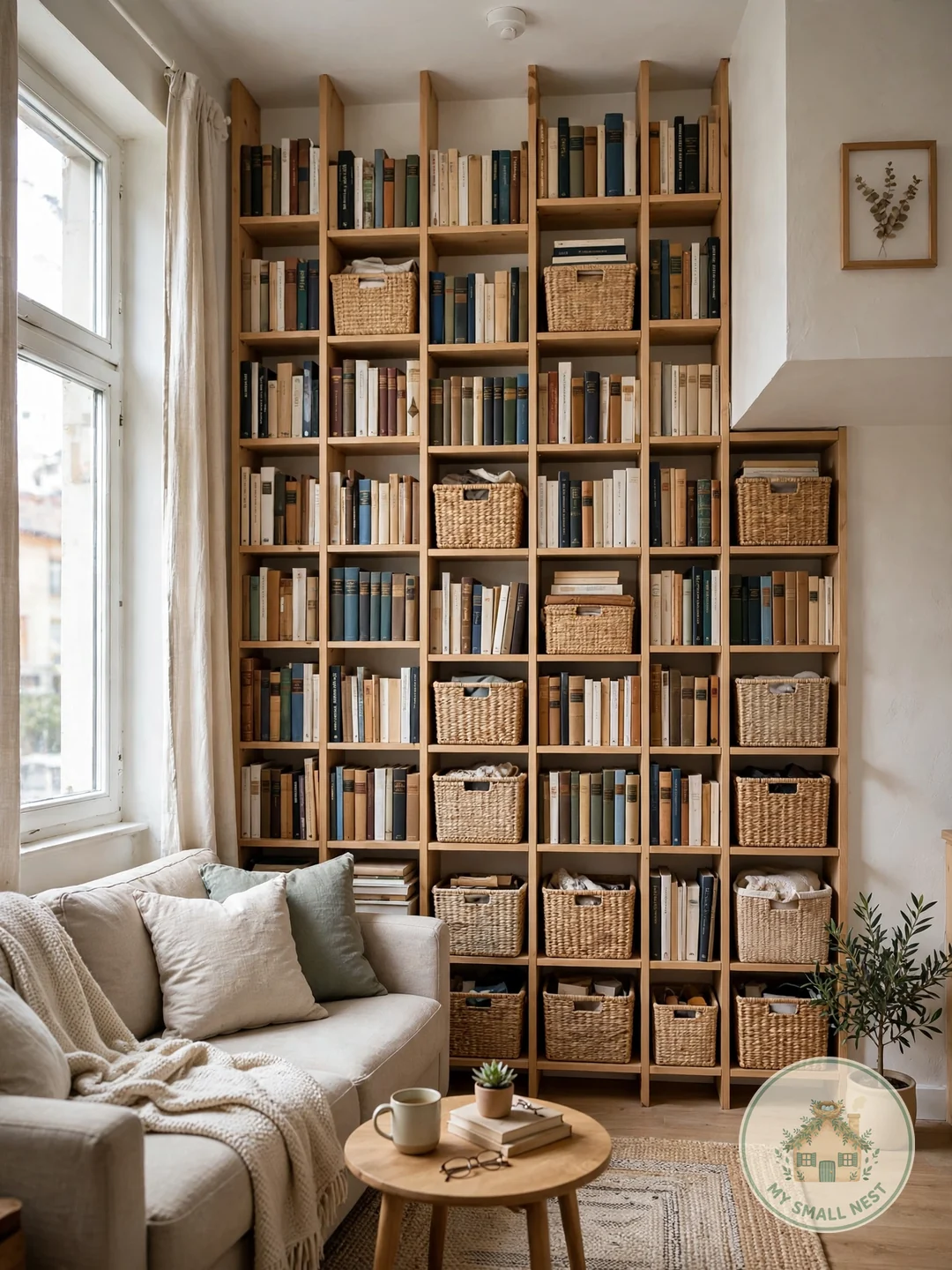
Tall, narrow bookshelves — floor to ceiling — in every dead corner. Vertical storage is the small apartment’s superpower: the same footprint, triple the capacity.
Make it work: Anchor tall shelves to the wall; safety first, especially in rentals with kids or earthquakes. Use matching bins on the lower shelves for a clean look and display the pretty things up top.
 Pin it
2. Under-Bed Storage System
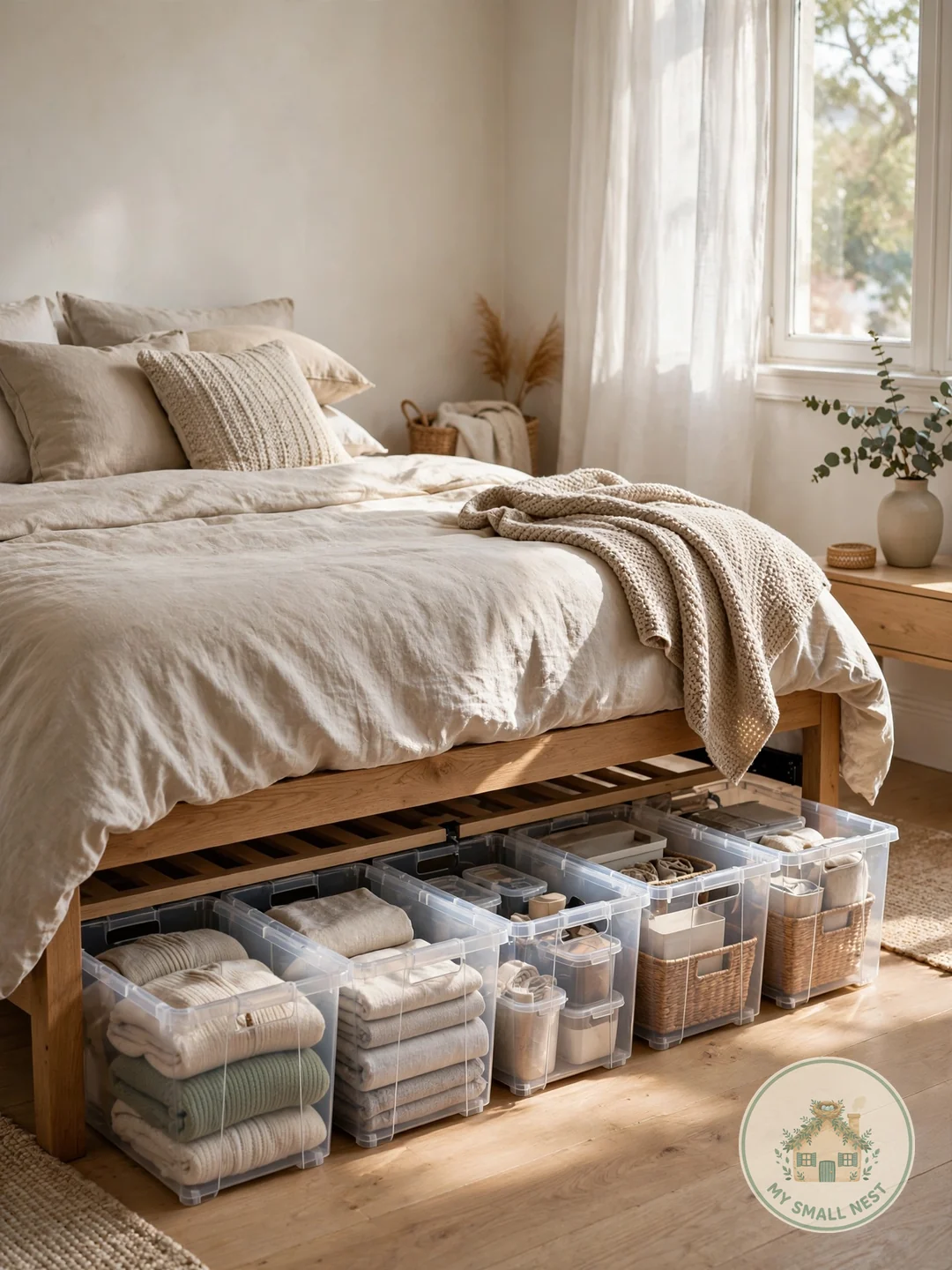
Under-bed bins, drawers, or a lift-up frame — the biggest hidden storage zone in any apartment. Out-of-season clothes, linens, luggage: all of it disappears under the bed.
Make it work: Measure your clearance before buying bins. Vacuum bags compress the bulky stuff; labeled bins keep everything findable. Bed risers add inches if you need them.
 Pin it
3. Over-Door Organizers
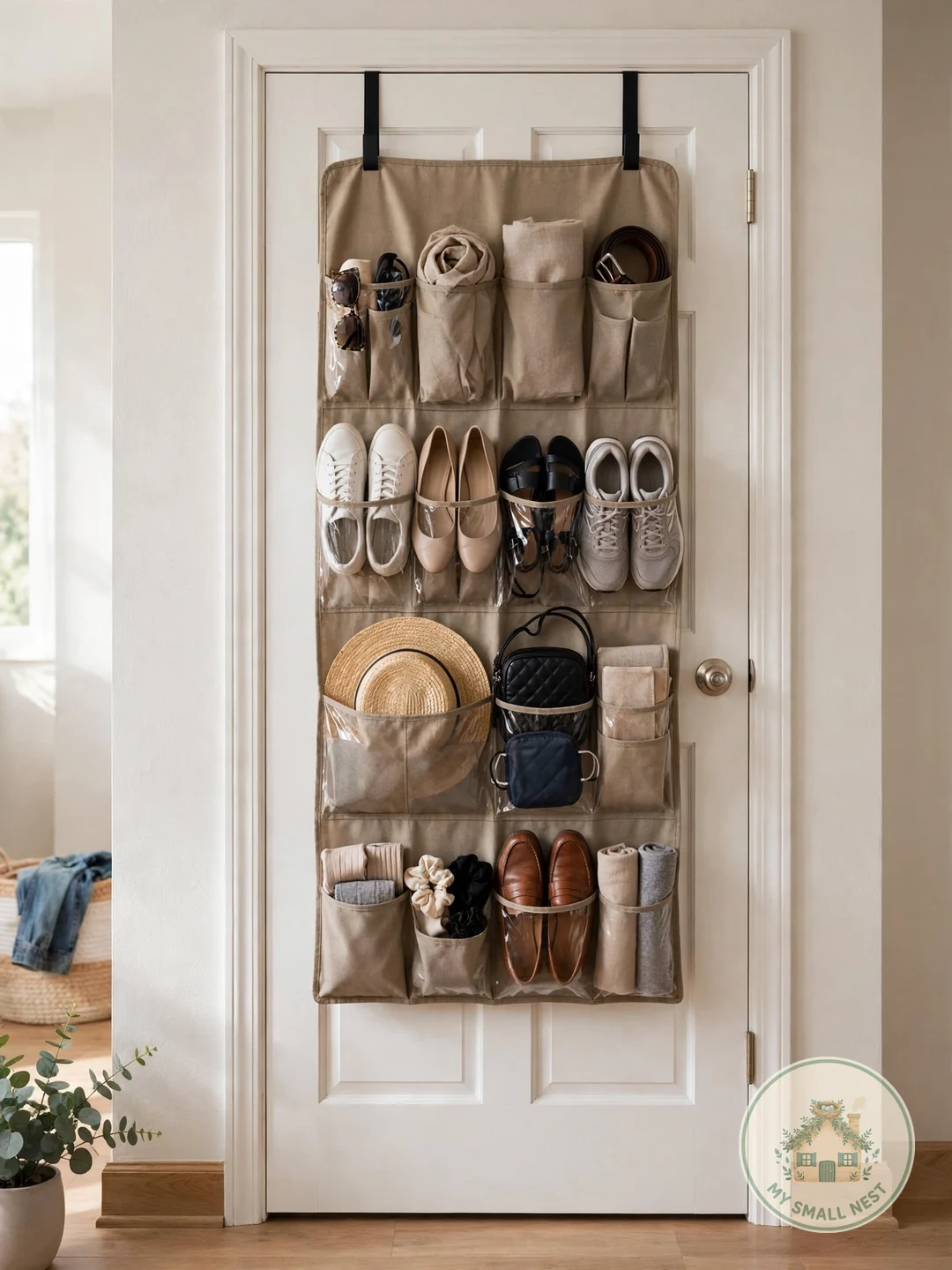
Over-door organizers on every door — pantry, bathroom, bedroom, closet. The storage zone most people completely ignore, and it needs zero floor space.
Make it work: Choose organizers with hooks that fit your door’s thickness. Use them for shoes, cleaning supplies, toiletries, accessories — the small stuff that clutters surfaces.
 Pin it
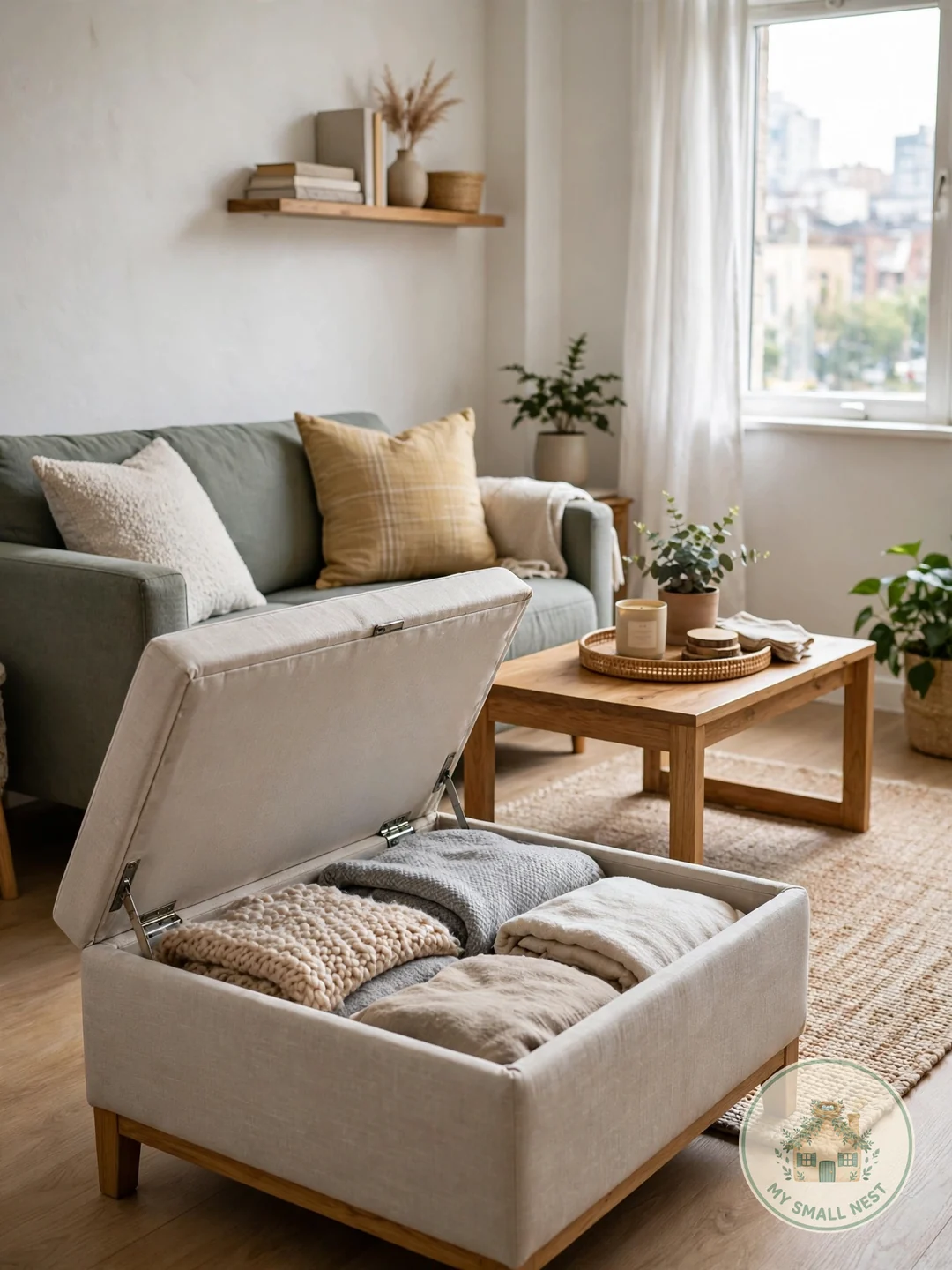
4. Storage Ottoman Multitasker
A storage ottoman (or two) — footrest, extra seat, coffee table, and hidden storage in one. The hardest-working furniture piece in small apartments.
Make it work: Size it to double as a coffee table (tray on top). Store throws, remotes, and chargers inside — the living-room clutter that never has a home.
 Pin it
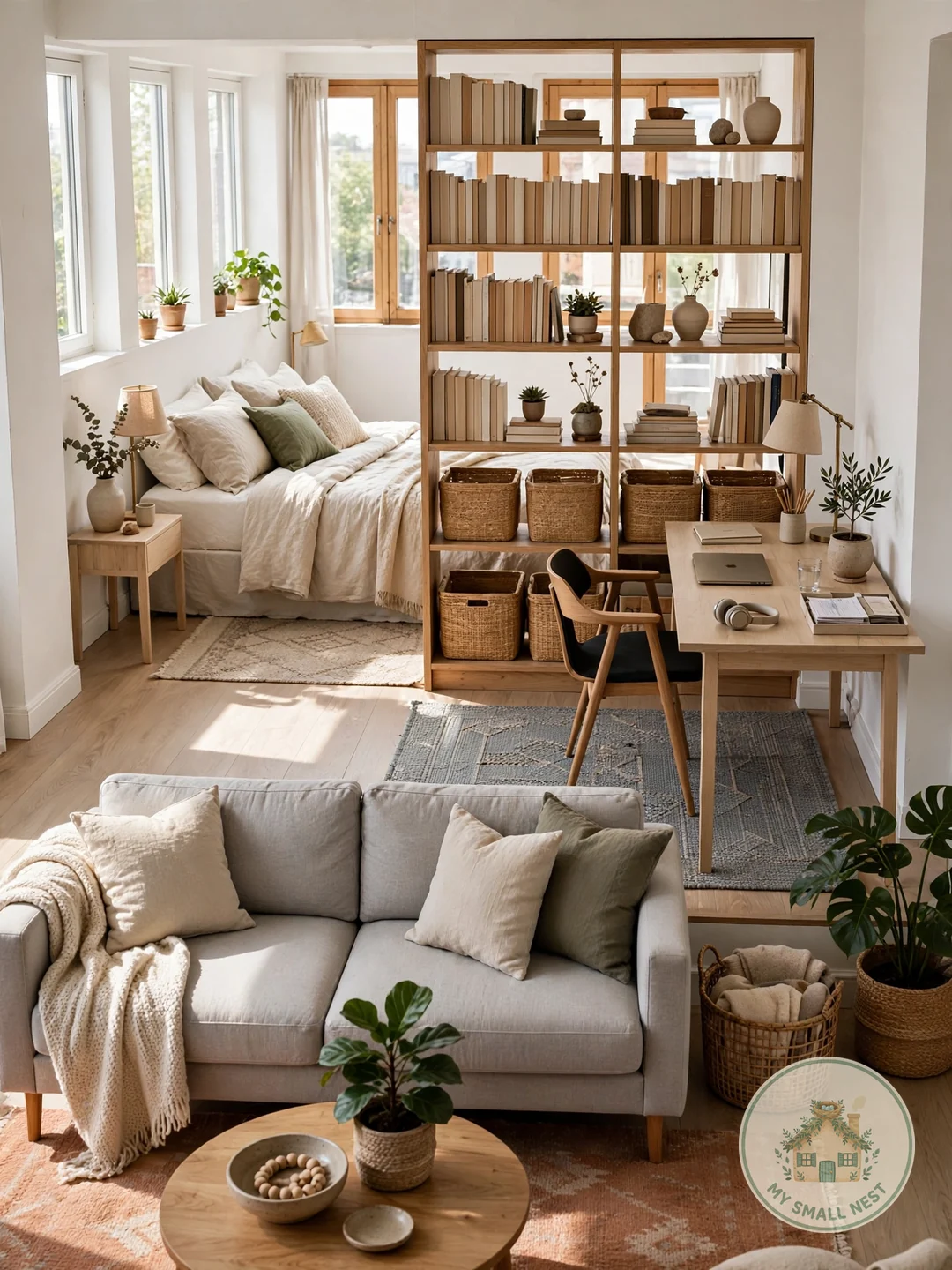
5. Zone Every Area
Divide the apartment into zones — sleep, work, eat, relax — even in a single room. Rugs, shelving, and furniture arrangement create the boundaries that make small feel organized instead of jumbled.
Make it work: A bookshelf as a room divider doubles as storage. Give each zone its own lighting — the visual separation is what makes it feel like distinct “rooms.”
 Pin it
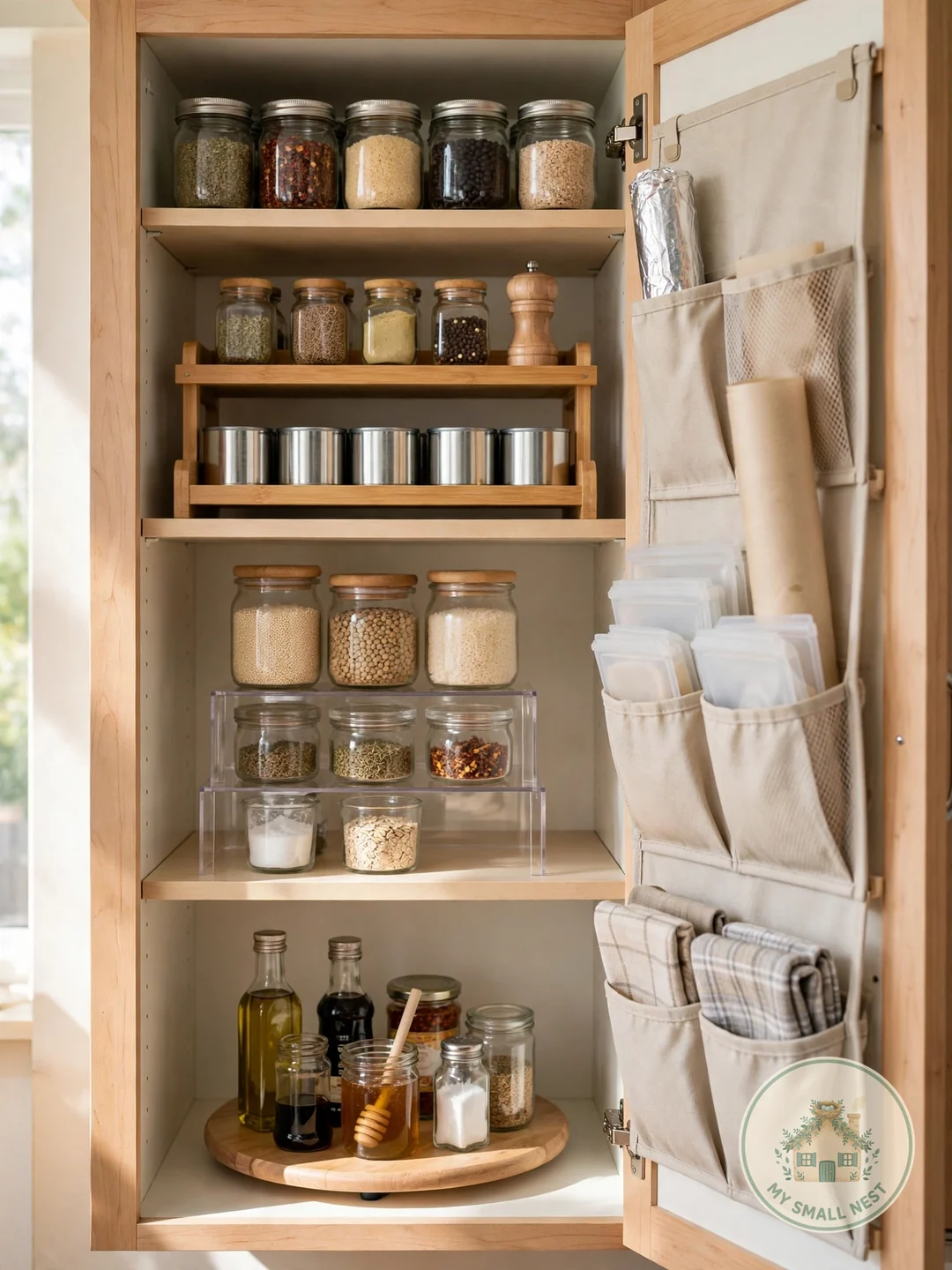
6. Kitchen Cabinet Maximizers
Cabinet-door organizers, tiered shelf risers, and turntables inside kitchen cabinets. Small kitchens hide enormous storage — you just have to unlock the full depth of the doors and shelves.
Make it work: Risers double shelf space instantly. Turntables (lazy Susans) rescue deep corner cabinets. Door-mounted racks hold spices, lids, and wraps.
 Pin it
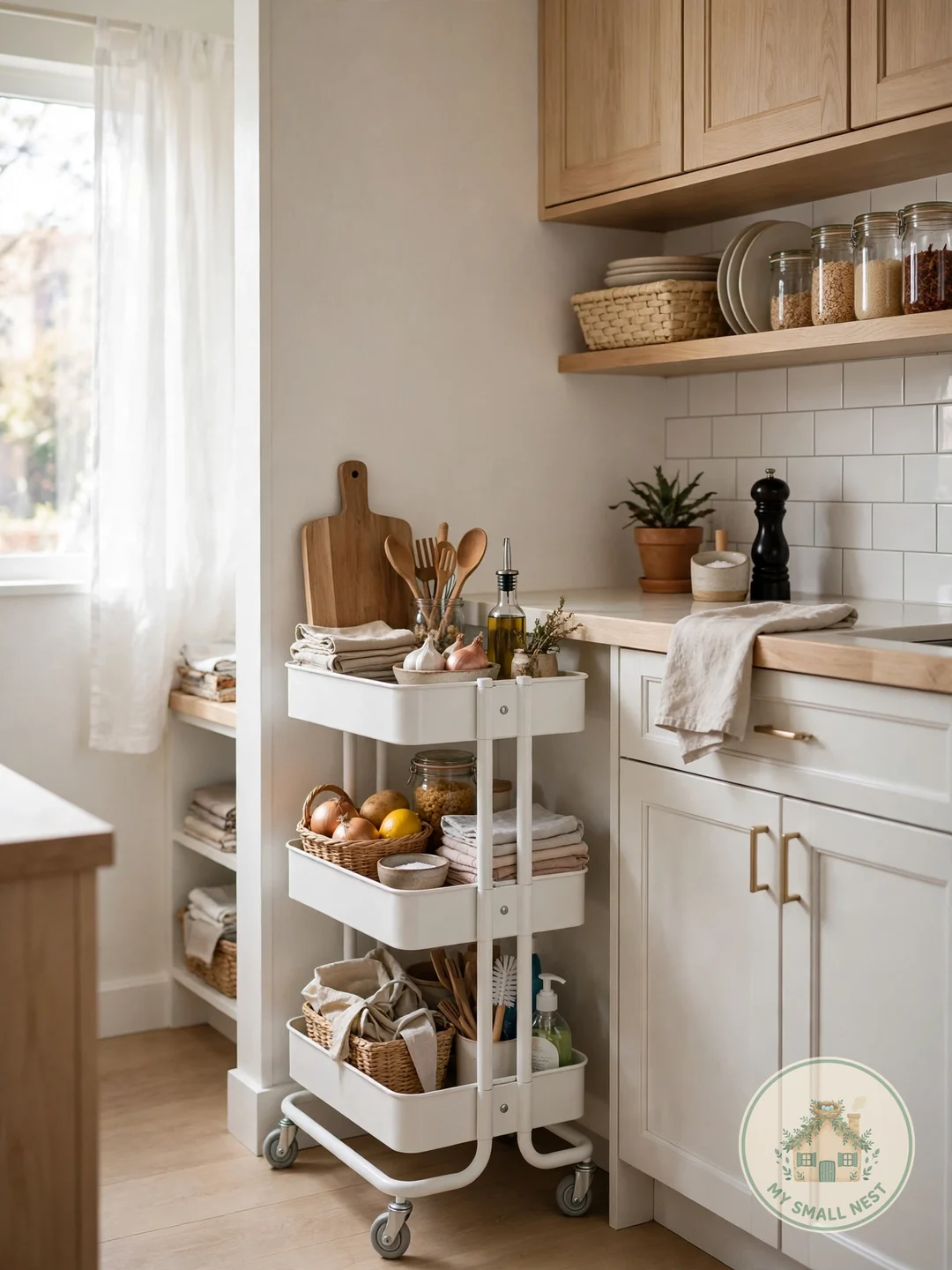
7. Rolling Cart Flexibility
A rolling cart — for the kitchen, bathroom, or craft supplies — that tucks into gaps and rolls wherever it’s needed. Flexible storage that adapts to small-apartment life.
Make it work: Measure your gaps first (between fridge and wall, beside the vanity). Style the top tier; keep the practical stuff below. Locking wheels keep it where you put it.
 Pin it
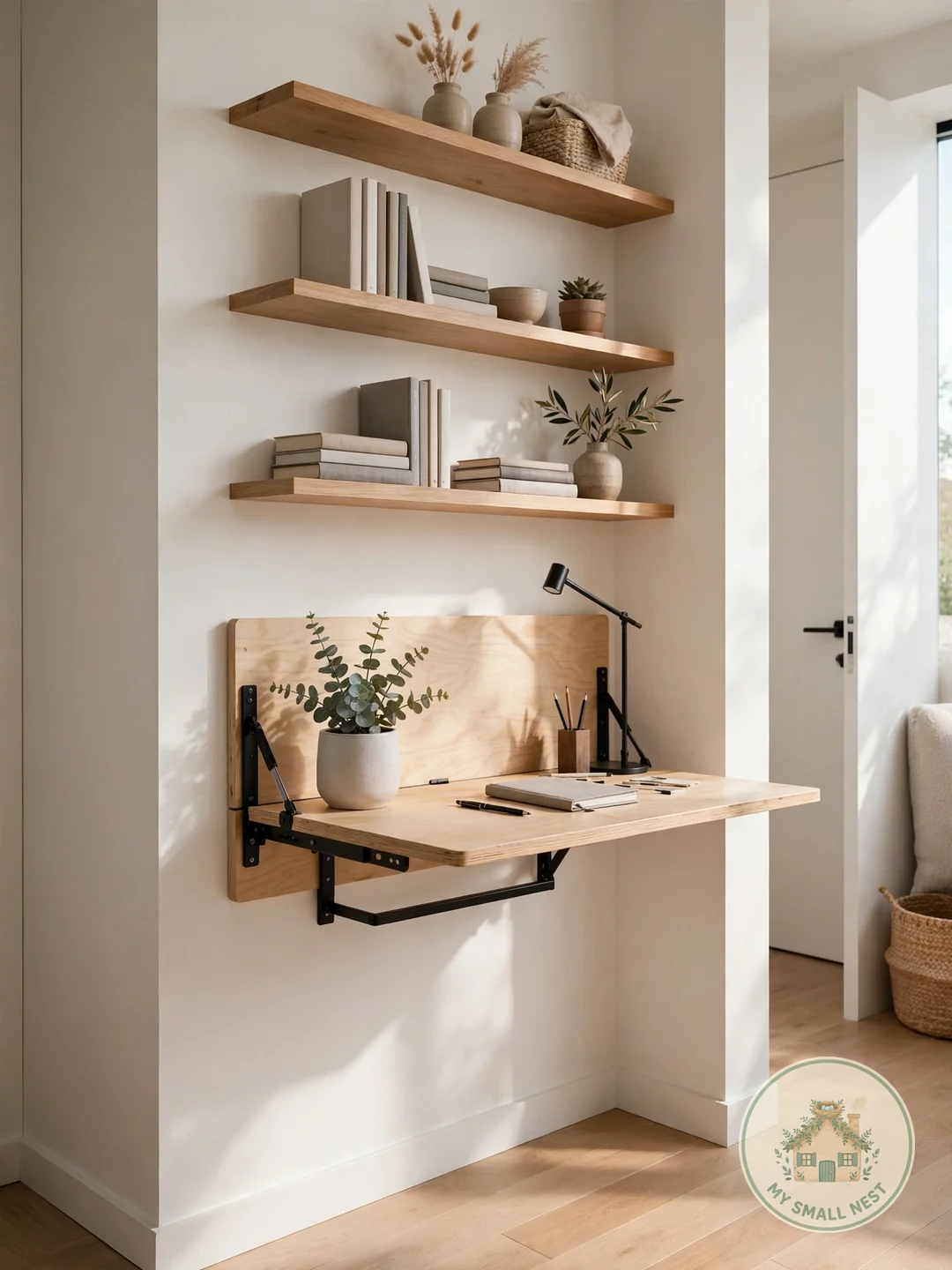
8. Wall-Mounted Everything
Wall-mounted everything: a fold-down desk, wall shelves instead of a bookcase, a mounted TV instead of a console. Every item on the wall frees floor space — and floor space is gold.
Make it work: Renters: use heavy-duty removable strips or freestanding alternatives where mounting is banned. A fold-down wall desk creates a home office that vanishes after hours.
 Pin it
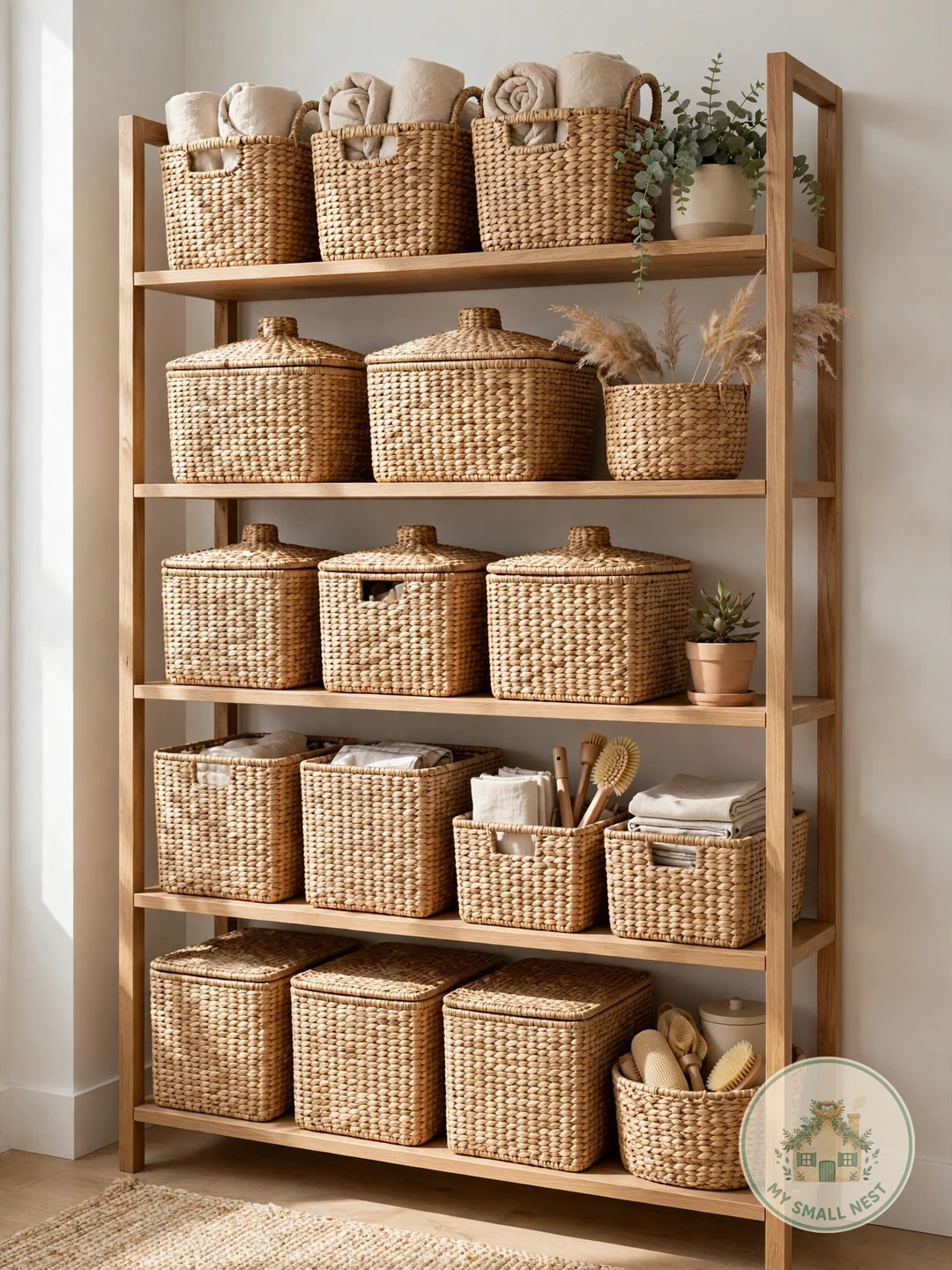
9. Basket and Bin System
Matching baskets and bins on every shelf — the visual trick that makes open storage look intentional instead of chaotic. Contain the clutter, unify the look.
Make it work: Stick to one material (seagrass, felt, canvas) throughout for cohesion. Label any bin you can’t see into — mystery bins become junk bins.
 Pin it
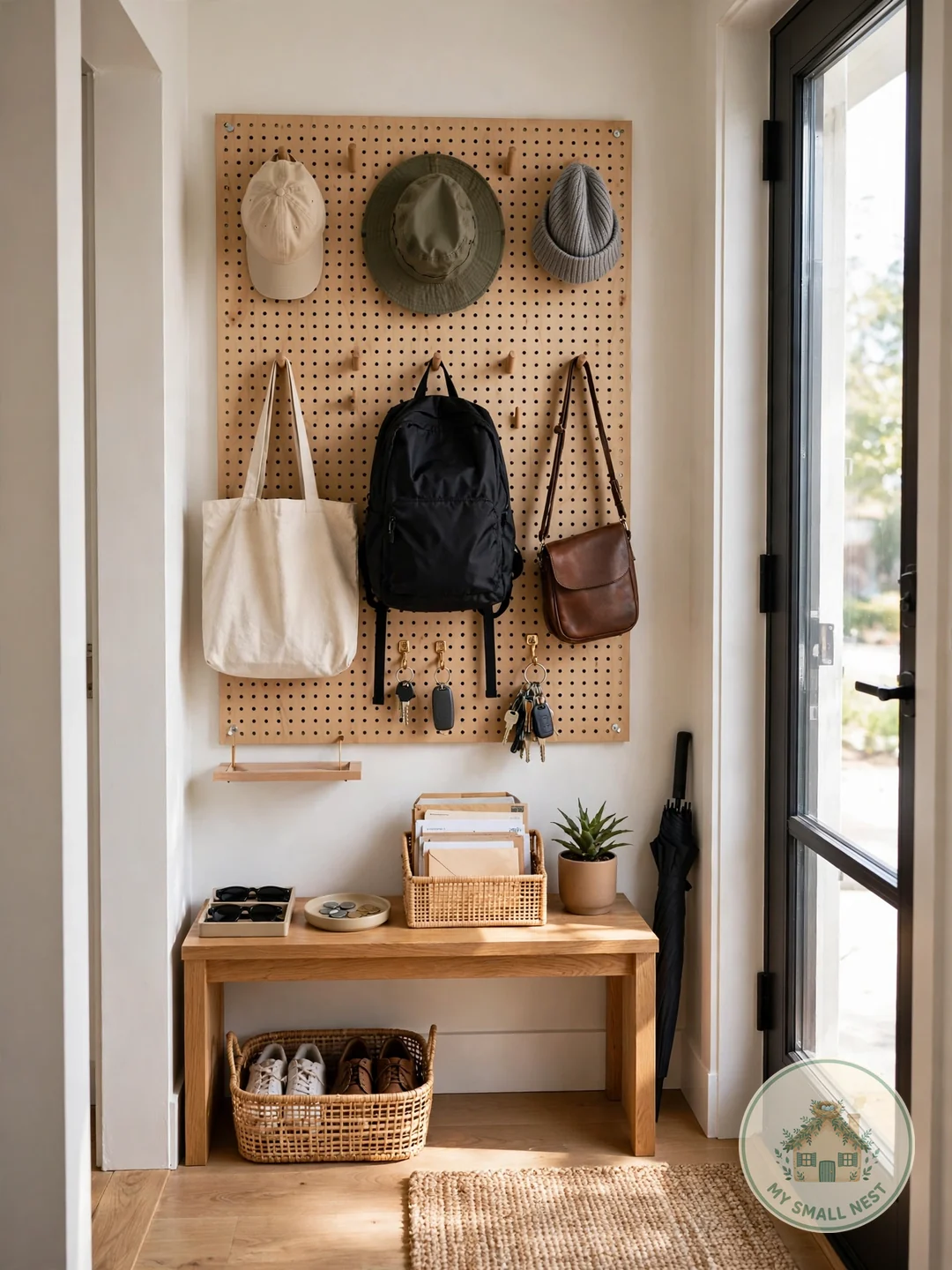
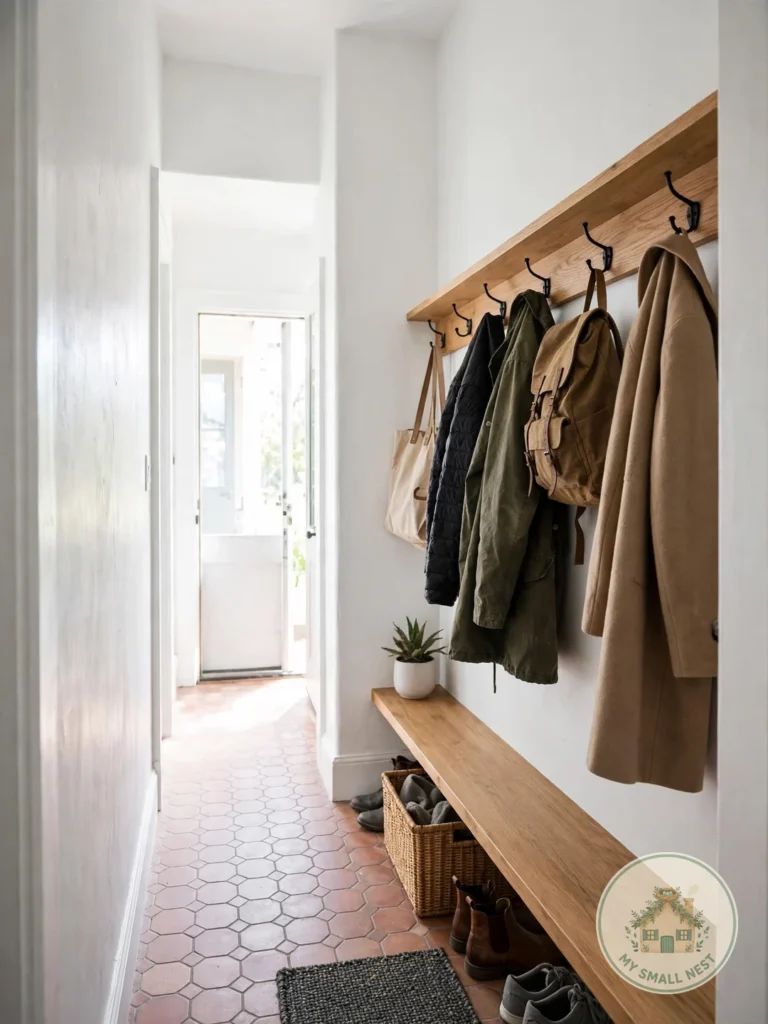
10. Hook and Pegboard Walls
Hooks, pegboards, and rails on walls and inside doors — for bags, hats, jewelry, kitchen tools, cleaning supplies. Three-dimensional storage that keeps daily items visible and reachable.
Make it work: A pegboard by the door holds keys, bags, sunglasses — the launch pad. Inside cabinet doors, hooks hold measuring cups and lids.
 Pin it
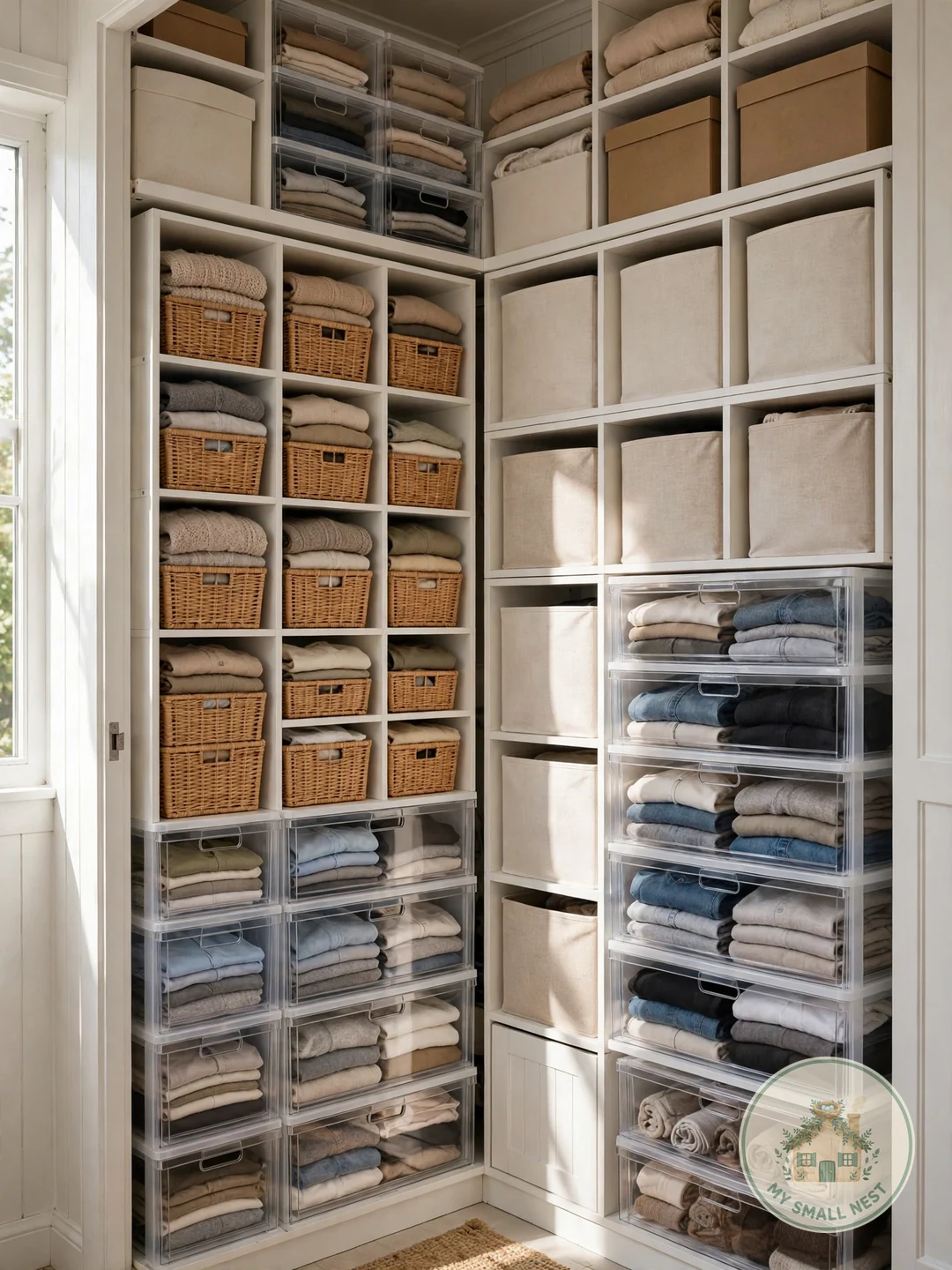
11. Closet Doubler System
Stackable drawers and modular cubes inside closets — turning one hanging rod into a full dresser system. Closet capacity doubles without a single renovation.
Make it work: Measure the closet first; modular systems come in standard widths. Fold (don’t hang) knits and tees — folded stacks in cubes beat hangers for capacity.
 Pin it
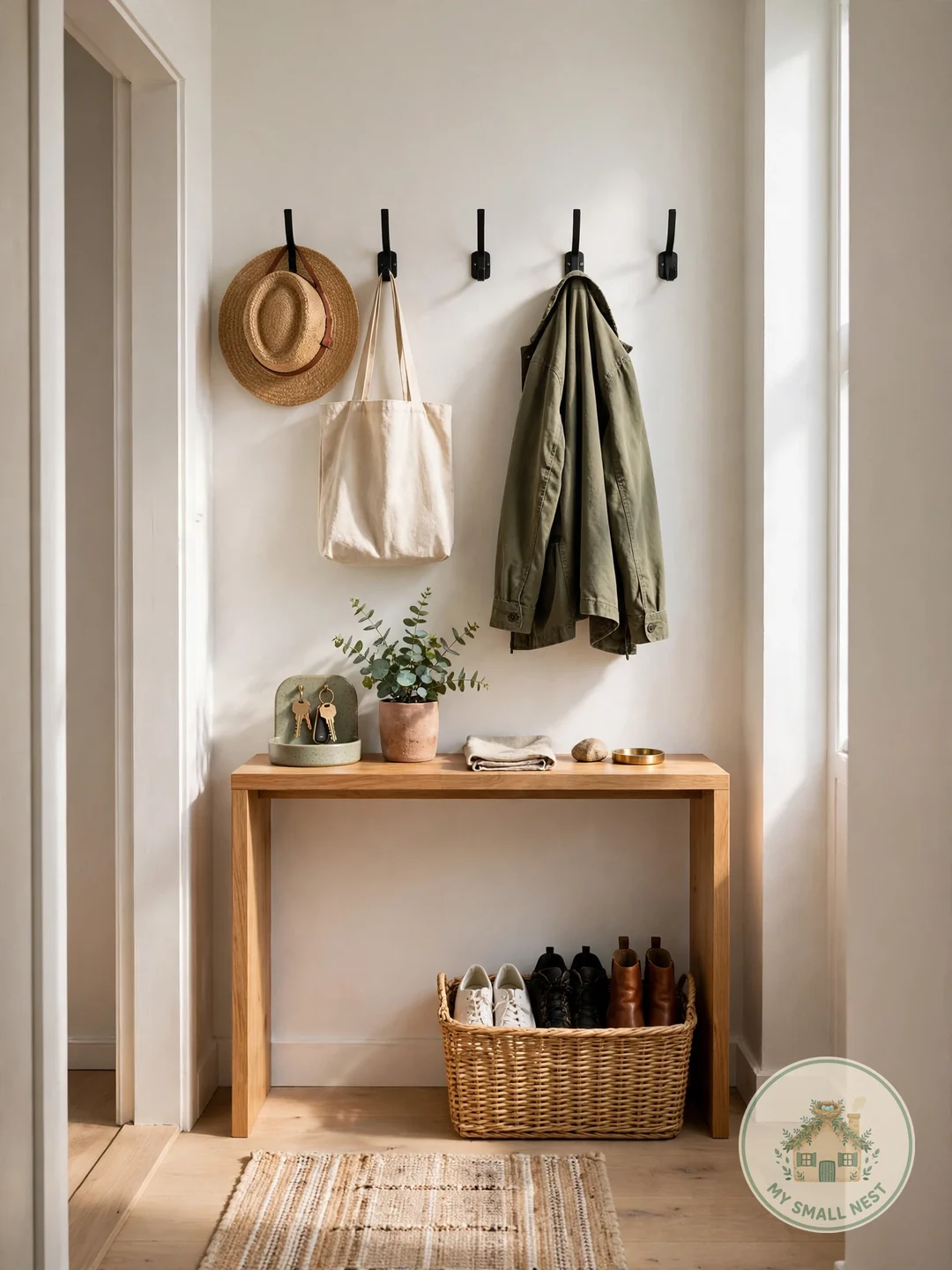
12. Entryway Launch Pad
The entryway launch pad: a narrow console or wall shelf with hooks, a tray for keys, and a basket for shoes. Five minutes of setup that prevents whole-apartment chaos.
Make it work: Everything you carry daily gets a spot here — keys, bag, sunglasses, mail. The “touch it once” rule: items land here, not on the nearest surface.
 Pin it
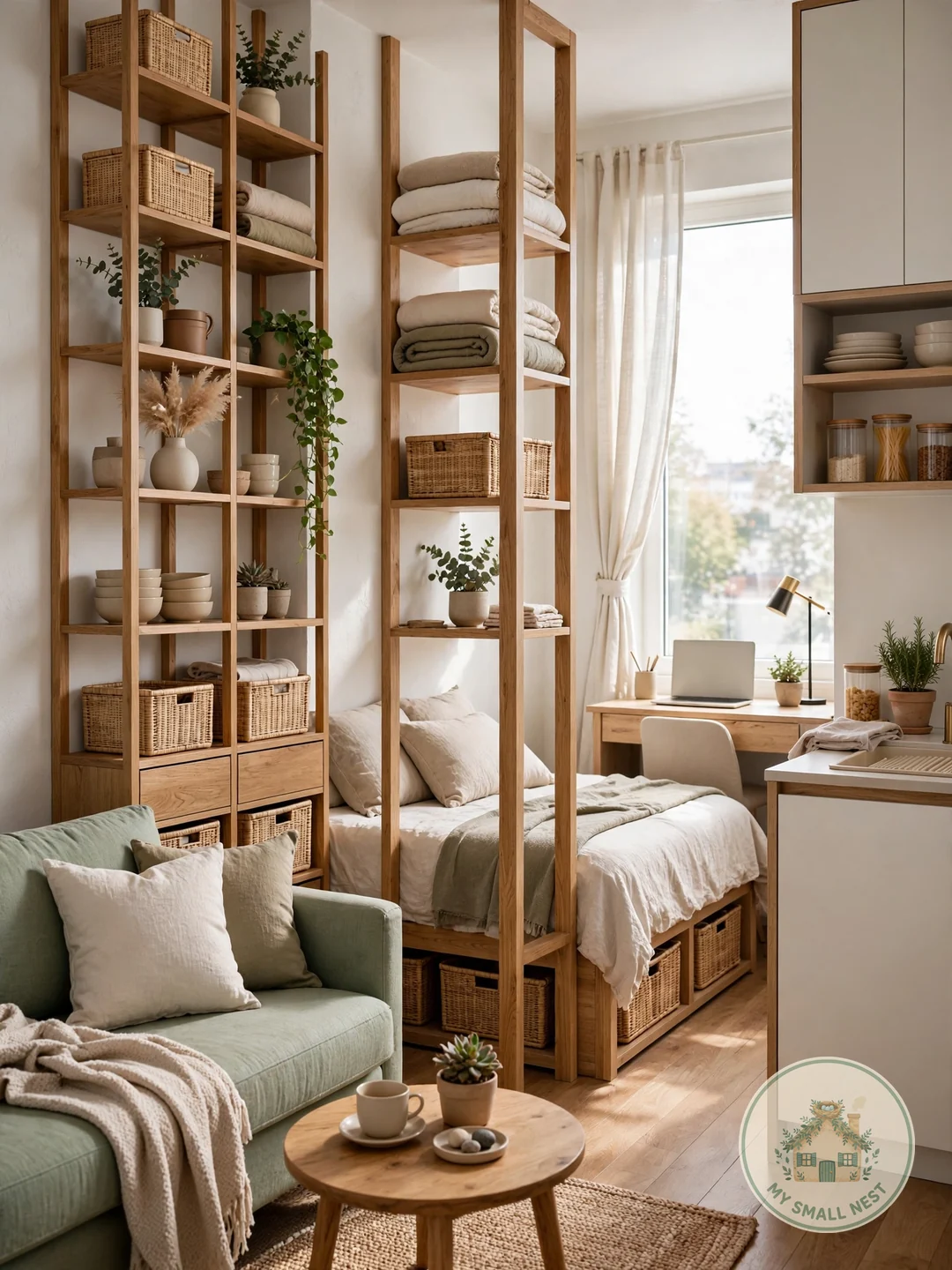
13. The Complete Small-Space System
The full system: vertical shelving, under-bed storage, zoned rooms, dual-purpose furniture, and matching bins throughout — every idea working together. The small apartment that lives large.
Make it work: Implement one zone per weekend. Photograph the “after” of each zone — the visible progress keeps motivation high through the whole apartment.
 Pin it
5 Mistakes to Avoid
Organizing before decluttering
Beautiful bins full of stuff you don’t need is just decorated hoarding. Declutter first — small spaces punish every excess item — then organize what remains.
Ignoring vertical space
Walls, doors, and the space above cabinets are free real estate. If all your storage sits at floor level, you’re using a fraction of your apartment’s capacity.
Single-purpose furniture
In a small apartment, every piece should do two jobs minimum. A coffee table that doesn’t store anything is a wasted opportunity.
No home for daily items
Keys, bags, mail, chargers — the small stuff creates most of the visible mess. If it doesn’t have a designated spot, it lives on your counters forever.
Skipping the nightly reset
Small spaces show mess instantly. A five-minute nightly reset — everything back to its home — is the habit that makes all the systems stick.
FAQs
How do I organize a small apartment with no storage?
Go vertical (tall shelves, over-door organizers), choose dual-purpose furniture (storage ottoman, bed with drawers), and zone every area so everything has a home. The goal: use the walls, doors, and under-furniture space you’re ignoring.
What is the best way to organize a small apartment?
Declutter first (small spaces punish excess), assign every item a zone, maximize vertical space, and use furniture that stores. Maintain it with the nightly five-minute reset — small spaces show mess fast.
How can I maximize storage in a small apartment?
Think in 3D: floor-to-ceiling shelving, over-door racks, under-bed bins, cabinet-door organizers, and furniture with hidden storage. Renters: lean on freestanding pieces that move with you.
How do I keep a small apartment tidy?
Less stuff, everything has a home, nightly five-minute reset. In small apartments, tidiness is a system, not an event — build the reset into your evening routine.
What furniture is best for small apartments?
Multi-functional: storage ottomans, lift-top coffee tables, murphy or loft beds, drop-leaf tables, nesting tables, and benches with storage. Every piece should do at least two jobs.
Small apartment organization isn’t about having less — it’s about making everything you own earn its place. Start with the one idea that addresses your biggest pain point, then build from there.
Save this guide for your next organization session, and share it with the friend whose apartment is currently one junk drawer away from chaos.
What readers are saying
No comments yet — yours could be the first.