 My Small Nest
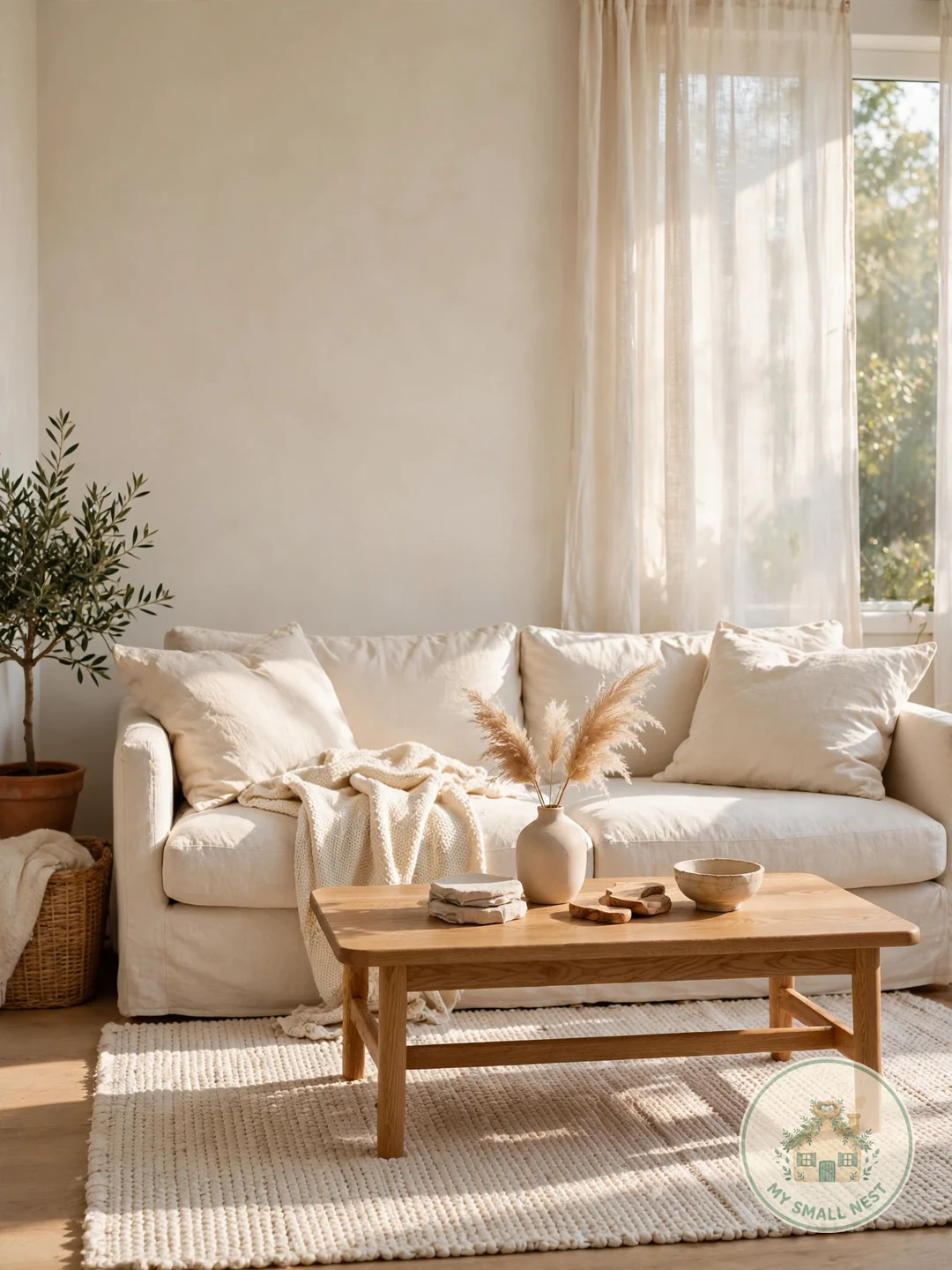
Minimalism got a bad reputation for feeling cold and empty — all white boxes and echo. But it does not have to be that way. Warm minimalist decor keeps the calm, clutter-free feeling while wrapping your small home in creamy neutrals, natural wood, and textures you actually want to touch. My 380 sq ft studio is basically a case study in this style.
Below are 8 warm minimalist ideas designed for small spaces: budget-friendly paint choices, multi-purpose furniture, cozy lighting tricks, and styling rules that make tiny rooms feel both serene and snug. This is for minimalists-at-heart who still want their home to feel like a hug.
1. Paint Walls a Warm, Creamy White
Think ivory, oatmeal, and soft beige with undertones of yellow or pink rather than blue — colors like Benjamin Moore’s White Dove or Behr’s Swiss Coffee. These warm whites bounce light around a small room just like stark white does, but they feel gentler and more inviting. A gallon of quality warm white paint costs about $35-45 and transforms a rental living room in a single weekend; most landlords approve white-to-warm-white repaints, but check your lease first.
Make it work: Paint three large swatches and check them at morning, noon, and night before committing — undertones shift dramatically in different light.
 Pin it
2. Let Natural Wood Grain Take Center Stage
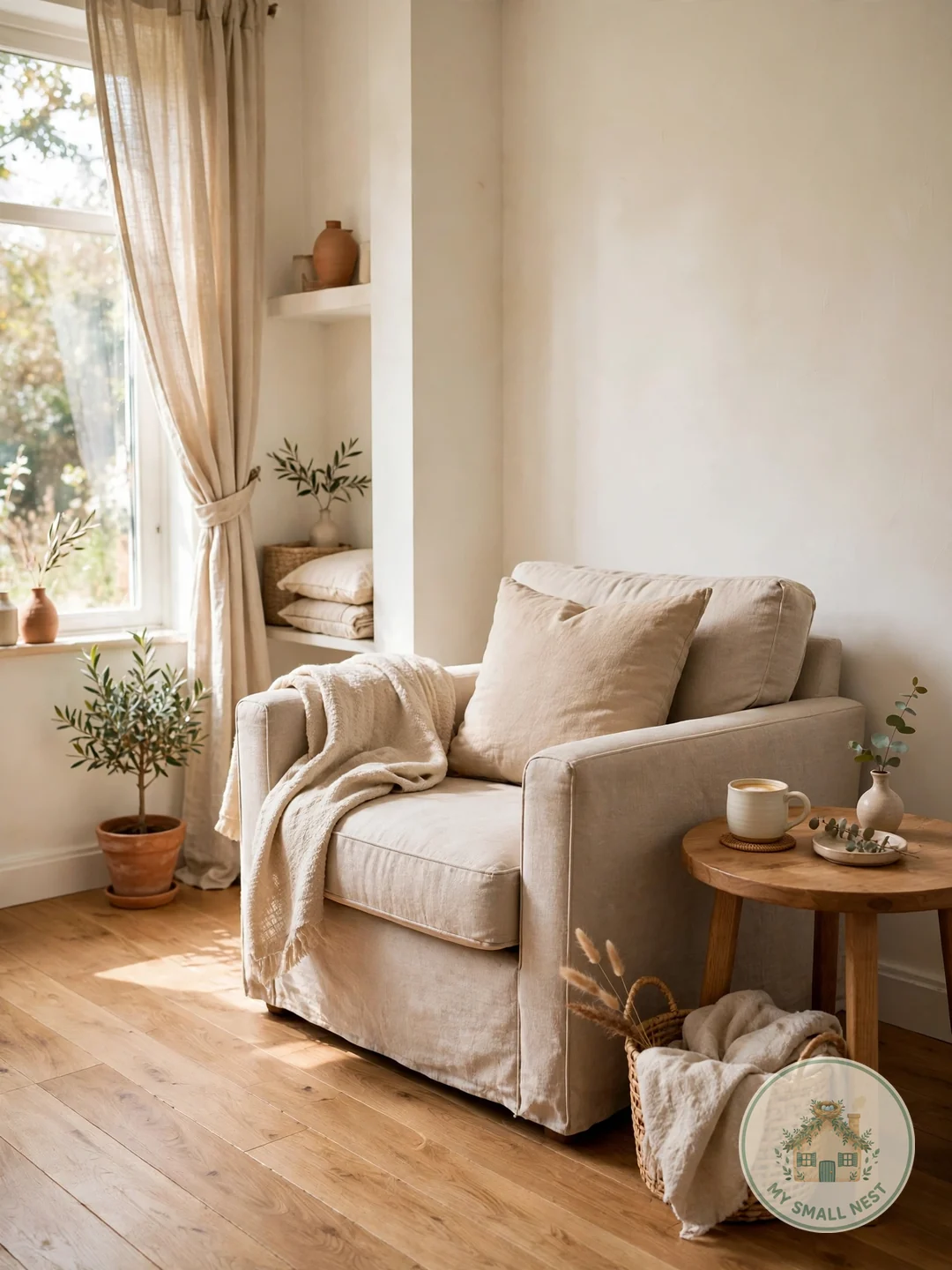
Natural wood is warm minimalism’s signature material. Keep the grain visible with clear or honey-toned oil finishes instead of painting over it, and repeat one wood tone through a room for a calm, cohesive look. Thrifted oak and pine pieces bring the look home for under $50 each — a $12 can of Danish oil and an hour of sanding makes a tired side table look brand new.
Make it work: Pick one wood tone per room (all oak, or all walnut) and stick to it — mixed woods are where calm goes to die.
 Pin it
3. Layer Soft, Touch-Me Textures
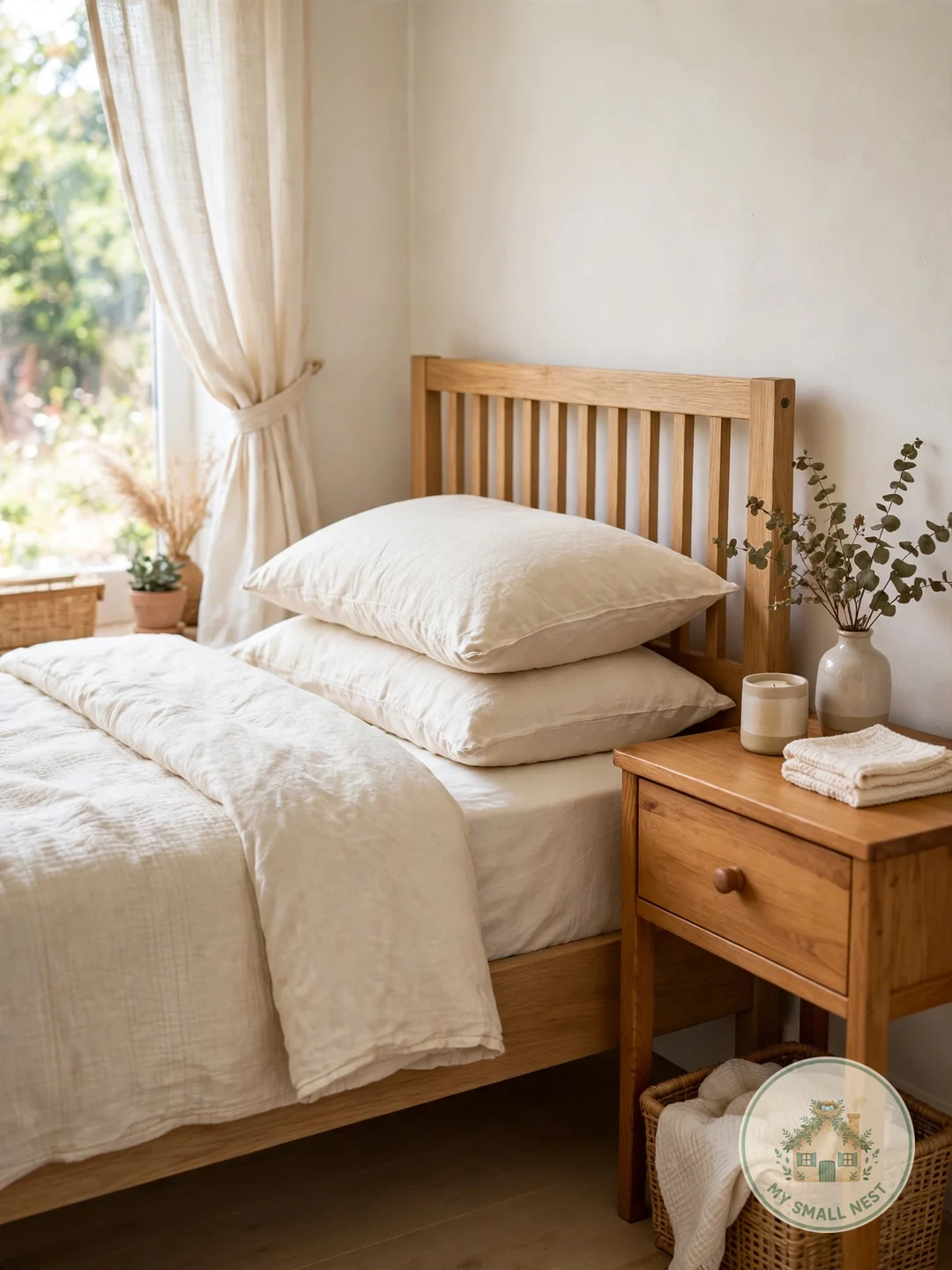
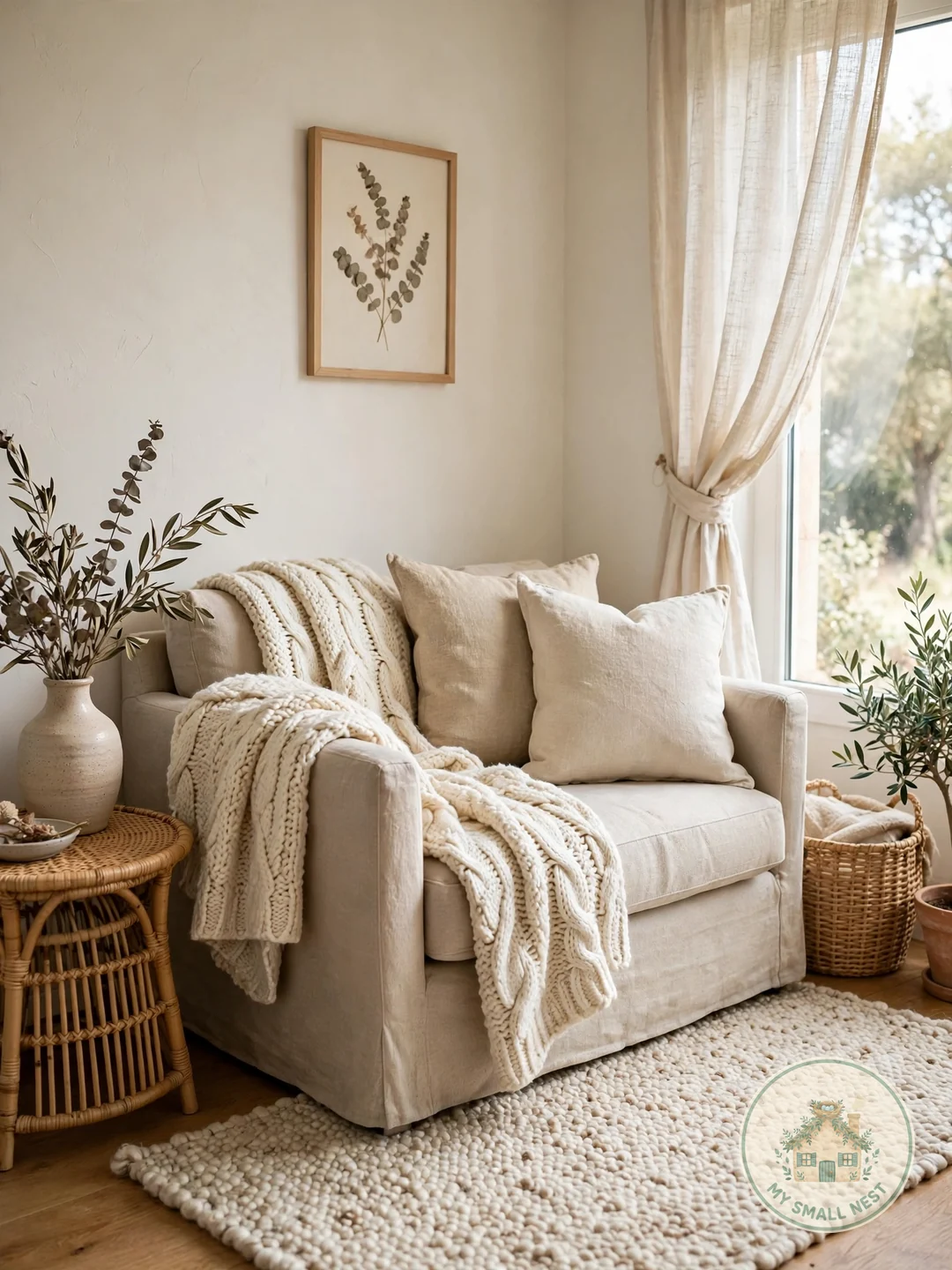
A nubby wool rug, a chunky knit throw, and linen cushions can coexist in the same neutral palette because their textures do all the talking. This layering makes a small space feel rich and styled even with very few pieces. Mixing thrifted and new textiles keeps costs low — aim for $80-120 total per room, and shop end-of-season sales at IKEA, Target, and H&M Home.
Make it work: Combine three textures (smooth linen, nubby wool, woven jute) in the same color family for instant cohesion.
Emma’s studio note: I tried this in my studio — my entire “decor budget” one month was a $40 chunky knit throw and two $12 linen-look cushion covers. Three new textures in the same oatmeal tone, and my sofa corner went from flat to cozy overnight. Texture really is the whole trick.
 Pin it
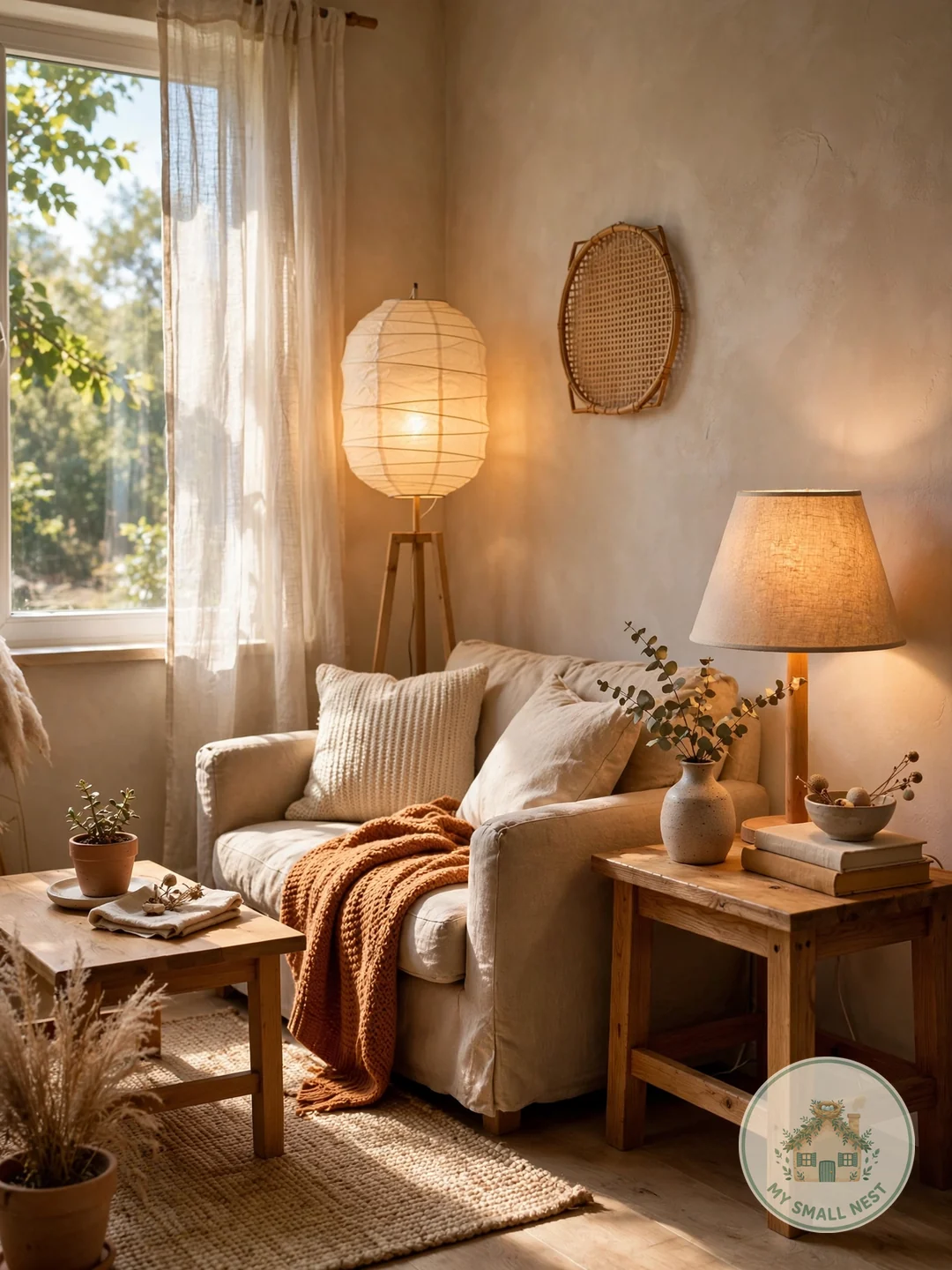
4. Choose Warm, Low Lighting Everywhere
Warm minimalism lives or dies by lighting. Swap cool daylight bulbs for warm 2700K ones — a 4-pack of LEDs runs about $10 — then add a floor lamp with a paper or linen shade for a soft, diffused glow. In a small room, two warm light sources at different heights make the space feel layered and expensive instead of flat, and it is the cheapest “renovation” in decorating.
Make it work: Put table lamps on $8 plug-in timers so your home glows warm the moment you walk in.
 Pin it
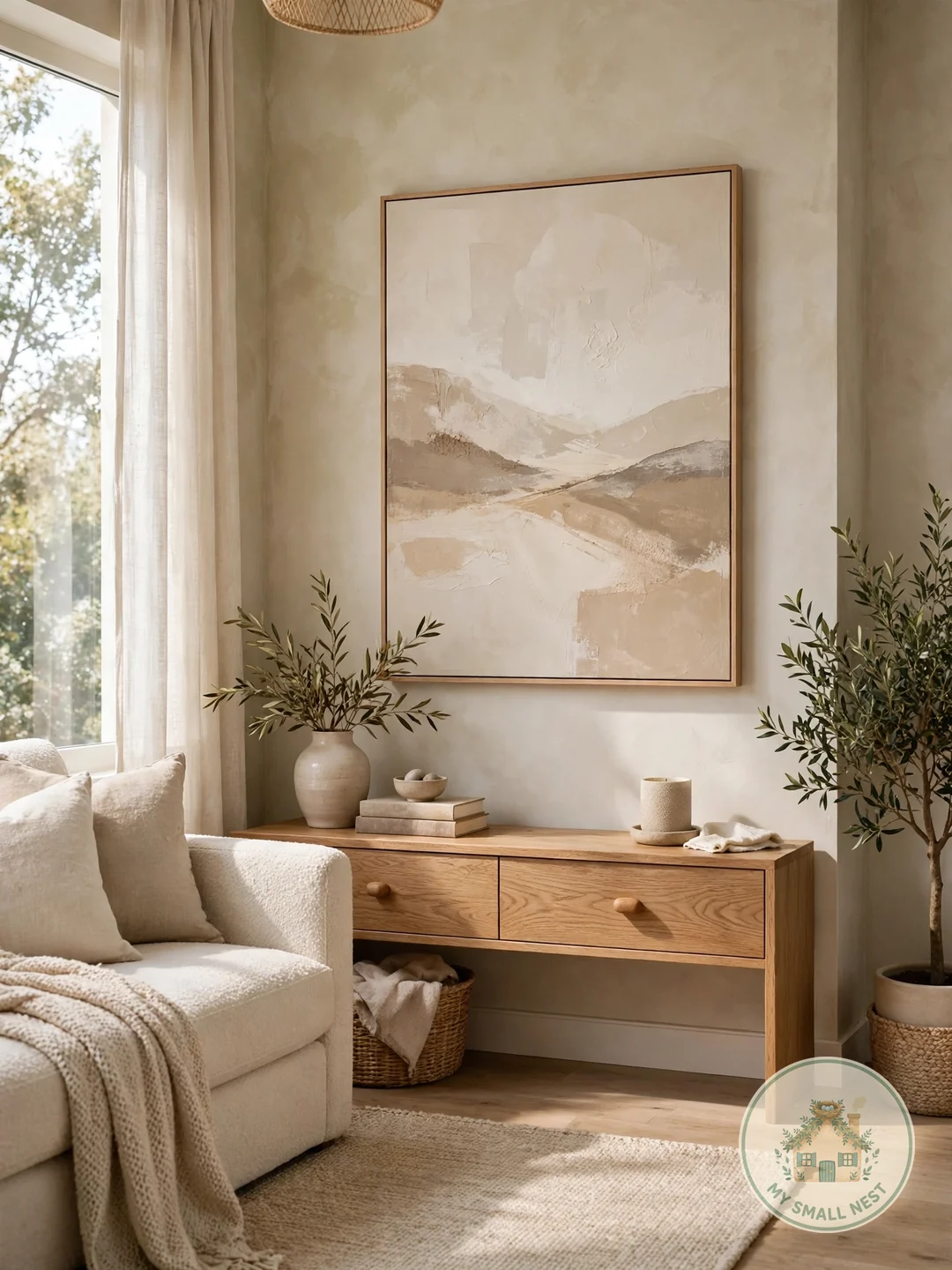
5. Pick One Statement Piece Per Room
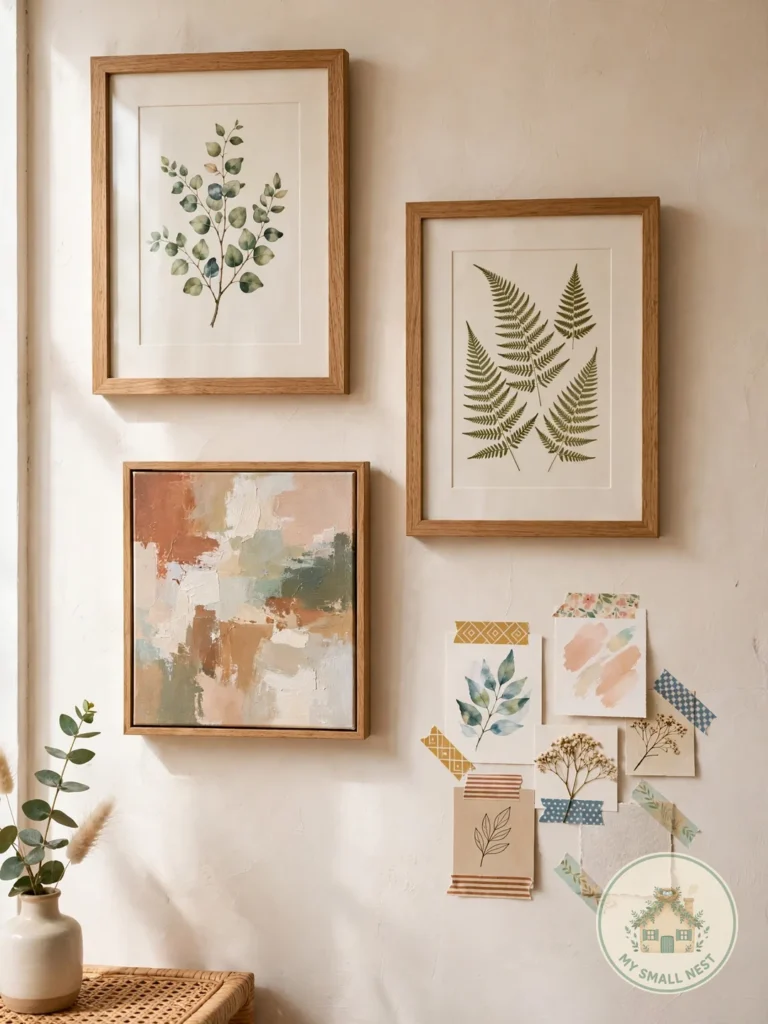
Instead of a gallery wall, choose one generous piece — an abstract landscape print, a woven wall hanging, or a large round mirror. One statement per room keeps the calm minimal feel while giving the eye somewhere restful to land, and oversized art in a small room actually makes the walls feel bigger. Thrift stores and IKEA’s larger frames make this a $30-60 move.
Make it work: Hang art so its center sits at eye level, about 57 inches from the floor — the museum standard works in studios too.
 Pin it
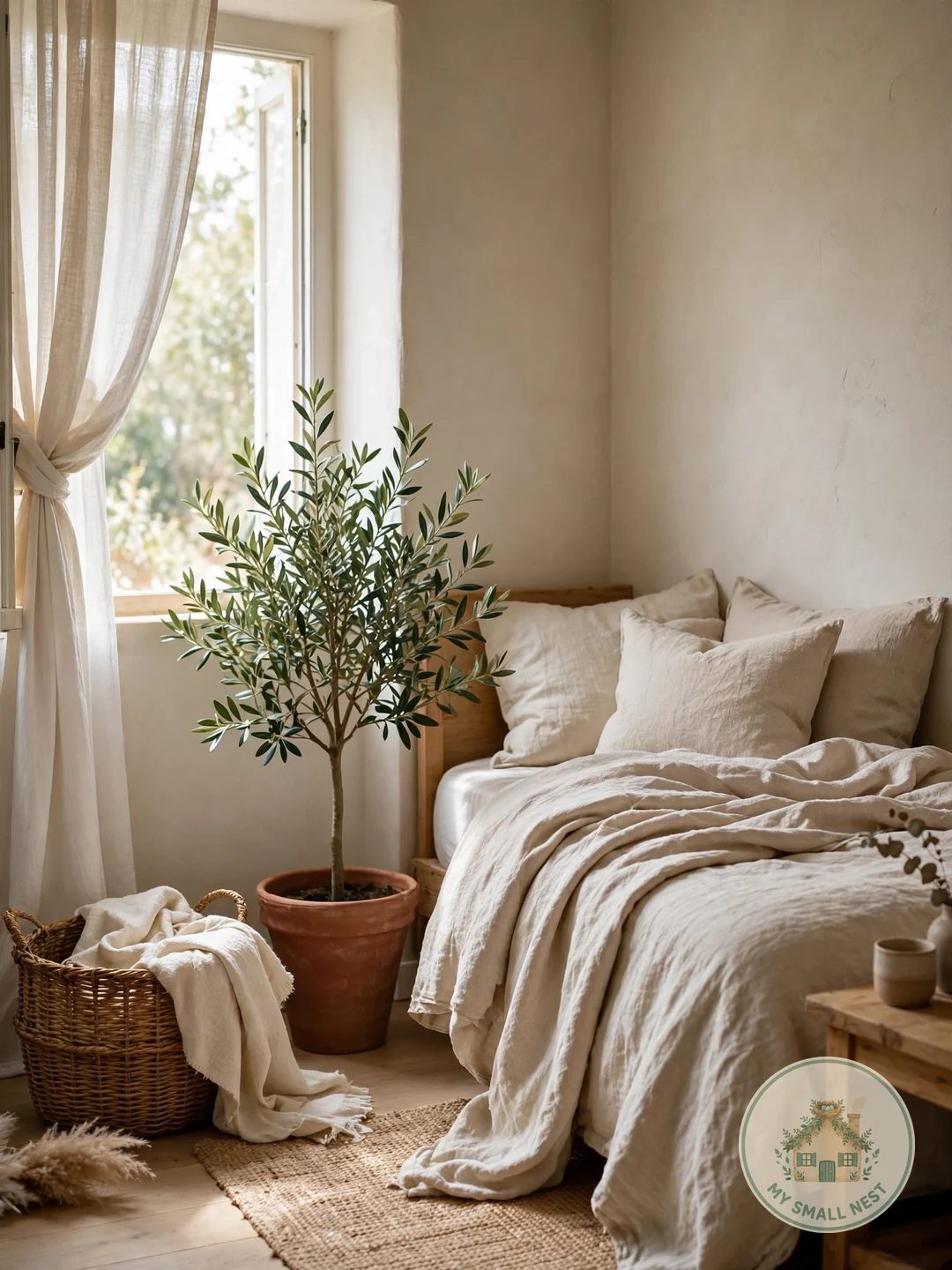
6. Add One Living Green Touch
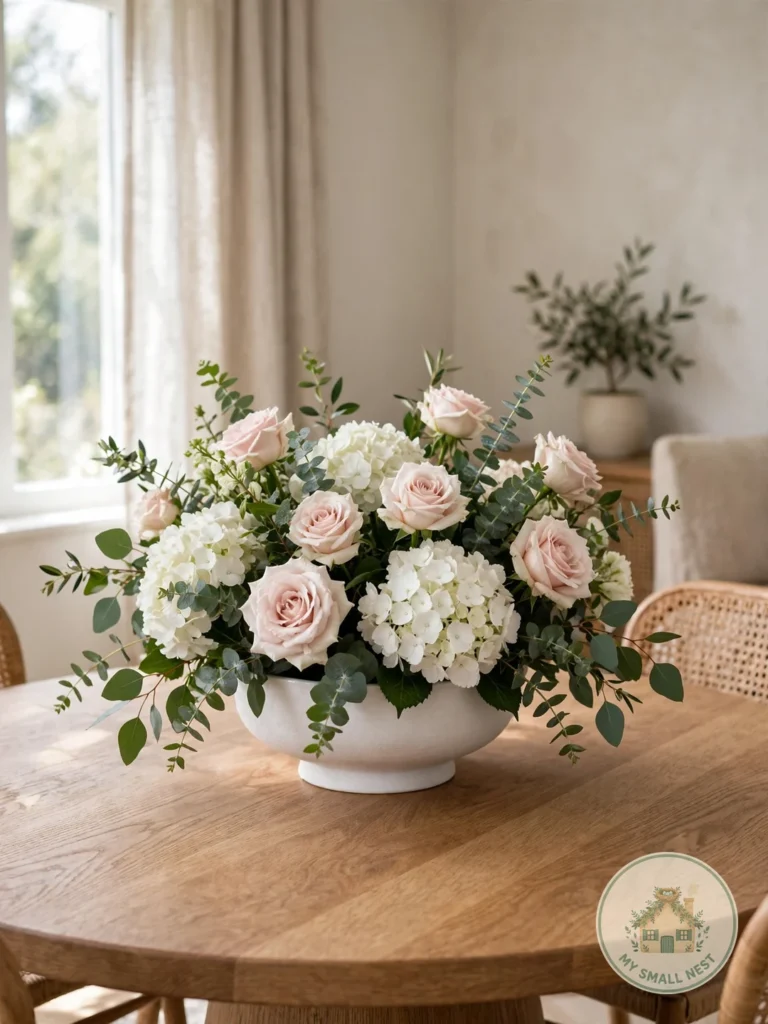
A single olive branch in a ceramic vase, a small potted pothos, or dried pampas grass in a corner adds life without clutter. Plants bring organic shapes into a minimal room and soften all those straight lines. Start with one or two low-maintenance plants under $20 — pothos and snake plants survive almost anything, including north-facing windows and forgetful owners.
Make it work: Use handmade-look ceramic or clay pots in warm tones to reinforce the palette.
Emma’s studio note: My pothos is four years old, cost $9, and has survived every lighting mistake a north-facing studio can offer. One trailing plant on my bookshelf does more for the room’s warmth than any decor object I own.
 Pin it
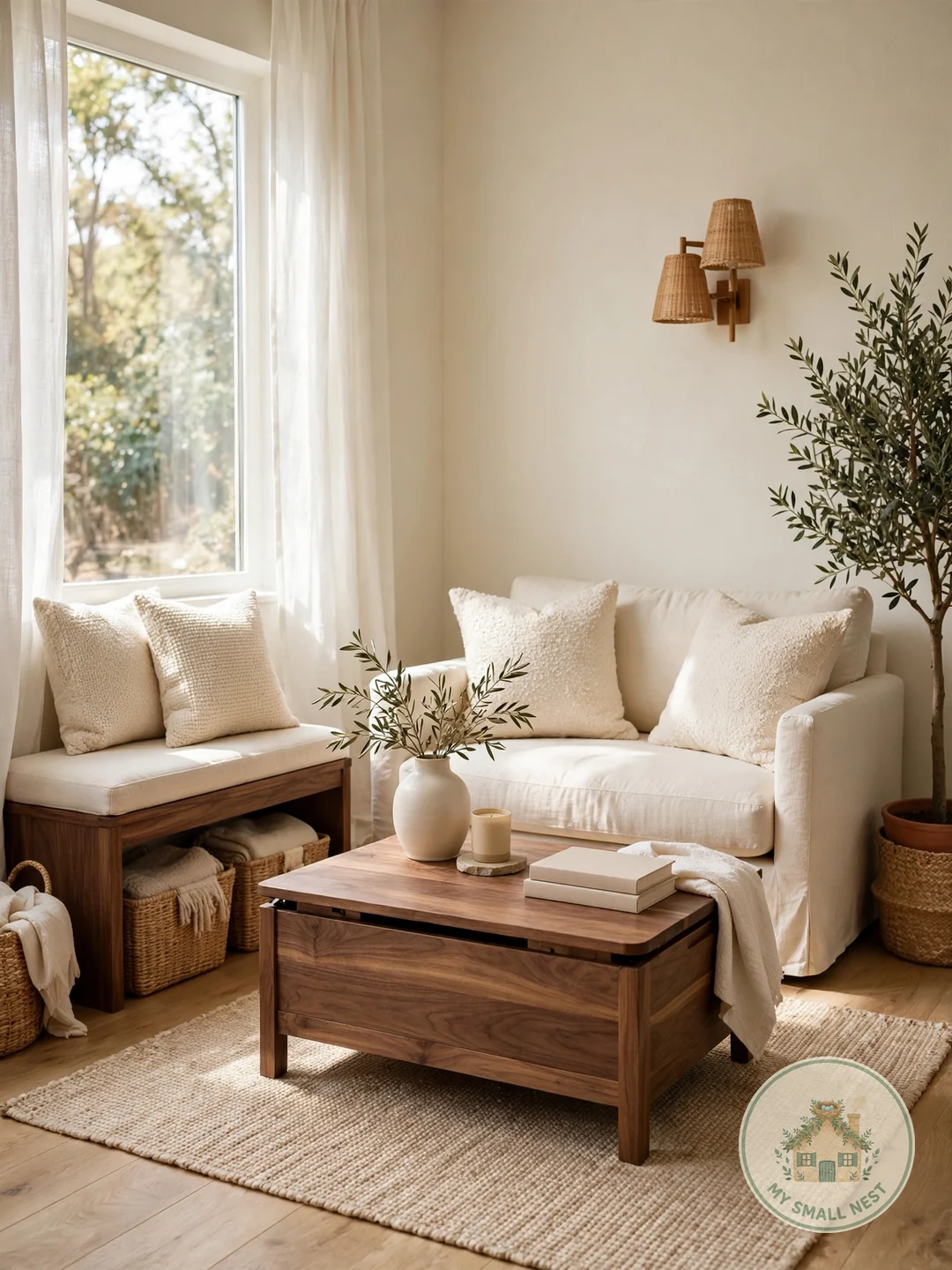
7. Use Multi-Purpose Furniture in Warm Finishes
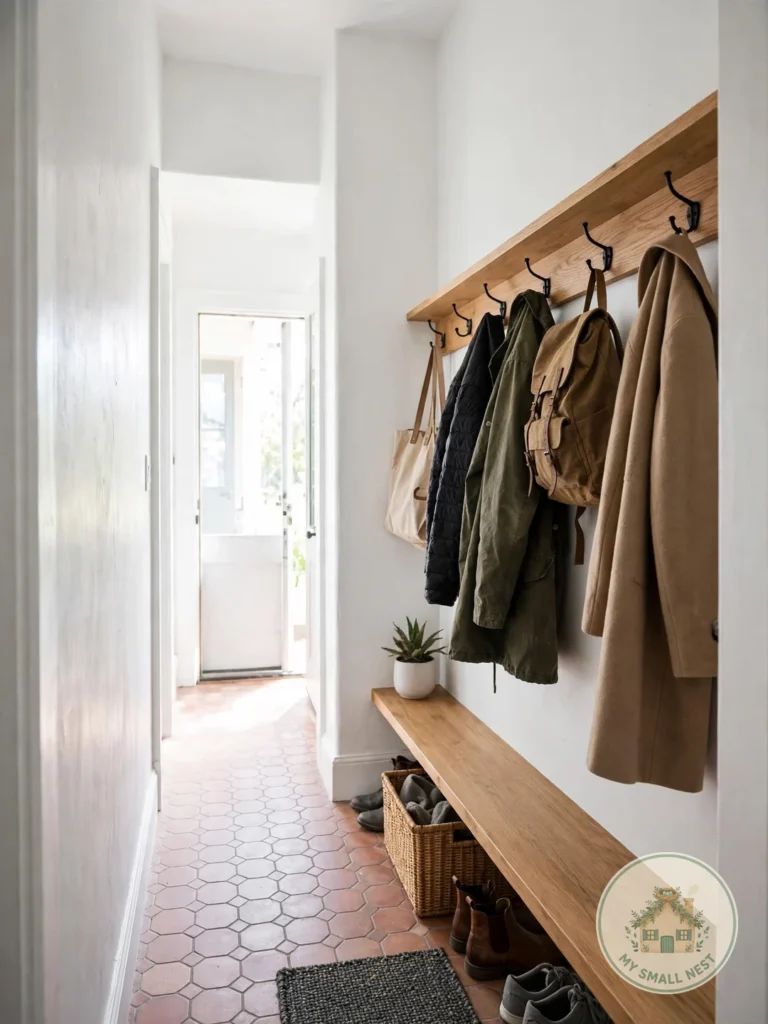
A walnut storage bench that holds throws, a lift-top coffee table with hidden shelving, or a daybed that works as a sofa — warm minimalism loves furniture that earns its footprint. In a small home, every piece should be beautiful AND useful, so the room stays uncluttered naturally instead of by constant effort. Secondhand stores are full of solid wood pieces in warm finishes for a fraction of new prices.
Make it work: Before buying, ask: does it store something, seat someone, or serve two purposes? If not, skip it.
 Pin it
8. Hide Clutter in Natural-Fiber Baskets
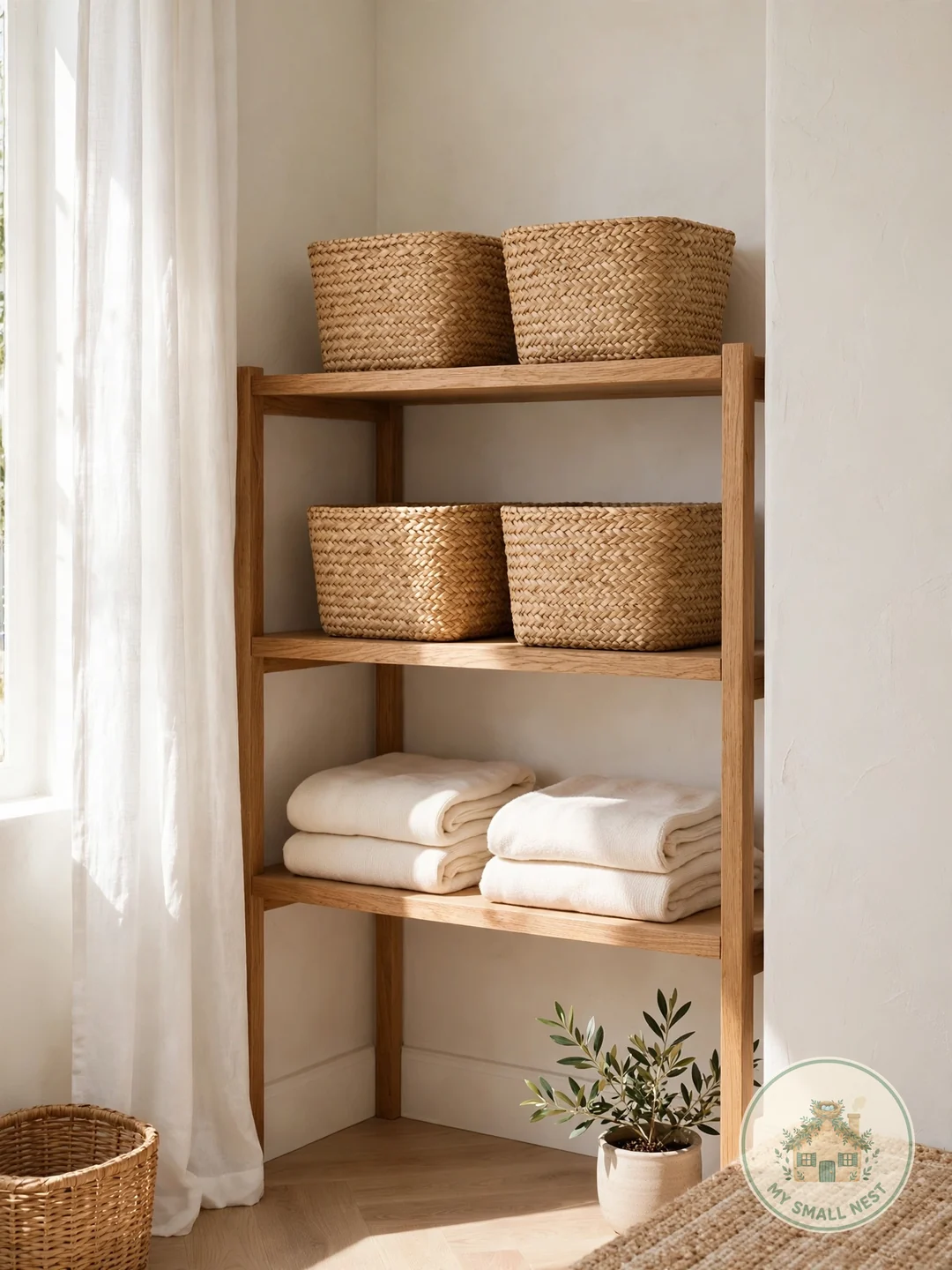
Closed cabinets and lidded baskets in cane, seagrass, or warm wood hide everyday clutter so surfaces stay clear — which is the whole point of minimalism. A set of matching woven baskets (about $10-15 each at IKEA, Target, or HomeGoods) on an open shelf looks intentional instead of messy, and the natural texture doubles as decor.
Make it work: Give every category of stuff (cables, remotes, mail) its own basket, then place each basket exactly where that clutter happens.
 Pin it
Mistakes to Avoid
Using cool grays and stark white
Cool-toned neutrals are the fastest way to make minimalism feel clinical. Stick to warm undertones in every paint, textile, and finish.
Forgetting about lighting temperature
Even the warmest palette looks flat under 5000K daylight bulbs. Use 2700K warm bulbs throughout for that golden, cozy glow.
Stripping away all texture
Smooth, flat surfaces with no texture read as empty, not minimal. Layer at least three natural textures per room.
Choosing form over function
A beautiful piece that stores nothing in a tiny home is a missed opportunity. Prioritize furniture that works hard.
Adding “just one more” decor piece
Minimalism’s magic is restraint. If a new item does not earn its place, the room was better without it.
FAQs
What is warm minimalism exactly?
Warm minimalism keeps the clean, uncluttered spirit of minimalism but replaces cool whites and grays with warm neutrals like ivory, beige, and camel, plus natural textures such as wood, wool, and linen. The result is a calm space that still feels cozy and lived-in.
Can warm minimalist decor work in a tiny apartment?
Absolutely — it is one of the best styles for small spaces. Fewer pieces make rooms feel larger, while warm tones and soft textures keep them from feeling empty. Stick to a tight palette and multi-purpose furniture to get the look in even the smallest studio.
What colors should I use for a warm minimalist palette?
Build around warm whites, ivory, soft beige, camel, and honey-toned woods. Add depth with muted terracotta, sage, or clay accents. Avoid stark white and cool grays, which can make a minimalist room feel clinical instead of cozy.
How do I keep warm minimalist rooms from looking bare?
Layer textures instead of adding more stuff. A nubby throw, a woven rug, linen curtains, and a handmade ceramic vase add visual richness without clutter. Good lighting — warm bulbs around 2700K — also makes a simple room feel finished and inviting.
Is warm minimalist decor expensive to achieve?
Not at all. It is actually budget-friendly because you buy less. Shop thrift stores for solid wood pieces and natural-fiber textiles, repaint existing furniture in warm neutrals, and let one quality piece per room do the heavy lifting.
Warm minimalism proves you do not need much to feel at home — you just need the right things. Start with your color palette and lighting, then add one texture at a time until the room feels like a hug. Save this guide for your next styling session, and share it with anyone who thinks minimal has to mean cold.
What readers are saying
No comments yet — yours could be the first.